Category: Military Posts

These are all my military insights all in one place!

  • Iran’s Drone Swarm Doctrine: The Cheap Weapons Challenging Modern Militaries

    Iran’s Drone Swarm Doctrine: The Cheap Weapons Challenging Modern Militaries

    How Low-Cost Drones Are Reshaping Warfare in the Middle East and Beyond


    Introduction: The Rise of the Drone Battlefield

    In modern warfare, some of the most powerful weapons no longer come from expensive fighter jets or billion-dollar warships.

    Instead, they come from small, inexpensive drones.

    Over the last decade, Iran has developed one of the world’s most extensive drone programs. These unmanned aerial vehicles (UAVs) have become a central part of Iran’s military strategy.

    Unlike traditional air forces, drone warfare allows countries to launch attacks that are:

    • cheap
    • difficult to detect
    • easy to mass produce
    • capable of overwhelming air defenses

    Iran has exported these drones to allied groups and partner states across the Middle East, turning them into one of the most influential tools in modern asymmetric warfare.

    This strategy—sometimes described as drone swarm doctrine—is now reshaping military planning worldwide.


    Chapter 1: Why Drones Became Iran’s Weapon of Choice

    For decades, Iran has faced strict military sanctions and technological restrictions.

    These limits made it difficult for the country to acquire advanced aircraft comparable to those operated by rivals such as:

    • Israel
    • United States
    • Saudi Arabia

    Instead of trying to compete directly in expensive airpower, Iran developed an alternative strategy.

    Military planners focused on asymmetric warfare—using inexpensive technologies to challenge technologically superior opponents.

    Drones offered several advantages:

    • They cost far less than fighter aircraft.
    • They can travel long distances.
    • They can be launched in large numbers.
    • They reduce risk to human pilots.

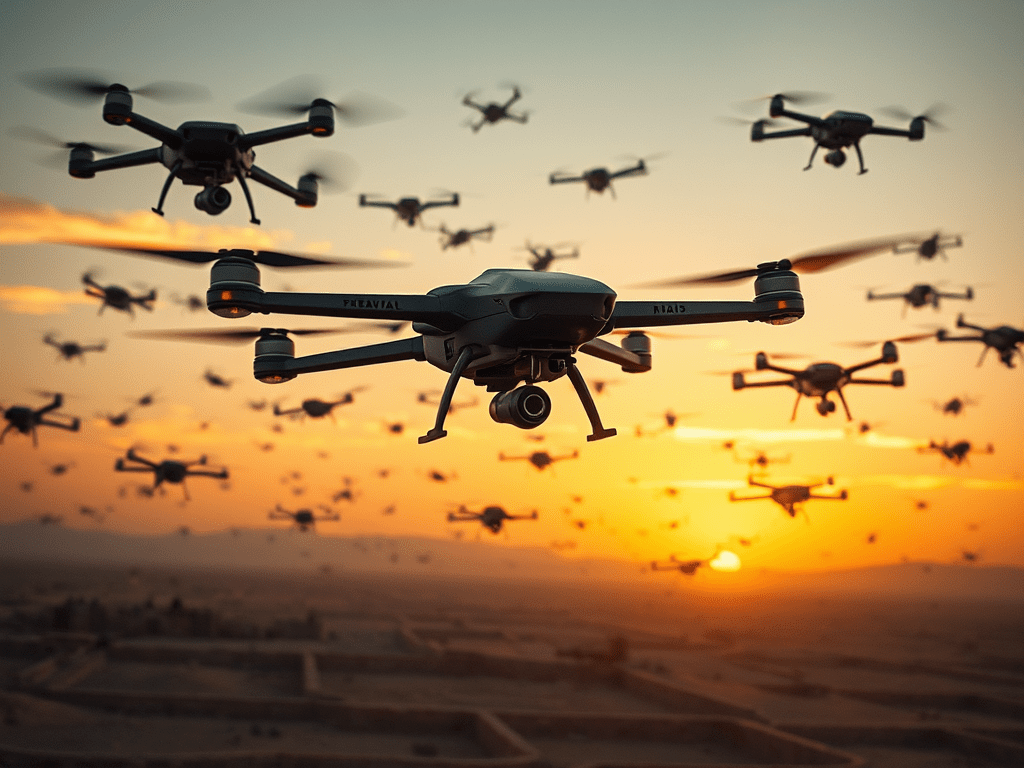
    By combining these advantages, Iran created a system where dozens of drones could be launched simultaneously, overwhelming traditional air defenses.


    Chapter 2: The Evolution of Iran’s Drone Program

    Iran’s drone program began during the Iran–Iraq War in the 1980s.

    At the time, early UAVs were used mainly for reconnaissance missions.

    Over the decades, the technology improved dramatically.

    Iran eventually developed several types of combat drones capable of performing missions such as:

    • reconnaissance
    • precision strike attacks
    • loitering munitions (kamikaze drones)

    One of the most widely discussed models is the Shahed‑136 loitering munition, a small drone designed to fly long distances before crashing into its target with an explosive payload.

    These drones are relatively simple compared to advanced Western UAVs, but they are cheap and easy to produce in large numbers.

    This is exactly what makes them strategically powerful.


    Chapter 3: The Power of Drone Swarms

    Traditional air defenses are designed to intercept a small number of incoming missiles or aircraft.

    Drone swarm tactics challenge this system.

    Instead of sending one large weapon, attackers launch dozens or even hundreds of drones simultaneously.

    This creates several problems for defenders:

    Air Defense Saturation

    Missile defense systems have limited interceptors.

    If too many drones approach at once, defenses may run out of missiles before destroying every target.

    Cost Imbalance

    Defending against drones can be extremely expensive.

    For example:

    • A drone might cost $20,000–$50,000 to build.
    • A missile used to intercept it might cost hundreds of thousands of dollars.

    This creates a cost imbalance, where defenders spend far more money than attackers.

    Radar Detection Challenges

    Many drones fly at low altitude and have small radar signatures.

    This makes them harder to detect than conventional aircraft.


    Chapter 4: Iran’s Proxy Drone Network

    Iran’s drone strategy extends far beyond its own military.

    Tehran has supplied drones to allied groups across the Middle East.

    This network includes organizations such as:

    • Hezbollah in Lebanon
    • Houthi movement in Yemen
    • various militias in Iraq and Syria

    By distributing drones to partner forces, Iran can influence conflicts across the region without deploying its own troops.

    This strategy allows Iran to conduct what analysts sometimes call “remote warfare.”

    Drone attacks launched by proxy groups can strike targets hundreds or even thousands of kilometers away.


    Chapter 5: The Impact on Global Warfare

    Iran’s drone tactics have influenced conflicts well beyond the Middle East.

    In recent wars, drone swarms have been used to attack:

    • military bases
    • air defense systems
    • shipping vessels
    • energy infrastructure

    These attacks demonstrate how drones can disrupt both military operations and civilian economies.

    Major powers are now racing to develop counter-drone technologies, including:

    • electronic jamming systems
    • laser defenses
    • anti-drone missiles
    • radar systems designed for small UAV detection

    Even advanced militaries are still adapting to this new type of threat.


    Chapter 6: Drone Warfare and the Strait of Hormuz

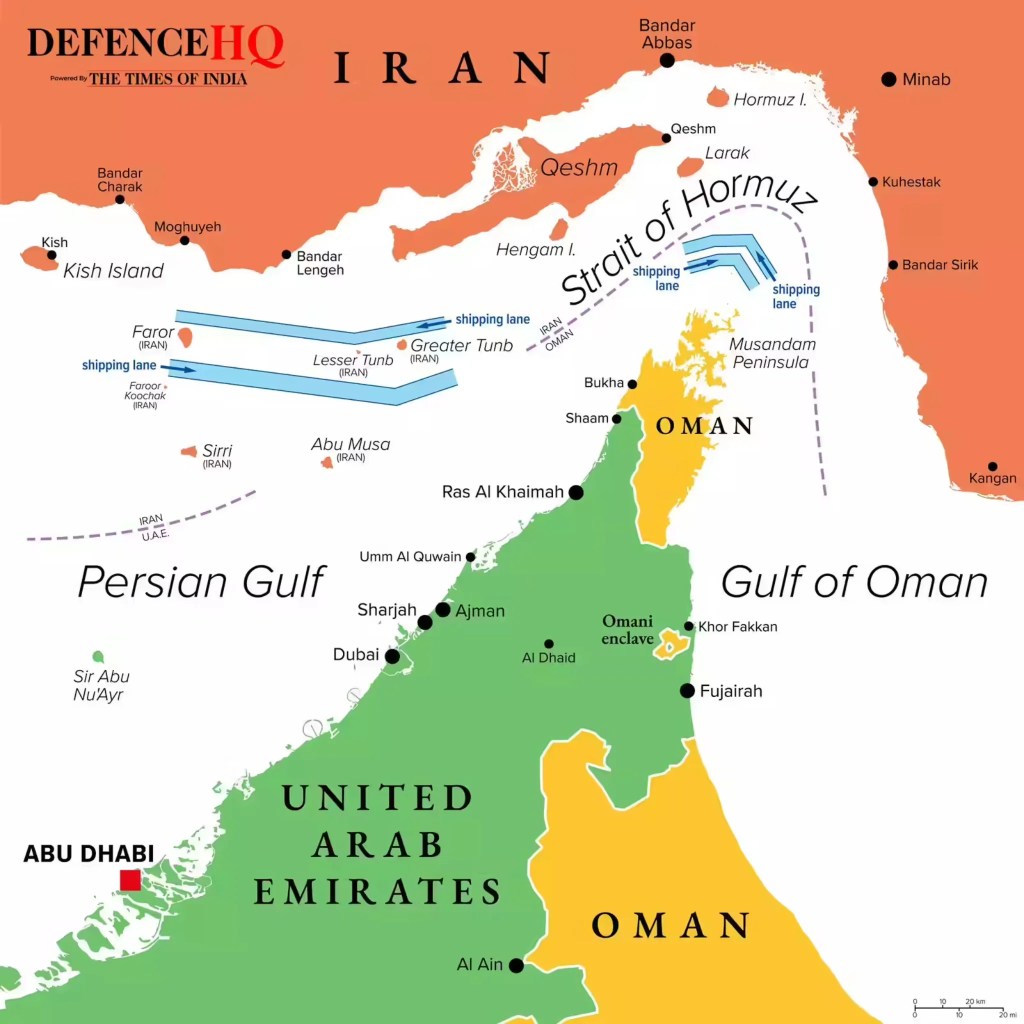
    The drone threat is especially significant in maritime chokepoints such as the Strait of Hormuz.

    Shipping lanes in the region are narrow and crowded.

    This makes commercial vessels vulnerable to aerial attacks.

    Drone strikes could target:

    • oil tankers
    • cargo ships
    • naval vessels
    • port infrastructure

    Even a small number of successful attacks could disrupt global shipping and energy supplies.

    This connection between drone warfare and maritime strategy is one reason the Strait of Hormuz remains such a critical geopolitical flashpoint.


    Chapter 7: The Future of Drone Warfare

    Military analysts believe drones will play an even larger role in future conflicts.

    Several trends suggest drone warfare will continue expanding:

    Artificial Intelligence

    Future drones may operate with increasing autonomy, allowing swarms to coordinate attacks without human control.

    Mass Production

    Advances in manufacturing make drones easier and cheaper to produce.

    Global Proliferation

    More countries are developing drone technology, spreading these capabilities worldwide.

    As these trends continue, drone warfare may become one of the defining features of 21st-century conflict.


    Conclusion: The New Airpower Revolution

    For most of the 20th century, airpower depended on expensive fighter jets, massive aircraft carriers, and highly trained pilots.

    Today, that model is changing.

    Cheap drones can now threaten some of the most advanced military systems ever built.

    Iran’s drone swarm doctrine shows how smaller or sanctioned states can challenge powerful adversaries using innovation and asymmetric tactics.

    The result is a new era of warfare where quantity, affordability, and adaptability may matter as much as technological superiority.

    And as conflicts continue to evolve across the Middle East and beyond, drone warfare is likely to remain one of the most important military developments of the modern age.

    Sources & Citations

    1. International Institute for Strategic Studies – Reports on Iranian UAV capabilities.
    2. Center for Strategic and International Studies – Analysis of drone swarm warfare.
    3. U.S. Department of Defense – Assessments of Iranian military technology.
    4. RAND Corporation – Studies on unmanned aerial systems and asymmetric warfare.
    5. Stockholm International Peace Research Institute – Global proliferation of drone technology.
  • The Strait of Hormuz Crisis: The Chokepoint That Could Crash the Global Economy

    The Strait of Hormuz Crisis: The Chokepoint That Could Crash the Global Economy

    Why a Narrow Waterway Between Iran and Oman Holds the Power to Shock the Entire World


    Introduction: The World’s Most Dangerous Bottleneck

    A narrow strip of water just a few dozen kilometers wide may be one of the most strategically important locations on Earth.

    That waterway is the Strait of Hormuz, a narrow channel connecting the Persian Gulf to the Arabian Sea.

    Every day, an enormous share of the world’s energy supply flows through this corridor. Tankers carrying oil and natural gas from Gulf producers pass through it on their way to Asia, Europe, and beyond.

    Roughly 20 million barrels of oil per day — about 20% of global petroleum consumption — transit the strait, making it the most important energy chokepoint on the planet.

    Because of this, any disruption in the strait has immediate global consequences.

    Today, rising tensions involving Iran, Israel, and the United States have once again placed the Strait of Hormuz at the center of global attention.

    Recent attacks on commercial vessels and threats to block the waterway have raised fears that the strait could become the epicenter of the next global economic shock.

    To understand why, we need to explore how geography, energy, and military strategy intersect in this narrow passage.


    Chapter 1: The Geography of a Global Chokepoint

    The Strait of Hormuz lies between:

    • Iran to the north
    • Oman and the Musandam Peninsula to the south

    At its narrowest point, the strait is only about 33 kilometers (21 miles) wide.

    Yet despite its narrow size, it carries a huge volume of global energy trade.

    Oil exports from several major producers must pass through this route, including:

    • Saudi Arabia
    • Iraq
    • Kuwait
    • Qatar
    • United Arab Emirates
    • Iran

    This concentration of energy exports makes the strait one of the world’s most critical maritime chokepoints.

    In fact:

    • Around 20% of global oil consumption passes through the strait.
    • Nearly one-fifth of global LNG trade also travels through the corridor.

    Few alternative routes exist for these exports.

    If the strait closes, the global energy market would feel the shock almost immediately.


    Chapter 2: Why the Strait Matters to the Global Economy

    Energy is the lifeblood of the global economy.

    Factories, transportation systems, agriculture, and electricity grids all depend on steady fuel supplies.

    Because such a large portion of global oil exports moves through the Strait of Hormuz, any disruption can rapidly drive prices higher.

    A full closure could remove tens of millions of barrels of oil per day from global supply, creating a severe market shock.

    Recent reports warn that disruptions to the strait could trigger one of the worst energy crises in modern history.

    Countries especially vulnerable include major energy importers such as:

    • Japan
    • China
    • India
    • South Korea

    About 84% of oil passing through the strait ultimately goes to Asian markets, making the region particularly dependent on its stability.

    In a worst-case scenario, oil prices could spike dramatically, causing inflation and economic slowdowns across the world.


    Chapter 3: The Strait of Hormuz in Past Conflicts

    The strait has long been a flashpoint in Middle Eastern geopolitics.

    One of the most dangerous periods occurred during the Iran–Iraq War (1980–1988).

    During the later stages of that conflict, both sides began targeting oil tankers in what became known as the Tanker War.

    Iran and Iraq attacked shipping vessels in the Persian Gulf in an attempt to damage each other’s economies.

    The attacks soon drew in outside powers.

    The United States launched Operation Earnest Will, escorting Kuwaiti oil tankers through the Gulf to protect them from attacks.

    This period demonstrated how quickly regional conflicts in the Gulf can escalate into international crises.


    Chapter 4: Iran’s Strategy — The Threat of Closure

    For decades, Iran has maintained that it could close the Strait of Hormuz if threatened.

    Iran cannot easily match the naval power of the United States or its allies in conventional warfare.

    Instead, it relies on asymmetric naval tactics, including:

    • naval mines
    • anti-ship missiles
    • swarm attacks by small fast boats
    • drones targeting shipping

    These tactics are designed to make the strait too dangerous for commercial traffic.

    Even a partial disruption could cause major economic damage.

    Recent attacks on cargo vessels and drone strikes in the region illustrate how quickly shipping routes can become unsafe during escalating conflict.


    Chapter 5: The Naval Forces Guarding the Strait

    Because the strait is so vital, multiple military powers operate in the surrounding waters.

    The United States maintains a large naval presence in the region through the United States Navy and the U.S. Central Command.

    Its mission includes protecting freedom of navigation and safeguarding global energy supplies.

    Other countries also patrol nearby waters, including:

    • United Kingdom
    • France
    • Saudi Arabia

    Despite this military presence, the strait remains vulnerable.

    The narrow shipping lanes make tankers easy targets for mines, missiles, or drone attacks.


    Chapter 6: The Economic Domino Effect of a Closure

    If the Strait of Hormuz were closed for a prolonged period, the consequences would ripple across the global economy.

    Possible effects include:

    Oil Price Shock

    A sudden reduction in supply could push oil prices dramatically higher.

    Some analysts warn prices could surge above $100 per barrel if shipping disruptions persist.

    Global Inflation

    Higher energy costs would raise transportation and manufacturing prices worldwide.

    This would likely increase inflation in both developed and developing economies.

    Shipping Disruptions

    Commercial vessels might be forced to reroute around longer and more expensive routes.

    Insurance premiums for shipping in the region could skyrocket.

    Strategic Oil Reserves

    Countries may release emergency reserves to stabilize markets.

    In fact, the International Energy Agency has already coordinated massive reserve releases during past energy crises.


    Chapter 7: Can the Strait Be Bypassed?

    Some countries have attempted to reduce dependence on the strait by building alternative export routes.

    Examples include pipelines from Saudi Arabia and the United Arab Emirates that allow some oil to bypass the waterway.

    However, these pipelines cannot handle the full volume of exports that normally travel through the strait.

    Most energy shipments from the Persian Gulf still depend on the Strait of Hormuz.

    This means that even partial disruptions could send shockwaves through global markets.


    Conclusion: The Narrow Passage That Holds Global Power

    The Strait of Hormuz is a powerful example of how geography shapes global politics.

    A narrow waterway between Iran and Oman has become one of the most important strategic locations in the modern world.

    Through this small corridor flows:

    • a fifth of the world’s oil
    • massive LNG shipments
    • billions of dollars in global trade

    As tensions rise in the Middle East, the strait remains one of the most dangerous flashpoints in international politics.

    If conflict escalates and shipping is disrupted, the consequences could extend far beyond the region.

    Energy markets, global inflation, and economic stability all depend on keeping this narrow passage open.

    In the modern world, the Strait of Hormuz is not just a shipping route.

    It is one of the most critical pressure points in the global economy.

    Sources & Citations

    1. U.S. Energy Information Administration – Global Oil Transit Chokepoints Report.
    2. Reuters Energy Analysis – Strait of Hormuz Oil Transit Data.
    3. Energy Trade Analysis – Global LNG and Oil Flows through Hormuz.
    4. International Energy Agency – Strategic Petroleum Reserve Releases.
    5. Regional conflict updates on shipping attacks in the strait.
    6. Global energy crisis warnings linked to potential closure.

  • The Great Game 2.0: How Modern Powers Are Fighting for Central Asia

    The Great Game 2.0: How Modern Powers Are Fighting for Central Asia

    From 19th-Century Empires to Modern Superpowers — Why Central Asia Is Again the World’s Strategic Crossroads


    Introduction: The Return of the Great Game

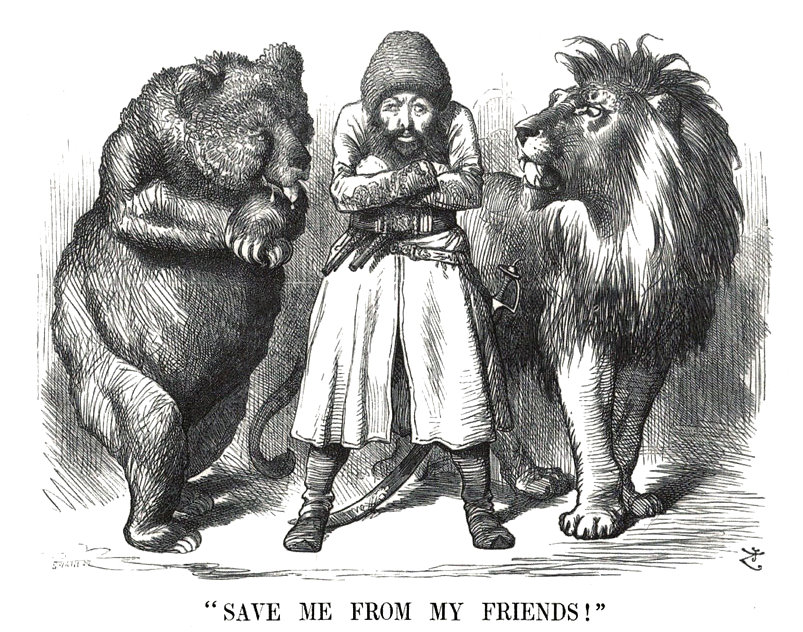
    In the 1800s, Central Asia became the stage for one of history’s most famous geopolitical rivalries. The British Empire and the Russian Empire competed fiercely for influence across the region in a struggle known as The Great Game.

    Both empires believed that controlling Central Asia meant controlling the balance of power in Eurasia.

    Today, more than a century later, the region is once again at the center of global competition. But this time the players are different.

    Instead of Victorian-era empires, the new contestants include:

    • China
    • Russia
    • United States
    • India
    • Turkey
    • Iran

    At stake are energy resources, trade routes, military influence, and strategic geography.

    Many analysts now call this new competition “The Great Game 2.0.”

    To understand why Central Asia matters so much today, we must first look at why it mattered in the past.


    Chapter 1: The Original Great Game

    Britain vs Russia

    During the 19th century, the British Empire ruled India — the most valuable colony in the world. British leaders feared that Russia might expand southward and threaten India.

    At the same time, the Russian Empire was expanding across the Eurasian landmass, conquering vast territories in Central Asia.

    The two powers began a quiet but intense rivalry.

    This competition involved:

    • espionage missions
    • military expeditions
    • diplomatic alliances
    • influence over local rulers

    The region became a chessboard where empires competed for advantage.

    Afghanistan: The Strategic Buffer

    One country became especially important in this struggle:
    Afghanistan.

    Britain wanted Afghanistan to remain independent but friendly — a buffer state protecting India from Russian influence.

    This led to several conflicts known as the Anglo‑Afghan Wars, as Britain attempted to control Afghanistan’s foreign policy.

    The Great Game shaped the political borders of Central Asia that still exist today.


    Chapter 2: The Strategic Geography of Central Asia

    Central Asia includes several nations that once formed part of the Soviet Union:

    • Kazakhstan
    • Uzbekistan
    • Turkmenistan
    • Kyrgyzstan
    • Tajikistan

    These countries lie at the heart of Eurasia.

    Their geography creates several strategic advantages:

    Crossroads of Continents

    Central Asia connects:

    • Europe
    • East Asia
    • the Middle East
    • South Asia

    This makes it a vital corridor for trade routes and transportation networks.

    Energy and Natural Resources

    The region contains massive reserves of:

    • oil
    • natural gas
    • uranium
    • rare earth minerals

    These resources make Central Asia attractive to major powers seeking energy security.

    Strategic Military Position

    Central Asia borders several critical regions, including:

    • Russia
    • China
    • Afghanistan
    • Iran

    Control or influence here can shape regional security across a huge portion of the world.


    Chapter 3: China’s Strategy — The Belt and Road Vision

    One of the most important players in the new Great Game is China.

    China launched a massive global infrastructure project known as the Belt and Road Initiative.

    This project aims to build railways, highways, pipelines, and ports across Eurasia to strengthen trade with China.

    Central Asia is a critical part of this network.

    Why China Needs Central Asia

    China relies heavily on international trade and imported energy.

    Central Asia provides:

    • land routes that avoid vulnerable sea lanes
    • pipelines for oil and gas
    • access to European markets

    New railways across Kazakhstan and Uzbekistan now allow goods to travel between China and Europe much faster than by sea.

    For China, Central Asia is not just geography — it is economic security.


    Chapter 4: Russia’s Traditional Sphere of Influence

    For more than a century, Central Asia was dominated by Russia, first as part of the Russian Empire and later as part of the Soviet Union.

    Even after the Soviet Union collapsed in 1991, Russia continued to maintain strong influence in the region.

    Russia’s Tools of Influence

    Russia maintains power in Central Asia through several methods:

    • military alliances
    • economic cooperation
    • cultural ties
    • energy infrastructure

    One major organization is the Collective Security Treaty Organization (CSTO), a military alliance that includes several Central Asian states.

    Russia also hosts migrant workers from the region, creating economic links that reinforce its influence.

    Despite China’s growing presence, Russia still sees Central Asia as part of its traditional sphere of influence.


    Chapter 5: The United States and Western Interests

    The United States entered the Central Asian geopolitical arena mainly after the attacks of September 11 Attacks in 2001.

    To support military operations in Afghanistan, the United States established bases and logistical agreements across the region.

    Strategic Goals

    U.S. interests in Central Asia include:

    • counterterrorism cooperation
    • energy development
    • balancing Russian and Chinese influence

    Although U.S. military presence in the region declined after the war in Afghanistan ended, Washington still views Central Asia as strategically important.


    Chapter 6: Regional Powers Enter the Competition

    In addition to global superpowers, several regional countries are also expanding their influence.

    Turkey’s Cultural Strategy

    Turkey shares linguistic and cultural ties with many Central Asian countries.

    Through cultural exchanges, trade agreements, and diplomatic partnerships, Turkey seeks to strengthen its regional influence.

    India’s Strategic Concerns

    India is also interested in Central Asia, particularly because of security concerns involving Afghanistan and regional terrorism.

    India has invested in transportation corridors connecting Central Asia to South Asia.

    Iran’s Geographic Advantage

    Iran sits between Central Asia and the Persian Gulf.

    By offering trade routes to its ports, Iran hopes to become a key transit hub for Central Asian exports.


    Chapter 7: Energy Pipelines and Economic Competition

    Energy pipelines are one of the most important elements of the modern Great Game.

    Major pipelines carry oil and natural gas from Central Asia to:

    • China
    • Russia
    • Europe

    Control over pipeline routes can determine who profits from the region’s resources.

    For example:

    • China built major pipelines from Kazakhstan and Turkmenistan.
    • Russia maintains traditional energy networks linking Central Asia to Europe.

    These infrastructure projects represent billions of dollars and decades of geopolitical planning.


    Chapter 8: The Future of the New Great Game

    Central Asia is becoming increasingly important in global politics.

    Several trends suggest competition will continue:

    Growing Energy Demand

    As global energy consumption increases, access to Central Asian resources will remain valuable.

    Trade Route Competition

    Railways and highways connecting Asia and Europe will shape future global trade.

    Strategic Rivalry

    China, Russia, and the United States all want influence in the region, even if their methods differ.

    Regional Stability

    Political stability in Central Asia will determine whether the region becomes a bridge for cooperation or a battlefield for competition.


    Conclusion: The Chessboard of Eurasia

    The original Great Game was a rivalry between two empires fighting for influence over remote territories.

    Today’s version is far more complex.

    Instead of two empires, multiple powers now compete across Central Asia — through infrastructure projects, diplomacy, economic investment, and security partnerships.

    While the methods have changed, the underlying reality remains the same:

    Geography shapes power.

    Central Asia sits at the heart of Eurasia, connecting continents, resources, and civilizations.

    For that reason, the region will likely remain one of the world’s most important geopolitical crossroads for decades to come.

    The Great Game never truly ended.

    It simply evolved into The Great Game 2.0.

    Sources & Citations

    1. Hopkirk, Peter. The Great Game: The Struggle for Empire in Central Asia. Kodansha International, 1992.
    2. Cooley, Alexander. Great Games, Local Rules: The New Great Power Contest in Central Asia. Oxford University Press, 2012.
    3. Rashid, Ahmed. Central Asia in the Post-Cold War World. Yale University Press, 2017.
    4. Council on Foreign Relations. “China’s Belt and Road Initiative and Eurasian Strategy.”
    5. NATO Strategic Studies Reports on Eurasian Security.
    6. Encyclopaedia Britannica. “The Great Game.”
  • Iran’s Underground Missile Cities: The Secret Bases Hidden Beneath Mountains

    Iran’s Underground Missile Cities: The Secret Bases Hidden Beneath Mountains

    Inside the Hidden Tunnel Networks Designed to Protect Iran’s Deadliest Weapons


    Introduction: The Hidden Arsenal Beneath the Mountains

    Deep beneath the mountains and deserts of Iran, massive tunnel complexes hide one of the most mysterious military systems in the world.

    Iran calls them “missile cities.”

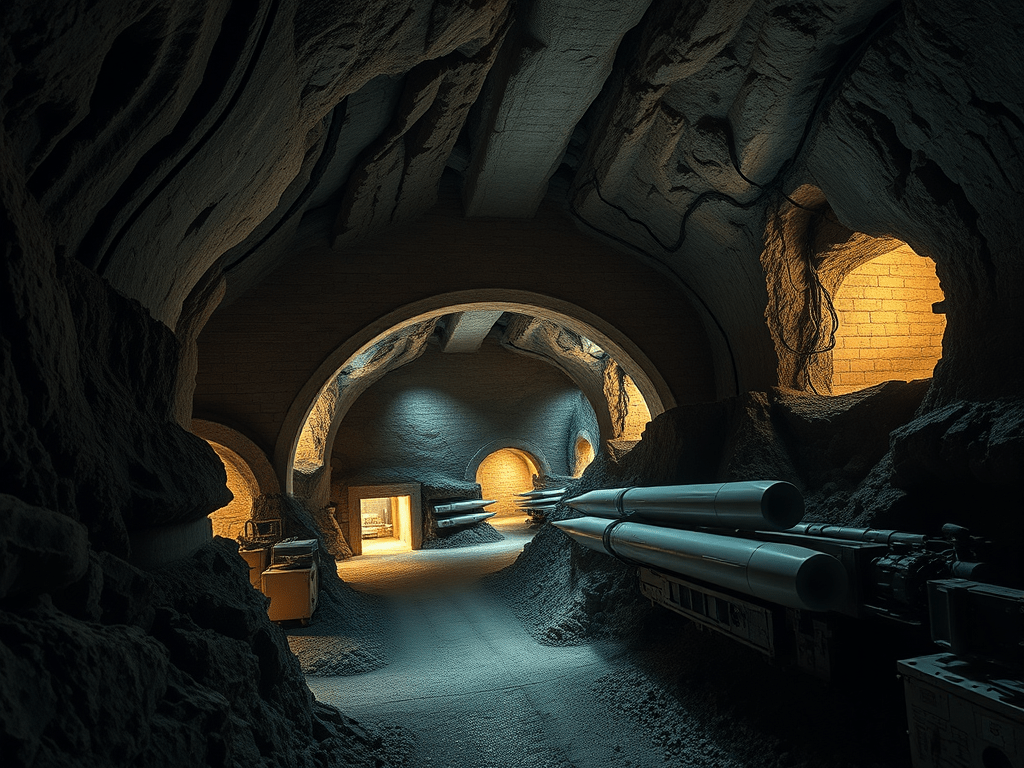
    These underground bases are vast networks of tunnels carved into solid rock where ballistic missiles, drones, and launch systems are stored and prepared for war.

    Many of these facilities are buried hundreds of meters underground, designed to survive airstrikes and continue launching missiles even during heavy bombardment.

    For Iran’s military planners, these hidden bunkers serve one primary purpose:

    Guaranteeing that Iran can strike back even if its surface military bases are destroyed.

    This strategy—known as second-strike capability—has become the backbone of Iran’s missile doctrine.

    But as modern surveillance and precision weapons improve, these secret underground cities are increasingly becoming the focus of global military attention.


    Chapter 1: Why Iran Built Underground Missile Cities

    Iran’s focus on missile warfare stems largely from its experiences during the Iran–Iraq War (1980–1988).

    During that conflict, Iraqi missile strikes hit Iranian cities repeatedly. Iran had little ability to retaliate effectively.

    The lesson for Iranian military leaders was clear:

    Missiles could determine the outcome of future wars.

    However, Iran faced several challenges:

    • limited airpower compared with Western countries
    • international arms sanctions
    • vulnerability of surface military bases to airstrikes

    To solve these problems, Iran began building hardened underground facilities where missiles could be hidden from surveillance and protected from attack.

    Over the following decades, these tunnel systems expanded across the country.

    Today they form one of the most extensive underground missile networks in the world.


    Chapter 2: How Iran’s Missile Cities Work

    The underground missile cities are not simple bunkers.

    They are complete underground military complexes.

    Some tunnels reportedly extend hundreds of meters below the surface, deep enough to resist most conventional bunker-busting bombs.

    Inside these facilities are:

    • missile storage chambers
    • launch preparation areas
    • command centers
    • transportation tunnels
    • ventilation and power systems

    Some bases even contain rail systems or transport vehicles that move missiles from storage areas to launch points hidden on mountain slopes.

    When a launch order is given, missiles are transported through the tunnels to hidden exits where they can be fired.

    This design allows Iran to:

    • protect its missile stockpiles
    • conceal launch preparations
    • rapidly deploy missiles during conflict

    Chapter 3: The Missiles Hidden in the Mountains

    Iran possesses the largest ballistic missile arsenal in the Middle East.

    Many of these weapons are stored inside underground facilities.

    Examples include missiles such as:

    • the Emad ballistic missile
    • the Sejjil ballistic missile
    • the Ghadr missile

    Some of these missiles have ranges between 1,000 and 2,500 kilometers, placing much of the Middle East within reach.

    These weapons are operated primarily by the Islamic Revolutionary Guard Corps (IRGC), which controls Iran’s missile forces.

    Because missiles can strike distant targets quickly, they are a central element of Iran’s deterrence strategy.


    Chapter 4: Known Locations of Missile Cities

    The exact locations of many missile cities remain secret.

    However, intelligence analysts have identified several likely regions where these facilities exist.

    Examples include:

    • Kermanshah Province in western Iran
    • Semnan Province in northern Iran
    • mountainous regions near the Persian Gulf

    One well-known installation is the Kermanshah Underground Missile Facility, which stores ballistic missiles such as the Fateh-110 and Qiam-1.

    Many of these locations were chosen because Iran’s rugged terrain provides natural protection.

    Mountains act as a shield against airstrikes while also hiding tunnel entrances.


    Chapter 5: Why These Bases Are So Difficult to Destroy

    Underground missile cities are designed to survive war.

    Their defenses include:

    Extreme Depth

    Some tunnels are reportedly built hundreds of meters inside mountains, making them resistant to most conventional bombs.

    Multiple Entrances

    Many complexes have dozens of entrances spread across large areas.

    Destroying one entrance does not necessarily disable the entire facility.

    Concealed Launch Sites

    Missile launch platforms can appear suddenly from hidden tunnel exits, allowing surprise attacks.

    Because of these features, completely eliminating such bases would require extensive bombing campaigns or specialized bunker-penetrating weapons.


    Chapter 6: The Growing Hunt for Iran’s Missile Cities

    In recent conflicts, these underground facilities have become key military targets.

    The Wall Street Journal

    Iran’s Underground ‘Missile Cities’ Have Become One of Its Biggest Vulnerabilities

    6 days ago

    Satellite imagery shows extensive damage to Iran's missile bases

    The Washington Post

    Satellite imagery shows extensive damage to Iran’s missile bases

    6 days ago

    Israel to attack Iran's underground missile sites in second phase of war, sources say

    Reuters

    Israel to attack Iran’s underground missile sites in second phase of war, sources say

    6 days ago

    Reports indicate that U.S. and Israeli forces have increasingly targeted missile city infrastructure such as tunnel entrances and launch systems.

    Satellite imagery has revealed damage to facilities in areas like Tabriz and Kermanshah, where buildings near tunnel entrances were destroyed during airstrikes.

    Military analysts say the strategy focuses on attacking launchers and access points, rather than attempting to destroy the entire underground complex.

    When launch vehicles leave the tunnels, they become vulnerable to surveillance drones and precision strikes.


    Chapter 7: The Strategic Purpose — Deterrence

    Despite growing threats, Iran’s missile cities serve a clear strategic purpose.

    They are designed to ensure that Iran can still retaliate after a first strike by an enemy.

    This concept is similar to nuclear deterrence strategies used during the Cold War, where countries protected weapons in hardened silos to guarantee a response.

    By hiding missiles underground, Iran aims to make any attack against it too risky for adversaries.

    Even if many missiles are destroyed, some would likely survive.

    Those surviving weapons would still be capable of launching devastating strikes.


    Conclusion: The Hidden War Beneath the Mountains

    Iran’s underground missile cities represent one of the most secretive military infrastructures in the modern world.

    Hidden deep within mountains and deserts, these bases form the backbone of Iran’s missile deterrence strategy.

    They allow Iran to protect its missile arsenal, conceal launch operations, and maintain the ability to retaliate during wartime.

    But advances in satellite surveillance, drones, and precision airstrikes are beginning to challenge the effectiveness of these underground fortresses.

    As tensions rise in the Middle East, the battle over these hidden bases may play a decisive role in future conflicts.

    Because beneath the mountains of Iran lies not just tunnels and bunkers—

    but one of the most powerful missile arsenals in the region.

    Sources & Citations

    1. International Institute for Strategic Studies – Iranian missile force analysis.
    2. Center for Strategic and International Studies – Missile proliferation in the Middle East.
    3. U.S. Defense Intelligence Agency – Iranian missile capabilities report.
    4. Analysis of underground missile facilities and tunnel networks.
    5. Known underground missile bases and missile deployments.
    6. Reporting on airstrikes targeting missile facilities in recent conflicts.
  • Operation Gladio: NATO’s Secret Cold War Armies

    Operation Gladio: NATO’s Secret Cold War Armies

    The Hidden Networks Built to Fight a Soviet Invasion — and the Controversy That Followed


    Introduction: The Secret Armies of the Cold War

    After World War II ended in 1945, Europe did not become peaceful overnight. Instead, the continent entered a new kind of conflict known as the Cold War. On one side stood the Western alliance led by the United States. On the other stood the communist bloc led by the Soviet Union.

    Leaders in the West feared one terrifying possibility:
    What if Soviet armies invaded Western Europe?

    If that happened, traditional armies might collapse quickly. Cities could fall. Governments could be captured. To prepare for this nightmare scenario, Western intelligence agencies secretly created hidden resistance networks across Europe.

    These secret groups became known as “stay-behind armies.”

    The most famous of them was called Operation Gladio, a covert program connected to NATO and Western intelligence services.

    The idea was simple but dramatic:
    If Soviet forces conquered Europe, these secret fighters would stay behind enemy lines and launch guerrilla warfare, sabotage missions, and resistance operations.

    For decades, the existence of these networks remained hidden. When the truth began to emerge in the early 1990s, it shocked the world and raised major questions about intelligence agencies, democracy, and the limits of secrecy.

    This is the story of Operation Gladio — the Cold War’s hidden armies.


    Chapter 1: The Cold War Begins

    A Continent Divided

    After World War II, Europe was split into two powerful camps.

    The Western nations — including Britain, France, and the United States — formed military alliances to defend themselves from Soviet expansion. In 1949, these countries created North Atlantic Treaty Organization, better known as NATO.

    Meanwhile, the Soviet Union created its own alliance in Eastern Europe called the Warsaw Pact.

    Both sides feared invasion.

    Western leaders worried that millions of Soviet soldiers could pour into Western Europe, overwhelming defenses within days.

    Lessons from World War II

    During World War II, resistance movements played a huge role in fighting Nazi occupation. Groups like the French Resistance sabotaged railroads, gathered intelligence, and helped Allied forces.

    Western planners wondered:

    What if they could prepare resistance groups before an invasion even started?

    The idea was to build secret networks that could operate behind enemy lines long after armies had fallen.

    These networks would be trained, supplied, and hidden — ready to activate if war broke out.


    Chapter 2: The Birth of Operation Gladio

    Building Secret Armies

    In the late 1940s and early 1950s, Western intelligence services quietly began building these networks across Europe.

    Key players included:

    • Central Intelligence Agency (CIA)
    • European intelligence agencies
    • NATO military planners

    Each participating country developed its own secret network.

    These networks included:

    • Former soldiers
    • Anti-communist activists
    • Special forces veterans
    • Civilians trained in sabotage and survival

    Weapons, radios, and explosives were hidden in secret supply caches throughout Europe.

    Why the Name “Gladio”?

    The Italian branch of the program became the most famous. It was named after a Roman short sword called a gladius, symbolizing strength and defense.

    Over time, the name “Gladio” became shorthand for the entire network of stay-behind armies across Europe.

    Countries believed to have participated included:

    • Italy
    • France
    • Belgium
    • Germany
    • Greece
    • Turkey
    • the Netherlands
    • Switzerland
    • and several others

    Each nation maintained its own secret units while coordinating with NATO.


    Chapter 3: How the Secret Networks Were Supposed to Work

    Guerrilla Warfare Behind Enemy Lines

    If the Soviet Union invaded Western Europe, the stay-behind networks would activate.

    Their mission would include:

    • sabotaging railways and bridges
    • disrupting enemy supply lines
    • gathering intelligence
    • organizing underground resistance movements
    • helping NATO forces return

    In many ways, these fighters were meant to operate like the resistance groups of World War II.

    Hidden Weapons and Safe Houses

    To prepare for this mission, secret caches were placed across Europe. These caches contained:

    • rifles
    • explosives
    • radios
    • medical supplies
    • coded instructions

    Many of these supplies were buried underground or hidden in forests and remote areas.

    Only select members of the network knew their locations.

    Training the Fighters

    Members were often trained in:

    • guerrilla tactics
    • sabotage techniques
    • secret communications
    • survival skills
    • intelligence gathering

    Some received training from NATO special forces or intelligence agencies.

    Everything about the program was kept secret — even from many elected officials.


    Chapter 4: The Discovery of Operation Gladio

    The Secret Comes Out

    For decades, Operation Gladio remained hidden from the public.

    But in 1990, the secret began to unravel.

    Italian Prime Minister Giulio Andreotti publicly confirmed the existence of a secret NATO-linked network in Italy.

    The revelation stunned the country.

    Investigations soon showed that similar networks had existed across Western Europe.

    Public Shock and Political Controversy

    Many citizens were shocked to learn that secret armies had existed inside their countries for decades.

    Questions immediately emerged:

    • Who controlled these networks?
    • Did governments approve them?
    • Were they ever used inside their own countries?

    Parliaments across Europe launched investigations.

    Some leaders defended the networks as necessary Cold War defenses.

    Others argued they had gone too far.


    Chapter 5: The Controversies and Allegations

    Operation Gladio became highly controversial because of claims that some networks may have been involved in political activities.

    Allegations in Italy

    Italy experienced years of violence during the Cold War known as the “Years of Lead.”

    This period included:

    • bombings
    • political assassinations
    • extremist attacks

    Some investigators suggested that parts of the Gladio network may have been connected to these events, although evidence remains debated and controversial.

    Critics claimed that secret networks might have supported anti-communist strategies that influenced politics.

    Supporters argued the networks were strictly defensive and had nothing to do with terrorism.

    Investigations Across Europe

    Several European countries launched official inquiries.

    Some confirmed the existence of stay-behind networks but denied wrongdoing.

    Others shut the programs down completely.

    Even today, historians continue debating what role — if any — Gladio networks played in domestic politics.


    Chapter 6: The Soviet Threat That Created Gladio

    To understand Operation Gladio, it is important to remember the fears of the early Cold War.

    The Soviet Union possessed:

    • massive armies in Eastern Europe
    • powerful intelligence services like the KGB
    • nuclear weapons
    • influence over communist political parties across Europe

    Western leaders believed Soviet invasion plans were a real possibility.

    Military planners feared Western Europe could fall within weeks.

    From their perspective, secret resistance networks were a form of insurance.

    If everything else failed, the underground fighters would continue the war.


    Chapter 7: The End of the Cold War

    By the late 1980s, the Cold War was collapsing.

    Communist governments across Eastern Europe began to fall. In 1991, the Soviet Union itself dissolved.

    With the main threat gone, the purpose of stay-behind networks disappeared.

    Many countries dismantled their programs.

    Some intelligence agencies destroyed records. Others opened archives to investigators.

    But because these operations were secret for decades, many details remain unclear.


    Chapter 8: The Legacy of Operation Gladio

    Operation Gladio left behind an important legacy.

    The Power of Secret Intelligence Networks

    Gladio demonstrated how intelligence agencies can create hidden structures that operate outside public awareness.

    While secrecy can protect national security, it also raises concerns about democratic oversight.

    Preparing for Worst-Case Scenarios

    The stay-behind networks reflected the extreme fears of the Cold War era.

    Western governments were willing to build underground armies because they believed invasion was possible.

    Lessons for Modern Security

    Today, governments still prepare for unconventional threats such as cyberwarfare, terrorism, and hybrid warfare.

    While the world has changed, the core idea remains the same:

    Nations prepare secret plans for the worst scenarios.


    Conclusion: The Cold War’s Hidden Battlefield

    Operation Gladio reveals a hidden side of the Cold War.

    Behind the public speeches, treaties, and nuclear standoffs, governments were quietly preparing for occupation and resistance.

    Secret weapons caches were buried. Fighters were trained. Networks were built.

    Fortunately, the invasion these networks were created to resist never happened.

    But the existence of Operation Gladio reminds us that the Cold War was not only fought with missiles and diplomacy.

    It was also fought in the shadows — through intelligence operations, covert planning, and secret armies waiting silently for a war that never came.

    Sources & Citations

    1. Ganser, Daniele. NATO’s Secret Armies: Operation Gladio and Terrorism in Western Europe. Frank Cass, 2005.
    2. Willan, Philip. Puppetmasters: The Political Use of Terrorism in Italy. Constable & Robinson, 1991.
    3. NATO Historical Archives. “Stay-Behind Networks During the Cold War.”
    4. Central Intelligence Agency Historical Studies Division. Cold War Covert Operations Records.
    5. European Parliament. “Resolution on Gladio Networks and Stay-Behind Armies,” 1990.
    6. Encyclopaedia Britannica. “Operation Gladio.”

  • The Spice Wars: How Nutmeg Fueled Empires and Global Conflict

    The Spice Wars: How Nutmeg Fueled Empires and Global Conflict

    How a Tiny Seed Became the World’s First Billion-Dollar Commodity War


    Introduction: The Most Valuable Food on Earth

    Today, nutmeg is something you sprinkle on your latte. But 400 years ago, it was worth more than gold. This single spice sparked wars, massacres, secret missions, global monopolies, and the rise of modern capitalism.

    For European powers in the 1500s–1700s, nutmeg was not a flavor — it was a weapon. Whoever controlled nutmeg could control a global fortune.

    This is the story of how a tiny seed from a few islands in the middle of the Indian Ocean shaped:

    • The rise and fall of empires
    • The birth of corporate warfare
    • The creation of global trade networks
    • Early economic monopolies and market manipulation
    • International treaties and territorial swaps

    This is the geo-economic story of the Spice Wars — the world’s first true global commodity conflict.


    Chapter 1: The Banda Islands — The Center of the World

    Nutmeg only grew in one place on Earth for thousands of years:
    A handful of volcanic islands called the Banda Islands, in modern-day Indonesia.

    This made the Bandas the Saudi Arabia of the 1600s — tiny, remote, and absolutely essential.

    Why Nutmeg Was So Valuable

    Nutmeg had a mythical reputation in Europe:

    • Thought to cure the plague
    • Used in perfume, medicine, and food
    • It grew nowhere else in the world
    • Was transported by long, dangerous trade routes
    • Had a markup of 5,000–10,000% when it reached Europe

    Nutmeg wasn’t just a spice. It was a life-saving luxury, a status symbol, and a medical essential.

    In many ways, nutmeg was the world’s first luxury microchip — tiny but able to shape economies.


    Chapter 2: The First Spice Traders — Arab & Indian Merchants

    Before Europe even knew the source of nutmeg, Arab traders controlled the market. They kept the Bandas secret and sold nutmeg in Constantinople, Venice, and Cairo.

    This secrecy was their economic strategy:

    • Hide the source
    • Control supply
    • Raise prices

    They used a long chain of middlemen. By the time nutmeg reached Europe, each step added a new layer of profit.

    This was early supply chain management, except guarded with strict secrecy and misinformation.


    Chapter 3: Portugal Breaks the Monopoly

    When Portugal reached the Indian Ocean in the early 1500s, everything changed.
    They found out the spice source and wanted it for themselves.

    Portugal’s Geo-Economic Plan

    1. Control the sea lanes
    2. Block Arab traders
    3. Force local rulers into exclusive deals
    4. Capture the Banda Islands
    5. Dominate the nutmeg trade

    Portugal set up forts throughout Southeast Asia, but the Bandanese resisted.
    The Portuguese held the islands only loosely — too loosely to control supply.

    That weakness opened the door for the next empire.


    Chapter 4: The Dutch Arrive — And Turn Nutmeg Into a Monopoly

    No country exploited nutmeg like the Dutch.

    In 1602, the Netherlands created the VOC — the Dutch East India Company, the world’s first multinational corporation and the first company to issue public stock.

    But it wasn’t just a business.

    The VOC was:

    • A corporation
    • A navy
    • An army
    • A tax collector
    • A diplomatic force

    It was the first time in history that a private company waged war for profit.

    Their mission?

    Seize the Banda Islands and create a global nutmeg monopoly.

    The Banda Massacre (1621)

    When Bandanese leaders refused Dutch trade terms, VOC governor Jan Pieterszoon Coen led a brutal assault. Thousands were killed or enslaved, and the survivors were expelled.

    The Dutch then imported:

    • Enslaved workers
    • European planters
    • A closed plantation system

    By controlling the farmers, the land, and the ports, the Dutch created the world’s first vertically integrated monopoly.

    This allowed them to:

    • Control global supply
    • Manipulate prices
    • Destroy competitors
    • Enforce exclusive trade routes

    This is exactly how modern companies dominate markets — except the VOC did it with cannons.


    Chapter 5: Economic Warfare — Burning Nutmeg to Raise Prices

    The VOC had a shocking strategy:

    They destroyed nutmeg harvests to keep prices high.

    If the supply grew too much, the price dropped.
    So the VOC ordered farmers to burn entire crops.

    This is an early example of commodity price fixing, centuries before OPEC.

    The Dutch maintained sky-high prices for decades because:

    • They controlled 95% of the world’s nutmeg
    • They controlled the only fertile islands
    • They controlled the shipping lanes
    • They punished any competition

    This was economic warfare at a global scale — and it kept the Dutch rich.


    Chapter 6: Britain Strikes Back — The Nutmeg Heist

    The British did not accept losing the spice trade. They wanted nutmeg as badly as the Dutch.

    They tried:

    • Pirate raids
    • Military assaults
    • Smuggling operations
    • Spy missions

    Finally, during the Napoleonic Wars, they captured Run Island, the only Banda island the Dutch didn’t fully control.

    Then Britain launched a daring move:

    They stole nutmeg seedlings and transplanted them to:

    • India
    • Sri Lanka
    • Zanzibar

    This ended the Dutch monopoly overnight.

    It was one of the greatest acts of agricultural espionage in history.


    Chapter 7: The Most Important Real Estate Deal in History

    The Spice Wars created one of the strangest deals ever:

    The Treaty of Breda (1667)

    Britain traded Run Island to the Dutch.

    In exchange, Britain got a little island in North America:

    Manhattan.

    So yes —

    New York City exists because of nutmeg.

    This is the ultimate example of how a commodity war reshaped global geography.


    Chapter 8: The End of the Monopoly — And the Birth of Global Markets

    Once Britain spread nutmeg to other colonies, supply grew rapidly. Prices fell, and nutmeg became affordable around the world.

    The Spice Wars left behind major legacies:

    1. The rise of multinational corporations

    The VOC created the blueprint for modern corporations like:

    • Amazon
    • Apple
    • Exxon
    • Walmart

    Vertical integration, global trade control, stock trading — it began with nutmeg.

    2. The birth of commodity markets

    Nutmeg helped create:

    • Futures trading
    • Inventory management
    • Price manipulation
    • Market speculation

    3. The first globalized trade war

    European powers fought over a plant using:

    • Armies
    • Navies
    • Diplomacy
    • Espionage

    4. The reshaping of national borders

    The nutmeg trade influenced:

    • Indonesia’s colonial history
    • The rise of Dutch wealth
    • British colonial expansion
    • The founding of New York City

    Nutmeg wasn’t just food.
    It was power.


    Conclusion: The World’s First Billion-Dollar Commodity War

    The Spice Wars show how a simple product can reshape the world. Nutmeg:

    • Sparked wars
    • Created monopolies
    • Built corporations
    • Inspired espionage
    • Shifted borders
    • Influenced global trade

    It is the earliest example of how economic competition fuels global conflict.
    The same patterns appear today in:

    • Oil
    • Rare earth minerals
    • Microchips
    • Strategic metals
    • Technology products

    The Spice Wars prove a simple truth:
    Control the key resource, and you control the world.

    Nutmeg may not rule the global economy anymore, but the lessons of the Spice Wars still define global power today.

    Sources & Citations

    1. Milton, Giles. Nathaniel’s Nutmeg: How One Man’s Courage Changed the Course of History. Sceptre, 1999.
    2. Hanna, Willard A. Indonesian Banda: Colonialism and Its Aftermath in the Nutmeg Islands. Equinox Publishing, 1978.
    3. National Archives of the Netherlands. “VOC Records and Banda Islands Collection.” (Accessed 2024).
    4. National Archives UK. “Treaty of Breda, 1667.” UK Government Historical Treaties Database.
    5. Britannica. “Nutmeg and Mace.” Encyclopedia Britannica, 2023.
    6. Ricklefs, M.C. A History of Modern Indonesia Since c. 1200. Stanford University Press, 2008.
    7. Subrahmanyam, Sanjay. The Portuguese Empire in Asia, 1500–1700. Wiley Blackwell, 2012.
    8. Reid, Anthony. Southeast Asia in the Age of Commerce, 1450–1680. Yale University Press, 1988.
    9. Yale University – Beinecke Library. “VOC Trade Documents and Privateering Records.”
    10. University of Oxford, Faculty of History. “The Global Impact of the East India Companies.”
  • The Gurkhas: How a Mountain Tribe Became the World’s Fiercest Infantry

    The Gurkhas: How a Mountain Tribe Became the World’s Fiercest Infantry

    From Himalayan Hills to Global Battlefields — The Legacy of Unmatched Valor


    Introduction: Legends Born in the Mountains

    High in the Himalayan foothills lives a group of men known for an extraordinary trait: courage. They come from rugged valleys, high passes, and villages carved in stone — places where survival demands strength, endurance, and fierce loyalty. These men are the Gurkhas, and for over 200 years, they have served as soldiers for empires and nations far from home.

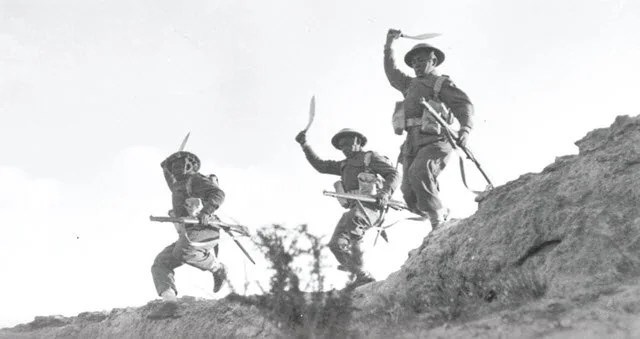
    From the 19th-century wars of colonial India to modern conflicts in the Middle East, the Gurkhas have built a reputation that few armies in the world can match. They are known for being tough, fearless, disciplined — and forever loyal. Their signature weapon, the kukri knife, became a symbol of their ferocity.

    But how did mountain tribesmen from Nepal become one of the most respected infantry forces on Earth? This article traces their journey: how they were discovered, tested, refined, and revered. Their story is a testament to the power of tradition, hardship, and unwavering honor.


    1. From Kingdom to Kiel — How the Gurkhas Entered Global History

    1.1 The Kingdom of Gorkha and the Anglo-Nepalese War (1814–1816)

    Before the name “Gurkha” became famous on battlefields around the world, it belonged to a kingdom — the Kingdom of Gorkha in Nepal. Those who fought for the Gorkha kings were fierce mountain warriors, trained to fight for survival among the peaks.

    When the British East India Company invaded Nepal in 1814, the war was tough. The British expected easy victory. But the Gorkha soldiers fought back with unmatched courage and resilience — even if they lacked modern weapons.

    By the end, neither side had total victory. But the British were impressed. Instead of crushing the Gorkhas, they offered them a deal: Join the Company’s army. That was the birth of what would become the famed Gurkha regiments. army.mod.uk+2nam.ac.uk+2

    1.2 Joining a Global Army

    After the peace treaty of 1816, Gurkhas began volunteering for British service. Over decades, they proved themselves in campaigns across India and beyond. Their reputation spread. Their value became obvious: strong men, fearless, loyal, and adaptable to any terrain.

    By the mid-1800s, the Gurkhas had earned their place in the expanding British Indian Army. nam.ac.uk+1


    2. What Makes a Gurkha: Culture, Training and the Kukri Legacy

    2.1 The People and Their Roots

    The Gurkhas are not a single tribe — they come from many ethnic groups across Nepal: Gurung, Magar, Rai, Limbu, Khas, and others. Encyclopedia Britannica+1

    Life in the Nepal hills is harsh. The terrain, the weather, the lifestyle — all forged a people used to hardship, accustomed to self-reliance, and comfortable with danger. Those traits translated naturally into battlefield strength.

    2.2 The Kukri — A Knife and a Symbol

    Perhaps the most iconic element of the Gurkha soldier is the kukri — a curved knife roughly 18 inches long. In the hands of a Gurkha, the kukri is not only a weapon — it is a symbol of heritage, courage, and deadly efficiency. India Today+1

    Stories and folklore speak of the kukri’s power and the resolve of its bearer. This legacy helped cement the Gurkha’s fearsome reputation.

    2.3 Rigorous Selection & Training

    Even today, joining the modern Gurkha regiments is not easy. Selection involves rigorous physical tests and mental resilience. Many thousands apply; only a tiny fraction are accepted. This selectivity ensures that only the most capable — physically strong, mentally tough, loyal — become Gurkhas. The Independent+1

    The training builds on their heritage — mountain survival, jungle warfare, close-quarters fighting, endurance, discipline.


    3. Gurkhas in Global Wars: When Their Reputation Was Forged in Fire

    3.1 The Indian Rebellion of 1857 — Loyalty Under Pressure

    During the 1857 rebellion in India, many Bengal Army units mutinied. In contrast, the Gurkha regiments remained steadfastly loyal to the British. That loyalty cemented their place as elite, reliable soldiers in the eyes of commanders. army.mod.uk+1

    From that point on, Gurkhas were trusted for dangerous and vital missions — their loyalty made them a stabilizing force under uncertain conditions.

    3.2 The First World War — Gurkhas Go Global

    During World War I (1914–1918), more than 200,000 Gurkhas served under the British Empire. They fought in many theaters:

    • Western Front (France/Belgium)
    • Middle East (Mesopotamia, Palestine)
    • Gallipoli against the Ottomans
    • Persia, Suez, and more Wikipedia+1

    They earned gallantry awards, suffered heavy casualties, and proved their mettle under the worst conditions. Their reputation as fearless infantry spread worldwide.

    3.3 World War II & Beyond — From Deserts to Jungles

    In WWII, over 110,000 Gurkhas fought in many regions:

    • North Africa deserts
    • Italy and Europe
    • Greece
    • Burma jungles
    • Malaya and Southeast Asia nam.ac.uk+1

    They adapted to varied terrains — from snow-capped mountains to sweltering jungles — and used their kukris and infantry skills to strike swiftly and boldly. Tens of thousands were wounded or killed, yet many more emerged as legends.

    After Indian independence in 1947, a tripartite agreement among Britain, India, and Nepal determined the future of Gurkha regiments: some joined the British Army, others joined the Indian Army. The Indian Express+1

    Since then, Gurkhas served in many post-colonial conflicts: Malaysia (Malayan Emergency), Borneo conflict, Cyprus, Falklands, peacekeeping missions, and modern deployments in Iraq and Afghanistan. nam.ac.uk+1


    4. Why Gurkhas Became the World’s Fiercest Infantry

    What combined to make the Gurkha reputation legendary? Several factors:

    4.1 Physical & Mental Resilience

    They come from a harsh climate and steep terrain. They endure altitude, cold, hard work, and hardship. Those who pass recruitment are tough, disciplined, and used to hardship — a breed of soldier not easily broken.

    4.2 Versatility Across Terrains

    Gurkhas proved themselves in deserts, jungles, mountains, plains, and cities. Their adaptability made them ideal for colonial wars, global conflicts, and modern asymmetric warfare.

    4.3 Loyalty & Discipline

    From the 1857 mutiny to WWII to modern deployments — Gurkha regiments remained professional and loyal. That reliability built trust among allied commanders and made them go-to troops for difficult tasks. army.mod.uk+1

    4.4 Fear Factor & Psychological Edge

    The kukri, their history, their reputation — all contributed to a psychological edge. Enemy soldiers feared Gurkhas; that fear often translated to tactical advantage.

    4.5 Global Legacy of Courage

    Over centuries, Gurkhas earned respect worldwide. Their story inspires new recruits and commands respect even beyond the battlefield — giving them moral power beyond arms.


    5. The Modern Gurkha: Service, Identity, and Legacy

    5.1 Structure Today: Indian and British Gurkhas

    Post-1947, Gurkhas split:

    • Several regiments went to India (as part of the Indian Army)
    • Some went to the United Kingdom under the Brigade of Gurkhas The Indian Express+1

    Today, Gurkhas continue to serve in global peacekeeping, jungle warfare, mountain operations, anti-insurgency, and special forces roles. They’ve adapted to modern weapons, tactics, and missions — but kept their core traditions alive.

    5.2 Cultural Identity & Discipline

    Even today, many recruits come from Nepalese villages. The sense of honor, humility, loyalty, and courage remains central. The kukri stays a symbol — sometimes ceremonial, sometimes deadly.

    This preservation of tradition builds cohesion and morale, even in the most modern military environment.

    5.3 Challenges and Recognition

    Gurkhas often face challenges: language barriers, cultural differences, homesickness, and the burden of legacy. But they also enjoy respect, honor, and a unique place in global military history — a legacy few can match.


    6. Lessons from the Gurkhas: Why Their Story Resonates Today

    6.1 When Character Matters More Than Firepower

    The Gurkhas prove that heart, discipline, and courage can match or even overcome technological advantages. In asymmetrical warfare and modern conflicts, human factors remain decisive.

    6.2 Cultural Diversity in Global Forces

    Recruiting from remote regions and integrating tribal or ethnic soldiers into global armies can succeed — if their identity is respected and valor is noted. The Gurkha model is proof of that.

    6.3 Adaptability Is Key

    From muskets and kukris to modern rifles and global deployments — Gurkhas adapted. Flexibility and willingness to learn and change kept them relevant across centuries.

    6.4 Reputation as a Force Multiplier

    A reputation built over generations creates fear, respect, and psychological advantage. Gurkhas gained strength not just by weapons — but by legend.


    Conclusion: The Mountain Breed That Conquered the World’s Battlefields

    The story of the Gurkhas is not just about war. It is about human spirit forged in hardship, tradition preserved across time, loyalty, honor, and dignity under fire.

    From the snowy passes of Nepal to jungles, deserts, and modern combat zones — Gurkhas have proven that a soldier’s strength is not measured only by weaponry, but by courage, discipline, and character.

    They remain, even today, among the most respected infantry in the world. Their history is a testament to what humanity can achieve when grit meets honor.

    If you want to understand courage, history, and loyalty — study the Gurkhas.

    Citations

    • “Gurkha History.” The British Army — Brigade of Gurkhas. 2025. army.mod.uk+1
    • “Gurkha.” Encyclopaedia Britannica (entry on Gurkha people and history). 2025. Encyclopedia Britannica+1
    • “The Gurkhas.” National Army Museum, UK. 2025. nam.ac.uk
    • “Those Who Served: Gurkhas in the World Wars.” British Indian Army Records. (Overview from historical records.) Wikipedia+1
    • “Post-1947: Gurkhas after Partition.” The Independent (analysis of Gurkha regiments after British India split). The Indian Express+1
  • The Winter War: How Tiny Finland Stopped a Soviet Invasion

    The Winter War: How Tiny Finland Stopped a Soviet Invasion

    The Incredible Story of How a Small Nation Fought a Giant and Refused to Break


    Introduction: When a Giant Knocked on the Door

    In late 1939, Europe was already on fire. World War II had begun, and powerful nations were fighting for land, resources, and control. But far to the north, another story was unfolding—one that shocked the world and became a symbol of courage.

    On November 30, 1939, the Soviet Union, one of the largest military powers on Earth, invaded Finland, a small country with limited weapons and only a few million people. On paper, the war should have lasted a week. The Soviets had:

    • More than 20 times Finland’s soldiers
    • Thousands of tanks
    • Massive artillery
    • A huge air force
    • Unlimited supplies

    Finland had:

    • A tiny army
    • Almost no tanks
    • Old rifles
    • A few dozen planes
    • And winter gear sewn by hand

    Yet somehow, Finland survived. For 105 days—through darkness, blizzards, starvation, and nonstop attacks—Finland fought back with skill, creativity, and sheer determination.

    This fight became known as The Winter War, and it remains one of history’s most surprising military stories.


    I. Why the Soviet Union Invaded Finland

    Stalin’s Plan for Security

    Before the war begun, Soviet leader Joseph Stalin believed Finland posed a threat to Leningrad (today’s St. Petersburg). The Soviet border was only 32 km from the city. Stalin demanded that Finland:

    • Move its border west
    • Lease ports to the USSR
    • Hand over key islands
    • Allow Soviet bases in Finland

    Finland refused.

    The Soviets claimed they felt unsafe. Finland felt bullied. Diplomacy failed, and Stalin made a decision:
    He would take Finland by force.

    The Soviet Military Expected an Easy Victory

    The Soviet High Command believed:

    • Finland would collapse quickly
    • The Finnish people would not resist
    • The war would end before winter got harsh

    They were wrong on every point.


    II. Finland’s First Defense: The Mannerheim Line

    A Line of Forts—But Not Enough

    Finland’s main defensive barrier was the Mannerheim Line, built across the Karelian Isthmus. But it wasn’t a real “wall.” It was:

    • Bunkers
    • Trenches
    • Forest obstacles
    • Concrete positions

    Finland had so little money that some “forts” were just logs covered in dirt.

    Still, the terrain helped. The area was:

    • Dense forest
    • Deep snow
    • Cold beyond imagining
    • Filled with lakes and swamps

    The Soviets had never planned to fight here in winter.

    The First Attacks Fail

    When the Soviets charged the Mannerheim Line with tanks and infantry, they assumed Finland would crumble.

    Instead:

    • Finnish skis moved faster than Soviet vehicles
    • Finnish soldiers knew every hill and frozen lake
    • Soviet tanks got stuck in deep snow
    • Finnish snipers took out officers

    The Soviets were shocked:
    Finland was fighting like a cornered wolf.


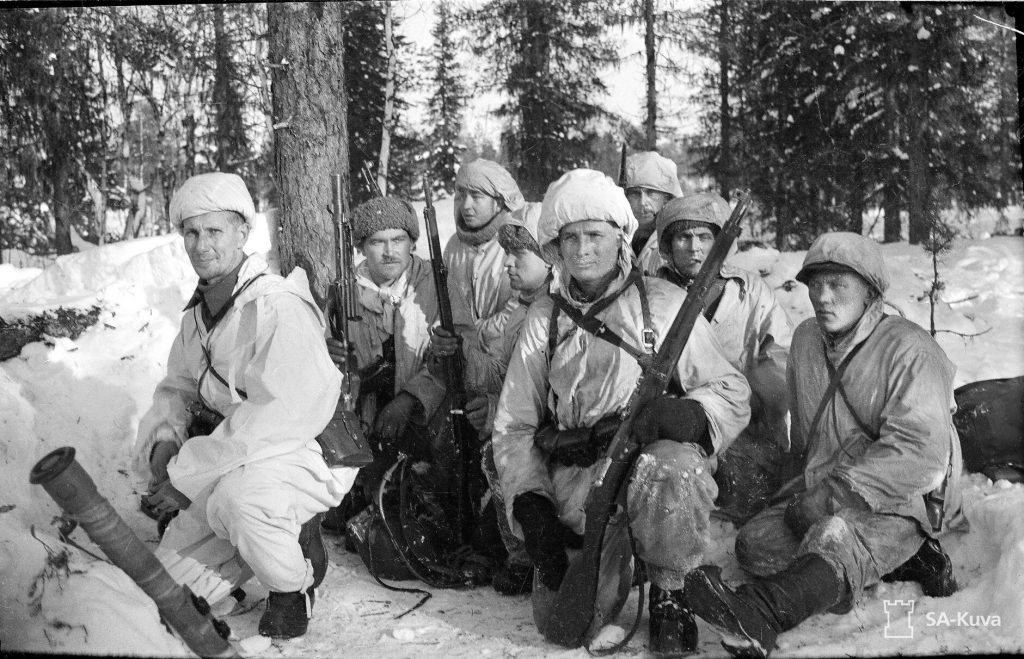
    III. The Fighters in White: Finland’s Winter Warriors

    Ski Soldiers of the North

    Finland’s troops were mostly farmers, hunters, and woodsmen. They grew up in snow. Many could ski faster than horses could run. The Finns used skis to:

    • Move silently
    • Surround Soviet units
    • Cut off supply lines
    • Launch surprise raids

    Soviet soldiers, wearing dark uniforms, sank into snow. Finnish troops, wearing white camouflage, vanished into the landscape.

    Molotov Cocktails: Finland’s Homemade Tank Killer

    Finland had almost no anti-tank weapons. So they invented a simple, deadly tool:

    • A glass bottle filled with gasoline
    • A burning rag as a wick
    • Thrown onto a tank’s engine

    They named it the Molotov Cocktail, mocking Soviet official Vyacheslav Molotov, who claimed the USSR was “dropping food supplies,” not bombs.

    Finns joked:

    “If Molotov gives us food, we will give him drinks in return.”

    Simo Häyhä: The White Death

    One man became a legend—the sniper Simo Häyhä. He operated alone, in temperatures below –30°C, using a basic rifle with no scope.

    He recorded over 500 confirmed kills, making him the most effective sniper in history.

    He never bragged. He simply said:

    “I did what had to be done.”

    His presence terrified Soviet units so much that they gave him a nickname:
    The White Death.


    IV. Soviet Mistakes: When the Giant Slipped

    Poor Planning and Harsh Weather

    The Soviets were not prepared for Arctic war. Their soldiers wore thin coats. Their trucks froze. Engines shut down. And their officers made critical mistakes:

    • No understanding of terrain
    • Tanks used in deep forests
    • Long supply lines
    • Soldiers marched in huge, easy-to-target columns

    The Soviets had numbers. But Finland had the environment on its side.

    The Raate Road Disaster

    One of the worst defeats for the Soviet Army came on the Raate Road. A massive Soviet column became trapped on a narrow, snowy forest road.

    Finnish forces executed the motti tactic—cutting the enemy into small pockets and destroying them one by one.

    Thousands of Soviet soldiers froze, starved, or were captured. Entire divisions were wiped out.


    V. The International Reaction: A Small Country Inspires the World

    People Admired Finland’s Courage

    Newspapers worldwide reported Finland’s bravery:

    • “The tiny nation that refuses to fall.”
    • “The Davids fighting a Soviet Goliath.”

    Countries couldn’t send full armies, but volunteers came from:

    • Sweden
    • Denmark
    • Norway
    • Hungary
    • Even the United States

    Finland became a symbol of resistance.

    The Soviet Union’s Embarrassment

    Stalin expected a fast victory. Instead, the world mocked the USSR’s failures. Soviet generals were shocked at how badly their troops performed.

    This humiliation pushed Stalin to escalate the war.


    VI. The Final Phase: When Numbers Overwhelmed Courage

    Soviets Return With Massive Force

    By February 1940, the Soviets launched a second, much larger offensive:

    • New commanders
    • Better tactics
    • More artillery
    • More tanks
    • More troops

    They adjusted to Finnish defenses, used night attacks, and brought overwhelming firepower.

    Finland Could Not Fight Forever

    The Finnish army was brave but exhausted:

    • Ammunition running low
    • Food shortages
    • Worn-out rifles
    • No replacements
    • Constant cold injuries

    Eventually, the Mannerheim Line began to crumble.


    VII. The Peace: Victory Through Survival

    Finland Signs the Moscow Peace Treaty

    On March 13, 1940, after 105 brutal days, Finland accepted peace terms. They had to give up:

    • 11% of their territory
    • Parts of Karelia
    • Islands in the Gulf of Finland
    • Key access to the Arctic

    Over 400,000 Finns became refugees.

    But Finland Remained Independent

    The most important fact:

    Finland did not fall.
    Finland did not become Soviet territory.

    They kept their government, their military, and their freedom.

    In a war where they were outnumbered 20 to 1, simply surviving was a victory.


    VIII. What Made Finland’s Defense So Impactful?

    1. Tactical Innovation

    Finland used:

    • Ski warfare
    • Motti tactics
    • Ambushes
    • Camouflage
    • Night raids

    They turned their weakness into new forms of warfare.

    2. Morale and Unity

    Finland fought as one nation. Rich or poor, city or village—everyone contributed.

    3. Terrain Advantage

    The Finns knew the land intimately. The Soviets did not.

    4. Soviet Failures

    Stalin’s purges removed many top officers. Logistics were poor. Strategies were outdated.

    5. Weather

    Temperatures fell to –40°C. The Finns survived. The Soviets did not.


    Conclusion: How Finland Turned a Lost Cause Into a Legend

    The Winter War was short but unforgettable. It showed that:

    • Courage can outmatch numbers
    • Good tactics can beat big armies
    • A united nation can survive anything
    • Even a giant can bleed

    Finland lost land, but it kept its freedom. And its story inspired generations worldwide.

    The Winter War remains one of history’s greatest examples of how a small nation, fighting in impossible conditions, refused to surrender—and won dignity, respect, and a place in military legend.

    Citations

    1. Trotter, William R. A Frozen Hell: The Russo-Finnish Winter War of 1939–1940. Algonquin Books, 1991.
    2. Engle, Eloise & Paananen, Lauri. The Winter War: The Soviet Attack on Finland 1939–1940. Stackpole Books, 1973.
    3. Vehviläinen, Olli. Finland in the Second World War: Between Germany and Russia. Palgrave Macmillan, 2002.
    4. Upton, Anthony F. Finland in Crisis 1940–1941. University of Minnesota Press, 1964.
    5. Lunde, Henrik O. Finland’s War of Choice: The Troubled German-Finnish Alliance in World War II. Casemate Publishers, 2011.
  • The War of the Currents: How Edison and Tesla Fought the First Tech War

    The War of the Currents: How Edison and Tesla Fought the First Tech War

    The Shocking Battle That Decided How the Modern World Uses Electricity


    Introduction: The World Before Wires

    Today, electricity is everywhere. We flip a switch and lights appear. We plug in our phones, laptops, and TVs without thinking. But in the late 1800s, electricity was new, rare, and dangerous. Only a few cities even had electric lights, and most people still used gas lamps or candles.

    Before the modern world could be born, humanity needed a safe, powerful, and affordable way to deliver electricity to everyone. And that is where the first great tech war began—a fight between two brilliant men with two very different visions:

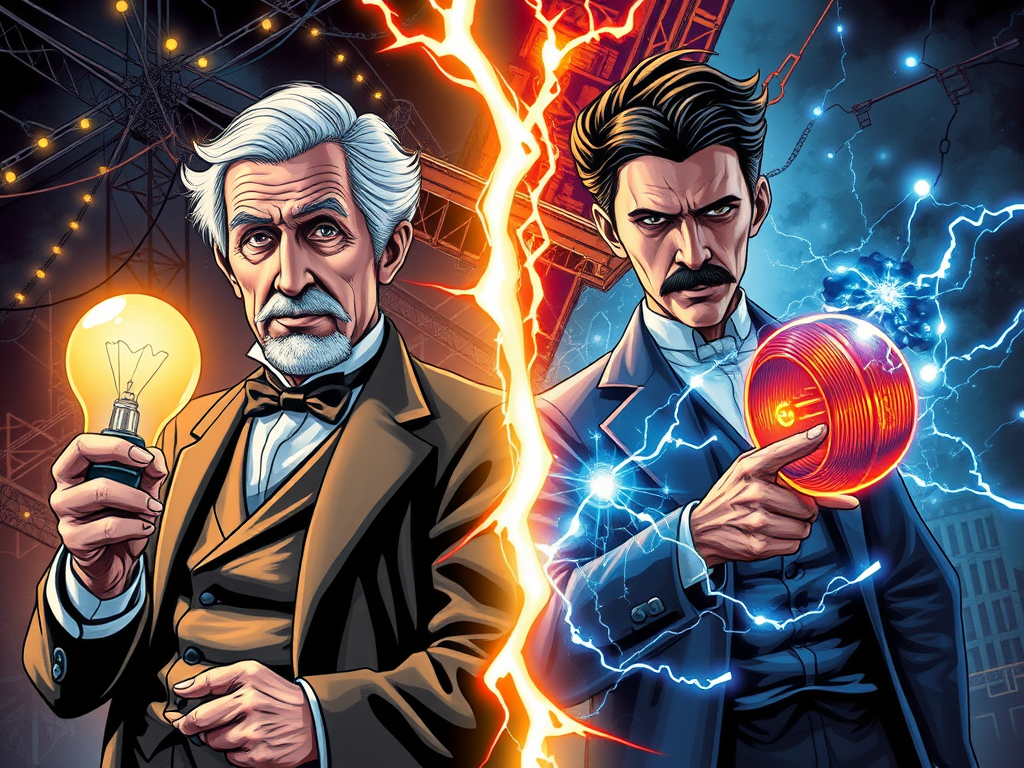
    • Thomas Edison, the inventor of the light bulb, who believed in direct current (DC)
    • Nikola Tesla, a genius immigrant inventor, who championed alternating current (AC)

    Their conflict became known as The War of the Currents. It involved science, business, politics, public fear, and even a bit of showmanship. It shaped the power grid we still use today.

    This is the story of how two men fought to control the future—and how one idea eventually powered the world.


    I. The Rise of Thomas Edison: America’s First Tech Superstar

    Edison’s DC Vision

    In the 1870s and 1880s, Thomas Edison was America’s most famous inventor. He created:

    • The light bulb
    • The phonograph
    • Early motion picture devices
    • The first power company

    Edison dreamed of electrifying entire cities. But he believed the safest way to deliver electricity was direct current (DC), which traveled in one direction and had a steady flow.

    It worked—but only over very short distances.

    DC power plants could serve only a few square blocks. That meant dozens or even hundreds of small power stations would be needed in every city. Edison believed this was the future, and he invested everything into DC power systems.

    Edison Builds an Empire

    By the early 1880s:

    • Edison opened the first commercial power station in New York
    • He powered homes, businesses, and streetlights
    • His company became the face of modern electricity

    To many Americans, Edison was electricity.

    But he wasn’t the only one with big ideas.


    II. Enter Nikola Tesla: The Outsider Who Saw a Different Future

    Tesla’s Early Life and Genius

    Nikola Tesla came from what is now Croatia. From a young age, he had a gift for visualizing inventions entirely in his mind. He could design machines without sketches, memorizing every gear and every bolt.

    Tesla moved to the United States in 1884 with one goal: work for Thomas Edison.

    He hoped to improve Edison’s electrical systems. But the two men were opposites:

    EdisonTesla
    PracticalTheoretical
    Trial-and-errorMathematical precision
    Business-drivenIdea-driven
    Preferred DCInvented AC

    Edison wanted results fast. Tesla wanted perfection.

    Their partnership didn’t last long.

    Tesla Builds His AC System

    Tesla believed that alternating current (AC) was the key to electrifying the world. AC power flowed back and forth, which meant:

    • It could travel hundreds of miles
    • It could power entire cities from one plant
    • It was cheaper to build
    • It could be converted to higher or lower voltages easily

    This made AC far more efficient than DC.

    But Edison refused to accept AC. He claimed it was too dangerous. Their disagreement created a rivalry that would soon explode across America.


    III. The War Begins: Edison vs. Tesla

    Edison Launches a Fear Campaign

    Edison saw AC as a threat to his business empire. So he began a public crusade to convince people that AC was deadly.

    His team:

    • Gave public demonstrations shocking animals with AC
    • Released pamphlets warning cities about “AC accidents”
    • Lobbied politicians to ban AC lines
    • Supported the electric chair as a way to label AC as “lethal power”

    Edison hoped to paint AC as a hazard that could kill anyone who touched it.

    The newspapers called it:

    “The Electrical Execution War.”
    (Source: Seifer, Wizard: The Life and Times of Nikola Tesla)

    Tesla Finds a Powerful Ally: George Westinghouse

    George Westinghouse, an inventor and businessman, saw the future in AC. He partnered with Tesla, buying Tesla’s patents and giving him a lab to continue his work.

    Together, Tesla and Westinghouse formed a team that could challenge Edison’s entire empire.

    This turned the fight into a full corporate war:

    • Edison Electric (DC)
    • Westinghouse Electric (AC)

    The future of electricity—and billions of dollars—were at stake.


    IV. The Turning Point: Lighting the World’s Fair

    The Battle for Chicago, 1893

    The biggest fight of the War of the Currents happened at the World’s Columbian Exposition in Chicago. The fair needed electricity to power thousands of lights, machines, and exhibits.

    Two companies bid:

    • Edison Electric (DC)
    • Westinghouse/Tesla (AC)

    Edison’s bid was nearly twice as expensive.

    Westinghouse won the contract.

    Tesla Lights Up the Night

    When the fair opened, more than 200,000 light bulbs powered by Tesla’s AC system lit up the night sky.

    People gasped. Many had never seen electric lights before—let alone an entire city block glowing white.

    This moment changed everything.

    Newspapers wrote:

    “The future belongs to alternating current.”
    (Source: Jonnes, Empires of Light)

    Edison had lost the first major battle.


    V. The Final Blow: Harnessing Niagara Falls

    A Power Source Like No Other

    Niagara Falls was the greatest source of natural energy in North America. Whoever could harness it would control the future of electricity.

    Two proposals came in:

    • Edison’s DC system
    • Tesla’s AC system

    In 1895, the decision was made:
    Tesla’s AC would power the project.

    Tesla’s System Powers a Region

    By 1896, AC power from Niagara Falls reached Buffalo, New York—20 miles away. It was the longest and most powerful electrical transmission ever built at the time.

    Soon:

    • Factories switched to AC
    • Cities expanded electric grids
    • The telephone, streetcars, and appliances spread everywhere

    DC faded from the world stage.

    Tesla’s vision had won.


    VI. The Aftermath: How the Tech War Shaped the Modern World

    Edison Was Forced to Change

    After losing the War of the Currents, Edison’s company eventually became part of General Electric, which quietly adopted AC technology. Edison himself stepped back from the electric industry and focused on other inventions.

    Tesla Became the Father of Modern Power

    AC power became the global standard, used in:

    • Homes
    • Skyscrapers
    • Cities
    • Factories
    • Power grids

    Today, about 95% of the world uses Tesla’s AC systems. (Source: Carlson, Tesla: Inventor of the Electrical Age)

    The First Modern Tech Rivalry

    The War of the Currents taught the world:

    • Innovation is not enough—business strategy matters
    • Public fear can shape technology
    • The best idea doesn’t always win quickly
    • Technology wars shape generations

    It was the “Silicon Valley battle” of its time—long before computers, smartphones, or social media.


    VII. The Human Side: Two Geniuses, One Dream

    Edison: The Builder

    Edison was a tireless worker and a brilliant businessman. His factories produced inventions that changed daily life. Even though he fought AC, his contributions to electricity were still vital.

    Tesla: The Visionary

    Tesla was imaginative, idealistic, and ahead of his time. He dreamed of:

    • Wireless global power
    • Renewable energy
    • Unlimited free electricity

    Some of his ideas were too advanced for the era, but many came true decades later.

    They Both Changed the World

    Even though they clashed, both men helped create the foundation for modern technology. Their rivalry pushed innovations faster and farther than either could have done alone.


    Conclusion: The Tech War That Powered the Future

    The War of the Currents was more than a fight between inventors. It was a battle over how humanity would use energy for the next 100 years—and beyond.

    In the end:

    • Tesla’s AC powered the world
    • Edison’s systems became the roots of modern technology
    • Westinghouse’s investments helped build the power grid

    The war proved that innovation takes courage, risk, and sometimes a bit of rivalry.

    And today, every time we flip a switch, we are living in the world Tesla imagined—and Edison helped bring to life.


    Citations

    Carlson, W. Bernard. Tesla: Inventor of the Electrical Age. Princeton University Press, 2013.

    Seifer, Marc J. Wizard: The Life and Times of Nikola Tesla. Citadel Press, 1996.

    Jonnes, Jill. Empires of Light: Edison, Tesla, Westinghouse, and the Race to Electrify the World. Random House, 2003.

  • The Monuments Men: The True Story of the Soldiers Who Rescued the World’s Art

    The Monuments Men: The True Story of the Soldiers Who Rescued the World’s Art

    How a Small Group of Allied Heroes Saved Thousands of Years of Human Culture


    Introduction: The Race to Save Civilization’s Treasures

    World War II was the deadliest conflict in human history. It destroyed cities, nations, and millions of lives. But while armies fought on the front lines, another battle was happening in the shadows—a race to save the world’s greatest art from total destruction.

    This mission fell to an unlikely group: museum curators, architects, artists, and scholars who became soldiers. They were officially called the Monuments, Fine Arts, and Archives Section (MFAA). But history remembers them by a simpler, more heroic name:

    The Monuments Men.

    Their mission was clear but nearly impossible:

    • Save Europe’s art and historic buildings
    • Track down priceless treasures stolen by the Nazis
    • Stop the destruction of cultural heritage
    • Preserve the identity of entire civilizations

    Against bombs, collapsing museums, fleeing armies, and strategic chaos, they protected more than five million pieces of art and cultural property.

    This is their story—how a small team protected the world’s culture during humanity’s darkest era.


    I. Why Hitler Wanted Europe’s Art

    To understand why the Monuments Men were needed, we first have to understand what the Nazis were trying to do.

    Hitler’s Vision of a “Museum Empire”

    Adolf Hitler saw himself not only as a political leader but as a failed artist who once dreamed of attending art school. When he gained power, he used the war to carry out a massive plan:

    • Steal Europe’s greatest artworks
    • Destroy anything he considered “degenerate”
    • Build the Führermuseum, a giant museum in Austria filled with stolen masterpieces

    The Nazis built special task forces to steal paintings, statues, books, and religious treasures from:

    • Jewish families
    • Museums
    • Churches
    • Palaces
    • Universities

    Hitler’s orders were simple:

    “Take everything valuable. Leave nothing behind.”
    (Source: Petropoulos, Art as Politics in the Third Reich)

    By 1943, Nazi officers had taken more art than any empire in history.


    The Risk: Europe Might Lose Its Culture Forever

    The Nazis hid their stolen treasures in:

    • Underground mines
    • Secret bunkers
    • Castles
    • Abandoned churches
    • Salt caverns

    Some were booby-trapped. Some were hidden so well that even Nazi officers lost track of them. If the war destroyed these hiding places, thousands of years of human creativity would vanish.

    This is why the Monuments Men were created.


    II. Who Were the Monuments Men?

    Not Typical Soldiers

    The Monuments Men were:

    • Art historians
    • Sculptors
    • Painters
    • Photographers
    • Professors
    • Museum directors
    • Architects

    Most were middle-aged and not trained for combat. Some had never carried a gun. Their tools were flashlights, pencils, notebooks—and a deep love for human history.

    Their Job Was Huge

    The Monuments Men had to:

    • Inspect bombed cities
    • Identify endangered monuments
    • Advise generals on which buildings not to bomb
    • Locate stolen artworks
    • Protect museums
    • Recover treasure from collapsing front lines

    At their peak, there were fewer than 350 of them, spread across all of Europe. (Source: Edsel, The Monuments Men)


    III. The Daring Missions That Defined the Monuments Men

    Mission 1: Saving the Churches and Monuments of Italy

    As Allied forces fought through Italy, cities like Florence and Rome were covered in ancient art. The Monuments Men worked day and night to:

    • Mark protected buildings
    • Warn pilots
    • Move fragile statues out of danger

    In Florence, they helped protect the Ponte Vecchio, the only major bridge in the city not destroyed by retreating German forces. (Source: Nicholas, The Rape of Europa)

    Mission 2: Chasing Art Across Bombed France

    In France, the Nazis had looted thousands of artworks, including pieces from the Louvre Museum. The Monuments Men followed leads through small towns, destroyed rail stations, and abandoned chateaus.

    They found many collections packed in crates, mislabeled to hide their value.

    One of their most important findings was a cache containing:

    • Renoirs
    • Monets
    • Manets
    • Degas
    • Van Goghs

    All stolen from Jewish families forced to flee or sent to camps.

    Every recovered crate was a step toward justice.


    IV. The Hunt for the Hidden Mines

    The Salt Mines: Underground Cities of Stolen Art

    The Nazis stored much of their treasure underground. These salt mines were perfect:

    • Dry
    • Cool
    • Protected from bombing
    • Easy to guard

    Inside these mines, Monuments Men found:

    • The Ghent Altarpiece
    • Michelangelo’s Madonna of Bruges
    • German royal crown jewels
    • Thousands of paintings from across Europe

    Some rooms were stacked floor-to-ceiling with masterpieces wrapped in mattress padding or buried under coal.

    In total, the Monuments Men recovered more than 1,500 major caches of stolen art. (Source: Edsel, Saving Italy)

    One of the Most Dangerous Finds: The Altaussee Mine

    In the Austrian mine of Altaussee, the team found:

    • Over 6,500 paintings
    • Sculptures
    • Tapestries
    • Rare books
    • Furniture
    • Gold and silver items

    The mine was rigged with explosives. Nazi officers had been ordered to blow everything up rather than let the Allies take it.

    Local miners, who feared losing their cultural heritage, secretly removed the explosives. Their bravery saved thousands of years of history. (Source: Petropoulos, The Faustian Bargain)


    V. The Human Side of the Mission

    Returning Art to Families Destroyed by War

    After finding stolen pieces, the Monuments Men faced another challenge: returning them to their rightful owners.

    This was heartbreaking work.

    Many families who owned priceless paintings had been killed in the Holocaust. In those cases, the Monuments Men returned art to national museums, where it was kept for survivors who might one day claim it.

    Their work became a symbol of dignity and justice.

    They Worked Until the Last Day of the War—and After

    Even after Germany surrendered, the Monuments Men stayed for years to finish the job:

    • Tracking down records
    • Interviewing locals
    • Preserving ruins
    • Restoring damaged buildings
    • Cataloging millions of stolen items

    Some continued until 1951.

    The war ended, but the mission to protect culture never really stopped.


    VI. Their Legacy: Why the Monuments Men Still Matter Today

    The First Global Effort to Protect Culture in War

    Before World War II, armies ignored cultural sites. After seeing how close humanity came to losing its heritage, the world changed.

    Because of the Monuments Men, nations created new policies and organizations:

    • UNESCO
    • The Hague Convention
    • International rules for protecting historic sites
    • Museum standards for wartime protection

    Their legacy still saves art today in conflicts in Syria, Ukraine, Iraq, and beyond.

    A Reminder That Culture Is Worth Defending

    The Monuments Men showed that wars are not only fought with tanks and planes. They are fought for:

    • Identity
    • Memory
    • Belonging
    • The story of humanity

    They believed that saving a painting could be as important as saving a bridge—because art holds the meaning of a civilization.


    Conclusion: A Legacy of Courage, Art, and Humanity

    The Monuments Men were ordinary scholars who did extraordinary things. They had no special weapons, no large armies, and no guarantees of safety. Yet they saved more art than any group in history.

    Their work proved something powerful:

    When culture survives, humanity survives.

    The treasures they rescued continue to inspire millions. Museums still display pieces that would have vanished without their courage.

    They were quiet heroes—guardians of our shared human story.

    And their mission will be remembered as long as art exists.

    Citations

    1. Petropoulos, Jonathan. Art as Politics in the Third Reich. Harvard University Press, 1996.
    2. Edsel, Robert M. The Monuments Men: Allied Heroes, Nazi Thieves, and the Greatest Treasure Hunt in History. Center Street, 2009.
    3. Nicholas, Lynn H. The Rape of Europa: The Fate of Europe’s Treasures in the Third Reich and the Second World War. Knopf, 1994.
    4. Edsel, Robert M. Saving Italy: The Race to Rescue a Nation’s Treasures from the Nazis. W. W. Norton, 2013.
    5. Petropoulos, Jonathan. The Faustian Bargain: The Art World in Nazi Germany. Oxford University Press, 2000.