Introduction: Indonesia at the Crossroads of the Indo-Pacific
Indonesia is often overlooked in global military rankings. When analysts debate the balance of power in Asia, eyes tend to focus on China, India, Japan, and the United States. Yet Indonesia, the world’s largest archipelagic state, sits astride the most important maritime chokepoints on earth: the Strait of Malacca, Sunda Strait, and Lombok Strait.
Every year, trillions of dollars of trade — including much of China’s and Japan’s energy imports — flow through these waters. To control or secure them is to shape the future of the Indo-Pacific. Indonesia’s military, known as the Tentara Nasional Indonesia (TNI), may not yet match the great powers in raw strength, but its geography, modernization, and neutrality make it one of the most strategically significant forces of the 21st century.
This deep dive explores how Indonesia’s military is structured, where it is headed, and why its choices will influence the future of regional security.
1. The Structure of Indonesia’s Military
🔹 The Army (TNI-AD)
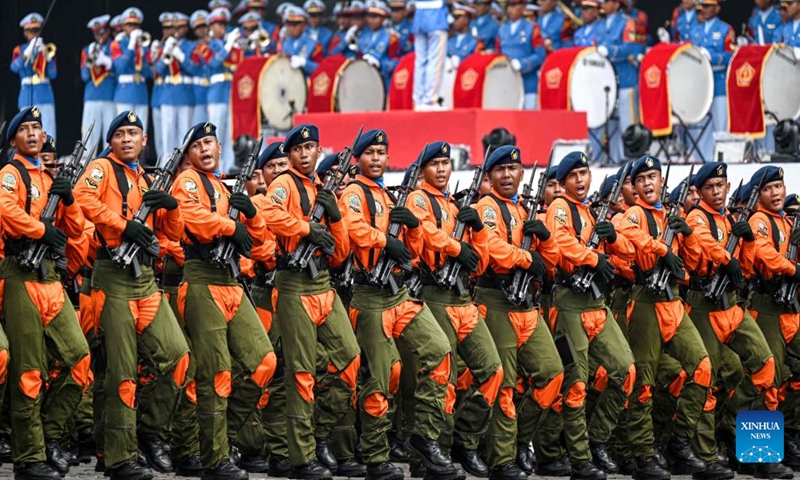
Indonesia’s army is the backbone of its military, with around 300,000 active personnel. Historically, it has played an outsized role in both politics and security, focusing on internal stability and counterinsurgency.
- Heavy Equipment: Leopard 2A4 main battle tanks, BMP-3F infantry fighting vehicles, and AH-64E Apache attack helicopters.
- Special Forces: Kopassus, Indonesia’s elite special operations unit, specializes in counter-terrorism and unconventional warfare. Though highly capable, it has a controversial history due to human rights abuses in East Timor and Papua.
The army’s priority remains guarding Indonesia’s vast and diverse islands, preventing separatism, and projecting presence across its huge archipelagic territory.
🔹 The Navy (TNI-AL)
With 74,000 personnel, Indonesia’s navy has ambitions to shift from a green-water force to a credible blue-water navy.
- Submarines: 4 South Korean-built Type 209/1400 submarines.
- Surface Fleet: 6 Dutch-designed Sigma-class corvettes, indigenous fast-attack craft, and Makassar-class landing platform docks (LPDs) that allow limited amphibious operations.
- Role: Securing sea lanes, countering illegal fishing, and reinforcing Indonesia’s sovereignty in the Natuna Islands, where its Exclusive Economic Zone (EEZ) overlaps with China’s Nine-Dash Line claims.
The navy is increasingly vital. With over 17,000 islands to defend, sea power is the key to deterrence and maritime domain control.
🔹 The Air Force (TNI-AU)
Indonesia’s air force has about 34,000 personnel and a mixed fleet that reflects its balancing strategy between great powers.
- Current Fighters: F-16C/D Block 52ID, Su-27SK, and Su-30MK2.
- Modernization: Orders have been placed for 42 Rafale fighters (France) and 24 F-15EX fighters (U.S.), which will significantly upgrade its capabilities.
- Future Tech: Investment in drones, UAVs, and long-range strike platforms.
The combination of Rafales and F-15EX will give Indonesia one of the most powerful air forces in Southeast Asia by the mid-2030s.
2. Defense Modernization and Ambitions
Indonesia spends around $13–15 billion annually on defense, about 0.7–0.8% of GDP. While relatively low compared to its size, there are plans to increase spending to 1.5% of GDP by 2035, nearly doubling its defense capacity.
🔸 The Minimum Essential Force (MEF)
The MEF is Indonesia’s three-phase modernization roadmap (2009–2025) designed to ensure the military reaches a “minimum credible deterrent.” Its goals:
- Interoperability between branches.
- Modernization of outdated Cold War-era platforms.
- Increased maritime defense.
🔸 Procurement Strategy
Unlike many countries that rely heavily on a single partner, Indonesia deliberately diversifies procurement:
- U.S.: F-15EX, Apache helicopters.
- France: Rafale jets, Scorpène submarines (negotiations ongoing).
- South Korea: Submarines and co-development of the KF-21 stealth fighter.
- Domestic Industry: PT PAL (shipbuilding), PTDI (aerospace), and Pindad (land systems).
This strategy prevents dependency but creates logistical complexity — maintaining parts and training across such a varied arsenal is a challenge.
3. Geostrategic Pressures
🔹 South China Sea Tensions
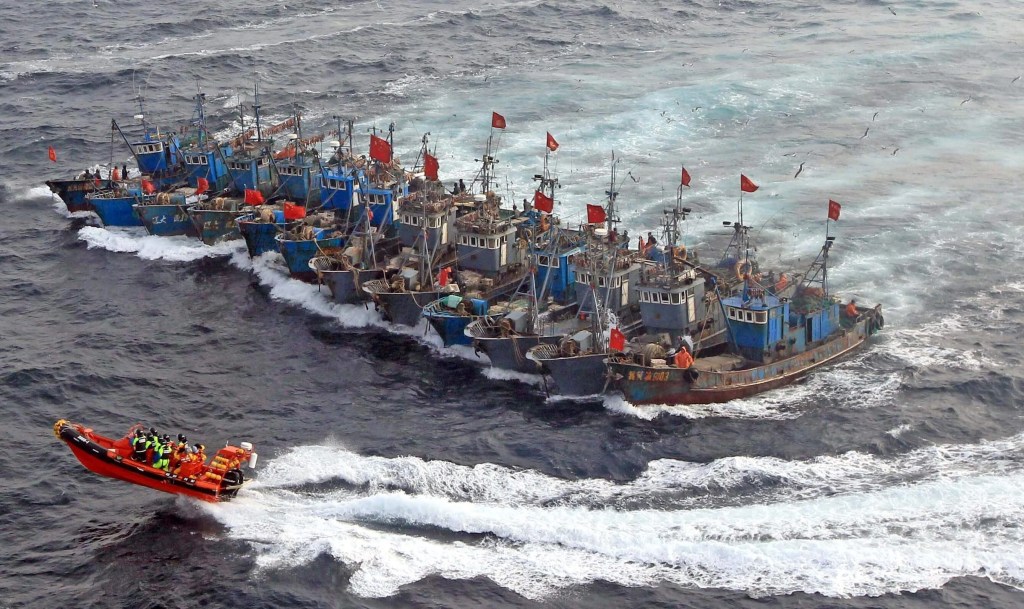
Indonesia officially rejects Beijing’s Nine-Dash Line, but clashes are frequent in the Natuna Islands. Chinese fishing fleets, backed by armed coast guards, often test Indonesian resolve. In response, Jakarta has expanded bases and deployed F-16s to Natuna.
🔹 Archipelagic Vulnerability
Indonesia’s geography is both a strength and a weakness. Defending 17,000 islands requires enormous logistical reach. Maritime domain awareness is limited, with insufficient radar and satellite coverage to track all illegal incursions.
🔹 Balancing Global Powers
Indonesia adheres to a “free and active” foreign policy — avoiding formal alliances while engaging multiple partners.
- With the U.S., it conducts joint training and buys advanced platforms.
- With China, it maintains economic ties but pushes back against maritime assertiveness.
- With Australia and Japan, it strengthens maritime cooperation and regional security coordination.
Jakarta’s neutrality makes it a swing state in the Indo-Pacific.
4. Grey-Zone and Unconventional Challenges
Beyond traditional threats, Indonesia faces grey-zone warfare and non-traditional security issues:
- Illegal Fishing: Foreign vessels cost Indonesia up to $4 billion annually. The navy’s dramatic tactic of blowing up seized vessels has become a symbol of resolve.
- Terrorism: Groups linked to Jemaah Islamiyah and ISIS remain a domestic threat, though weakened by counter-terror units like Densus 88 and Kopassus.
- Cyber Threats: As a digitally connected economy, Indonesia is investing in a Cyber Defense Command to protect infrastructure.
5. Indonesia in 2035 – The Silent Giant Rises
If modernization plans succeed, Indonesia in 2035 will look very different:
- Blue-Water Navy: Expansion to 12–14 submarines, indigenous frigates, and drone ships.
- Air Superiority: A powerful mix of Rafale and F-15EX, supported by drones and surveillance aircraft.
- Defense Industry Independence: Growing capacity in aerospace and naval shipbuilding will reduce reliance on foreign suppliers.
- Strategic Autonomy: Unlike Vietnam or the Philippines, Indonesia is unlikely to align firmly with either Washington or Beijing — giving it leverage as a balancing power.
6. Strategic Takeaways
- Indonesia’s military is not yet among the great powers, but its geography and modernization make it impossible to ignore.
- Its doctrine is evolving from internal defense to regional sea control and deterrence.
- In a conflict over the South China Sea, Indonesia could be a kingmaker, tilting the balance toward the U.S., China, or maintaining neutrality.
- By 2035, if modernization goals are realized, Indonesia could emerge as Southeast Asia’s dominant military power.
Conclusion: The Archipelagic Power to Watch
Indonesia’s military today is still a work in progress — underfunded, spread thin across vast geography, and reliant on a patchwork of imported systems. But tomorrow, it may become the guardian of Southeast Asia’s sea lanes, a neutral balancer between great powers, and a formidable force in its own right.
For strategists watching the Indo-Pacific, one lesson is clear: ignore Indonesia at your peril.





 Vellum Insights