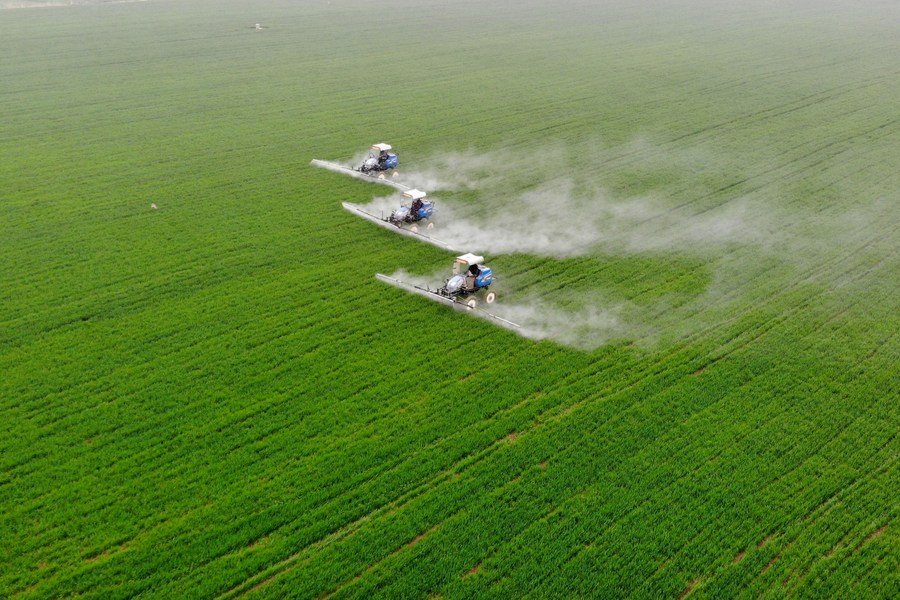
How Beijing Is Building Massive Reserves to Protect Itself From War, Blockades, and Global Crises
Introduction: Why China Is Stockpiling for the Future
In recent years, China has quietly begun building some of the largest strategic reserves in the world.
These reserves include massive stockpiles of:
- grain 🌾
- oil 🛢️
- natural gas
- coal
- key industrial minerals
The goal is simple: prepare for a future where global trade could be disrupted by war, sanctions, or economic crises.
China imports enormous amounts of food and energy. If global shipping routes were interrupted—especially in regions like the South China Sea or the Taiwan Strait—China’s economy could face serious pressure.
To reduce this risk, Beijing has spent years quietly building vast strategic reserves.
These stockpiles are now becoming a key part of China’s long-term geopolitical strategy.
Chapter 1: The Lesson of Vulnerability
China’s leadership understands a simple reality: the country depends heavily on imports.
China is the world’s largest importer of:
- oil
- soybeans
- many agricultural commodities
Large portions of these supplies travel through narrow maritime chokepoints such as the Strait of Malacca.
Chinese leaders often refer to this vulnerability as the “Malacca Dilemma.”
If a major conflict or blockade closed this route, China could face severe shortages of energy and food.
This concern has pushed Beijing to invest heavily in long-term supply security.
Chapter 2: The World’s Largest Grain Stockpile
One of China’s biggest strategic priorities is food security.
According to agricultural analysts, China now holds an enormous share of the world’s grain reserves.
Estimates suggest the country controls:
- more than half of global wheat reserves
- large shares of global rice and corn reserves
These reserves are stored in massive government-controlled facilities operated by China Grain Reserves Corporation, also known as Sinograin.
The purpose of these reserves is to stabilize domestic food prices and ensure supply during emergencies.
If global trade were disrupted, these stockpiles could help feed China’s population of over 1.4 billion people.
Chapter 3: China’s Strategic Petroleum Reserve
Food is only part of the equation.
Energy security is just as important.
China is the world’s largest importer of crude oil, consuming millions of barrels every day.
To prepare for potential disruptions, China has built a massive Strategic Petroleum Reserve, similar to that maintained by the U.S. Department of Energy in the United States.
These reserves are stored in huge underground tanks and coastal storage facilities.
Some estimates suggest China’s oil reserves could cover several months of national consumption during a crisis.
China has also expanded oil storage facilities near major ports and industrial hubs to increase emergency capacity.
Chapter 4: Diversifying Energy Supply
Stockpiling alone is not enough.
China has also worked to diversify how it obtains energy.
Instead of relying only on sea routes, China has built major pipelines across Asia.
Key projects include:
- the Power of Siberia pipeline transporting natural gas from Russia
- oil pipelines connecting Kazakhstan and Central Asia to Chinese refineries
These pipelines allow China to import energy without relying entirely on vulnerable maritime routes.
This strategy helps reduce the risks posed by naval blockades or maritime conflict.
Chapter 5: Strategic Stockpiles of Critical Minerals
In addition to food and oil, China has accumulated large reserves of critical minerals.
These materials are essential for modern industries such as:
- electronics
- electric vehicles
- renewable energy technology
China already dominates global production of rare earth elements, which are crucial for manufacturing advanced electronics and military equipment.
By controlling both production and reserves of these materials, China gains powerful leverage in global supply chains.
This could become particularly important during periods of geopolitical tension.
Chapter 6: Preparing for Economic Warfare
Modern conflicts are no longer fought only with armies and weapons.
Economic pressure—such as sanctions, trade restrictions, and supply disruptions—has become a major tool in global competition.
China has studied recent economic conflicts carefully, including sanctions placed on countries such as Russia.
These events have reinforced Beijing’s belief that economic resilience is a form of national defense.
Strategic stockpiles help protect China against:
- supply shocks
- trade disruptions
- financial sanctions
- wartime blockades
By maintaining large reserves, China hopes to ensure that its economy can continue functioning even during severe international crises.
Chapter 7: The Limits of Stockpiling
Despite these preparations, stockpiles are not a perfect solution.
Maintaining large reserves is extremely expensive.
Food reserves must be rotated regularly to prevent spoilage.
Oil storage facilities require constant maintenance.
And even large reserves may not last indefinitely during a prolonged crisis.
China’s growing population and industrial demand mean that energy and food consumption remain extremely high.
This makes long-term supply security an ongoing challenge.
Conclusion: Strategic Reserves in an Uncertain World
China’s massive stockpiles of food, oil, and critical materials reflect a broader shift in global geopolitics.
In a world where supply chains can be disrupted by conflict, sanctions, or economic rivalry, national security is no longer just about military power.
It is also about economic resilience.
By building strategic reserves and diversifying supply routes, China is preparing for a future where global trade may become less predictable.
These preparations may never be tested in a major crisis.
But if they are, China’s stockpiles could play a critical role in determining how well the country can withstand global shocks.
In today’s uncertain geopolitical environment, food silos and oil tanks can be just as important as missiles and warships.
Sources & Citations
- Food and Agriculture Organization – Global grain reserves and agricultural supply data.
- U.S. Energy Information Administration – Analysis of China’s oil imports and strategic petroleum reserves.
- International Energy Agency – Reports on global energy security and strategic stockpiles.
- Center for Strategic and International Studies – Research on China’s economic security strategy.
- World Bank – Global trade and commodity reserve data.

