From Himalayan Hills to Global Battlefields — The Legacy of Unmatched Valor
Introduction: Legends Born in the Mountains
High in the Himalayan foothills lives a group of men known for an extraordinary trait: courage. They come from rugged valleys, high passes, and villages carved in stone — places where survival demands strength, endurance, and fierce loyalty. These men are the Gurkhas, and for over 200 years, they have served as soldiers for empires and nations far from home.
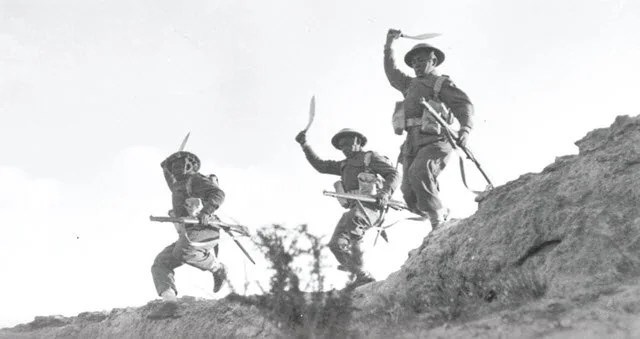
From the 19th-century wars of colonial India to modern conflicts in the Middle East, the Gurkhas have built a reputation that few armies in the world can match. They are known for being tough, fearless, disciplined — and forever loyal. Their signature weapon, the kukri knife, became a symbol of their ferocity.
But how did mountain tribesmen from Nepal become one of the most respected infantry forces on Earth? This article traces their journey: how they were discovered, tested, refined, and revered. Their story is a testament to the power of tradition, hardship, and unwavering honor.
1. From Kingdom to Kiel — How the Gurkhas Entered Global History
1.1 The Kingdom of Gorkha and the Anglo-Nepalese War (1814–1816)
Before the name “Gurkha” became famous on battlefields around the world, it belonged to a kingdom — the Kingdom of Gorkha in Nepal. Those who fought for the Gorkha kings were fierce mountain warriors, trained to fight for survival among the peaks.
When the British East India Company invaded Nepal in 1814, the war was tough. The British expected easy victory. But the Gorkha soldiers fought back with unmatched courage and resilience — even if they lacked modern weapons.
By the end, neither side had total victory. But the British were impressed. Instead of crushing the Gorkhas, they offered them a deal: Join the Company’s army. That was the birth of what would become the famed Gurkha regiments. army.mod.uk+2nam.ac.uk+2
1.2 Joining a Global Army
After the peace treaty of 1816, Gurkhas began volunteering for British service. Over decades, they proved themselves in campaigns across India and beyond. Their reputation spread. Their value became obvious: strong men, fearless, loyal, and adaptable to any terrain.
By the mid-1800s, the Gurkhas had earned their place in the expanding British Indian Army. nam.ac.uk+1
2. What Makes a Gurkha: Culture, Training and the Kukri Legacy
2.1 The People and Their Roots
The Gurkhas are not a single tribe — they come from many ethnic groups across Nepal: Gurung, Magar, Rai, Limbu, Khas, and others. Encyclopedia Britannica+1
Life in the Nepal hills is harsh. The terrain, the weather, the lifestyle — all forged a people used to hardship, accustomed to self-reliance, and comfortable with danger. Those traits translated naturally into battlefield strength.
2.2 The Kukri — A Knife and a Symbol
Perhaps the most iconic element of the Gurkha soldier is the kukri — a curved knife roughly 18 inches long. In the hands of a Gurkha, the kukri is not only a weapon — it is a symbol of heritage, courage, and deadly efficiency. India Today+1
Stories and folklore speak of the kukri’s power and the resolve of its bearer. This legacy helped cement the Gurkha’s fearsome reputation.
2.3 Rigorous Selection & Training
Even today, joining the modern Gurkha regiments is not easy. Selection involves rigorous physical tests and mental resilience. Many thousands apply; only a tiny fraction are accepted. This selectivity ensures that only the most capable — physically strong, mentally tough, loyal — become Gurkhas. The Independent+1
The training builds on their heritage — mountain survival, jungle warfare, close-quarters fighting, endurance, discipline.
3. Gurkhas in Global Wars: When Their Reputation Was Forged in Fire
3.1 The Indian Rebellion of 1857 — Loyalty Under Pressure
During the 1857 rebellion in India, many Bengal Army units mutinied. In contrast, the Gurkha regiments remained steadfastly loyal to the British. That loyalty cemented their place as elite, reliable soldiers in the eyes of commanders. army.mod.uk+1
From that point on, Gurkhas were trusted for dangerous and vital missions — their loyalty made them a stabilizing force under uncertain conditions.
3.2 The First World War — Gurkhas Go Global
During World War I (1914–1918), more than 200,000 Gurkhas served under the British Empire. They fought in many theaters:
- Western Front (France/Belgium)
- Middle East (Mesopotamia, Palestine)
- Gallipoli against the Ottomans
- Persia, Suez, and more Wikipedia+1
They earned gallantry awards, suffered heavy casualties, and proved their mettle under the worst conditions. Their reputation as fearless infantry spread worldwide.
3.3 World War II & Beyond — From Deserts to Jungles
In WWII, over 110,000 Gurkhas fought in many regions:
- North Africa deserts
- Italy and Europe
- Greece
- Burma jungles
- Malaya and Southeast Asia nam.ac.uk+1
They adapted to varied terrains — from snow-capped mountains to sweltering jungles — and used their kukris and infantry skills to strike swiftly and boldly. Tens of thousands were wounded or killed, yet many more emerged as legends.
After Indian independence in 1947, a tripartite agreement among Britain, India, and Nepal determined the future of Gurkha regiments: some joined the British Army, others joined the Indian Army. The Indian Express+1
Since then, Gurkhas served in many post-colonial conflicts: Malaysia (Malayan Emergency), Borneo conflict, Cyprus, Falklands, peacekeeping missions, and modern deployments in Iraq and Afghanistan. nam.ac.uk+1
4. Why Gurkhas Became the World’s Fiercest Infantry
What combined to make the Gurkha reputation legendary? Several factors:
4.1 Physical & Mental Resilience
They come from a harsh climate and steep terrain. They endure altitude, cold, hard work, and hardship. Those who pass recruitment are tough, disciplined, and used to hardship — a breed of soldier not easily broken.
4.2 Versatility Across Terrains
Gurkhas proved themselves in deserts, jungles, mountains, plains, and cities. Their adaptability made them ideal for colonial wars, global conflicts, and modern asymmetric warfare.
4.3 Loyalty & Discipline
From the 1857 mutiny to WWII to modern deployments — Gurkha regiments remained professional and loyal. That reliability built trust among allied commanders and made them go-to troops for difficult tasks. army.mod.uk+1
4.4 Fear Factor & Psychological Edge
The kukri, their history, their reputation — all contributed to a psychological edge. Enemy soldiers feared Gurkhas; that fear often translated to tactical advantage.
4.5 Global Legacy of Courage
Over centuries, Gurkhas earned respect worldwide. Their story inspires new recruits and commands respect even beyond the battlefield — giving them moral power beyond arms.
5. The Modern Gurkha: Service, Identity, and Legacy
5.1 Structure Today: Indian and British Gurkhas
Post-1947, Gurkhas split:
- Several regiments went to India (as part of the Indian Army)
- Some went to the United Kingdom under the Brigade of Gurkhas The Indian Express+1
Today, Gurkhas continue to serve in global peacekeeping, jungle warfare, mountain operations, anti-insurgency, and special forces roles. They’ve adapted to modern weapons, tactics, and missions — but kept their core traditions alive.
5.2 Cultural Identity & Discipline
Even today, many recruits come from Nepalese villages. The sense of honor, humility, loyalty, and courage remains central. The kukri stays a symbol — sometimes ceremonial, sometimes deadly.
This preservation of tradition builds cohesion and morale, even in the most modern military environment.
5.3 Challenges and Recognition
Gurkhas often face challenges: language barriers, cultural differences, homesickness, and the burden of legacy. But they also enjoy respect, honor, and a unique place in global military history — a legacy few can match.
6. Lessons from the Gurkhas: Why Their Story Resonates Today
6.1 When Character Matters More Than Firepower
The Gurkhas prove that heart, discipline, and courage can match or even overcome technological advantages. In asymmetrical warfare and modern conflicts, human factors remain decisive.
6.2 Cultural Diversity in Global Forces
Recruiting from remote regions and integrating tribal or ethnic soldiers into global armies can succeed — if their identity is respected and valor is noted. The Gurkha model is proof of that.
6.3 Adaptability Is Key
From muskets and kukris to modern rifles and global deployments — Gurkhas adapted. Flexibility and willingness to learn and change kept them relevant across centuries.
6.4 Reputation as a Force Multiplier
A reputation built over generations creates fear, respect, and psychological advantage. Gurkhas gained strength not just by weapons — but by legend.
Conclusion: The Mountain Breed That Conquered the World’s Battlefields
The story of the Gurkhas is not just about war. It is about human spirit forged in hardship, tradition preserved across time, loyalty, honor, and dignity under fire.
From the snowy passes of Nepal to jungles, deserts, and modern combat zones — Gurkhas have proven that a soldier’s strength is not measured only by weaponry, but by courage, discipline, and character.
They remain, even today, among the most respected infantry in the world. Their history is a testament to what humanity can achieve when grit meets honor.
If you want to understand courage, history, and loyalty — study the Gurkhas.
Citations
- “Gurkha History.” The British Army — Brigade of Gurkhas. 2025. army.mod.uk+1
- “Gurkha.” Encyclopaedia Britannica (entry on Gurkha people and history). 2025. Encyclopedia Britannica+1
- “The Gurkhas.” National Army Museum, UK. 2025. nam.ac.uk
- “Those Who Served: Gurkhas in the World Wars.” British Indian Army Records. (Overview from historical records.) Wikipedia+1
- “Post-1947: Gurkhas after Partition.” The Independent (analysis of Gurkha regiments after British India split). The Indian Express+1
 Vellum Insights