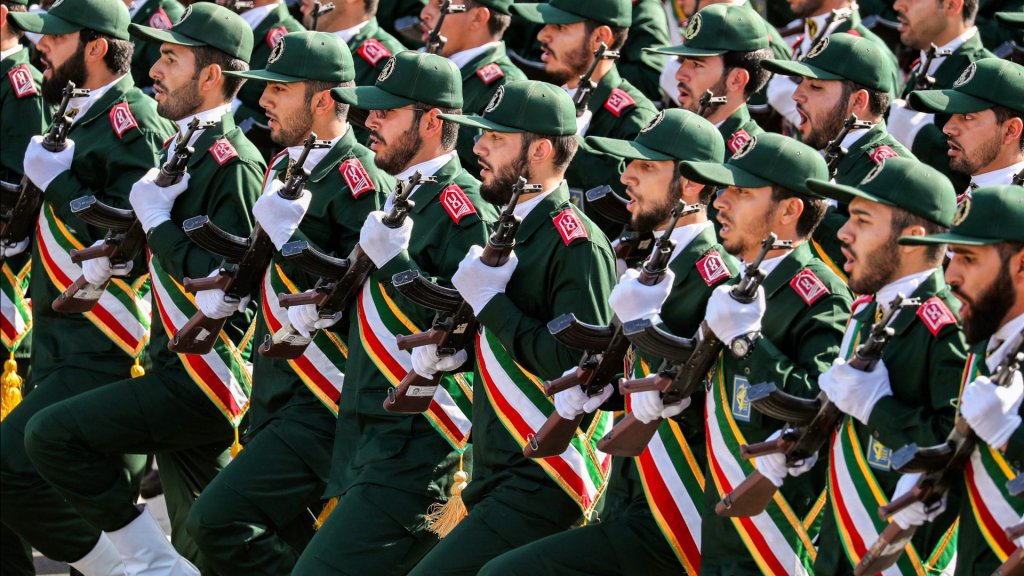
How a Secretive Military Unit Built One of the Most Powerful Proxy Networks in Modern Warfare
Introduction: The Invisible Army Behind Regional Conflicts
Across the Middle East, wars are often fought by groups that are not official armies.
Behind many of these forces stands one of the most secretive military organizations in the world: the Islamic Revolutionary Guard Corps Quds Force.
Often called Iran’s “shadow army,” this elite unit conducts covert operations, trains militias, and coordinates armed groups across the region.
Unlike conventional military forces, the Quds Force rarely fights large battles openly.
Instead, it works behind the scenes—building alliances with militias, supplying weapons, and shaping conflicts through proxy forces.
From Lebanon and Iraq to Syria and Yemen, the influence of the Quds Force has played a major role in shaping modern Middle Eastern geopolitics.
Understanding how this shadow army operates reveals how modern wars are increasingly fought through networks rather than traditional armies.
Chapter 1: The Birth of Iran’s Foreign Operations Unit
The Quds Force emerged shortly after the Iranian Revolution of 1979.
Following the revolution, Iran created a parallel military organization known as the Islamic Revolutionary Guard Corps (IRGC) to protect the new Islamic government.
Within the IRGC, the Quds Force was formed to handle operations outside Iran’s borders.
Its mission was unique:
- expand Iran’s influence abroad
- support allied movements
- challenge Western and Israeli influence in the region
- build alliances with militant groups
The name “Quds” itself means “Jerusalem,” reflecting Iran’s ideological goal of supporting movements opposed to Israel.
Over time, the Quds Force became Iran’s most important tool for conducting foreign military operations.
Chapter 2: The Structure of the Quds Force
Unlike a traditional army division, the Quds Force operates as a network of specialized units.
These units focus on different regions and missions across the world.
Typical responsibilities include:
- training foreign fighters
- transferring weapons to allied groups
- gathering intelligence
- conducting covert operations
- coordinating proxy forces
The organization is relatively small—estimated to have several thousand elite operatives—but its influence extends far beyond its size.
Rather than deploying large numbers of troops, the Quds Force acts as a coordinator and force multiplier for local militias.
Chapter 3: Qasem Soleimani — The Architect of Iran’s Proxy Strategy
For more than two decades, the Quds Force was led by Qasem Soleimani.
Under Soleimani’s leadership, the organization expanded dramatically.
He became one of the most influential military figures in the Middle East.
Soleimani’s strategy focused on building a network of allied militias across the region.
Instead of relying on Iranian soldiers, he supported local forces who shared Iran’s geopolitical goals.
These alliances eventually formed the backbone of the Axis of Resistance, linking groups across multiple countries.
Soleimani was killed in a U.S. drone strike near Baghdad International Airport in 2020, a moment that dramatically increased tensions between Iran and the United States.
After his death, leadership of the Quds Force passed to Esmail Qaani.
Chapter 4: The Quds Force Network of Militias
The Quds Force has built relationships with numerous militias across the Middle East.
These groups operate in different countries but are often connected through funding, training, and weapons supplied by Iran.
Some of the most prominent allies include:
Hezbollah (Lebanon)
One of the earliest and strongest partnerships is with Hezbollah in Lebanon.
The Quds Force helped organize Hezbollah during the 1982 Israeli invasion of Lebanon.
Today, Hezbollah is one of the most powerful non-state military groups in the world.
Iraqi Militias
Following the Iraq War in 2003, the Quds Force expanded its presence in Iraq.
It supported several Shiite militias that fought against both insurgent groups and coalition forces.
Many of these militias later became part of Iraq’s Popular Mobilization Forces.
Syrian Conflict
During the Syrian Civil War, the Quds Force played a major role in supporting the government of Bashar al-Assad.
Iranian advisers, militia fighters, and allied forces helped stabilize the Syrian government during some of the war’s most intense battles.
The Houthis in Yemen
The Quds Force has also supported the Houthi movement in Yemen.
The group has used drones and missiles against regional targets, demonstrating how proxy forces can challenge stronger militaries.
Chapter 5: The Strategy of Proxy Warfare
Iran’s use of the Quds Force represents a form of warfare known as proxy warfare.
Instead of fighting wars directly, countries support allied groups who fight on their behalf.
This approach offers several advantages:
Reduced Risk
Iran can influence conflicts without deploying large numbers of its own troops.
Strategic Depth
Conflicts occur far from Iran’s borders.
Plausible Deniability
Iran can sometimes deny direct responsibility for attacks carried out by allied groups.
This strategy has allowed Iran to expand its influence across multiple countries simultaneously.
Chapter 6: The Quds Force in Modern Conflicts
In recent decades, the Quds Force has been involved in many major regional conflicts.
These include:
- the War in Afghanistan (2001–2021)
- the Syrian Civil War
- the fight against Islamic State in Iraq and Syria
The organization has also been accused of organizing arms transfers, intelligence operations, and covert activities across the Middle East.
Through these activities, the Quds Force has helped shape the balance of power in the region.
Chapter 7: The Future of Iran’s Shadow Army
Despite leadership changes and international pressure, the Quds Force remains a central pillar of Iran’s military strategy.
Its influence continues through:
- expanding drone and missile programs
- strengthening proxy alliances
- coordinating regional militia networks
As conflicts continue across the Middle East, the Quds Force is likely to remain one of the most important—yet least visible—actors shaping events on the battlefield.
Because while many wars appear to be fought between nations, the real power behind them may lie in hidden networks operating in the shadows.
Conclusion: The Hidden Engine of Iran’s Regional Power
The Quds Force represents a new kind of military power.
Rather than relying on traditional armies, it builds influence through alliances with non-state actors across the region.
Through training, funding, and coordination, this shadow army has created a network of militias capable of shaping conflicts from Lebanon to Yemen.
For Iran, the Quds Force provides strategic depth and deterrence against powerful adversaries.
For the rest of the region, it represents one of the most influential and controversial forces in modern geopolitics.
And as long as proxy warfare remains a key feature of modern conflict, Iran’s shadow army will likely remain at the center of Middle Eastern power struggles.
Sources & Citations
- Encyclopaedia Britannica – History and operations of the Quds Force.
- Council on Foreign Relations – Analysis of the IRGC and Iran’s regional strategy.
- International Institute for Strategic Studies – Research on proxy warfare and regional security.
- Center for Strategic and International Studies – Middle East security reports.
- Wikipedia – Organizational structure and activities of the Quds Force.

