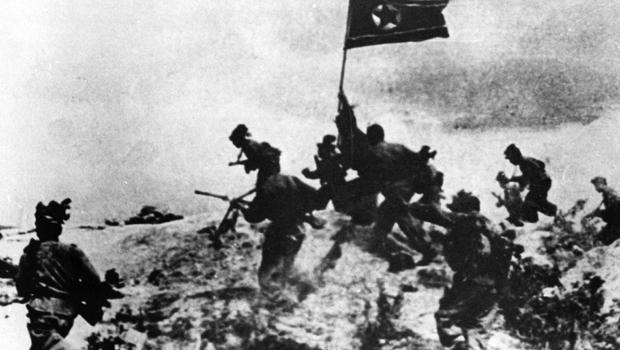
Tag: Korean War history

  • The Forgotten Front: Why the Korean War Faded from Memory

    The Forgotten Front: Why the Korean War Faded from Memory

    The War Everyone Fought, but No One Remembered

    The Korean War began on June 25, 1950, when North Korean forces poured across the 38th parallel and invaded South Korea.

    For three years, soldiers from across the world — especially the United States, South Korea, and United Nations allies — fought in freezing mountains, bombed-out cities, and muddy trenches.

    Yet today, when people speak of great wars, most remember World War II or Vietnam. The Korean War rarely makes the same lists, documentaries, or memorials. It’s often called “The Forgotten War.”

    Why did a conflict that claimed more than three million lives fade so quickly from public memory? The answer lies not just in the battlefield, but in the politics, media, and timing that shaped how the war was remembered.


    1. The War That Wasn’t Declared
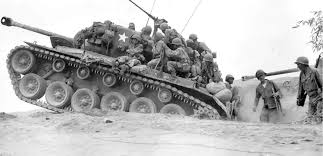
    Unlike World War II, the Korean War wasn’t officially a declared war — it was a “police action.” U.S. President Harry Truman never asked Congress for a formal declaration. Instead, the United Nations authorized the use of force to defend South Korea.

    That language mattered.
    Without the patriotic speeches, victory parades, and posters that defined World War II, Americans didn’t see the Korean War as a grand crusade — just another distant conflict in Asia.

    For soldiers who fought there, the lack of recognition was painful. They risked their lives under the same dangers as World War II veterans, yet came home to silence and indifference.

    “We went, we fought, and we came back — and nobody cared,” one veteran later said.


    2. The Media’s Quiet War

    During World War II, reporters embedded with troops sent back vivid stories and heroic images. By contrast, the Korean War came at an awkward moment in media history. Television was still new, radio was fading, and newspapers were turning their attention to the early Cold War.
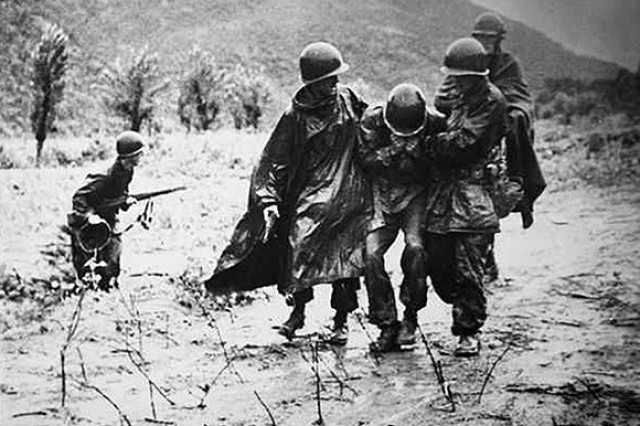
    America marks 70th anniversary of end of Korean War | Article | The United  States Army

    News from Korea was slow, often black-and-white footage of mud and snow. Without dramatic visuals, the public couldn’t connect emotionally.

    Worse, reporters called it a stalemate — a word that killed enthusiasm. Americans didn’t see victory or progress, only endless fighting with no clear end.

    By 1953, as the armistice was signed, few people outside the military even noticed the final battles. The war simply slipped off the front page.


    3. Cold War Fatigue

    The Korean War happened just five years after World War II ended. Many countries were still rebuilding their economies and mourning millions of dead.

    When the Korean War began, people felt war fatigue. They didn’t want another global conflict. Governments avoided dramatic language to prevent panic, while the public tuned out.

    At the same time, the Cold War between the U.S. and the Soviet Union was heating up. Korea became just one front in a much larger struggle — overshadowed by nuclear fears, spies, and propaganda.

    By the 1950s, headlines shifted to the arms race and McCarthyism at home, while soldiers still fought and froze on Korean hillsides.


    4. No Clear Victory

    The Korean War ended in armistice, not victory. The 38th parallel — the line that divided North and South — stayed right where it was.

    Unlike World War II, there was no surrender ceremony, no peace treaty, no victory march through Seoul or Pyongyang. The war simply stopped.

    For many, that felt like defeat. Politicians called it “containment,” not triumph. Veterans came home without medals of victory, only memories of survival.

    This lack of closure made it easy for the war to fade — because there was no clear ending to remember.


    5. The Human Cost Forgotten

    The Korean War | American Experience | Official Site | PBS

    Behind the politics and strategy were millions of ordinary people whose lives were torn apart. Cities like Seoul changed hands four times during the war. Families were split across the border, some never reunited again.

    Over 2.5 million Korean civilians died — many caught in the crossfire or bombings. Refugees poured south in endless columns.

    Yet their stories were rarely told. Western audiences saw Korea as a faraway place, not a people with faces and names.

    Only decades later did historians and filmmakers begin to recover these voices — stories of children orphaned, families divided, and survivors rebuilding from ashes.


    6. The Veterans’ Long Silence

    When American and UN soldiers returned home, there were no big parades. The U.S. was already moving on — new cars, new suburbs, new fears of communism.

    Many veterans didn’t talk about Korea for years. Some felt forgotten; others believed no one wanted to hear.

    In South Korea, too, the war left deep scars. The country rebuilt under strict rule, and memories of the conflict were often suppressed in favor of modernization.

    It wasn’t until the 1980s and 1990s that public recognition grew. The Korean War Veterans Memorial in Washington, D.C. — unveiled in 1995 — finally gave a voice to those who had been forgotten.


    7. Lessons in Memory and Honor

    The Korean War shows that history isn’t just about what happens — it’s about what people choose to remember.

    Wars fade not because they were unimportant, but because they don’t fit simple narratives of victory or loss. The Korean War was a brutal, necessary stalemate that stopped communism from spreading south, setting the stage for South Korea’s eventual rise into democracy and prosperity.

    Remembering it means honoring not only soldiers, but also the civilians who suffered and survived.

    As one veteran wrote in his diary:

    “We didn’t lose. We didn’t win. But we did our duty — and that should count for something.”

    Conclusion: The War That Built the Present

    The Korean War might be called “forgotten,” but its impact still shapes the world. The border at the DMZ remains one of the most dangerous on Earth. South Korea’s rise from rubble to global powerhouse stands as a symbol of resilience.

    For the United States, the Korean War marked the beginning of modern limited warfare — a conflict fought not for conquest, but for containment.

    Remembering the Forgotten War is more than looking back — it’s understanding how fragile peace truly is
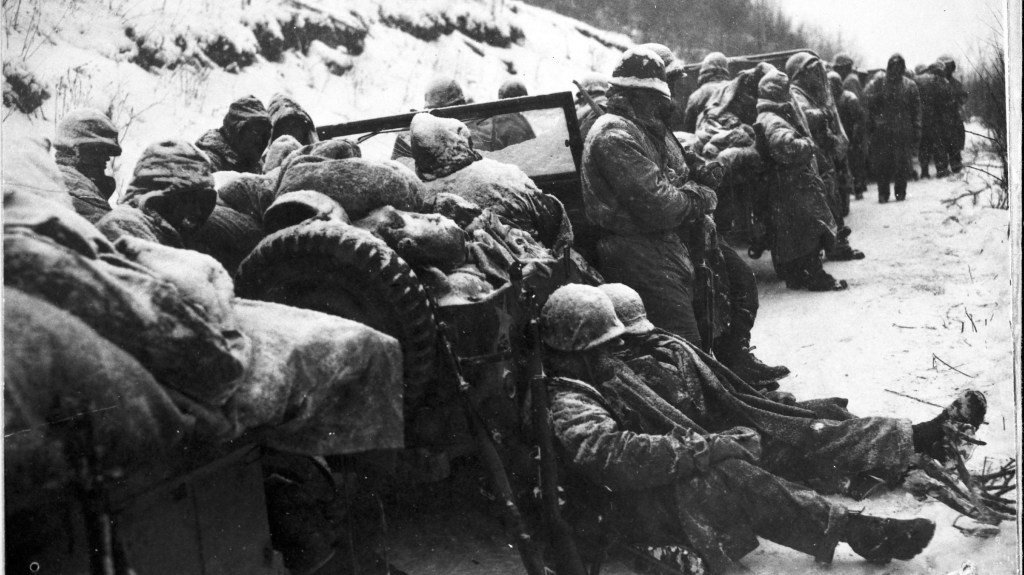
  • The Frozen Chosin: How U.S. Marines Escaped the Chinese Trap

    The Frozen Chosin: How U.S. Marines Escaped the Chinese Trap

    A Battle Fought in Ice and Fire — The Story of Survival at the Chosin Reservoir


    Introduction: The Coldest Hell on Earth

    In the winter of 1950, deep in the mountains of North Korea, U.S. Marines found themselves trapped.
    They were surrounded by 120,000 Chinese soldiers. Temperatures dropped to –30°F. The wind howled. Guns froze. Blood turned to ice.

    This was the Battle of the Chosin Reservoir — one of the most brutal battles in modern military history. What began as a confident U.N. advance to “end the war by Christmas” turned into a desperate fight for survival.

    But in that frozen chaos, the First Marine Division didn’t crumble. Instead, they fought their way out — breaking through encirclement, saving thousands of lives, and writing one of the most legendary chapters in U.S. military history.


    The Setting: A War That Wasn’t Supposed to Happen

    When North Korea invaded South Korea in June 1950, few believed it would become a global conflict.
    The U.N., led by the United States, rushed to defend the South. Within months, U.N. forces under General Douglas MacArthur pushed the North Koreans back across the 38th parallel — the dividing line between North and South.

    By November 1950, MacArthur’s forces had reached the mountains near the Chinese border.
    MacArthur believed victory was near. He even promised his troops they’d be home for Christmas.

    But high above the frozen ridges of the Yalu River, China was watching — and planning.


    The Chinese Counterattack: Mao’s Secret Gamble

    Mao Zedong feared that U.S. forces so close to China’s border would threaten his new Communist government.
    Secretly, he sent the People’s Volunteer Army — 300,000 Chinese soldiers — across the Yalu River under cover of night.

    They moved silently through the mountains, wearing white camouflage, carrying supplies by hand or mule.
    By late November, they surrounded U.N. troops near a place called the Chosin Reservoir.

    The U.S. Marines didn’t know it yet, but they were walking straight into a trap.


    The Trap Closes: Night of Fire

    On November 27, 1950, the temperature plunged to –35°F.
    That night, the Chinese struck.

    Thousands of bugles blared through the darkness. Waves of Chinese infantry charged through the snow, screaming and firing.
    The Marines at Yudam-ni — one of the main camps — were hit from all sides.

    Machine guns jammed in the cold. Wounded soldiers froze if not moved immediately.
    Even morphine syrettes were solid from the cold.

    By morning, the Chosin Reservoir was ringed with fire and bodies. The U.N. forces — mainly U.S. Marines — were surrounded.


    Retreat, Hell! We’re Just Attacking in Another Direction

    The situation seemed hopeless. The nearest safe port, Hungnam, was 78 miles away — through frozen mountains and enemy roadblocks.
    But the Marines refused to surrender.

    Under the leadership of Major General Oliver P. Smith, the First Marine Division made a bold decision:
    They would fight their way out, bringing their wounded, their dead, and their gear with them.

    When asked if he was retreating, General Smith famously replied:

    “Retreat, hell! We’re just attacking in another direction.”


    The March Through Hell

    The breakout from Chosin became one of the most heroic marches in military history.

    For 17 days, the Marines and attached Army units fought their way south through blizzards and ambushes.
    Convoys stretched for miles, crawling along the snow-covered road that wound through the mountains.

    Chinese troops attacked constantly — sometimes from ridges above, sometimes from both sides of the road.
    Every bridge was blown, every hill defended.

    To survive, the Marines relied on air power and teamwork.
    U.S. Air Force and Navy pilots — flying Corsairs, Mustangs, and Skyraiders — dropped bombs, napalm, and supplies from the sky.
    Parachutes carrying food, fuel, and ammunition became lifelines.

    At night, the wounded were loaded into trucks, wrapped in sleeping bags or canvas. Many never woke again.


    The “Frozen Chosin”: A Battle Against Nature Itself

    The enemy wasn’t just the Chinese. It was the cold.

    Engines had to be lit with torches.
    C-rations froze solid.
    Medical plasma had to be thawed over campfires before use.

    Many Marines suffered frostbite so severe that they lost fingers and toes.

    And yet, morale stayed high. The Marines joked, cursed, and fought. They refused to be broken.


    The Air Bridge: Lifeline of the Chosin Campaign

    One of the greatest feats of the Chosin campaign was the air support.

    From bases in Japan and South Korea, U.S. aircraft flew thousands of sorties, dropping supplies and attacking Chinese positions.
    Helicopters — still new to the battlefield — carried out daring evacuations of the wounded from icy mountain ridges.

    At Hagaru-ri, engineers built a small airstrip by hand, using frozen picks and shovels under sniper fire.
    That strip became the lifeline of the trapped division.
    More than 4,000 wounded were evacuated before the Marines broke through.


    Breaking the Trap: The Final Dash to Hungnam

    By mid-December, the Marines reached the coastal town of Hungnam.
    They had fought through 78 miles of mountains, destroyed seven Chinese divisions, and saved their wounded and equipment.

    The U.S. Navy waited at the port with transport ships.
    Operation Hungnam Evacuation began — one of the largest sea evacuations in military history.

    Over 100,000 U.N. troops, 17,500 vehicles, and 98,000 North Korean refugees were evacuated safely.
    When the last Marine boarded the ship, they blew up the port behind them — denying it to the enemy.

    The “Frozen Chosin” had escaped the trap.


    Aftermath: Victory in Defeat

    Technically, the battle was a retreat. But in reality, it was a moral victory.

    The First Marine Division had survived against impossible odds.
    The Chinese army suffered tens of thousands of casualties — far more than the U.N. forces.

    The battle proved the value of discipline, leadership, and logistics in modern warfare.
    It also showed the world that even when surrounded and freezing, U.S. forces could fight their way out — and win.

    The Chosin Reservoir became a symbol of courage under fire, studied in military academies for decades afterward.


    Lessons from the Frozen Chosin

    1. Leadership under Pressure: General Smith’s calm and deliberate command saved his men. He refused to panic, even when superiors demanded a faster advance.
    2. Logistics Matter: Air supply, engineering, and maintenance were as important as rifles. The ability to repair, refuel, and feed men in sub-zero temperatures determined survival.
    3. Morale is Everything: The Marines’ humor, camaraderie, and discipline kept them from breaking.
    4. Adaptation and Flexibility: The phrase “attack in another direction” summed up military resilience — turning retreat into strategy.
    5. The Human Spirit: The story of Chosin reminds us that courage isn’t the absence of fear — it’s the will to keep moving forward through it.

    Legacy: The Chosin Few

    Today, the veterans of the battle are known as “The Chosin Few.”
    Every year, they gather to remember those who didn’t make it out.

    Their story continues to inspire soldiers, Marines, and civilians alike.
    It reminds us that sometimes, the hardest battles aren’t won — they’re survived.

    Cited Sources

    • Appleman, Roy E. East of Chosin: Entrapment and Breakout in Korea, 1950. Texas A&M University Press, 1987.
    • Montross, Lynn, and Nicholas A. Canzona. U.S. Marine Operations in Korea, 1950–1953, Volume III: The Chosin Reservoir Campaign. U.S. Marine Corps, 1957.
    • “The Battle of Chosin Reservoir.” U.S. Marine Corps History Division.
    • Simmons, Edwin H. The United States Marines: A History. Naval Institute Press, 2003.
    • National Archives, Korean War Photo Collections.