How a Desert Siege, a Relentless Enemy, and Unbreakable Soldiers Made WWII History
🔷 Introduction: A Desert, a Fortress, and an Unbreakable Spirit
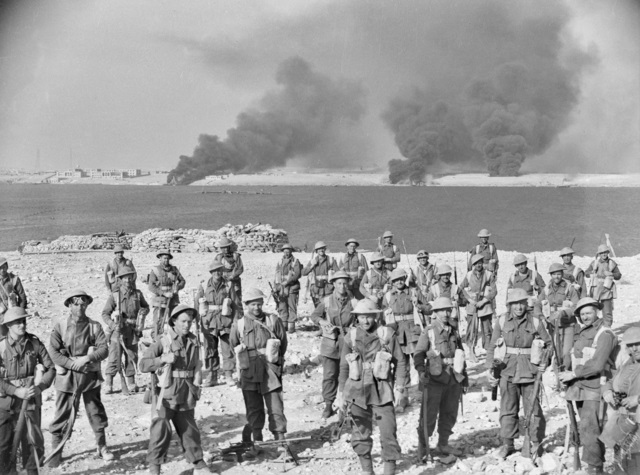
In 1941, a small group of Allied soldiers did something no one thought was possible.
They stopped Erwin Rommel, the German general known as the “Desert Fox,” and held a lonely desert fortress called Tobruk for more than 240 days.
They were surrounded.
They were bombed almost every day.
They lived underground like animals.
So the Germans mocked them with a name meant to insult:
“The Rats of Tobruk.”
But the soldiers didn’t get offended.
They embraced it.
And that insult became one of the greatest battle nicknames in military history.
This is the story of how they survived, how they fought, and how they turned a siege into a legend that still inspires the world today.
Section 1 — The North African War: Why Tobruk Mattered
⭐ A Port in the Middle of Nowhere
Tobruk sits on the Libyan coastline, a flat desert city with one major advantage:
It has a deep-water port perfect for unloading tanks, food, and fuel.
Whoever controlled Tobruk controlled North Africa’s supply line.
That made it priceless.
⭐ Rommel Arrives
In early 1941, the British pushed Italy out of eastern Libya. But Hitler sent Germany’s most aggressive general — Erwin Rommel — to take it back. He came with:
- fast-moving armored divisions
- experienced veterans
- a reputation for lightning strikes
When Rommel attacked, he crushed Allied lines and captured thousands of soldiers.
But one place did not fall:
Tobruk.
⭐ The Garrison That Stayed Behind
While most Allied forces retreated to Egypt, one group stayed behind to defend the port:
- Australian 9th Division
- British artillery units
- Indian and Palestinian units
- Polish Carpathian Brigade
- Local Libyan support forces
This mixed force would soon become famous.
Section 2 — The Siege Begins: Surrounded, Bombed, and Outnumbered
Rommel expected Tobruk to fall in a few days.
Instead, it held for eight months.
⭐ Life Under Constant Attack
The Germans and Italians surrounded Tobruk on three sides, with the sea on the fourth. Every day brought:
- bombing from the Luftwaffe
- artillery attacks
- probing assaults by tanks
- deadly sniper fire
- sandstorms that blinded entire units
Food was rationed.
Water was precious.
Medical supplies were scarce.
Tobruk became a battlefield where life happened underground.
Section 3 — The Underground City: Living Like “Rats”
When German planes made the surface too dangerous, soldiers dug into the earth. They carved:
- bunkers
- tunnels
- dugouts
- underground “houses” cut into rock
A massive network formed beneath the desert — a hidden city.
⭐ The German Insult
Nazi propaganda radio mocked them, calling them:
“Poor desert rats living in holes.”
Instead of feeling insulted, the troops embraced the name.
⭐ A Badge of Honor
The soldiers drew rats on their helmets.
They scribbled rat cartoons on walls.
They even made their own medals with rats engraved on them.
The name stuck:
The Rats of Tobruk.
Section 4 — How the Rats Fought Back
Despite being surrounded, the Rats did not stay still. They launched:
1. Night Raids
Small units crawled out into no-man’s-land and attacked German trenches in the dark. These raids:
- destroyed supply trucks
- blew up equipment
- captured intelligence
- rattled German morale
2. Hit-and-Run Tactics
The defenders could not fight in big battles, so they focused on:
- ambushes
- quick mortar strikes
- sniper attacks
- rapid withdrawal
3. Anti-Tank Defense
The Australians used British 2-pounder guns to destroy German tanks.
They got so good that German tank crews avoided ground near Tobruk altogether.
4. The “Tobruk Ferry Service”
At night, ships slipped into the port bringing:
- food
- ammunition
- replacement troops
It was extremely dangerous.
More than 40 Allied ships were sunk trying to reach Tobruk.
But the supply line never stopped.
Section 5 — Rommel’s Frustration: The Desert Fox Meets His Match
Rommel was known for winning fast campaigns. But Tobruk became the one place he couldn’t break.
⭐ Why Rommel Failed
Historians point to three key reasons:
1. The Rats refused to panic
They stayed disciplined under extreme stress.
2. Tobruk’s defenses were strong
The Italians had built massive concrete “boxes,” trenches, and anti-tank ditches years earlier.
3. The defenders adapted faster
Their night raids and ambushes constantly surprised Axis troops.
⭐ Rommel’s Reputation Takes a Hit
German newspapers bragged that Rommel would “capture Tobruk quickly.”
But as months passed, it became clear:
The Desert Fox had been outplayed.
Section 6 — Relief Arrives: Operation Crusader
In November 1941, British forces launched Operation Crusader to break the siege. After weeks of fighting in the desert, they pushed the Germans back far enough to open a corridor into Tobruk.
After over 240 days, the siege ended.
The Rats walked out — tired, dusty, and wounded — but undefeated.
Section 7 — Why the Rats of Tobruk Became Legends
The victory mattered for several reasons:
⭐ 1. First Major Defeat of Rommel
This battle proved the Germans could be stopped in North Africa.
⭐ 2. Boosted Allied Morale
When everything looked grim in early 1941, Tobruk was a rare good story.
⭐ 3. Symbol of Courage
The image of soldiers living underground, refusing to surrender, inspired millions.
⭐ 4. Built Australia’s Military Identity
The Australian 9th Division became one of the most respected units of WWII.
⭐ 5. A Lesson in Defensive Warfare
Tobruk became a model for modern fortress defense and guerrilla-style tactics.
Section 8 — Legacy of the Rats of Tobruk
Today, the Rats are remembered through:
- memorials in Australia, Poland, the UK, and Libya
- books and documentaries
- annual ceremonies
- military schools that study their tactics
The Rats showed the world something timeless:
A soldier’s spirit can matter more than numbers, tanks, or firepower.
Conclusion: A Victory Carved Into Desert Stone
The Siege of Tobruk wasn’t just a battle.
It was a test of human endurance.
The Rats fought with:
- limited supplies
- outdated weapons
- water shortages
- constant bombs
- hopeless odds
And yet they held firm.
They turned an insult into a symbol.
They turned a siege into a legacy.
They turned themselves into one of history’s most admired fighting forces.
The story of the Rats of Tobruk reminds us that even in the harshest places on Earth, ordinary people can become extraordinary heroes.
Citations
- Australian War Memorial. Siege of Tobruk, 1941. Canberra: AWM Archives.
- Maughan, Barton. Tobruk and El Alamein: Official History of Australia in the War of 1939–1945. Australian War Memorial, 1966.
- Playfair, I.S.O. The Mediterranean and Middle East, Volume II. HMSO (UK Official History), 1956.
- Rommel, Erwin. The Rommel Papers. Edited by B.H. Liddell Hart. Harcourt, 1953.
- Cooper, Matthew. The German Army 1933–1945. Macdonald & Jane’s, 1978.
- Scoullar, James. The Battle for North Africa. London: Faber & Faber, 1952.
- British Ministry of Information. The Defense of Tobruk. London, 1942.
- Neillands, Robin. The Desert Rats: The Story of the North African Campaign. John Murray Press, 2005.
 Vellum Insights