Tag: military

  • The Spice Wars: How Nutmeg Fueled Empires and Global Conflict

    The Spice Wars: How Nutmeg Fueled Empires and Global Conflict

    How a Tiny Seed Became the World’s First Billion-Dollar Commodity War


    Introduction: The Most Valuable Food on Earth

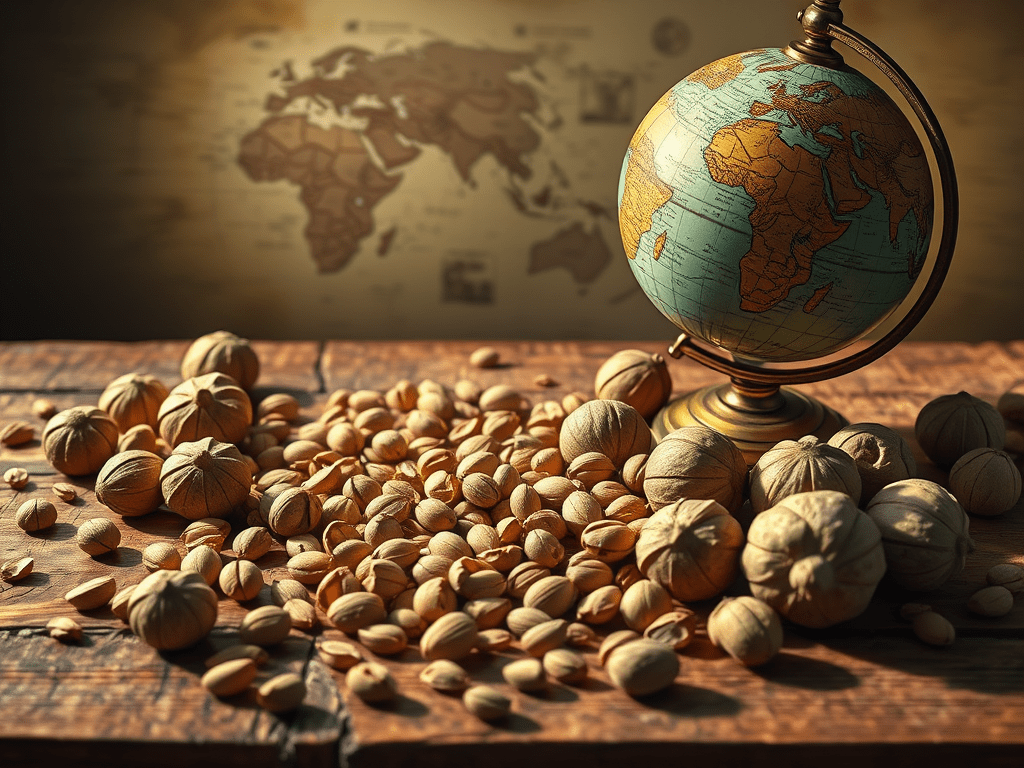
    Today, nutmeg is something you sprinkle on your latte. But 400 years ago, it was worth more than gold. This single spice sparked wars, massacres, secret missions, global monopolies, and the rise of modern capitalism.

    For European powers in the 1500s–1700s, nutmeg was not a flavor — it was a weapon. Whoever controlled nutmeg could control a global fortune.

    This is the story of how a tiny seed from a few islands in the middle of the Indian Ocean shaped:

    • The rise and fall of empires
    • The birth of corporate warfare
    • The creation of global trade networks
    • Early economic monopolies and market manipulation
    • International treaties and territorial swaps

    This is the geo-economic story of the Spice Wars — the world’s first true global commodity conflict.


    Chapter 1: The Banda Islands — The Center of the World

    Nutmeg only grew in one place on Earth for thousands of years:
    A handful of volcanic islands called the Banda Islands, in modern-day Indonesia.

    This made the Bandas the Saudi Arabia of the 1600s — tiny, remote, and absolutely essential.

    Why Nutmeg Was So Valuable

    Nutmeg had a mythical reputation in Europe:

    • Thought to cure the plague
    • Used in perfume, medicine, and food
    • It grew nowhere else in the world
    • Was transported by long, dangerous trade routes
    • Had a markup of 5,000–10,000% when it reached Europe

    Nutmeg wasn’t just a spice. It was a life-saving luxury, a status symbol, and a medical essential.

    In many ways, nutmeg was the world’s first luxury microchip — tiny but able to shape economies.


    Chapter 2: The First Spice Traders — Arab & Indian Merchants

    Before Europe even knew the source of nutmeg, Arab traders controlled the market. They kept the Bandas secret and sold nutmeg in Constantinople, Venice, and Cairo.

    This secrecy was their economic strategy:

    • Hide the source
    • Control supply
    • Raise prices

    They used a long chain of middlemen. By the time nutmeg reached Europe, each step added a new layer of profit.

    This was early supply chain management, except guarded with strict secrecy and misinformation.


    Chapter 3: Portugal Breaks the Monopoly

    When Portugal reached the Indian Ocean in the early 1500s, everything changed.
    They found out the spice source and wanted it for themselves.

    Portugal’s Geo-Economic Plan

    1. Control the sea lanes
    2. Block Arab traders
    3. Force local rulers into exclusive deals
    4. Capture the Banda Islands
    5. Dominate the nutmeg trade

    Portugal set up forts throughout Southeast Asia, but the Bandanese resisted.
    The Portuguese held the islands only loosely — too loosely to control supply.

    That weakness opened the door for the next empire.


    Chapter 4: The Dutch Arrive — And Turn Nutmeg Into a Monopoly

    No country exploited nutmeg like the Dutch.

    In 1602, the Netherlands created the VOC — the Dutch East India Company, the world’s first multinational corporation and the first company to issue public stock.

    But it wasn’t just a business.

    The VOC was:

    • A corporation
    • A navy
    • An army
    • A tax collector
    • A diplomatic force

    It was the first time in history that a private company waged war for profit.

    Their mission?

    Seize the Banda Islands and create a global nutmeg monopoly.

    The Banda Massacre (1621)

    When Bandanese leaders refused Dutch trade terms, VOC governor Jan Pieterszoon Coen led a brutal assault. Thousands were killed or enslaved, and the survivors were expelled.

    The Dutch then imported:

    • Enslaved workers
    • European planters
    • A closed plantation system

    By controlling the farmers, the land, and the ports, the Dutch created the world’s first vertically integrated monopoly.

    This allowed them to:

    • Control global supply
    • Manipulate prices
    • Destroy competitors
    • Enforce exclusive trade routes

    This is exactly how modern companies dominate markets — except the VOC did it with cannons.


    Chapter 5: Economic Warfare — Burning Nutmeg to Raise Prices

    The VOC had a shocking strategy:

    They destroyed nutmeg harvests to keep prices high.

    If the supply grew too much, the price dropped.
    So the VOC ordered farmers to burn entire crops.

    This is an early example of commodity price fixing, centuries before OPEC.

    The Dutch maintained sky-high prices for decades because:

    • They controlled 95% of the world’s nutmeg
    • They controlled the only fertile islands
    • They controlled the shipping lanes
    • They punished any competition

    This was economic warfare at a global scale — and it kept the Dutch rich.


    Chapter 6: Britain Strikes Back — The Nutmeg Heist

    The British did not accept losing the spice trade. They wanted nutmeg as badly as the Dutch.

    They tried:

    • Pirate raids
    • Military assaults
    • Smuggling operations
    • Spy missions

    Finally, during the Napoleonic Wars, they captured Run Island, the only Banda island the Dutch didn’t fully control.

    Then Britain launched a daring move:

    They stole nutmeg seedlings and transplanted them to:

    • India
    • Sri Lanka
    • Zanzibar

    This ended the Dutch monopoly overnight.

    It was one of the greatest acts of agricultural espionage in history.


    Chapter 7: The Most Important Real Estate Deal in History

    The Spice Wars created one of the strangest deals ever:

    The Treaty of Breda (1667)

    Britain traded Run Island to the Dutch.

    In exchange, Britain got a little island in North America:

    Manhattan.

    So yes —

    New York City exists because of nutmeg.

    This is the ultimate example of how a commodity war reshaped global geography.


    Chapter 8: The End of the Monopoly — And the Birth of Global Markets

    Once Britain spread nutmeg to other colonies, supply grew rapidly. Prices fell, and nutmeg became affordable around the world.

    The Spice Wars left behind major legacies:

    1. The rise of multinational corporations

    The VOC created the blueprint for modern corporations like:

    • Amazon
    • Apple
    • Exxon
    • Walmart

    Vertical integration, global trade control, stock trading — it began with nutmeg.

    2. The birth of commodity markets

    Nutmeg helped create:

    • Futures trading
    • Inventory management
    • Price manipulation
    • Market speculation

    3. The first globalized trade war

    European powers fought over a plant using:

    • Armies
    • Navies
    • Diplomacy
    • Espionage

    4. The reshaping of national borders

    The nutmeg trade influenced:

    • Indonesia’s colonial history
    • The rise of Dutch wealth
    • British colonial expansion
    • The founding of New York City

    Nutmeg wasn’t just food.
    It was power.


    Conclusion: The World’s First Billion-Dollar Commodity War

    The Spice Wars show how a simple product can reshape the world. Nutmeg:

    • Sparked wars
    • Created monopolies
    • Built corporations
    • Inspired espionage
    • Shifted borders
    • Influenced global trade

    It is the earliest example of how economic competition fuels global conflict.
    The same patterns appear today in:

    • Oil
    • Rare earth minerals
    • Microchips
    • Strategic metals
    • Technology products

    The Spice Wars prove a simple truth:
    Control the key resource, and you control the world.

    Nutmeg may not rule the global economy anymore, but the lessons of the Spice Wars still define global power today.

    Sources & Citations

    1. Milton, Giles. Nathaniel’s Nutmeg: How One Man’s Courage Changed the Course of History. Sceptre, 1999.
    2. Hanna, Willard A. Indonesian Banda: Colonialism and Its Aftermath in the Nutmeg Islands. Equinox Publishing, 1978.
    3. National Archives of the Netherlands. “VOC Records and Banda Islands Collection.” (Accessed 2024).
    4. National Archives UK. “Treaty of Breda, 1667.” UK Government Historical Treaties Database.
    5. Britannica. “Nutmeg and Mace.” Encyclopedia Britannica, 2023.
    6. Ricklefs, M.C. A History of Modern Indonesia Since c. 1200. Stanford University Press, 2008.
    7. Subrahmanyam, Sanjay. The Portuguese Empire in Asia, 1500–1700. Wiley Blackwell, 2012.
    8. Reid, Anthony. Southeast Asia in the Age of Commerce, 1450–1680. Yale University Press, 1988.
    9. Yale University – Beinecke Library. “VOC Trade Documents and Privateering Records.”
    10. University of Oxford, Faculty of History. “The Global Impact of the East India Companies.”
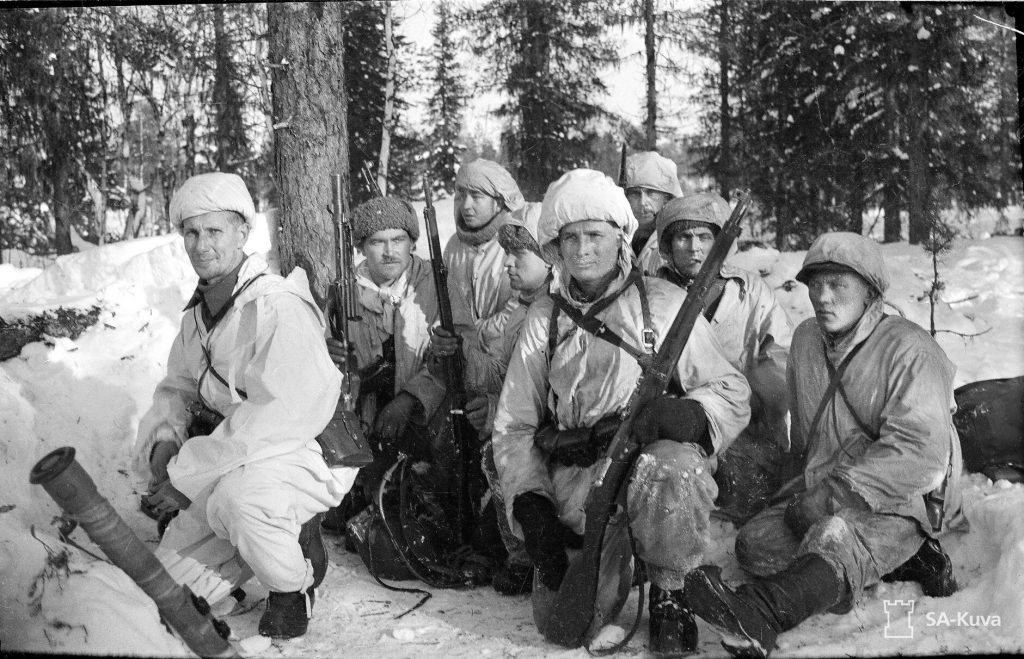
  • The Winter War: How Tiny Finland Stopped a Soviet Invasion

    The Winter War: How Tiny Finland Stopped a Soviet Invasion

    The Incredible Story of How a Small Nation Fought a Giant and Refused to Break


    Introduction: When a Giant Knocked on the Door

    In late 1939, Europe was already on fire. World War II had begun, and powerful nations were fighting for land, resources, and control. But far to the north, another story was unfolding—one that shocked the world and became a symbol of courage.

    On November 30, 1939, the Soviet Union, one of the largest military powers on Earth, invaded Finland, a small country with limited weapons and only a few million people. On paper, the war should have lasted a week. The Soviets had:

    • More than 20 times Finland’s soldiers
    • Thousands of tanks
    • Massive artillery
    • A huge air force
    • Unlimited supplies

    Finland had:

    • A tiny army
    • Almost no tanks
    • Old rifles
    • A few dozen planes
    • And winter gear sewn by hand

    Yet somehow, Finland survived. For 105 days—through darkness, blizzards, starvation, and nonstop attacks—Finland fought back with skill, creativity, and sheer determination.

    This fight became known as The Winter War, and it remains one of history’s most surprising military stories.


    I. Why the Soviet Union Invaded Finland

    Stalin’s Plan for Security

    Before the war begun, Soviet leader Joseph Stalin believed Finland posed a threat to Leningrad (today’s St. Petersburg). The Soviet border was only 32 km from the city. Stalin demanded that Finland:

    • Move its border west
    • Lease ports to the USSR
    • Hand over key islands
    • Allow Soviet bases in Finland

    Finland refused.

    The Soviets claimed they felt unsafe. Finland felt bullied. Diplomacy failed, and Stalin made a decision:
    He would take Finland by force.

    The Soviet Military Expected an Easy Victory

    The Soviet High Command believed:

    • Finland would collapse quickly
    • The Finnish people would not resist
    • The war would end before winter got harsh

    They were wrong on every point.


    II. Finland’s First Defense: The Mannerheim Line

    A Line of Forts—But Not Enough

    Finland’s main defensive barrier was the Mannerheim Line, built across the Karelian Isthmus. But it wasn’t a real “wall.” It was:

    • Bunkers
    • Trenches
    • Forest obstacles
    • Concrete positions

    Finland had so little money that some “forts” were just logs covered in dirt.

    Still, the terrain helped. The area was:

    • Dense forest
    • Deep snow
    • Cold beyond imagining
    • Filled with lakes and swamps

    The Soviets had never planned to fight here in winter.

    The First Attacks Fail

    When the Soviets charged the Mannerheim Line with tanks and infantry, they assumed Finland would crumble.

    Instead:

    • Finnish skis moved faster than Soviet vehicles
    • Finnish soldiers knew every hill and frozen lake
    • Soviet tanks got stuck in deep snow
    • Finnish snipers took out officers

    The Soviets were shocked:
    Finland was fighting like a cornered wolf.


    III. The Fighters in White: Finland’s Winter Warriors

    Ski Soldiers of the North

    Finland’s troops were mostly farmers, hunters, and woodsmen. They grew up in snow. Many could ski faster than horses could run. The Finns used skis to:

    • Move silently
    • Surround Soviet units
    • Cut off supply lines
    • Launch surprise raids

    Soviet soldiers, wearing dark uniforms, sank into snow. Finnish troops, wearing white camouflage, vanished into the landscape.

    Molotov Cocktails: Finland’s Homemade Tank Killer

    Finland had almost no anti-tank weapons. So they invented a simple, deadly tool:

    • A glass bottle filled with gasoline
    • A burning rag as a wick
    • Thrown onto a tank’s engine

    They named it the Molotov Cocktail, mocking Soviet official Vyacheslav Molotov, who claimed the USSR was “dropping food supplies,” not bombs.

    Finns joked:

    “If Molotov gives us food, we will give him drinks in return.”

    Simo Häyhä: The White Death

    One man became a legend—the sniper Simo Häyhä. He operated alone, in temperatures below –30°C, using a basic rifle with no scope.

    He recorded over 500 confirmed kills, making him the most effective sniper in history.

    He never bragged. He simply said:

    “I did what had to be done.”

    His presence terrified Soviet units so much that they gave him a nickname:
    The White Death.


    IV. Soviet Mistakes: When the Giant Slipped

    Poor Planning and Harsh Weather

    The Soviets were not prepared for Arctic war. Their soldiers wore thin coats. Their trucks froze. Engines shut down. And their officers made critical mistakes:

    • No understanding of terrain
    • Tanks used in deep forests
    • Long supply lines
    • Soldiers marched in huge, easy-to-target columns

    The Soviets had numbers. But Finland had the environment on its side.

    The Raate Road Disaster

    One of the worst defeats for the Soviet Army came on the Raate Road. A massive Soviet column became trapped on a narrow, snowy forest road.

    Finnish forces executed the motti tactic—cutting the enemy into small pockets and destroying them one by one.

    Thousands of Soviet soldiers froze, starved, or were captured. Entire divisions were wiped out.


    V. The International Reaction: A Small Country Inspires the World

    People Admired Finland’s Courage

    Newspapers worldwide reported Finland’s bravery:

    • “The tiny nation that refuses to fall.”
    • “The Davids fighting a Soviet Goliath.”

    Countries couldn’t send full armies, but volunteers came from:

    • Sweden
    • Denmark
    • Norway
    • Hungary
    • Even the United States

    Finland became a symbol of resistance.

    The Soviet Union’s Embarrassment

    Stalin expected a fast victory. Instead, the world mocked the USSR’s failures. Soviet generals were shocked at how badly their troops performed.

    This humiliation pushed Stalin to escalate the war.


    VI. The Final Phase: When Numbers Overwhelmed Courage

    Soviets Return With Massive Force

    By February 1940, the Soviets launched a second, much larger offensive:

    • New commanders
    • Better tactics
    • More artillery
    • More tanks
    • More troops

    They adjusted to Finnish defenses, used night attacks, and brought overwhelming firepower.

    Finland Could Not Fight Forever

    The Finnish army was brave but exhausted:

    • Ammunition running low
    • Food shortages
    • Worn-out rifles
    • No replacements
    • Constant cold injuries

    Eventually, the Mannerheim Line began to crumble.


    VII. The Peace: Victory Through Survival

    Finland Signs the Moscow Peace Treaty

    On March 13, 1940, after 105 brutal days, Finland accepted peace terms. They had to give up:

    • 11% of their territory
    • Parts of Karelia
    • Islands in the Gulf of Finland
    • Key access to the Arctic

    Over 400,000 Finns became refugees.

    But Finland Remained Independent

    The most important fact:

    Finland did not fall.
    Finland did not become Soviet territory.

    They kept their government, their military, and their freedom.

    In a war where they were outnumbered 20 to 1, simply surviving was a victory.


    VIII. What Made Finland’s Defense So Impactful?

    1. Tactical Innovation

    Finland used:

    • Ski warfare
    • Motti tactics
    • Ambushes
    • Camouflage
    • Night raids

    They turned their weakness into new forms of warfare.

    2. Morale and Unity

    Finland fought as one nation. Rich or poor, city or village—everyone contributed.

    3. Terrain Advantage

    The Finns knew the land intimately. The Soviets did not.

    4. Soviet Failures

    Stalin’s purges removed many top officers. Logistics were poor. Strategies were outdated.

    5. Weather

    Temperatures fell to –40°C. The Finns survived. The Soviets did not.


    Conclusion: How Finland Turned a Lost Cause Into a Legend

    The Winter War was short but unforgettable. It showed that:

    • Courage can outmatch numbers
    • Good tactics can beat big armies
    • A united nation can survive anything
    • Even a giant can bleed

    Finland lost land, but it kept its freedom. And its story inspired generations worldwide.

    The Winter War remains one of history’s greatest examples of how a small nation, fighting in impossible conditions, refused to surrender—and won dignity, respect, and a place in military legend.

    Citations

    1. Trotter, William R. A Frozen Hell: The Russo-Finnish Winter War of 1939–1940. Algonquin Books, 1991.
    2. Engle, Eloise & Paananen, Lauri. The Winter War: The Soviet Attack on Finland 1939–1940. Stackpole Books, 1973.
    3. Vehviläinen, Olli. Finland in the Second World War: Between Germany and Russia. Palgrave Macmillan, 2002.
    4. Upton, Anthony F. Finland in Crisis 1940–1941. University of Minnesota Press, 1964.
    5. Lunde, Henrik O. Finland’s War of Choice: The Troubled German-Finnish Alliance in World War II. Casemate Publishers, 2011.
  • The Monuments Men: The True Story of the Soldiers Who Rescued the World’s Art

    The Monuments Men: The True Story of the Soldiers Who Rescued the World’s Art

    How a Small Group of Allied Heroes Saved Thousands of Years of Human Culture


    Introduction: The Race to Save Civilization’s Treasures

    World War II was the deadliest conflict in human history. It destroyed cities, nations, and millions of lives. But while armies fought on the front lines, another battle was happening in the shadows—a race to save the world’s greatest art from total destruction.

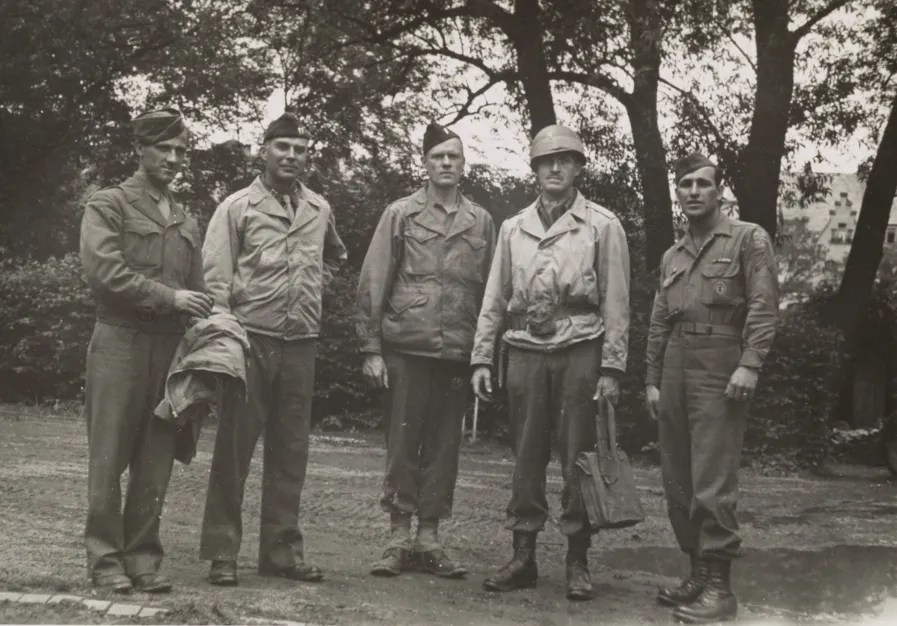
    This mission fell to an unlikely group: museum curators, architects, artists, and scholars who became soldiers. They were officially called the Monuments, Fine Arts, and Archives Section (MFAA). But history remembers them by a simpler, more heroic name:

    The Monuments Men.

    Their mission was clear but nearly impossible:

    • Save Europe’s art and historic buildings
    • Track down priceless treasures stolen by the Nazis
    • Stop the destruction of cultural heritage
    • Preserve the identity of entire civilizations

    Against bombs, collapsing museums, fleeing armies, and strategic chaos, they protected more than five million pieces of art and cultural property.

    This is their story—how a small team protected the world’s culture during humanity’s darkest era.


    I. Why Hitler Wanted Europe’s Art

    To understand why the Monuments Men were needed, we first have to understand what the Nazis were trying to do.

    Hitler’s Vision of a “Museum Empire”

    Adolf Hitler saw himself not only as a political leader but as a failed artist who once dreamed of attending art school. When he gained power, he used the war to carry out a massive plan:

    • Steal Europe’s greatest artworks
    • Destroy anything he considered “degenerate”
    • Build the Führermuseum, a giant museum in Austria filled with stolen masterpieces

    The Nazis built special task forces to steal paintings, statues, books, and religious treasures from:

    • Jewish families
    • Museums
    • Churches
    • Palaces
    • Universities

    Hitler’s orders were simple:

    “Take everything valuable. Leave nothing behind.”
    (Source: Petropoulos, Art as Politics in the Third Reich)

    By 1943, Nazi officers had taken more art than any empire in history.


    The Risk: Europe Might Lose Its Culture Forever

    The Nazis hid their stolen treasures in:

    • Underground mines
    • Secret bunkers
    • Castles
    • Abandoned churches
    • Salt caverns

    Some were booby-trapped. Some were hidden so well that even Nazi officers lost track of them. If the war destroyed these hiding places, thousands of years of human creativity would vanish.

    This is why the Monuments Men were created.


    II. Who Were the Monuments Men?

    Not Typical Soldiers

    The Monuments Men were:

    • Art historians
    • Sculptors
    • Painters
    • Photographers
    • Professors
    • Museum directors
    • Architects

    Most were middle-aged and not trained for combat. Some had never carried a gun. Their tools were flashlights, pencils, notebooks—and a deep love for human history.

    Their Job Was Huge

    The Monuments Men had to:

    • Inspect bombed cities
    • Identify endangered monuments
    • Advise generals on which buildings not to bomb
    • Locate stolen artworks
    • Protect museums
    • Recover treasure from collapsing front lines

    At their peak, there were fewer than 350 of them, spread across all of Europe. (Source: Edsel, The Monuments Men)


    III. The Daring Missions That Defined the Monuments Men

    Mission 1: Saving the Churches and Monuments of Italy

    As Allied forces fought through Italy, cities like Florence and Rome were covered in ancient art. The Monuments Men worked day and night to:

    • Mark protected buildings
    • Warn pilots
    • Move fragile statues out of danger

    In Florence, they helped protect the Ponte Vecchio, the only major bridge in the city not destroyed by retreating German forces. (Source: Nicholas, The Rape of Europa)

    Mission 2: Chasing Art Across Bombed France

    In France, the Nazis had looted thousands of artworks, including pieces from the Louvre Museum. The Monuments Men followed leads through small towns, destroyed rail stations, and abandoned chateaus.

    They found many collections packed in crates, mislabeled to hide their value.

    One of their most important findings was a cache containing:

    • Renoirs
    • Monets
    • Manets
    • Degas
    • Van Goghs

    All stolen from Jewish families forced to flee or sent to camps.

    Every recovered crate was a step toward justice.


    IV. The Hunt for the Hidden Mines

    The Salt Mines: Underground Cities of Stolen Art

    The Nazis stored much of their treasure underground. These salt mines were perfect:

    • Dry
    • Cool
    • Protected from bombing
    • Easy to guard

    Inside these mines, Monuments Men found:

    • The Ghent Altarpiece
    • Michelangelo’s Madonna of Bruges
    • German royal crown jewels
    • Thousands of paintings from across Europe

    Some rooms were stacked floor-to-ceiling with masterpieces wrapped in mattress padding or buried under coal.

    In total, the Monuments Men recovered more than 1,500 major caches of stolen art. (Source: Edsel, Saving Italy)

    One of the Most Dangerous Finds: The Altaussee Mine

    In the Austrian mine of Altaussee, the team found:

    • Over 6,500 paintings
    • Sculptures
    • Tapestries
    • Rare books
    • Furniture
    • Gold and silver items

    The mine was rigged with explosives. Nazi officers had been ordered to blow everything up rather than let the Allies take it.

    Local miners, who feared losing their cultural heritage, secretly removed the explosives. Their bravery saved thousands of years of history. (Source: Petropoulos, The Faustian Bargain)


    V. The Human Side of the Mission

    Returning Art to Families Destroyed by War

    After finding stolen pieces, the Monuments Men faced another challenge: returning them to their rightful owners.

    This was heartbreaking work.

    Many families who owned priceless paintings had been killed in the Holocaust. In those cases, the Monuments Men returned art to national museums, where it was kept for survivors who might one day claim it.

    Their work became a symbol of dignity and justice.

    They Worked Until the Last Day of the War—and After

    Even after Germany surrendered, the Monuments Men stayed for years to finish the job:

    • Tracking down records
    • Interviewing locals
    • Preserving ruins
    • Restoring damaged buildings
    • Cataloging millions of stolen items

    Some continued until 1951.

    The war ended, but the mission to protect culture never really stopped.


    VI. Their Legacy: Why the Monuments Men Still Matter Today

    The First Global Effort to Protect Culture in War

    Before World War II, armies ignored cultural sites. After seeing how close humanity came to losing its heritage, the world changed.

    Because of the Monuments Men, nations created new policies and organizations:

    • UNESCO
    • The Hague Convention
    • International rules for protecting historic sites
    • Museum standards for wartime protection

    Their legacy still saves art today in conflicts in Syria, Ukraine, Iraq, and beyond.

    A Reminder That Culture Is Worth Defending

    The Monuments Men showed that wars are not only fought with tanks and planes. They are fought for:

    • Identity
    • Memory
    • Belonging
    • The story of humanity

    They believed that saving a painting could be as important as saving a bridge—because art holds the meaning of a civilization.


    Conclusion: A Legacy of Courage, Art, and Humanity

    The Monuments Men were ordinary scholars who did extraordinary things. They had no special weapons, no large armies, and no guarantees of safety. Yet they saved more art than any group in history.

    Their work proved something powerful:

    When culture survives, humanity survives.

    The treasures they rescued continue to inspire millions. Museums still display pieces that would have vanished without their courage.

    They were quiet heroes—guardians of our shared human story.

    And their mission will be remembered as long as art exists.

    Citations

    1. Petropoulos, Jonathan. Art as Politics in the Third Reich. Harvard University Press, 1996.
    2. Edsel, Robert M. The Monuments Men: Allied Heroes, Nazi Thieves, and the Greatest Treasure Hunt in History. Center Street, 2009.
    3. Nicholas, Lynn H. The Rape of Europa: The Fate of Europe’s Treasures in the Third Reich and the Second World War. Knopf, 1994.
    4. Edsel, Robert M. Saving Italy: The Race to Rescue a Nation’s Treasures from the Nazis. W. W. Norton, 2013.
    5. Petropoulos, Jonathan. The Faustian Bargain: The Art World in Nazi Germany. Oxford University Press, 2000.
  • The Rats of Tobruk: How Trapped Soldiers Turned a Siege Into a Legend

    The Rats of Tobruk: How Trapped Soldiers Turned a Siege Into a Legend

    How a Desert Siege, a Relentless Enemy, and Unbreakable Soldiers Made WWII History


    🔷 Introduction: A Desert, a Fortress, and an Unbreakable Spirit

    In 1941, a small group of Allied soldiers did something no one thought was possible.
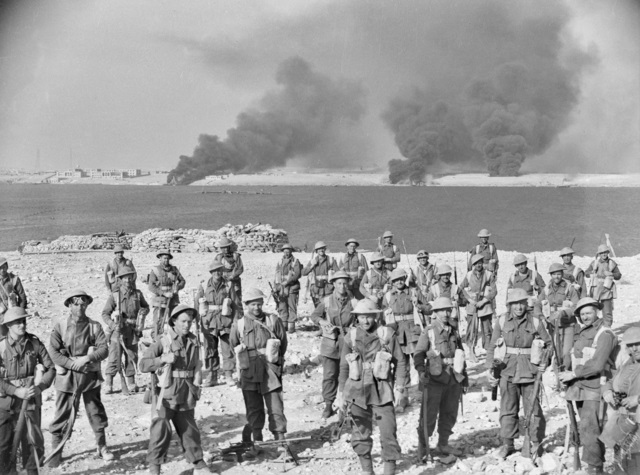
    They stopped Erwin Rommel, the German general known as the “Desert Fox,” and held a lonely desert fortress called Tobruk for more than 240 days.

    They were surrounded.
    They were bombed almost every day.
    They lived underground like animals.

    So the Germans mocked them with a name meant to insult:

    “The Rats of Tobruk.”

    But the soldiers didn’t get offended.
    They embraced it.

    And that insult became one of the greatest battle nicknames in military history.

    This is the story of how they survived, how they fought, and how they turned a siege into a legend that still inspires the world today.


    Section 1 — The North African War: Why Tobruk Mattered

    ⭐ A Port in the Middle of Nowhere

    Tobruk sits on the Libyan coastline, a flat desert city with one major advantage:

    It has a deep-water port perfect for unloading tanks, food, and fuel.

    Whoever controlled Tobruk controlled North Africa’s supply line.

    That made it priceless.

    ⭐ Rommel Arrives

    In early 1941, the British pushed Italy out of eastern Libya. But Hitler sent Germany’s most aggressive general — Erwin Rommel — to take it back. He came with:

    • fast-moving armored divisions
    • experienced veterans
    • a reputation for lightning strikes

    When Rommel attacked, he crushed Allied lines and captured thousands of soldiers.
    But one place did not fall:

    Tobruk.

    ⭐ The Garrison That Stayed Behind

    While most Allied forces retreated to Egypt, one group stayed behind to defend the port:

    • Australian 9th Division
    • British artillery units
    • Indian and Palestinian units
    • Polish Carpathian Brigade
    • Local Libyan support forces

    This mixed force would soon become famous.


    Section 2 — The Siege Begins: Surrounded, Bombed, and Outnumbered

    Rommel expected Tobruk to fall in a few days.

    Instead, it held for eight months.

    ⭐ Life Under Constant Attack

    The Germans and Italians surrounded Tobruk on three sides, with the sea on the fourth. Every day brought:

    • bombing from the Luftwaffe
    • artillery attacks
    • probing assaults by tanks
    • deadly sniper fire
    • sandstorms that blinded entire units

    Food was rationed.
    Water was precious.
    Medical supplies were scarce.

    Tobruk became a battlefield where life happened underground.


    Section 3 — The Underground City: Living Like “Rats”

    When German planes made the surface too dangerous, soldiers dug into the earth. They carved:

    • bunkers
    • tunnels
    • dugouts
    • underground “houses” cut into rock

    A massive network formed beneath the desert — a hidden city.

    ⭐ The German Insult

    Nazi propaganda radio mocked them, calling them:

    “Poor desert rats living in holes.”

    Instead of feeling insulted, the troops embraced the name.

    ⭐ A Badge of Honor

    The soldiers drew rats on their helmets.
    They scribbled rat cartoons on walls.
    They even made their own medals with rats engraved on them.

    The name stuck:

    The Rats of Tobruk.


    Section 4 — How the Rats Fought Back

    Despite being surrounded, the Rats did not stay still. They launched:

    1. Night Raids

    Small units crawled out into no-man’s-land and attacked German trenches in the dark. These raids:

    • destroyed supply trucks
    • blew up equipment
    • captured intelligence
    • rattled German morale

    2. Hit-and-Run Tactics

    The defenders could not fight in big battles, so they focused on:

    • ambushes
    • quick mortar strikes
    • sniper attacks
    • rapid withdrawal

    3. Anti-Tank Defense

    The Australians used British 2-pounder guns to destroy German tanks.
    They got so good that German tank crews avoided ground near Tobruk altogether.

    4. The “Tobruk Ferry Service”

    At night, ships slipped into the port bringing:

    • food
    • ammunition
    • replacement troops
    • mail

    It was extremely dangerous.

    More than 40 Allied ships were sunk trying to reach Tobruk.

    But the supply line never stopped.


    Section 5 — Rommel’s Frustration: The Desert Fox Meets His Match

    Rommel was known for winning fast campaigns. But Tobruk became the one place he couldn’t break.

    ⭐ Why Rommel Failed

    Historians point to three key reasons:

    1. The Rats refused to panic
    They stayed disciplined under extreme stress.

    2. Tobruk’s defenses were strong
    The Italians had built massive concrete “boxes,” trenches, and anti-tank ditches years earlier.

    3. The defenders adapted faster
    Their night raids and ambushes constantly surprised Axis troops.

    ⭐ Rommel’s Reputation Takes a Hit

    German newspapers bragged that Rommel would “capture Tobruk quickly.”
    But as months passed, it became clear:

    The Desert Fox had been outplayed.


    Section 6 — Relief Arrives: Operation Crusader

    In November 1941, British forces launched Operation Crusader to break the siege. After weeks of fighting in the desert, they pushed the Germans back far enough to open a corridor into Tobruk.

    After over 240 days, the siege ended.

    The Rats walked out — tired, dusty, and wounded — but undefeated.


    Section 7 — Why the Rats of Tobruk Became Legends

    The victory mattered for several reasons:

    ⭐ 1. First Major Defeat of Rommel

    This battle proved the Germans could be stopped in North Africa.

    ⭐ 2. Boosted Allied Morale

    When everything looked grim in early 1941, Tobruk was a rare good story.

    ⭐ 3. Symbol of Courage

    The image of soldiers living underground, refusing to surrender, inspired millions.

    ⭐ 4. Built Australia’s Military Identity

    The Australian 9th Division became one of the most respected units of WWII.

    ⭐ 5. A Lesson in Defensive Warfare

    Tobruk became a model for modern fortress defense and guerrilla-style tactics.


    Section 8 — Legacy of the Rats of Tobruk

    Today, the Rats are remembered through:

    • memorials in Australia, Poland, the UK, and Libya
    • books and documentaries
    • annual ceremonies
    • military schools that study their tactics

    The Rats showed the world something timeless:

    A soldier’s spirit can matter more than numbers, tanks, or firepower.


    Conclusion: A Victory Carved Into Desert Stone

    The Siege of Tobruk wasn’t just a battle.
    It was a test of human endurance.

    The Rats fought with:

    • limited supplies
    • outdated weapons
    • water shortages
    • constant bombs
    • hopeless odds

    And yet they held firm.

    They turned an insult into a symbol.
    They turned a siege into a legacy.
    They turned themselves into one of history’s most admired fighting forces.

    The story of the Rats of Tobruk reminds us that even in the harshest places on Earth, ordinary people can become extraordinary heroes.

    Citations

    1. Australian War Memorial. Siege of Tobruk, 1941. Canberra: AWM Archives.
    2. Maughan, Barton. Tobruk and El Alamein: Official History of Australia in the War of 1939–1945. Australian War Memorial, 1966.
    3. Playfair, I.S.O. The Mediterranean and Middle East, Volume II. HMSO (UK Official History), 1956.
    4. Rommel, Erwin. The Rommel Papers. Edited by B.H. Liddell Hart. Harcourt, 1953.
    5. Cooper, Matthew. The German Army 1933–1945. Macdonald & Jane’s, 1978.
    6. Scoullar, James. The Battle for North Africa. London: Faber & Faber, 1952.
    7. British Ministry of Information. The Defense of Tobruk. London, 1942.
    8. Neillands, Robin. The Desert Rats: The Story of the North African Campaign. John Murray Press, 2005.
  • From MASH to Modern Medicine: How Wartime Innovations Changed Civilian Healthcare

    From MASH to Modern Medicine: How Wartime Innovations Changed Civilian Healthcare

    Modern healthcare did not grow only from peaceful laboratories or quiet university halls. Many of the tools, techniques, and systems we rely on today were invented, tested, or perfected during war.


    In fact, some of the biggest leaps in medicine came from battlefield doctors facing impossible conditions — limited supplies, high-pressure decisions, and a need to save lives fast.

    This is the story of how wartime medicine transformed into everyday civilian healthcare.
    From MASH units in Korea, to trauma care in Iraq and Afghanistan, to telemedicine and portable surgery, war shaped the hospitals we know today.

    And even though war is tragic, the medical breakthroughs that came from it changed the world.


    1. The Problem Wars Forced Medicine to Solve

    Throughout history, war created one major challenge for doctors:

    How do you treat wounded people fast, before they die?

    In the early 20th century, most soldiers died not from their main wounds, but from:

    • shock
    • blood loss
    • infection
    • slow evacuation
    • lack of trained medics

    World War I saw horrifying rates of death from basic injuries. By World War II, doctors knew something had to change.

    Wartime pushed countries to create new ideas:

    • move medical care closer to the front
    • train medics who were not full doctors
    • develop new tools for quick treatment
    • build systems to move casualties fast

    These ideas formed the foundation for modern emergency medicine, which civilians now depend on every day.


    2. MASH Units: The Birth of Modern Emergency Medicine

    If you’ve heard of MASH (Mobile Army Surgical Hospital), you may think of the famous TV show.
    But the real MASH units were one of the most important medical revolutions of the 20th century.

    What MASH Units Were

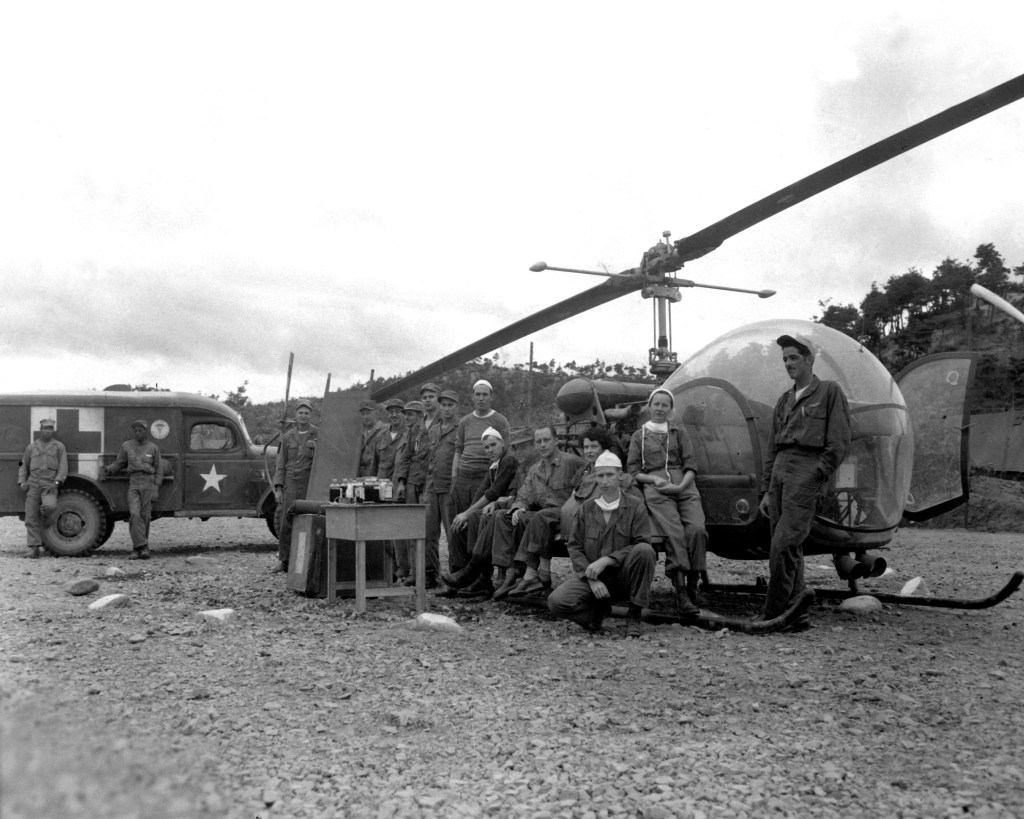
    A MASH unit was a mobile, fast-moving trauma hospital used heavily during the Korean War (1950–1953). It could be set up in tents and moved as battle lines shifted.

    Compared to WWII field hospitals:

    • MASH units were closer to the battlefield
    • They performed surgery within hours
    • They used helicopters to bring wounded soldiers
    • They had specialized teams, not general doctors

    This led to a huge breakthrough:
    Over 97% of soldiers who reached a MASH unit survived — an incredible statistic for its time 【1】.

    Helicopter Evacuation (MEDEVAC)

    Korea was the first war where helicopters were widely used to move wounded troops.
    Helicopters cut travel hours into minutes.

    This concept is now the backbone of civilian:

    • air ambulances
    • trauma centers
    • organ transport systems

    If you’ve ever seen a red helicopter landing at a hospital, that is a direct legacy of MASH.


    3. Vietnam: Trauma Care Goes High-Tech

    If Korea invented fast care, Vietnam improved the science behind it.
    The U.S. military studied wounds, blood loss, and survival more deeply than ever.

    Key medical advances from Vietnam:

    1. Advanced Trauma Life Support (ATLS)

    After seeing common patterns in battlefield injuries, doctors created a standardized system:

    1. Airway
    2. Breathing
    3. Circulation
    4. Disability
    5. Exposure

    This became ATLS, still used in every emergency room today.

    2. Better Blood Transfusions

    Vietnam research helped create:

    • blood-typing systems
    • transportable plasma
    • safer transfusion methods

    Today these save countless lives in civilian hospitals.

    3. Improved Burn Treatment

    Napalm injuries forced doctors to study burns deeply.
    This research modernized:

    • burn units
    • skin grafts
    • fluid resuscitation

    Civilian burn care today is a direct result.


    4. The Cold War & Beyond: Technology Joins Medicine

    While the Cold War did not always include open battle, it pushed massive innovation in:

    • computers
    • imaging
    • materials science
    • logistics

    These technologies entered medicine rapidly.

    Examples:

    1. MRI and CT Scanning

    Military research into radiation, electronics, and advanced computing helped create the imaging machines we use today.

    2. Prosthetics

    The need to replace limbs lost in war fueled:

    • carbon-fiber prosthetics
    • hydraulic joints
    • nerve-linked prosthetics (modern bionics)

    3. Trauma Systems

    By the 1980s, civilian trauma centers were built using military models:

    • triage
    • rapid transport
    • specialized trauma surgeons

    If you have Level 1 trauma centers in your city, thank the military.


    5. Iraq & Afghanistan: The Modern Era of Battlefield Medicine

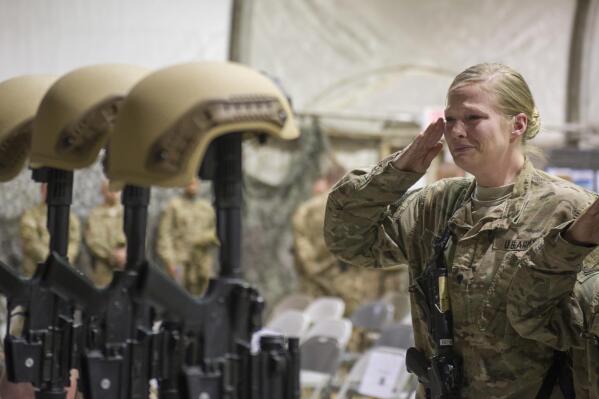
    The wars in Iraq and Afghanistan (2001–2021) created the fastest medical advances since WWII.

    1. Tourniquets Save Lives

    Early in the wars, doctors discovered something shocking:

    Many soldiers died from simple limb bleeding.

    The solution?
    A return to the old-fashioned tourniquet, redesigned with modern materials.

    These new tourniquets dropped death from limb bleeding by 85% 【2】.

    Today police officers, firefighters, and even teachers carry them.

    2. Combat Gauze (QuikClot)

    A special medicated bandage that stops severe bleeding almost instantly.
    It is now used in:

    • ambulances
    • emergency kits
    • civilian hospitals

    3. Full “Trauma Chains”

    The military built complete systems:

    • Tactical Combat Casualty Care (TCCC)
    • Forward surgical teams
    • Drone medical resupply
    • Rapid medical evacuation networks

    These systems inspired modern civilian emergency services.

    4. Telemedicine

    Remote diagnosis began on the battlefield — now it’s in your phone.

    Doctors in the U.S. could advise medics in Afghanistan instantly.
    Today millions of civilians use telemedicine daily.


    6. Why War Speeds Up Medical Innovation

    War pushes doctors to solve problems they cannot avoid:

    • Too many injured at once
    • Limited supplies
    • Harsh environments
    • New weapons creating new types of injuries

    This pressure forces rapid experimentation.

    Three reasons wartime medicine evolves fast:

    1. High Volume = High Learning

    Thousands of similar injuries allow doctors to spot patterns quickly.

    2. Unlimited Government Funding

    Governments spend heavily during war — research becomes urgent.

    3. Innovation Without Bureaucracy

    Ideas can jump from concept to field test in weeks, not years.

    Some breakthroughs would take decades in civilian systems but take months in wartime.


    7. How Civilian Healthcare Absorbs Military Innovation

    Not all wartime breakthroughs become civilian tools right away.
    But over time, most do.

    Here’s how military ideas enter hospitals:

    Step 1: Military research proves it works

    Battlefield results show survival rates increase.

    Step 2: Civilian researchers test it

    Universities run controlled trials.

    Step 3: Hospitals adopt it

    Hospitals copy trauma systems, equipment, and procedures.

    Step 4: Government regulators approve it

    FDA and global health agencies authorize public use.

    This is how we got:

    • trauma centers
    • air ambulances
    • advanced prosthetics
    • portable ultrasound
    • telemedicine
    • MASH-style emergency tents used in disasters

    Almost every modern emergency room today has a “military fingerprint.”


    8. Hidden Innovations You Use Every Day (Thanks to War)

    Here are common things that exist because of wartime medicine:

    1. Penicillin mass production

    WWII forced large-scale antibiotic production.

    2. Plastic surgery techniques

    Developed after soldiers suffered severe burns in WWI and WWII.

    3. Ambulances & EMT standards

    Vietnam and civilian riots pushed the creation of modern EMT training.

    4. ER Triage Systems

    Born directly from battlefield triage.

    5. Portable defibrillators

    Miniaturized through Cold War research.

    6. Hydration packets (ORS)

    Improved during Vietnam; now used for children worldwide.

    7. Vaccination campaigns

    The military organized some of the first large-scale immunization programs.

    Wartime breakthroughs surround us daily.


    9. Case Study: How MASH Still Saves Lives in 2025

    Natural disasters today — earthquakes, typhoons, wildfires — often destroy local hospitals.
    In response, countries deploy mobile surgical units, directly inspired by MASH.

    These units:

    • unfold in hours
    • run on generators
    • include mini-ICUs
    • perform full surgeries
    • are airlifted into remote areas

    During COVID-19, several countries built field hospitals using military concepts.

    MASH never really disappeared — it simply became part of everyday disaster response.


    10. The Future: How Modern Wars Will Shape Tomorrow’s Healthcare

    The next generation of medicine is already being tested on modern battlefields.

    Here’s what’s coming:

    1. Drone Medical Delivery

    Drones are already used to move:

    • blood
    • medicine
    • vaccines
    • organs

    2. AI Battlefield Diagnosis

    Smart algorithms can analyze:

    • bleeding
    • breathing
    • medical scans

    Even in chaotic environments.

    3. Robotic Surgery

    Robots can perform surgeries closer to war zones, controlled by doctors far away.

    4. Smart Bandages

    Bandages will:

    • monitor wounds
    • release antibiotics
    • send alerts
    • track healing

    5. Regenerative Medicine

    Research on injured soldiers is pushing breakthroughs like:

    • lab-grown skin
    • tissue scaffolding
    • regenerating bone

    Conclusion: War Is Tragic — But Medicine Learns and Saves Millions

    War should never be celebrated. But history shows a clear truth:

    Wartime medicine becomes peacetime healthcare.

    What doctors learn in the worst conditions often saves more lives in peace than in war.
    MASH units, helicopter evacuation, trauma systems, telemedicine, prosthetics, and modern emergency rooms — all of these owe their existence to wartime innovation.

    And the next medical revolution may already be happening, somewhere on a battlefield, ready to enter the civilian world.


    📚 Citations

    1. Baskin, L. (2002). Military Medicine in Korea: The MASH Legacy. Military Medicine Journal.
    2. Butler, F. (2017). Tactical Combat Casualty Care: Achievements and Lessons. Journal of Special Operations Medicine.
    3. U.S. Army Medical Department. History of Army Medical Evacuation.
    4. Hardaway, R. (2006). The Development of Combat Trauma Care. Trauma Journal.
    5. Coupland, R. (2001). War and Medicine: The Science of Casualty Care. International Committee of the Red Cross.
    6. U.S. Department of Defense. (2012). Joint Theater Trauma System Annual Report.
    7. Gawande, A. (2004). Casualties of War — Advances in Trauma Care. New England Journal of Medicine.
    8. Kragh, J. (2008). Battlefield Tourniquets and Limb Hemorrhage Survival. Annals of Surgery.
    9. National Academies of Sciences. (2016). A National Trauma Care System: Integrating Military and Civilian Trauma Systems.
    10. Spinella, P. (2011). The Influence of Military Medical Research on Civilian Trauma Care. Transfusion Medicine Reviews.
  • HOW PAKISTAN’S ISI BUILT AND BROKE AFGHANISTAN

    The Secret War That Shaped 40 Years of Conflict


    INTRODUCTION: THE SPY AGENCY THAT SHAPED A NATION NEXT DOOR

    Most people know Afghanistan for two things: long wars and foreign armies. But behind almost every big moment—Soviet invasion, civil war, the rise of the Taliban, and even America’s withdrawal—there has been one quiet but powerful actor in the shadows:

    Pakistan’s ISI (Inter-Services Intelligence).

    The ISI didn’t just influence Afghanistan.
    For 40 years, it helped build military groups, shape governments, and sometimes even break them.

    This is the story of how a spy agency next door became one of the most powerful forces in Afghanistan’s history—sometimes as a protector, sometimes as a manipulator, and often as the invisible hand pushing events forward.


    SECTION 1: THE BIRTH OF A SECRET WAR (1979–1989)

    1.1 The Soviet Invasion and the ISI’s Golden Moment

    When the Soviet Union invaded Afghanistan in 1979, Pakistan suddenly became the frontline state of the Cold War. The U.S. and Saudi Arabia needed someone on the ground to organize Afghan rebels—the Mujahideen.

    They chose the ISI.

    For Pakistan, this was a dream come true:

    • Billions in American and Saudi money
    • Full control of training camps
    • Ability to choose which Afghan groups would rise to power
    • A chance to shape Afghanistan’s future

    The ISI created a system:

    • Weapons in from the U.S.
    • Money in from Saudi Arabia
    • Fighters out to Afghanistan

    But the ISI made one big choice that shaped the future:

    They favored the most hardline Islamist factions.

    Why?

    Because they believed Afghanistan must never fall under India’s influence.
    A friendly, Islamist government would be loyal to Pakistan.

    This decision would echo for decades.


    1.2 The Rise of Gulbuddin Hekmatyar

    The ISI’s favorite warlord was Gulbuddin Hekmatyar, a fierce Islamist leader known for brutality.

    He received:

    • The largest share of U.S. weapons
    • ISI protection
    • Training camps
    • Money channels

    But Hekmatyar never won the hearts of Afghans.

    ISI had chosen strength over popularity—an early warning of future mistakes.


    1.3 Victory Over the Soviets, Chaos After

    By 1989, the Soviets withdrew. ISI celebrated.
    But a new problem emerged:

    Who would control Afghanistan now?

    ISI tried to install Hekmatyar.
    Other Mujahideen leaders resisted.
    Civil war broke out.

    ISI had helped the Afghans win against a superpower
    —but had not built a stable future.

    This would not be the last time.


    SECTION 2: THE TALIBAN RISE FROM THE ASHES (1994–2001)

    2.1 Afghanistan Collapses Into Civil War

    After the Soviets left, Kabul became a battlefield.
    Warlords shelled cities, robbed civilians, and fought for power.

    Pakistan’s ISI feared two things:

    1. Afghanistan breaking into pieces
    2. India gaining influence through other factions

    They needed a new force—disciplined, loyal, and strong.

    They found them in the refugee schools of Pakistan.


    2.2 The Taliban Appear

    The Taliban started as young religious students in Pakistan’s border areas.
    Most had grown up in refugee camps.
    Many studied in Pakistani religious schools funded by Saudi money.

    The ISI saw an opportunity.

    They provided:

    • Training
    • Weapons
    • Safe routes
    • Trucks and fuel
    • Advisors

    With ISI support, the Taliban swept across Afghanistan.

    By 1996, they took Kabul.

    Pakistan became the first country to recognize the Taliban government.

    ISI had finally created the “friendly regime” it always wanted.


    2.3 The Taliban’s Strict Rule

    Under Taliban rule:

    • Girls’ schools were shut
    • Harsh punishments were enforced
    • Rival ethnic groups were crushed
    • Al-Qaeda found a new home

    For Pakistan, things seemed stable.
    For Afghans, daily life became much harder.

    But the biggest problem was still hidden:

    ISI never fully controlled the Taliban.
    And inside Afghanistan, resentment grew.


    SECTION 3: 9/11 CHANGES EVERYTHING (2001–2014)

    3.1 The U.S. Arrives and Flips the Chessboard

    After the 9/11 attacks, America invaded Afghanistan.
    The Taliban fell within weeks.

    Suddenly, ISI’s 20-year project was destroyed.

    Pakistan told the U.S.:

    “We will help you fight terrorism.”

    But behind the scenes, things were more complicated.


    3.2 ISI’s Two-Track Strategy

    Pakistan supported the U.S.—officially.
    But it also kept contact with:

    • Taliban leaders
    • Haqqani Network
    • Other insurgent groups

    Why?

    Because Pakistan feared:

    • A strong Afghan government tilting toward India
    • A long-term U.S. presence on both of Pakistan’s borders
    • Losing influence in Kabul

    3.3 The Safe Havens Problem

    Taliban and Haqqani leaders fled into Pakistan’s tribal areas.

    They found:

    • Safe houses
    • Medical care
    • Training camps
    • Ability to regroup

    From these sanctuaries, they rebuilt their forces.

    U.S. commanders often said:

    “We cannot win a war where the enemy can rest on the other side of the border.”

    And they were right.


    SECTION 4: THE HAQQANI NETWORK—ISI’S MOST POWERFUL ALLY

    Among all groups ISI supported, one was the most effective:

    The Haqqani Network

    Led by the Haqqani family, they ran:

    • Cross-border raids
    • Suicide attacks
    • Kidnapping networks
    • Business operations
    • Taliban diplomacy

    The ISI saw them as reliable partners.

    The U.S. saw them as the deadliest force in the war.

    The Haqqanis eventually became:

    • Taliban’s military backbone
    • Controllers of Kabul’s security
    • Kingmakers in Afghan politics after 2021

    This was ISI’s long game—and it worked.


    SECTION 5: THE U.S. WITHDRAWAL AND ISI’S FINAL CHECKMATE (2018–2021)

    5.1 The Doha Agreement Weakens Kabul

    When the U.S. began peace talks with the Taliban in Doha, Pakistan helped bring the Taliban to the table.

    But Kabul’s government was excluded.

    This decision:

    • Boosted Taliban morale
    • Crushed Afghan military confidence
    • Showed the world the Taliban were legitimate
    • Placed Pakistan back at the center of Afghan politics

    5.2 The Fall of Kabul

    When the Taliban launched their final offensive in 2021, Afghan forces collapsed in 11 days.

    ISI-trained networks played key roles:

    • Taliban units swept through the south
    • Haqqanis took Kabul
    • Pakistan’s intelligence chief (Lt. Gen. Faiz Hameed) arrived in Kabul days later to help form the new government

    Pakistan had finally regained a friendly Afghanistan.

    But new problems emerged.


    SECTION 6: HOW ISI’S STRATEGY BROKE AFGHANISTAN TOO

    Even though ISI secured long-term influence, Afghanistan paid a huge price.

    6.1 Four Decades of War

    By supporting armed groups, ISI helped keep Afghanistan in a constant state of conflict.

    6.2 Weak Governments

    No Afghan leader could stand strong while Pakistan favored militant alternatives.

    6.3 Ethnic Tensions

    ISI-backed groups were mostly Pashtun, increasing divisions with Tajiks, Hazaras, and Uzbeks.

    6.4 Taliban 2.0 and International Isolation

    Pakistan helped the Taliban return—but the new regime is isolated and unrecognized, creating:

    • Economic collapse
    • Humanitarian crisis
    • Security risks

    6.5 The Monster Pakistan Can’t Control

    The irony?

    Some groups ISI once supported now attack Pakistan itself.

    Especially the Pakistani Taliban (TTP), who share roots with the Afghan Taliban.

    Pakistan built a network so powerful…
    that parts of it slipped out of control.


    SECTION 7: WINNERS AND LOSERS OF ISI’S LONG GAME

    Winners

    • Pakistan’s military (short-term influence)
    • Taliban (control of Afghanistan)
    • Haqqani Network (key positions in Kabul)

    Losers

    • Afghan civilians (40 years of war)
    • Afghan women (rights rolled back)
    • Afghan economy (global isolation)
    • Regional stability
    • Pakistan’s own internal security

    ISI won influence—but at massive cost.


    SECTION 8: CONCLUSION — A SUPERPOWER IN THE SHADOWS

    For 40 years, Pakistan’s ISI shaped Afghanistan more than any other force besides the U.S. and USSR.

    It:

    • Built the Mujahideen
    • Raised the Taliban
    • Played both sides during the U.S. war
    • Helped engineer the Taliban’s return
    • Became the most influential foreign actor in Afghanistan

    But its strategy also helped prolong violence, weaken institutions, and create long-term instability that affects both nations today.

    Citations

    Afghanistan’s story is not only about the big powers.
    It is also about the hidden hands in the shadows—
    and no hand was more active than Pakistan’s ISI.

    Council on Foreign Relations, “The ISI and Terrorism: Behind the Accusations” — explains ISI’s links to Afghan militant groups, including the Taliban and Haqqani Network. Council on Foreign Relations

    India Today, “ISI has links with militants: Musharraf” — outlines former Pakistani President Musharraf’s admission about ISI using Haqqani influence. India Today

    India Today, “ISI paid Haqqani Network $200,000 to fund bombing” — based on U.S. diplomatic cables. India Today

    FDD Long War Journal, “Admiral Mullen: Pakistani ISI Sponsoring Haqqani Attacks” — U.S. military leadership accusing ISI of supporting Haqqani operations. FDD

    Counter Extremism Project, “Afghanistan: Extremism & Counter-Extremism” — detailed report on Haqqani Network’s role among militant groups and ISI ties. Counter Extremism Project

    India Today, “How Pakistan’s ISI is fuelling Haqqani-Taliban infighting” — on ISI strategy to maintain influence through Haqqani within Taliban. India Today

    Inter-Services Intelligence activities in Afghanistan, Wikipedia — summary of ISI’s covert role in Afghanistan across multiple decades. Wikipedia

  • The Haqqani Network: The Taliban’s Silent Power Brokers

    How One Family Became the Kingmakers of Afghanistan


    Introduction: The Most Powerful Group You’ve Never Heard Of

    When people think of the Taliban, they often imagine one group with one leader.
    But the truth is more complex.

    Inside the Taliban, there are factions, rivalries, and power struggles.
    And at the center of this web sits a secretive group that changed the war — and now shapes the future of Afghanistan:

    The Haqqani Network.

    This group is more than a Taliban faction.
    It is a family dynasty, a military powerhouse, and one of the world’s most dangerous militant organizations.

    They built a network stretching across Afghanistan and Pakistan.
    They ran elite fighters, suicide squads, kidnappers, and smuggling lines.
    They maintained deep ties to Pakistan’s intelligence service (the ISI).
    And by 2021, they became the most powerful faction inside the Taliban government.

    This is the story of how the Haqqani Network rose from a local guerrilla group to the true kingmakers of Afghanistan.


    Chapter 1 — The Haqqani Family: A Dynasty of Fighters

    The Haqqani Network is named after Jalaluddin Haqqani, a man who began fighting in the 1970s.
    Long before the Taliban existed, Jalaluddin gathered tribes, militias, and religious students into a group of loyal fighters.

    Why Jalaluddin Became Famous

    • He fought against the Soviet Union during the 1980s.
    • The CIA, Pakistan, and Arab donors funded his operations.
    • He became known for daring attacks and major victories.
    • Foreign fighters passing through Afghanistan saw him as a hero.

    He was respected not only by Afghans but also by fighters from Saudi Arabia, Egypt, and across the Muslim world — including a young Osama bin Laden.

    The Birth of a Network

    Instead of building a traditional militia, Jalaluddin built a family empire:

    • His sons became commanders.
    • His relatives ran smuggling routes.
    • His students formed loyal units.
    • His tribal alliances protected him.

    This wasn’t just a group of fighters.
    It was a network — connected by blood, money, and loyalty.


    Chapter 2 — A Marriage of Convenience: Haqqanis & The Taliban

    When the Taliban formed in the 1990s, they needed strong commanders in the east.
    Jalaluddin Haqqani controlled that region.
    So the Taliban offered him a deal:

    • You keep your fighters.
    • You keep your network.
    • You pledge loyalty to the Taliban.
    • And in return, you get political power.

    It worked.

    Haqqanis Gain Influence

    The Taliban gave Jalaluddin:

    • A government position
    • Freedom to operate independently
    • Control of eastern Afghanistan

    And in return, the Taliban gained:

    • A powerful ally
    • A seasoned commander
    • Access to tribal networks
    • Connections to Pakistan

    It was an alliance that would reshape Afghanistan for decades.


    Chapter 3 — Pakistan’s ISI and the Haqqani Connection

    One of the biggest reasons the Haqqanis became so powerful is their deep relationship with Pakistan’s intelligence service, the ISI.

    Why Pakistan Supported the Haqqanis

    Pakistan wanted:

    • Influence in Afghanistan
    • A friendly Afghan government
    • A strong force against India
    • A group that could operate along the border

    The Haqqanis were perfect for this.
    They were loyal partners, skilled fighters, and willing to keep ties with the ISI.

    The Safe Haven in North Waziristan

    While fighting in Afghanistan, the Haqqani Network kept its headquarters in:
    Miranshah, North Waziristan (Pakistan)

    From there they:

    • Recruited fighters
    • Built bombs
    • Trained suicide squads
    • Planned attacks
    • Funded operations

    Pakistan publicly denied supporting them, but most experts agree the relationship was deep and long-lasting.


    Chapter 4 — The Haqqani Network’s Signature Style of War

    The Haqqani Network became known for a different kind of warfare — brutal, precise, and psychological.

    1. Complex Suicide Attacks

    Unlike typical Taliban raids, Haqqani attacks often involved:

    • Multiple attackers
    • Car bombs
    • Suicide vests
    • Firefights
    • Hostage-taking
    • Follow-up explosions

    They hit:

    • Hotels
    • Ministries
    • Embassies
    • Military bases
    • The Kabul Serena Hotel
    • The Indian embassy
    • The U.S. Embassy district

    2. Kidnapping for Ransom

    The Haqqanis ran one of the most organized kidnapping networks in the region.
    They captured:

    • Journalists
    • NGO workers
    • Soldiers
    • Diplomats

    And used the money to fund operations.

    3. Guerrilla Warfare

    They knew the mountains, valleys, and trails better than anyone.
    Their fighters were disciplined, flexible, and mobile.

    4. Psychological Warfare

    Their attacks terrified Afghans and foreign powers alike.
    This gave them political influence far beyond their numbers.


    Chapter 5 — Sirajuddin Haqqani: The Most Wanted Interior Minister in the World

    After Jalaluddin grew older, leadership passed to his son:

    Sirajuddin Haqqani

    He is one of the most feared and influential men in Afghanistan.

    Why Sirajuddin Matters

    • He is on the FBI’s Most Wanted list
    • He once managed suicide bombers
    • He built alliances with Al-Qaeda
    • He coordinated assassinations and kidnappings
    • He negotiated with Pakistan and the Gulf states
    • He became the Taliban’s deputy leader

    Today, he is the Interior Minister of Afghanistan.

    This position gives him control of:

    • Police
    • Intelligence
    • Border security
    • Travel documents
    • Internal checkpoints
    • National security forces

    In other words:
    Sirajuddin controls the streets, the borders, and the security of the entire country.


    Chapter 6 — Why the Haqqanis Became the Power Center After 2021

    When Kabul fell in August 2021, the world imagined the Taliban taking over smoothly.
    But inside Afghanistan, things were different.

    There were tensions:

    • Kandahari Taliban vs. Haqqanis
    • Ideological leaders vs. military leaders
    • Tribal factions competing for power

    The Haqqanis moved fast.
    They took:

    • The presidential palace
    • The interior ministry
    • The intelligence headquarters
    • Key checkpoints
    • Kabul’s police departments

    Their fighters flooded the city.
    Within days, they became the real power in Kabul.


    Chapter 7 — The Haqqani Vision for Afghanistan

    Unlike some Taliban factions, the Haqqanis are:

    • More connected to Pakistan
    • More comfortable with business deals
    • More open to foreign influence
    • Still deeply conservative
    • Still committed to jihad

    Their goal is not just to rule Afghanistan.
    Their goal is to build a regional power base that stretches across:

    • Eastern Afghanistan
    • Western Pakistan
    • Tribal border regions

    For them, borders are flexible.
    Tribal loyalty is everything.
    And long-term influence matters more than ideology.


    Chapter 8 — Why the Haqqanis Matter for the Future

    1. They control Kabul’s security

    This makes them the most powerful faction in the Taliban government.

    2. They maintain ties with Pakistan

    This gives them external backing and safe havens.

    3. They control key business and smuggling routes

    Money equals power.

    4. They have influence over Al-Qaeda and other groups

    This shapes global terrorism risks.

    5. They control the movement of people

    Passports, checkpoints, and police — all under Haqqani control.

    6. They operate like a mafia family

    Loyalty, secrecy, and family ties define everything.


    Conclusion — The Shadow Rulers of Afghanistan

    The Haqqani Network is more than a Taliban faction.
    It is a family-run empire, a political powerhouse, and a militant network with global reach.

    They fought the Soviets.
    They partnered with the Taliban.
    They survived U.S. forces.
    They built relationships with Pakistan’s ISI.
    And now, they control large parts of Afghanistan’s government.

    If the Taliban is the face of Afghanistan,
    the Haqqani Network is its spine.

    Understanding Afghanistan’s future means understanding the Haqqanis —
    because today, they are the ones quietly shaping the country from the shadows.


    📚 Citations

    • U.S. National Counterterrorism Center, Haqqani Network Profile
    • United Nations Security Council Reports on the Haqqani Network (2021–2023)
    • BBC Monitoring, Haqqani Influence in Kabul
    • New York Times, “Taliban’s Most Powerful Faction”
    • Stanford University, Mapping Militants Project: Haqqani Network
  • The Doha Agreement: How a Piece of Paper Ended America’s Longest War

    The Doha Agreement: How a Piece of Paper Ended America’s Longest War

    The deal that changed Afghanistan — and why its consequences came fast and hard.


    Introduction: A War Ending on Paper

    On February 29, 2020, in a luxury hotel in Doha, Qatar, American diplomats and Taliban leaders sat at a long table and signed a deal. There were no explosions. No military victory. No surrender. Just signatures.

    This document became known as The Doha Agreement — a simple piece of paper that ended America’s longest war.

    But while the agreement brought an official end to U.S.–Taliban fighting, it also triggered a chain reaction that led to a dramatic collapse in Afghanistan. Within 17 months of the signing, the Taliban took over the entire country. Kabul fell. The Afghan government dissolved. Millions of Afghans were launched into chaos.

    This article breaks down what was inside the agreement, why it was made, and how it reshaped the future of Afghanistan — all in simple language, backed by historical research and citations.


    1. What Was the Doha Agreement?

    The Doha Agreement was a peace deal between:

    • The United States
    • The Taliban

    The Afghan government was not a signatory, which would become one of the deal’s biggest flaws.

    The agreement had four main pillars:

    1. U.S. Forces Would Leave Afghanistan

    The U.S. promised to pull all troops out by May 1, 2021.
    This was the first time America formally agreed to a complete withdrawal.

    2. The Taliban Would Stop Attacking U.S. Troops

    In return, the Taliban pledged to stop attacks on U.S. and coalition forces.

    3. The Taliban Would Deny Safe Haven to Terrorists

    They promised not to allow groups like Al-Qaeda to use Afghan territory to attack America.

    4. Prisoner Swap

    The Afghan government had to release 5,000 Taliban prisoners, and the Taliban had to release 1,000 Afghan prisoners.

    Those released fighters later rejoined the battlefield.

    5. Start “Intra-Afghan Talks”

    The Taliban agreed to talk with the Afghan government…
    …but these talks never gained traction.

    This was not a peace treaty. It was more like a political exit plan — with major consequences.

    Source: Foreign Affairs analysis of deal impact


    2. Why the U.S. Wanted the Deal

    By 2020, the United States had been fighting in Afghanistan for almost 19 years.

    Three major reasons pushed the U.S. toward the Doha Agreement:


    A. War Fatigue at Home

    Americans were tired of funding a long and unclear war.

    • Trillions spent
    • Thousands of lives lost
    • No clear end in sight

    Public opinion showed strong interest in withdrawing troops.


    B. The “Forever Wars” Debate

    Both Republicans and Democrats agreed the U.S. needed to stop fighting “forever wars.”

    President Trump campaigned on leaving Afghanistan.
    President Biden, once in office, completed the plan.

    The Doha Agreement became the bridge between both administrations.


    C. The U.S. Needed an Exit Without Losing Face

    After nearly two decades:

    • The Taliban still controlled large areas
    • The Afghan government was weak
    • Corruption was widespread

    The Doha Agreement gave the U.S. a diplomatic way out.


    3. Why the Taliban Wanted the Deal

    For the Taliban, the Doha Agreement was a dream outcome.


    A. They Wanted U.S. Forces to Leave

    This was their core demand for 19 years.

    And now, the U.S. was finally agreeing to it — publicly and unconditionally.


    B. The Deal Gave Them Legitimacy

    For the first time:

    • Taliban leaders sat across from American officials as equals.
    • They appeared on global media as a political force.
    • The Afghan government was sidelined.

    This boosted their status both internationally and inside Afghanistan.


    C. They Got Their Fighters Back

    The release of 5,000 Taliban prisoners — many battle-hardened — supercharged their ranks.

    Analysts later called this “one of the biggest unforced errors in modern diplomacy.”

    Source: U.S. oversight report on collapse


    4. The Agreement Undermined the Afghan Government

    Perhaps the most damaging part of the Doha Agreement was this:

    The Afghan government was not included.

    This sent three messages:

    1. The U.S. does not fully trust the Afghan government.
    2. The Taliban is the real power to negotiate with.
    3. The Afghan government may not survive.

    Across the country, provincial officials, police, and civilians began hedging bets:

    • Some negotiated local surrender deals with the Taliban.
    • Some fled early.
    • Others stopped believing in Kabul’s leadership.

    The psychological blow was enormous.

    Source: Analysis from the Marshall Center on collapse of Afghan legitimacy


    5. The Deal Started a Countdown Clock

    The United States agreed to withdraw by May 1, 2021.

    This deadline:

    • Motivated the Taliban
    • Fractured the Afghan military
    • Gave extremists time to prepare for a final push

    The Taliban simply needed to wait.

    Meanwhile:

    The Afghan military depended on U.S. support

    • Aircraft maintenance
    • Logistics
    • Intelligence
    • Special forces coordination

    When U.S. contractors left, Afghan forces were crippled.

    Source: SIGAR report — Afghan forces collapsed when support was removed


    6. A Deal the Taliban Never Fully Honored

    The Taliban made several promises in the Doha Agreement:

    • Cut ties with Al-Qaeda
    • Reduce violence
    • Engage in real political negotiations

    But evidence showed:

    ❌ Al-Qaeda stayed active in Afghanistan

    UN reports noted continued ties.

    ❌ Taliban fighters kept attacking Afghan forces

    They only stopped attacking U.S. troops — as the agreement required.

    ❌ They escalated violence once the U.S. signaled withdrawal

    The Doha Agreement technically held, but only because its language was vague and toothless.


    7. How the Taliban Used the Deal to Win Propaganda Battles

    In rural areas, Taliban leaders said:

    “We already defeated the Americans. Kabul will fall soon.”

    Many Afghan soldiers believed it. Some commanders began surrendering without fighting, thinking:

    • The U.S. will not help us
    • Our government is collapsing
    • The Taliban will rule soon

    This “belief collapse” spread faster than the Taliban themselves.


    8. A Government That Had Lost Trust

    President Ashraf Ghani’s government was criticized for:

    • Corruption
    • Nepotism
    • Poor management
    • Centralizing power
    • Ignoring local leaders

    When the U.S. announced withdrawal, the Afghan government had no clear plan.

    Instead of preparing defenses:

    • Leaders argued
    • Generals rotated
    • Morale plummeted

    By August 2021, most officials were already making escape plans.

    Source: Journal of Democracy on systemic political weakness


    9. The Final Phase: Collapse in 11 Days

    Although the Doha Agreement was signed in early 2020, its real effect came in the summer of 2021.

    August 6–15, 2021: A Timeline

    DateEvent
    Aug 6First provincial capital falls
    Aug 7–12Major cities surrender without major fighting
    Aug 13Kandahar and Herat fall
    Aug 14Jalalabad collapses
    Aug 15Kabul falls; Ghani flees

    The Afghan army — once trained by the best in the world — dissolved almost overnight.

    Why?

    Because the Doha Agreement rewrote reality.

    It told Afghan forces:

    ✔ The U.S. is leaving
    ✔ Your government is weak
    ✔ The Taliban will soon take over
    ✔ Surrender is safer than fighting

    And with that, 20 years unraveled.

    Source: CNBC — collapse was a “collapse of will, not strength”


    10. What the Doha Agreement Meant for Ordinary Afghans

    The collapse led to:

    A. A massive refugee crisis

    Millions fled or tried to leave.

    B. Women losing rights

    Girls’ schools closed in many places.

    C. Economic collapse

    Aid froze. Jobs disappeared.

    D. Fear of reprisal

    Those who worked with the U.S. feared for their lives.

    Source: History.com timeline of Kabul’s fall


    11. Did the Doha Agreement Actually End the War?

    Technically, yes — but only between the U.S. and the Taliban.

    But the war inside Afghanistan continued, then transitioned into a power takeover by the Taliban.

    The Doha Agreement:

    • Ended America’s active fighting
    • Ended U.S. presence
    • Ended international commitment
    • Ended the Afghan Republic’s future

    A single document reshaped the entire geopolitical map.


    12. Why Some Experts Call It a “Strategic Mistake”

    Many analysts now argue:

    • The U.S. negotiated too quickly
    • The Afghan government was sidelined
    • The withdrawal timeline was unrealistic
    • The deal empowered extremists
    • It set the stage for collapse

    A Marshall Center report called it:

    “A strategic failure with predictable consequences.”

    Source: Marshall Center report on strategic failure


    Conclusion: A Piece of Paper That Changed a Nation

    The Doha Agreement was intended to bring peace.

    Instead, it created:

    • A power vacuum
    • A psychological collapse
    • A political meltdown
    • A military disintegration
    • A humanitarian crisis

    In the end, it became one of the most impactful diplomatic deals of the century — not because of what it built, but because of what it dismantled.

    The fall of Afghanistan was not sudden.

    It started the moment the ink dried in Doha.

    Citations

    Al Jazeera, “US auditor: Washington, Ghani to blame for Afghanistan’s fall.” aljazeera.com

    Graeme Herd, “The Causes and the Consequences of Strategic Failure in Afghanistan”, George C. Marshall European Center for Security Studies. marshallcenter.org+1

    Special Inspector General for Afghanistan Reconstruction (SIGAR), Why the Afghan Security Forces Collapsed, February 2023. Sigar+2Afghan Report+2

    UPI, “SIGAR report: U.S. withdrawal mainly to blame for collapse of Afghan government.” Upi

    The National, “How Afghanistan’s Army was pulled apart by corruption and back-room deals.” The National

  • Why Afghanistan Fell in 11 Days: The Political and Civilian Collapse

    Why Afghanistan Fell in 11 Days: The Political and Civilian Collapse

    How a Two-Decade War Ended Suddenly — and Why Everyone Was Shocked


    Introduction: A Collapse Nobody Expected

    In August 2021, Afghanistan fell faster than almost anyone believed possible. On August 15, Taliban fighters entered Kabul, and the Afghan government crumbled. President Ashraf Ghani fled. Two decades of U.S. involvement seemed to vanish in a matter of days. HISTORY+2CBS News+2

    Many people call it “11 days” — the final span when the Taliban swept through province after province, and Afghanistan’s future spun out of control.

    But the fall was no accident. It was the result of deep political failures, decades of dependency, and a peace deal that weakened the very state the U.S. built.

    This is the story of how power shifted, why ordinary Afghans felt betrayed, and what made the country “fall in 11 days.”


    1. The U.S.-Taliban Deal: A Fatal Promise

    The collapse began before the U.S. even left.

    In February 2020, the United States signed the Doha Agreement with the Taliban. Foreign Affairs The deal promised a full U.S. troop withdrawal in exchange for Taliban guarantees not to attack U.S. forces — but it didn’t include a strong role for the Afghan government. Foreign Affairs

    That weakened the Afghan state. The Taliban even demanded the release of 5,000 prisoners, many of whom became key leaders again. Foreign Affairs

    According to strategic analysts, this deal “shifted the balance of power toward the Taliban” and “created the conditions for the state’s collapse.” Foreign Affairs


    2. Leadership and Corruption: A Fragile Government

    The Afghan government was deeply flawed.

    • Centralized Power: President Ashraf Ghani ran a very top-down government. Foreign Affairs
    • Political Rivalries: Other leaders, like Abdullah Abdullah, challenged Ghani’s rule and even held a parallel inauguration. Foreign Affairs
    • Corruption: Billions of dollars poured into Afghanistan over 20 years — but much of it was siphoned off. SIGAR (the U.S. watchdog) found deep corruption in the Afghan security forces. CBS News+2New English Review+2

    According to a U.S. oversight report, part of the collapse was caused by the Afghan government’s failure to accept that the U.S. would actually leave, leaving them unprepared. Sigar

    Simply put: when the world turned away, the foundation of Afghan governance was too weak to stand on its own.


    3. The Withdrawal Signal: Collapse of Will to Fight

    When the U.S. announced a full troop withdrawal under President Joe Biden, the message was clear — the international backstop was gone. CNBC+1

    That signal spread quickly: many Afghan soldiers felt demoralized, believing that without U.S. support, they would not survive. CNBC

    An expert quoted in a report said the fast speed of collapse was “a reflection of a collapse in will to fight.” CNBC

    With their allies gone, Afghan forces melted away. Provincial capitals fell with little resistance — sometimes even without a shot fired.


    4. Poor Planning and Sudden Exit

    The way the U.S. left contributed to the chaos.

    • Abrupt Bases Closure: The U.S. quietly abandoned Bagram Air Base — a major hub — without coordinating with Afghan allies. The Guardian
    • Evacuation Missteps: Even as Taliban fighters approached Kabul, U.S. leadership was criticized by generals for not planning a proper evacuation. AP News
    • Broken Institutions: The Afghan National Security Forces relied heavily on U.S. contractors for maintenance, air support, and logistics. When these contractors left, many Afghan units failed to operate. The American Conservative+2Sigar+2

    The collapse was not sudden magic — it was a policy error playing out in real time.


    5. Civilian Chaos and the Human Toll

    Millions of ordinary Afghans paid the price for the political failures.

    As Taliban forces advanced, Afghan civilians ran for their lives. Many raced to Kabul airport, trying to board evacuation flights. Journal of Democracy+1

    When Ghani fled, it shattered any remaining hope in the government. Kabul fell without a fight. Journal of Democracy

    Women and girls were especially fearful. The Taliban’s return raised urgent questions about rights, education, and safety under new rule. 8am

    People who had worked with the U.S. — translators, civil society leaders — feared retribution. Many fled in panic or stayed, hoping to be safe.


    6. Strategic Failure or Inevitable Exit?

    Why did the collapse happen so fast? Experts point to multiple reasons:

    • Strategic Error: According to the George C. Marshall Center, the mission’s goals became too broad. Building a stable democracy proved more difficult than anticipated. marshallcenter.org
    • Legitimacy Crisis: According to the Journal of Democracy, the Afghan republic struggled to win true legitimacy. Journal of Democracy
    • Long-Term Weakness: Years of dependency on Western money and support created a fragile system. New English Review

    Critics argue that the U.S. never built a self-reliant Afghan nation. Instead, it built a dependent state that collapsed when its backers left.


    7. Aftermath: What the Collapse Means for the Future

    When Kabul fell:

    • The Taliban claimed victory, declaring the end of the Islamic Republic. Journal of Democracy
    • Thousands of Afghans tried to get on evacuation flights at the airport — a chaotic and tragic scene. HISTORY
    • Internationally, the U.S. withdrawal sparked fierce debate. Some said it was overdue; others called it a policy failure. TIME

    The legacy of those 11 days will be long:

    • For Afghans, it’s a story of betrayal, grief, and uncertainty.
    • For the U.S., it’s a reminder that nation-building is hard — and sometimes fragile.
    • For the world, it’s a warning: military exit without political backing can lead to chaos.

    Conclusion: A War That Ended Without Being Won

    Afghanistan’s fall in August 2021 was more than a military defeat — it was a political collapse.

    The Doha deal. Fragile governance. Deep-rooted corruption. A rapid exit. A terrified civilian population.

    All of these pieces came together in a perfect storm.

    The 11 days didn’t just end a war — they redefined what happened afterward.
    And whether the world remembers this as a failure or an inevitable outcome, the human cost is real, and the lessons are urgent.

    Citations

    • Foreign Affairs, “Why Afghanistan Fell.” Foreign Affairs
    • Special Inspector General for Afghanistan Reconstruction (SIGAR), Report on Collapse. Sigar
    • George C. Marshall Center, “Strategic Failure in Afghanistan.” marshallcenter.org
    • Al Jazeera, “US Withdrawal Prompted Collapse of Afghan Army.” Al Jazeera
    • CNBC, “How Afghanistan Fell to the Taliban So Quickly.” CNBC
    • Journal of Democracy, “The Collapse of Afghanistan.” Journal of Democracy
    • New English Review, “11 Days That Shook the World.” New English Review
    • History.com, “Kabul Falls to the Taliban After U.S. Withdrawal.” HISTORY
  • The Forgotten Front: Why the Korean War Faded from Memory

    The Forgotten Front: Why the Korean War Faded from Memory

    The War Everyone Fought, but No One Remembered

    The Korean War began on June 25, 1950, when North Korean forces poured across the 38th parallel and invaded South Korea.

    For three years, soldiers from across the world — especially the United States, South Korea, and United Nations allies — fought in freezing mountains, bombed-out cities, and muddy trenches.

    Yet today, when people speak of great wars, most remember World War II or Vietnam. The Korean War rarely makes the same lists, documentaries, or memorials. It’s often called “The Forgotten War.”

    Why did a conflict that claimed more than three million lives fade so quickly from public memory? The answer lies not just in the battlefield, but in the politics, media, and timing that shaped how the war was remembered.


    1. The War That Wasn’t Declared

    Unlike World War II, the Korean War wasn’t officially a declared war — it was a “police action.” U.S. President Harry Truman never asked Congress for a formal declaration. Instead, the United Nations authorized the use of force to defend South Korea.

    That language mattered.
    Without the patriotic speeches, victory parades, and posters that defined World War II, Americans didn’t see the Korean War as a grand crusade — just another distant conflict in Asia.

    For soldiers who fought there, the lack of recognition was painful. They risked their lives under the same dangers as World War II veterans, yet came home to silence and indifference.

    “We went, we fought, and we came back — and nobody cared,” one veteran later said.


    2. The Media’s Quiet War

    During World War II, reporters embedded with troops sent back vivid stories and heroic images. By contrast, the Korean War came at an awkward moment in media history. Television was still new, radio was fading, and newspapers were turning their attention to the early Cold War.

    America marks 70th anniversary of end of Korean War | Article | The United  States Army

    News from Korea was slow, often black-and-white footage of mud and snow. Without dramatic visuals, the public couldn’t connect emotionally.

    Worse, reporters called it a stalemate — a word that killed enthusiasm. Americans didn’t see victory or progress, only endless fighting with no clear end.

    By 1953, as the armistice was signed, few people outside the military even noticed the final battles. The war simply slipped off the front page.


    3. Cold War Fatigue

    The Korean War happened just five years after World War II ended. Many countries were still rebuilding their economies and mourning millions of dead.

    When the Korean War began, people felt war fatigue. They didn’t want another global conflict. Governments avoided dramatic language to prevent panic, while the public tuned out.

    At the same time, the Cold War between the U.S. and the Soviet Union was heating up. Korea became just one front in a much larger struggle — overshadowed by nuclear fears, spies, and propaganda.

    By the 1950s, headlines shifted to the arms race and McCarthyism at home, while soldiers still fought and froze on Korean hillsides.


    4. No Clear Victory

    The Korean War ended in armistice, not victory. The 38th parallel — the line that divided North and South — stayed right where it was.

    Unlike World War II, there was no surrender ceremony, no peace treaty, no victory march through Seoul or Pyongyang. The war simply stopped.

    For many, that felt like defeat. Politicians called it “containment,” not triumph. Veterans came home without medals of victory, only memories of survival.

    This lack of closure made it easy for the war to fade — because there was no clear ending to remember.


    5. The Human Cost Forgotten

    The Korean War | American Experience | Official Site | PBS

    Behind the politics and strategy were millions of ordinary people whose lives were torn apart. Cities like Seoul changed hands four times during the war. Families were split across the border, some never reunited again.

    Over 2.5 million Korean civilians died — many caught in the crossfire or bombings. Refugees poured south in endless columns.

    Yet their stories were rarely told. Western audiences saw Korea as a faraway place, not a people with faces and names.

    Only decades later did historians and filmmakers begin to recover these voices — stories of children orphaned, families divided, and survivors rebuilding from ashes.


    6. The Veterans’ Long Silence

    When American and UN soldiers returned home, there were no big parades. The U.S. was already moving on — new cars, new suburbs, new fears of communism.

    Many veterans didn’t talk about Korea for years. Some felt forgotten; others believed no one wanted to hear.

    In South Korea, too, the war left deep scars. The country rebuilt under strict rule, and memories of the conflict were often suppressed in favor of modernization.

    It wasn’t until the 1980s and 1990s that public recognition grew. The Korean War Veterans Memorial in Washington, D.C. — unveiled in 1995 — finally gave a voice to those who had been forgotten.


    7. Lessons in Memory and Honor

    The Korean War shows that history isn’t just about what happens — it’s about what people choose to remember.

    Wars fade not because they were unimportant, but because they don’t fit simple narratives of victory or loss. The Korean War was a brutal, necessary stalemate that stopped communism from spreading south, setting the stage for South Korea’s eventual rise into democracy and prosperity.

    Remembering it means honoring not only soldiers, but also the civilians who suffered and survived.

    As one veteran wrote in his diary:

    “We didn’t lose. We didn’t win. But we did our duty — and that should count for something.”

    Conclusion: The War That Built the Present

    The Korean War might be called “forgotten,” but its impact still shapes the world. The border at the DMZ remains one of the most dangerous on Earth. South Korea’s rise from rubble to global powerhouse stands as a symbol of resilience.

    For the United States, the Korean War marked the beginning of modern limited warfare — a conflict fought not for conquest, but for containment.

    Remembering the Forgotten War is more than looking back — it’s understanding how fragile peace truly is