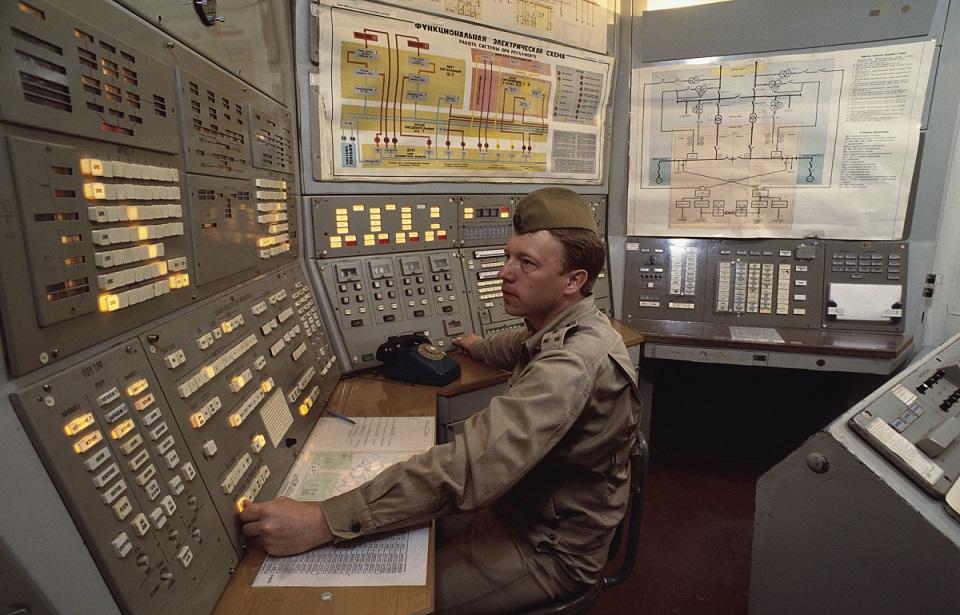
To understand Able Archer, we must first understand the atmosphere of 1983.
The Cold War was already entering a tense period.
Relations between East and West had deteriorated sharply.
The Soviet Union viewed many Western actions as increasingly aggressive.
Meanwhile, the United States believed it needed to confront Soviet expansion around the world.
At the center of this confrontation stood Ronald Reagan.
Reagan had adopted a tougher stance toward Moscow than many previous American presidents.
In March 1983, he famously described the Soviet Union as an “evil empire.”
To Soviet leaders, this rhetoric appeared threatening.
To American leaders, it reflected growing concerns about Soviet military power.
The tension grew even worse in September 1983.
A Soviet fighter aircraft shot down Korean Air Lines Flight 007, a civilian airliner that had accidentally entered Soviet airspace.
All 269 people aboard were killed.
The incident shocked the world and pushed East-West relations to a new low.
By late 1983, distrust between the superpowers had reached dangerous levels.
Neither side trusted the intentions of the other.
Chapter 2: Living Under the Shadow of Nuclear War
To modern readers, it can be difficult to understand just how frightening the nuclear threat felt during the Cold War.
Both the United States and the Soviet Union possessed thousands of nuclear weapons.
Many could reach their targets in less than thirty minutes.
Some missiles could strike in under fifteen minutes.
This created a terrifying strategic problem.
If one side believed a nuclear attack was imminent, leaders would have only minutes to decide how to respond.
Waiting too long could mean losing the ability to retaliate.
Acting too quickly could start a war unnecessarily.
This reality became known as Mutually Assured Destruction, often shortened to MAD.
The theory was simple:
- If either side launched a nuclear attack,
- The other side would respond,
- Both societies would suffer catastrophic destruction.
Ironically, the fear of total destruction helped prevent war.
But it also created an environment where misunderstandings could become extremely dangerous.
Chapter 3: Operation RYAN – The Soviet Search for Signs of War
Years before Able Archer began, Soviet leaders were already worried about the possibility of a surprise Western attack.
In response, the Soviet intelligence service launched one of the largest intelligence operations in its history.
The program was known as Operation RYAN.
The name came from a Russian phrase meaning “Nuclear Missile Attack.”
The objective was straightforward:
Detect signs that NATO might be preparing a first strike.
Soviet intelligence officers around the world were instructed to watch for unusual activity.
They monitored:
- military movements
- government communications
- political meetings
- changes in military readiness
Agents were told to report anything that might suggest preparations for war.
This created a dangerous situation.
Because Soviet leaders expected to find signs of an attack, intelligence officers sometimes interpreted ordinary events as possible evidence of hostile intentions.
Fear began influencing analysis.
And fear can be a powerful force.
Chapter 4: What Was Able Archer 83?
Every year, North Atlantic Treaty Organization conducted military exercises designed to test readiness and command procedures.
Able Archer was one such exercise.
The 1983 version was scheduled for November.
Its purpose was to simulate how NATO would respond during a major conflict with the Soviet Union.
What made Able Archer 83 unusual was its realism.
The exercise included:
- high-level command participation
- simulated nuclear release procedures
- secure communications systems
- realistic military messaging
NATO commanders wanted the exercise to closely resemble actual wartime conditions.
From their perspective, realism improved training.
From the Soviet perspective, realism looked frightening.
The more realistic the exercise became, the harder it was to distinguish from genuine preparations for war.
Chapter 5: Why the Soviets Became Alarmed
As Able Archer unfolded, Soviet intelligence began reporting troubling observations.
Several factors contributed to Soviet fears.
Realistic Nuclear Procedures
For the first time, the exercise included highly realistic simulations involving nuclear command procedures.
Increased Communications Security
Military communications became more encrypted and active.
Senior Leader Participation
High-ranking officials took part in the exercise.
Existing Political Tensions
The exercise occurred during one of the worst periods of Cold War relations.
Each development might seem harmless on its own.
Combined together, they created a picture that worried Soviet analysts.
Some feared NATO might be using the exercise as cover for a real attack.
This possibility may seem unlikely today.
But in an environment of extreme distrust, leaders often expect the worst.
Chapter 6: The Soviet Response
Inside the Soviet military, concerns grew rapidly.
Reports later revealed that Soviet forces increased readiness levels during the exercise.
Nuclear-capable aircraft in parts of Eastern Europe were reportedly placed on heightened alert.
Military units monitored NATO activity closely.
The Soviet leadership wanted to ensure they would not be caught by surprise.
At the time, Soviet leader Yuri Andropov was already deeply suspicious of Western intentions.
Andropov believed the United States might be seeking strategic advantages.
This mindset made Soviet leaders more likely to interpret NATO actions as threatening.
The result was a dangerous cycle.
NATO activity increased Soviet fears.
Soviet preparations could have increased NATO concerns.
Both sides were reacting to what they believed the other side might do.
Chapter 7: The World Had No Idea
One of the most remarkable aspects of Able Archer is that ordinary citizens knew almost nothing about it.
Newspapers did not report a major crisis.
Television broadcasts did not warn of impending war.
Most people continued their daily routines completely unaware of the danger.
Even many Western officials did not fully understand how seriously Soviet leaders viewed the exercise.
The crisis remained largely hidden.
Only years later, after classified documents were declassified, did historians begin piecing together the full story.
What emerged was deeply unsettling.
The world may have come closer to accidental nuclear war than anyone realized at the time.
Chapter 8: The Intelligence Warnings
Not everyone was unaware of Soviet concerns.
Certain intelligence sources began reporting that Soviet reactions were more serious than expected.
One particularly valuable source was Rainer Rupp, who provided information indicating that NATO’s exercise was causing alarm inside the Soviet bloc.
Western intelligence agencies gradually realized that Moscow might genuinely fear an attack.
This realization helped prevent misunderstandings from escalating further.
The exercise eventually concluded without incident.
No missiles were launched.
No war began.
But the experience revealed how easily misperceptions could create danger.
Chapter 9: Reagan’s Wake-Up Call
After learning how seriously Soviet leaders had interpreted Able Archer, President Reagan reportedly became deeply concerned.
He had previously believed Soviet fears of a surprise attack were exaggerated.
Able Archer challenged that assumption.
Reagan realized that Soviet leaders might genuinely believe the United States was capable of launching a first strike.
This revelation influenced his thinking about nuclear diplomacy.
In the years that followed, Reagan pursued greater dialogue with Soviet leaders.
His later relationship with Mikhail Gorbachev helped produce important arms-control agreements.
Many historians believe Able Archer played a role in changing how Reagan viewed the nuclear danger.
Chapter 10: Could It Happen Again?
The Cold War ended in 1991.
But the lessons of Able Archer remain relevant.
Modern technology has improved communications.
Yet misunderstandings still occur.
Today, tensions exist in multiple regions:
- Eastern Europe
- The South China Sea
- The Taiwan Strait
- The Korean Peninsula
- The Middle East
Military exercises continue.
Missile systems remain on alert.
Nuclear weapons still exist.
The fundamental lesson of Able Archer is timeless:
Countries do not always miscalculate because they are reckless.
Sometimes they miscalculate because they are afraid.
Fear can distort perception.
Fear can create false assumptions.
And fear can make routine actions appear threatening.
Conclusion: The Nuclear War That Never Happened
The Able Archer Scare remains one of history’s most important warnings.
For one tense week in November 1983, two nuclear superpowers looked at the same events and reached very different conclusions.
NATO believed it was conducting a training exercise.
The Soviet Union feared it might be witnessing the beginning of World War III.
Fortunately, cooler heads prevailed.
The exercise ended.
The alerts were lowered.
The missiles remained in their silos.
But the incident exposed a frightening reality.
The greatest dangers during the Cold War did not always come from deliberate aggression.
Sometimes they came from misunderstanding.
Able Archer reminds us that peace often depends not only on military strength but also on communication, trust, and restraint.
Because in a nuclear age, a mistake can be as dangerous as an attack.
And in November 1983, the world came dangerously close to learning that lesson the hard way.
Sources & Citations
- Able Archer 83.
- National Security Archive – Declassified documents relating to Able Archer 83 and Soviet reactions.
- Central Intelligence Agency – Cold War intelligence assessments and declassified reports.
- North Atlantic Treaty Organization – Historical information on NATO exercises and command procedures.
- The Dead Hand.
- Wilson Center – Cold War archival research and Soviet decision-making studies.
- U.S. Department of State – Historical records on Cold War diplomacy and arms control.
 Vellum Insights