Tag: politics

  • The Winter War: How Tiny Finland Stopped a Soviet Invasion

    The Winter War: How Tiny Finland Stopped a Soviet Invasion

    The Incredible Story of How a Small Nation Fought a Giant and Refused to Break


    Introduction: When a Giant Knocked on the Door

    In late 1939, Europe was already on fire. World War II had begun, and powerful nations were fighting for land, resources, and control. But far to the north, another story was unfolding—one that shocked the world and became a symbol of courage.

    On November 30, 1939, the Soviet Union, one of the largest military powers on Earth, invaded Finland, a small country with limited weapons and only a few million people. On paper, the war should have lasted a week. The Soviets had:

    • More than 20 times Finland’s soldiers
    • Thousands of tanks
    • Massive artillery
    • A huge air force
    • Unlimited supplies

    Finland had:

    • A tiny army
    • Almost no tanks
    • Old rifles
    • A few dozen planes
    • And winter gear sewn by hand

    Yet somehow, Finland survived. For 105 days—through darkness, blizzards, starvation, and nonstop attacks—Finland fought back with skill, creativity, and sheer determination.

    This fight became known as The Winter War, and it remains one of history’s most surprising military stories.


    I. Why the Soviet Union Invaded Finland

    Stalin’s Plan for Security

    Before the war begun, Soviet leader Joseph Stalin believed Finland posed a threat to Leningrad (today’s St. Petersburg). The Soviet border was only 32 km from the city. Stalin demanded that Finland:

    • Move its border west
    • Lease ports to the USSR
    • Hand over key islands
    • Allow Soviet bases in Finland

    Finland refused.

    The Soviets claimed they felt unsafe. Finland felt bullied. Diplomacy failed, and Stalin made a decision:
    He would take Finland by force.

    The Soviet Military Expected an Easy Victory

    The Soviet High Command believed:

    • Finland would collapse quickly
    • The Finnish people would not resist
    • The war would end before winter got harsh

    They were wrong on every point.


    II. Finland’s First Defense: The Mannerheim Line

    A Line of Forts—But Not Enough

    Finland’s main defensive barrier was the Mannerheim Line, built across the Karelian Isthmus. But it wasn’t a real “wall.” It was:

    • Bunkers
    • Trenches
    • Forest obstacles
    • Concrete positions

    Finland had so little money that some “forts” were just logs covered in dirt.

    Still, the terrain helped. The area was:

    • Dense forest
    • Deep snow
    • Cold beyond imagining
    • Filled with lakes and swamps

    The Soviets had never planned to fight here in winter.

    The First Attacks Fail

    When the Soviets charged the Mannerheim Line with tanks and infantry, they assumed Finland would crumble.

    Instead:

    • Finnish skis moved faster than Soviet vehicles
    • Finnish soldiers knew every hill and frozen lake
    • Soviet tanks got stuck in deep snow
    • Finnish snipers took out officers

    The Soviets were shocked:
    Finland was fighting like a cornered wolf.


    III. The Fighters in White: Finland’s Winter Warriors

    Ski Soldiers of the North

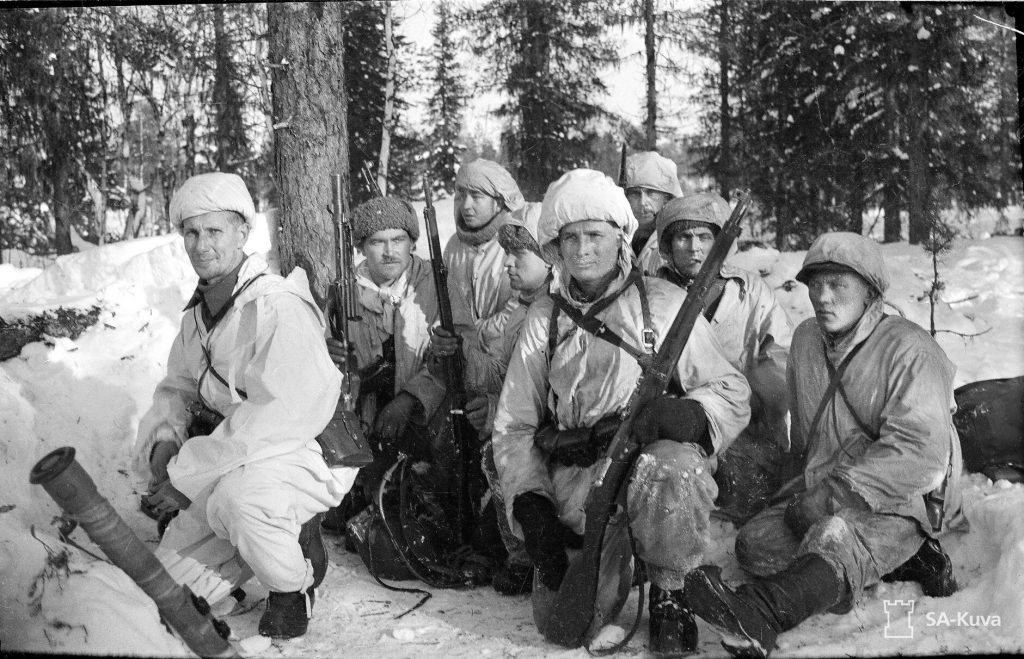
    Finland’s troops were mostly farmers, hunters, and woodsmen. They grew up in snow. Many could ski faster than horses could run. The Finns used skis to:

    • Move silently
    • Surround Soviet units
    • Cut off supply lines
    • Launch surprise raids

    Soviet soldiers, wearing dark uniforms, sank into snow. Finnish troops, wearing white camouflage, vanished into the landscape.

    Molotov Cocktails: Finland’s Homemade Tank Killer

    Finland had almost no anti-tank weapons. So they invented a simple, deadly tool:

    • A glass bottle filled with gasoline
    • A burning rag as a wick
    • Thrown onto a tank’s engine

    They named it the Molotov Cocktail, mocking Soviet official Vyacheslav Molotov, who claimed the USSR was “dropping food supplies,” not bombs.

    Finns joked:

    “If Molotov gives us food, we will give him drinks in return.”

    Simo Häyhä: The White Death

    One man became a legend—the sniper Simo Häyhä. He operated alone, in temperatures below –30°C, using a basic rifle with no scope.

    He recorded over 500 confirmed kills, making him the most effective sniper in history.

    He never bragged. He simply said:

    “I did what had to be done.”

    His presence terrified Soviet units so much that they gave him a nickname:
    The White Death.


    IV. Soviet Mistakes: When the Giant Slipped

    Poor Planning and Harsh Weather

    The Soviets were not prepared for Arctic war. Their soldiers wore thin coats. Their trucks froze. Engines shut down. And their officers made critical mistakes:

    • No understanding of terrain
    • Tanks used in deep forests
    • Long supply lines
    • Soldiers marched in huge, easy-to-target columns

    The Soviets had numbers. But Finland had the environment on its side.

    The Raate Road Disaster

    One of the worst defeats for the Soviet Army came on the Raate Road. A massive Soviet column became trapped on a narrow, snowy forest road.

    Finnish forces executed the motti tactic—cutting the enemy into small pockets and destroying them one by one.

    Thousands of Soviet soldiers froze, starved, or were captured. Entire divisions were wiped out.


    V. The International Reaction: A Small Country Inspires the World

    People Admired Finland’s Courage

    Newspapers worldwide reported Finland’s bravery:

    • “The tiny nation that refuses to fall.”
    • “The Davids fighting a Soviet Goliath.”

    Countries couldn’t send full armies, but volunteers came from:

    • Sweden
    • Denmark
    • Norway
    • Hungary
    • Even the United States

    Finland became a symbol of resistance.

    The Soviet Union’s Embarrassment

    Stalin expected a fast victory. Instead, the world mocked the USSR’s failures. Soviet generals were shocked at how badly their troops performed.

    This humiliation pushed Stalin to escalate the war.


    VI. The Final Phase: When Numbers Overwhelmed Courage

    Soviets Return With Massive Force

    By February 1940, the Soviets launched a second, much larger offensive:

    • New commanders
    • Better tactics
    • More artillery
    • More tanks
    • More troops

    They adjusted to Finnish defenses, used night attacks, and brought overwhelming firepower.

    Finland Could Not Fight Forever

    The Finnish army was brave but exhausted:

    • Ammunition running low
    • Food shortages
    • Worn-out rifles
    • No replacements
    • Constant cold injuries

    Eventually, the Mannerheim Line began to crumble.


    VII. The Peace: Victory Through Survival

    Finland Signs the Moscow Peace Treaty

    On March 13, 1940, after 105 brutal days, Finland accepted peace terms. They had to give up:

    • 11% of their territory
    • Parts of Karelia
    • Islands in the Gulf of Finland
    • Key access to the Arctic

    Over 400,000 Finns became refugees.

    But Finland Remained Independent

    The most important fact:

    Finland did not fall.
    Finland did not become Soviet territory.

    They kept their government, their military, and their freedom.

    In a war where they were outnumbered 20 to 1, simply surviving was a victory.


    VIII. What Made Finland’s Defense So Impactful?

    1. Tactical Innovation

    Finland used:

    • Ski warfare
    • Motti tactics
    • Ambushes
    • Camouflage
    • Night raids

    They turned their weakness into new forms of warfare.

    2. Morale and Unity

    Finland fought as one nation. Rich or poor, city or village—everyone contributed.

    3. Terrain Advantage

    The Finns knew the land intimately. The Soviets did not.

    4. Soviet Failures

    Stalin’s purges removed many top officers. Logistics were poor. Strategies were outdated.

    5. Weather

    Temperatures fell to –40°C. The Finns survived. The Soviets did not.


    Conclusion: How Finland Turned a Lost Cause Into a Legend

    The Winter War was short but unforgettable. It showed that:

    • Courage can outmatch numbers
    • Good tactics can beat big armies
    • A united nation can survive anything
    • Even a giant can bleed

    Finland lost land, but it kept its freedom. And its story inspired generations worldwide.

    The Winter War remains one of history’s greatest examples of how a small nation, fighting in impossible conditions, refused to surrender—and won dignity, respect, and a place in military legend.

    Citations

    1. Trotter, William R. A Frozen Hell: The Russo-Finnish Winter War of 1939–1940. Algonquin Books, 1991.
    2. Engle, Eloise & Paananen, Lauri. The Winter War: The Soviet Attack on Finland 1939–1940. Stackpole Books, 1973.
    3. Vehviläinen, Olli. Finland in the Second World War: Between Germany and Russia. Palgrave Macmillan, 2002.
    4. Upton, Anthony F. Finland in Crisis 1940–1941. University of Minnesota Press, 1964.
    5. Lunde, Henrik O. Finland’s War of Choice: The Troubled German-Finnish Alliance in World War II. Casemate Publishers, 2011.
  • The War of the Currents: How Edison and Tesla Fought the First Tech War

    The War of the Currents: How Edison and Tesla Fought the First Tech War

    The Shocking Battle That Decided How the Modern World Uses Electricity


    Introduction: The World Before Wires

    Today, electricity is everywhere. We flip a switch and lights appear. We plug in our phones, laptops, and TVs without thinking. But in the late 1800s, electricity was new, rare, and dangerous. Only a few cities even had electric lights, and most people still used gas lamps or candles.

    Before the modern world could be born, humanity needed a safe, powerful, and affordable way to deliver electricity to everyone. And that is where the first great tech war began—a fight between two brilliant men with two very different visions:

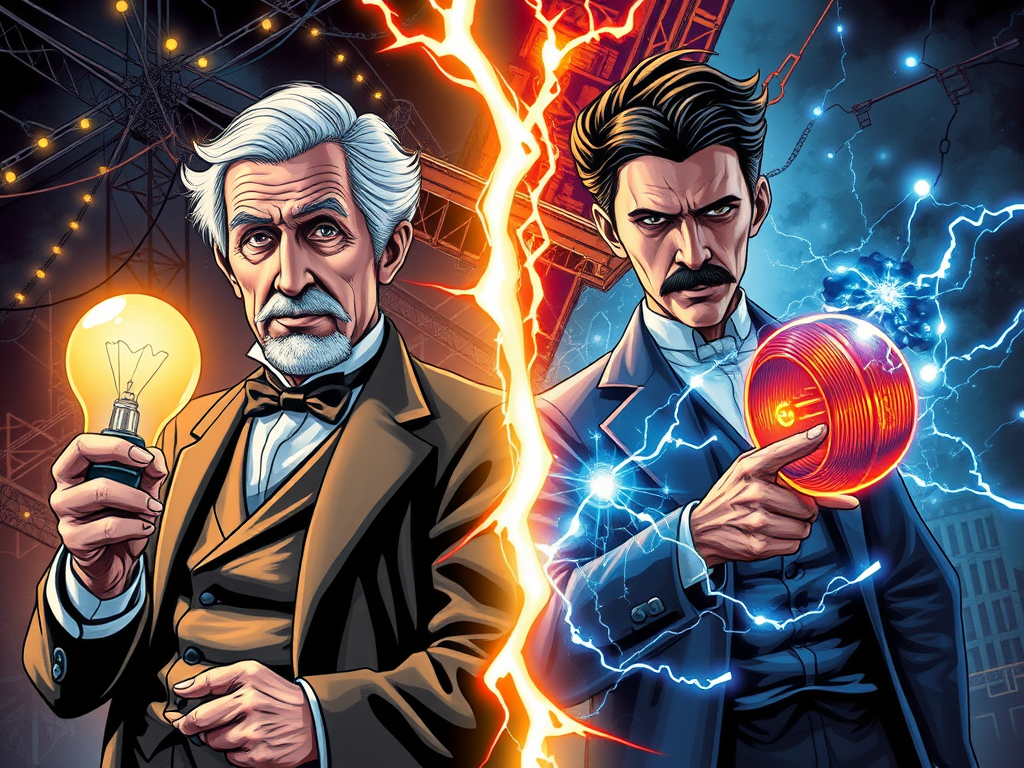
    • Thomas Edison, the inventor of the light bulb, who believed in direct current (DC)
    • Nikola Tesla, a genius immigrant inventor, who championed alternating current (AC)

    Their conflict became known as The War of the Currents. It involved science, business, politics, public fear, and even a bit of showmanship. It shaped the power grid we still use today.

    This is the story of how two men fought to control the future—and how one idea eventually powered the world.


    I. The Rise of Thomas Edison: America’s First Tech Superstar

    Edison’s DC Vision

    In the 1870s and 1880s, Thomas Edison was America’s most famous inventor. He created:

    • The light bulb
    • The phonograph
    • Early motion picture devices
    • The first power company

    Edison dreamed of electrifying entire cities. But he believed the safest way to deliver electricity was direct current (DC), which traveled in one direction and had a steady flow.

    It worked—but only over very short distances.

    DC power plants could serve only a few square blocks. That meant dozens or even hundreds of small power stations would be needed in every city. Edison believed this was the future, and he invested everything into DC power systems.

    Edison Builds an Empire

    By the early 1880s:

    • Edison opened the first commercial power station in New York
    • He powered homes, businesses, and streetlights
    • His company became the face of modern electricity

    To many Americans, Edison was electricity.

    But he wasn’t the only one with big ideas.


    II. Enter Nikola Tesla: The Outsider Who Saw a Different Future

    Tesla’s Early Life and Genius

    Nikola Tesla came from what is now Croatia. From a young age, he had a gift for visualizing inventions entirely in his mind. He could design machines without sketches, memorizing every gear and every bolt.

    Tesla moved to the United States in 1884 with one goal: work for Thomas Edison.

    He hoped to improve Edison’s electrical systems. But the two men were opposites:

    EdisonTesla
    PracticalTheoretical
    Trial-and-errorMathematical precision
    Business-drivenIdea-driven
    Preferred DCInvented AC

    Edison wanted results fast. Tesla wanted perfection.

    Their partnership didn’t last long.

    Tesla Builds His AC System

    Tesla believed that alternating current (AC) was the key to electrifying the world. AC power flowed back and forth, which meant:

    • It could travel hundreds of miles
    • It could power entire cities from one plant
    • It was cheaper to build
    • It could be converted to higher or lower voltages easily

    This made AC far more efficient than DC.

    But Edison refused to accept AC. He claimed it was too dangerous. Their disagreement created a rivalry that would soon explode across America.


    III. The War Begins: Edison vs. Tesla

    Edison Launches a Fear Campaign

    Edison saw AC as a threat to his business empire. So he began a public crusade to convince people that AC was deadly.

    His team:

    • Gave public demonstrations shocking animals with AC
    • Released pamphlets warning cities about “AC accidents”
    • Lobbied politicians to ban AC lines
    • Supported the electric chair as a way to label AC as “lethal power”

    Edison hoped to paint AC as a hazard that could kill anyone who touched it.

    The newspapers called it:

    “The Electrical Execution War.”
    (Source: Seifer, Wizard: The Life and Times of Nikola Tesla)

    Tesla Finds a Powerful Ally: George Westinghouse

    George Westinghouse, an inventor and businessman, saw the future in AC. He partnered with Tesla, buying Tesla’s patents and giving him a lab to continue his work.

    Together, Tesla and Westinghouse formed a team that could challenge Edison’s entire empire.

    This turned the fight into a full corporate war:

    • Edison Electric (DC)
    • Westinghouse Electric (AC)

    The future of electricity—and billions of dollars—were at stake.


    IV. The Turning Point: Lighting the World’s Fair

    The Battle for Chicago, 1893

    The biggest fight of the War of the Currents happened at the World’s Columbian Exposition in Chicago. The fair needed electricity to power thousands of lights, machines, and exhibits.

    Two companies bid:

    • Edison Electric (DC)
    • Westinghouse/Tesla (AC)

    Edison’s bid was nearly twice as expensive.

    Westinghouse won the contract.

    Tesla Lights Up the Night

    When the fair opened, more than 200,000 light bulbs powered by Tesla’s AC system lit up the night sky.

    People gasped. Many had never seen electric lights before—let alone an entire city block glowing white.

    This moment changed everything.

    Newspapers wrote:

    “The future belongs to alternating current.”
    (Source: Jonnes, Empires of Light)

    Edison had lost the first major battle.


    V. The Final Blow: Harnessing Niagara Falls

    A Power Source Like No Other

    Niagara Falls was the greatest source of natural energy in North America. Whoever could harness it would control the future of electricity.

    Two proposals came in:

    • Edison’s DC system
    • Tesla’s AC system

    In 1895, the decision was made:
    Tesla’s AC would power the project.

    Tesla’s System Powers a Region

    By 1896, AC power from Niagara Falls reached Buffalo, New York—20 miles away. It was the longest and most powerful electrical transmission ever built at the time.

    Soon:

    • Factories switched to AC
    • Cities expanded electric grids
    • The telephone, streetcars, and appliances spread everywhere

    DC faded from the world stage.

    Tesla’s vision had won.


    VI. The Aftermath: How the Tech War Shaped the Modern World

    Edison Was Forced to Change

    After losing the War of the Currents, Edison’s company eventually became part of General Electric, which quietly adopted AC technology. Edison himself stepped back from the electric industry and focused on other inventions.

    Tesla Became the Father of Modern Power

    AC power became the global standard, used in:

    • Homes
    • Skyscrapers
    • Cities
    • Factories
    • Power grids

    Today, about 95% of the world uses Tesla’s AC systems. (Source: Carlson, Tesla: Inventor of the Electrical Age)

    The First Modern Tech Rivalry

    The War of the Currents taught the world:

    • Innovation is not enough—business strategy matters
    • Public fear can shape technology
    • The best idea doesn’t always win quickly
    • Technology wars shape generations

    It was the “Silicon Valley battle” of its time—long before computers, smartphones, or social media.


    VII. The Human Side: Two Geniuses, One Dream

    Edison: The Builder

    Edison was a tireless worker and a brilliant businessman. His factories produced inventions that changed daily life. Even though he fought AC, his contributions to electricity were still vital.

    Tesla: The Visionary

    Tesla was imaginative, idealistic, and ahead of his time. He dreamed of:

    • Wireless global power
    • Renewable energy
    • Unlimited free electricity

    Some of his ideas were too advanced for the era, but many came true decades later.

    They Both Changed the World

    Even though they clashed, both men helped create the foundation for modern technology. Their rivalry pushed innovations faster and farther than either could have done alone.


    Conclusion: The Tech War That Powered the Future

    The War of the Currents was more than a fight between inventors. It was a battle over how humanity would use energy for the next 100 years—and beyond.

    In the end:

    • Tesla’s AC powered the world
    • Edison’s systems became the roots of modern technology
    • Westinghouse’s investments helped build the power grid

    The war proved that innovation takes courage, risk, and sometimes a bit of rivalry.

    And today, every time we flip a switch, we are living in the world Tesla imagined—and Edison helped bring to life.


    Citations

    Carlson, W. Bernard. Tesla: Inventor of the Electrical Age. Princeton University Press, 2013.

    Seifer, Marc J. Wizard: The Life and Times of Nikola Tesla. Citadel Press, 1996.

    Jonnes, Jill. Empires of Light: Edison, Tesla, Westinghouse, and the Race to Electrify the World. Random House, 2003.

  • From MASH to Modern Medicine: How Wartime Innovations Changed Civilian Healthcare

    From MASH to Modern Medicine: How Wartime Innovations Changed Civilian Healthcare

    Modern healthcare did not grow only from peaceful laboratories or quiet university halls. Many of the tools, techniques, and systems we rely on today were invented, tested, or perfected during war.


    In fact, some of the biggest leaps in medicine came from battlefield doctors facing impossible conditions — limited supplies, high-pressure decisions, and a need to save lives fast.

    This is the story of how wartime medicine transformed into everyday civilian healthcare.
    From MASH units in Korea, to trauma care in Iraq and Afghanistan, to telemedicine and portable surgery, war shaped the hospitals we know today.

    And even though war is tragic, the medical breakthroughs that came from it changed the world.


    1. The Problem Wars Forced Medicine to Solve

    Throughout history, war created one major challenge for doctors:

    How do you treat wounded people fast, before they die?

    In the early 20th century, most soldiers died not from their main wounds, but from:

    • shock
    • blood loss
    • infection
    • slow evacuation
    • lack of trained medics

    World War I saw horrifying rates of death from basic injuries. By World War II, doctors knew something had to change.

    Wartime pushed countries to create new ideas:

    • move medical care closer to the front
    • train medics who were not full doctors
    • develop new tools for quick treatment
    • build systems to move casualties fast

    These ideas formed the foundation for modern emergency medicine, which civilians now depend on every day.


    2. MASH Units: The Birth of Modern Emergency Medicine

    If you’ve heard of MASH (Mobile Army Surgical Hospital), you may think of the famous TV show.
    But the real MASH units were one of the most important medical revolutions of the 20th century.

    What MASH Units Were

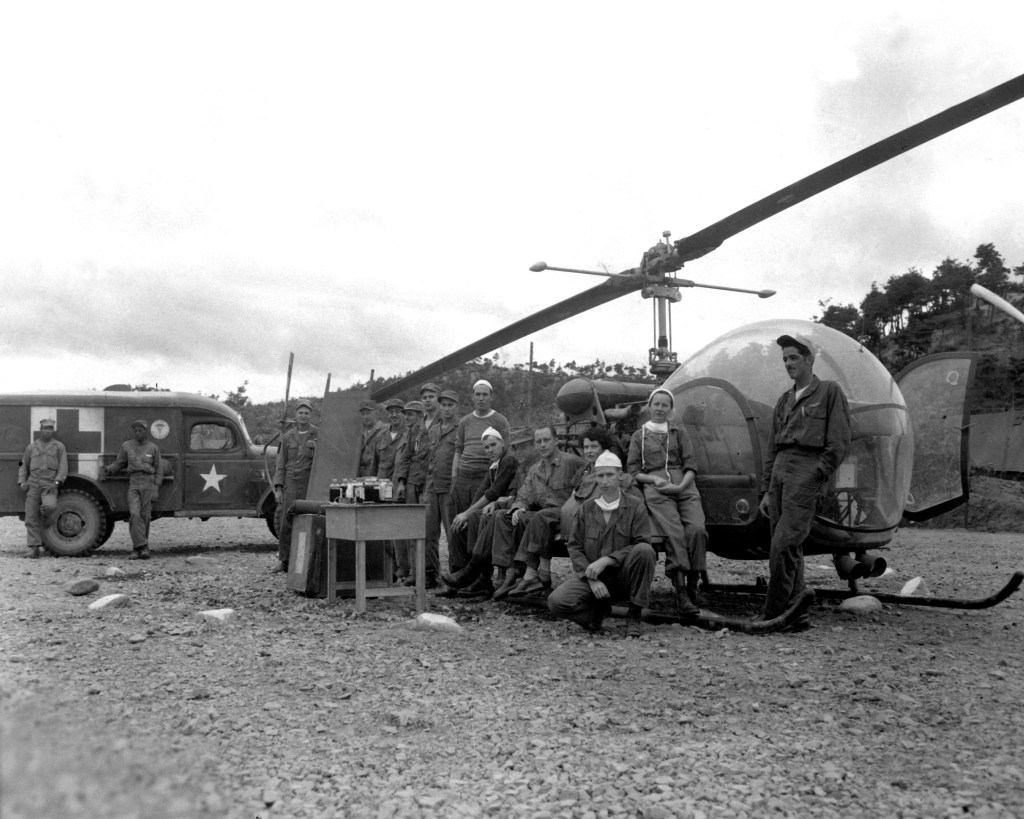
    A MASH unit was a mobile, fast-moving trauma hospital used heavily during the Korean War (1950–1953). It could be set up in tents and moved as battle lines shifted.

    Compared to WWII field hospitals:

    • MASH units were closer to the battlefield
    • They performed surgery within hours
    • They used helicopters to bring wounded soldiers
    • They had specialized teams, not general doctors

    This led to a huge breakthrough:
    Over 97% of soldiers who reached a MASH unit survived — an incredible statistic for its time 【1】.

    Helicopter Evacuation (MEDEVAC)

    Korea was the first war where helicopters were widely used to move wounded troops.
    Helicopters cut travel hours into minutes.

    This concept is now the backbone of civilian:

    • air ambulances
    • trauma centers
    • organ transport systems

    If you’ve ever seen a red helicopter landing at a hospital, that is a direct legacy of MASH.


    3. Vietnam: Trauma Care Goes High-Tech

    If Korea invented fast care, Vietnam improved the science behind it.
    The U.S. military studied wounds, blood loss, and survival more deeply than ever.

    Key medical advances from Vietnam:

    1. Advanced Trauma Life Support (ATLS)

    After seeing common patterns in battlefield injuries, doctors created a standardized system:

    1. Airway
    2. Breathing
    3. Circulation
    4. Disability
    5. Exposure

    This became ATLS, still used in every emergency room today.

    2. Better Blood Transfusions

    Vietnam research helped create:

    • blood-typing systems
    • transportable plasma
    • safer transfusion methods

    Today these save countless lives in civilian hospitals.

    3. Improved Burn Treatment

    Napalm injuries forced doctors to study burns deeply.
    This research modernized:

    • burn units
    • skin grafts
    • fluid resuscitation

    Civilian burn care today is a direct result.


    4. The Cold War & Beyond: Technology Joins Medicine

    While the Cold War did not always include open battle, it pushed massive innovation in:

    • computers
    • imaging
    • materials science
    • logistics

    These technologies entered medicine rapidly.

    Examples:

    1. MRI and CT Scanning

    Military research into radiation, electronics, and advanced computing helped create the imaging machines we use today.

    2. Prosthetics

    The need to replace limbs lost in war fueled:

    • carbon-fiber prosthetics
    • hydraulic joints
    • nerve-linked prosthetics (modern bionics)

    3. Trauma Systems

    By the 1980s, civilian trauma centers were built using military models:

    • triage
    • rapid transport
    • specialized trauma surgeons

    If you have Level 1 trauma centers in your city, thank the military.


    5. Iraq & Afghanistan: The Modern Era of Battlefield Medicine

    The wars in Iraq and Afghanistan (2001–2021) created the fastest medical advances since WWII.

    1. Tourniquets Save Lives

    Early in the wars, doctors discovered something shocking:

    Many soldiers died from simple limb bleeding.

    The solution?
    A return to the old-fashioned tourniquet, redesigned with modern materials.

    These new tourniquets dropped death from limb bleeding by 85% 【2】.

    Today police officers, firefighters, and even teachers carry them.

    2. Combat Gauze (QuikClot)

    A special medicated bandage that stops severe bleeding almost instantly.
    It is now used in:

    • ambulances
    • emergency kits
    • civilian hospitals

    3. Full “Trauma Chains”

    The military built complete systems:

    • Tactical Combat Casualty Care (TCCC)
    • Forward surgical teams
    • Drone medical resupply
    • Rapid medical evacuation networks

    These systems inspired modern civilian emergency services.

    4. Telemedicine

    Remote diagnosis began on the battlefield — now it’s in your phone.

    Doctors in the U.S. could advise medics in Afghanistan instantly.
    Today millions of civilians use telemedicine daily.


    6. Why War Speeds Up Medical Innovation

    War pushes doctors to solve problems they cannot avoid:

    • Too many injured at once
    • Limited supplies
    • Harsh environments
    • New weapons creating new types of injuries

    This pressure forces rapid experimentation.

    Three reasons wartime medicine evolves fast:

    1. High Volume = High Learning

    Thousands of similar injuries allow doctors to spot patterns quickly.

    2. Unlimited Government Funding

    Governments spend heavily during war — research becomes urgent.

    3. Innovation Without Bureaucracy

    Ideas can jump from concept to field test in weeks, not years.

    Some breakthroughs would take decades in civilian systems but take months in wartime.


    7. How Civilian Healthcare Absorbs Military Innovation

    Not all wartime breakthroughs become civilian tools right away.
    But over time, most do.

    Here’s how military ideas enter hospitals:

    Step 1: Military research proves it works

    Battlefield results show survival rates increase.

    Step 2: Civilian researchers test it

    Universities run controlled trials.

    Step 3: Hospitals adopt it

    Hospitals copy trauma systems, equipment, and procedures.

    Step 4: Government regulators approve it

    FDA and global health agencies authorize public use.

    This is how we got:

    • trauma centers
    • air ambulances
    • advanced prosthetics
    • portable ultrasound
    • telemedicine
    • MASH-style emergency tents used in disasters

    Almost every modern emergency room today has a “military fingerprint.”


    8. Hidden Innovations You Use Every Day (Thanks to War)

    Here are common things that exist because of wartime medicine:

    1. Penicillin mass production

    WWII forced large-scale antibiotic production.

    2. Plastic surgery techniques

    Developed after soldiers suffered severe burns in WWI and WWII.

    3. Ambulances & EMT standards

    Vietnam and civilian riots pushed the creation of modern EMT training.

    4. ER Triage Systems

    Born directly from battlefield triage.

    5. Portable defibrillators

    Miniaturized through Cold War research.

    6. Hydration packets (ORS)

    Improved during Vietnam; now used for children worldwide.

    7. Vaccination campaigns

    The military organized some of the first large-scale immunization programs.

    Wartime breakthroughs surround us daily.


    9. Case Study: How MASH Still Saves Lives in 2025

    Natural disasters today — earthquakes, typhoons, wildfires — often destroy local hospitals.
    In response, countries deploy mobile surgical units, directly inspired by MASH.

    These units:

    • unfold in hours
    • run on generators
    • include mini-ICUs
    • perform full surgeries
    • are airlifted into remote areas

    During COVID-19, several countries built field hospitals using military concepts.

    MASH never really disappeared — it simply became part of everyday disaster response.


    10. The Future: How Modern Wars Will Shape Tomorrow’s Healthcare

    The next generation of medicine is already being tested on modern battlefields.

    Here’s what’s coming:

    1. Drone Medical Delivery

    Drones are already used to move:

    • blood
    • medicine
    • vaccines
    • organs

    2. AI Battlefield Diagnosis

    Smart algorithms can analyze:

    • bleeding
    • breathing
    • medical scans

    Even in chaotic environments.

    3. Robotic Surgery

    Robots can perform surgeries closer to war zones, controlled by doctors far away.

    4. Smart Bandages

    Bandages will:

    • monitor wounds
    • release antibiotics
    • send alerts
    • track healing

    5. Regenerative Medicine

    Research on injured soldiers is pushing breakthroughs like:

    • lab-grown skin
    • tissue scaffolding
    • regenerating bone

    Conclusion: War Is Tragic — But Medicine Learns and Saves Millions

    War should never be celebrated. But history shows a clear truth:

    Wartime medicine becomes peacetime healthcare.

    What doctors learn in the worst conditions often saves more lives in peace than in war.
    MASH units, helicopter evacuation, trauma systems, telemedicine, prosthetics, and modern emergency rooms — all of these owe their existence to wartime innovation.

    And the next medical revolution may already be happening, somewhere on a battlefield, ready to enter the civilian world.


    📚 Citations

    1. Baskin, L. (2002). Military Medicine in Korea: The MASH Legacy. Military Medicine Journal.
    2. Butler, F. (2017). Tactical Combat Casualty Care: Achievements and Lessons. Journal of Special Operations Medicine.
    3. U.S. Army Medical Department. History of Army Medical Evacuation.
    4. Hardaway, R. (2006). The Development of Combat Trauma Care. Trauma Journal.
    5. Coupland, R. (2001). War and Medicine: The Science of Casualty Care. International Committee of the Red Cross.
    6. U.S. Department of Defense. (2012). Joint Theater Trauma System Annual Report.
    7. Gawande, A. (2004). Casualties of War — Advances in Trauma Care. New England Journal of Medicine.
    8. Kragh, J. (2008). Battlefield Tourniquets and Limb Hemorrhage Survival. Annals of Surgery.
    9. National Academies of Sciences. (2016). A National Trauma Care System: Integrating Military and Civilian Trauma Systems.
    10. Spinella, P. (2011). The Influence of Military Medical Research on Civilian Trauma Care. Transfusion Medicine Reviews.
  • The Forgotten Front: Why the Korean War Faded from Memory

    The Forgotten Front: Why the Korean War Faded from Memory

    The War Everyone Fought, but No One Remembered

    The Korean War began on June 25, 1950, when North Korean forces poured across the 38th parallel and invaded South Korea.

    For three years, soldiers from across the world — especially the United States, South Korea, and United Nations allies — fought in freezing mountains, bombed-out cities, and muddy trenches.

    Yet today, when people speak of great wars, most remember World War II or Vietnam. The Korean War rarely makes the same lists, documentaries, or memorials. It’s often called “The Forgotten War.”

    Why did a conflict that claimed more than three million lives fade so quickly from public memory? The answer lies not just in the battlefield, but in the politics, media, and timing that shaped how the war was remembered.


    1. The War That Wasn’t Declared

    Unlike World War II, the Korean War wasn’t officially a declared war — it was a “police action.” U.S. President Harry Truman never asked Congress for a formal declaration. Instead, the United Nations authorized the use of force to defend South Korea.

    That language mattered.
    Without the patriotic speeches, victory parades, and posters that defined World War II, Americans didn’t see the Korean War as a grand crusade — just another distant conflict in Asia.

    For soldiers who fought there, the lack of recognition was painful. They risked their lives under the same dangers as World War II veterans, yet came home to silence and indifference.

    “We went, we fought, and we came back — and nobody cared,” one veteran later said.


    2. The Media’s Quiet War

    During World War II, reporters embedded with troops sent back vivid stories and heroic images. By contrast, the Korean War came at an awkward moment in media history. Television was still new, radio was fading, and newspapers were turning their attention to the early Cold War.

    America marks 70th anniversary of end of Korean War | Article | The United  States Army

    News from Korea was slow, often black-and-white footage of mud and snow. Without dramatic visuals, the public couldn’t connect emotionally.

    Worse, reporters called it a stalemate — a word that killed enthusiasm. Americans didn’t see victory or progress, only endless fighting with no clear end.

    By 1953, as the armistice was signed, few people outside the military even noticed the final battles. The war simply slipped off the front page.


    3. Cold War Fatigue

    The Korean War happened just five years after World War II ended. Many countries were still rebuilding their economies and mourning millions of dead.

    When the Korean War began, people felt war fatigue. They didn’t want another global conflict. Governments avoided dramatic language to prevent panic, while the public tuned out.

    At the same time, the Cold War between the U.S. and the Soviet Union was heating up. Korea became just one front in a much larger struggle — overshadowed by nuclear fears, spies, and propaganda.

    By the 1950s, headlines shifted to the arms race and McCarthyism at home, while soldiers still fought and froze on Korean hillsides.


    4. No Clear Victory

    The Korean War ended in armistice, not victory. The 38th parallel — the line that divided North and South — stayed right where it was.

    Unlike World War II, there was no surrender ceremony, no peace treaty, no victory march through Seoul or Pyongyang. The war simply stopped.

    For many, that felt like defeat. Politicians called it “containment,” not triumph. Veterans came home without medals of victory, only memories of survival.

    This lack of closure made it easy for the war to fade — because there was no clear ending to remember.


    5. The Human Cost Forgotten

    The Korean War | American Experience | Official Site | PBS

    Behind the politics and strategy were millions of ordinary people whose lives were torn apart. Cities like Seoul changed hands four times during the war. Families were split across the border, some never reunited again.

    Over 2.5 million Korean civilians died — many caught in the crossfire or bombings. Refugees poured south in endless columns.

    Yet their stories were rarely told. Western audiences saw Korea as a faraway place, not a people with faces and names.

    Only decades later did historians and filmmakers begin to recover these voices — stories of children orphaned, families divided, and survivors rebuilding from ashes.


    6. The Veterans’ Long Silence

    When American and UN soldiers returned home, there were no big parades. The U.S. was already moving on — new cars, new suburbs, new fears of communism.

    Many veterans didn’t talk about Korea for years. Some felt forgotten; others believed no one wanted to hear.

    In South Korea, too, the war left deep scars. The country rebuilt under strict rule, and memories of the conflict were often suppressed in favor of modernization.

    It wasn’t until the 1980s and 1990s that public recognition grew. The Korean War Veterans Memorial in Washington, D.C. — unveiled in 1995 — finally gave a voice to those who had been forgotten.


    7. Lessons in Memory and Honor

    The Korean War shows that history isn’t just about what happens — it’s about what people choose to remember.

    Wars fade not because they were unimportant, but because they don’t fit simple narratives of victory or loss. The Korean War was a brutal, necessary stalemate that stopped communism from spreading south, setting the stage for South Korea’s eventual rise into democracy and prosperity.

    Remembering it means honoring not only soldiers, but also the civilians who suffered and survived.

    As one veteran wrote in his diary:

    “We didn’t lose. We didn’t win. But we did our duty — and that should count for something.”

    Conclusion: The War That Built the Present

    The Korean War might be called “forgotten,” but its impact still shapes the world. The border at the DMZ remains one of the most dangerous on Earth. South Korea’s rise from rubble to global powerhouse stands as a symbol of resilience.

    For the United States, the Korean War marked the beginning of modern limited warfare — a conflict fought not for conquest, but for containment.

    Remembering the Forgotten War is more than looking back — it’s understanding how fragile peace truly is

  • MiG Alley: The Jet Dogfights That Changed Air Combat Forever

    MiG Alley: The Jet Dogfights That Changed Air Combat Forever

    How the Skies Over Korea Became the Birthplace of the Jet Age


    Introduction: A New Kind of War in the Skies

    In the early 1950s, as the Korean War raged across the peninsula, another kind of battle unfolded far above the clouds.

    This wasn’t like the dogfights of World War II — propeller planes circling in the blue sky. This was something entirely new.

    Jet engines.
    Supersonic speeds.
    Split-second decisions that decided life or death.

    Over a narrow stretch of northwestern Korea, near the Yalu River, pilots from the United States and the Soviet Union (though Moscow denied it) faced off in the world’s first major jet-versus-jet combat.

    They called it MiG Alley — a place where skill, nerves, and technology were pushed to their limits.

    What happened in those skies would change the future of air combat forever.


    The Setting: The Birth of Jet Warfare

    By the time the Korean War broke out in June 1950, jet aircraft were still new technology.

    Both sides started the war flying World War II–era propeller planes — the U.S. used the F-51 Mustang, and the North Koreans flew Soviet-built Yak-9 fighters.

    But that changed fast.

    When the Soviet-built MiG-15 appeared in late 1950, everything changed.

    With swept wings, a pressurized cockpit, and a powerful jet engine, the MiG could climb higher, fly faster, and turn tighter than anything the U.N. forces had seen before.

    It could reach speeds of almost 670 miles per hour and operate at altitudes above 50,000 feet — well beyond the reach of older aircraft.

    For a while, the skies over North Korea belonged to the enemy.


    Enter the F-86 Sabre: America’s Answer

    The U.S. needed something to match the MiG — and fast.

    Enter the North American F-86 Sabre, one of the most advanced fighter jets of its time.

    It had swept wings like the MiG, radar-assisted gunsights, and powerful .50 caliber machine guns.

    But the Sabre’s real strength wasn’t just speed — it was stability and precision.
    At high speeds, it was easier to control than the MiG, giving American pilots an edge in tight maneuvers.

    When the Sabre took to the skies in late 1950, the stage was set for a clash unlike any before.


    MiG Alley: The Deadliest Airspace on Earth

    The battles took place over a stretch of northwestern Korea along the Yalu River, near the Chinese border.

    The area soon earned a name whispered with respect and fear — MiG Alley.

    It became the hunting ground of the USAF’s 4th Fighter Interceptor Wing and the Soviet 64th Fighter Aviation Corps.

    American pilots were told to stay south of the Yalu to avoid provoking China or the USSR, but MiGs would swoop down from the north, strike, and retreat across the river to safety.

    The result?
    A daily aerial chess match between two of the most advanced fighter forces on the planet.


    The Men Behind the Machines

    The dogfights of MiG Alley weren’t just about machines — they were about the men who flew them.

    U.S. pilots were veterans of World War II — experienced, disciplined, and aggressive.
    They called themselves the “Sabre Men.”

    Their Soviet opponents were equally skilled, though officially “volunteers.”
    They wore Chinese or North Korean uniforms, flew aircraft with red star insignias, and operated under strict secrecy.

    Among them was Soviet ace Nikolai Sutyagin, who scored 22 kills — one of the highest of the war.
    On the American side, Captain Joseph McConnell became the top U.S. ace with 16 victories.

    These pilots lived by the second — and often died by it.


    Dogfighting at the Speed of Sound

    Air combat over MiG Alley was brutal and fast.
    A pilot had less than a few seconds to spot, target, and fire before the enemy disappeared into a blur.

    The F-86 Sabre’s advanced gyro gunsight gave it an edge — it predicted enemy movement, helping pilots lead their shots.

    But the MiG-15 had superior climb and altitude performance, often using “boom and zoom” tactics — diving from above, firing, and escaping skyward.

    The result was a deadly dance of angles and velocity.

    At these speeds, every decision was instinct.
    Every mistake, fatal.

    As one Sabre pilot later said:

    “You didn’t fight the MiG. You fought the man flying it.”


    The Shadow War: Soviets in the Sky

    Officially, the Soviet Union never fought in the Korean War.
    Unofficially, they were deeply involved.

    From late 1950 onward, Soviet pilots secretly flew hundreds of missions from air bases in Manchuria.

    Their jets carried North Korean or Chinese markings, and radio operators spoke in broken Korean to maintain the illusion.

    But American pilots weren’t fooled.

    Intercepted radio chatter and combat reports revealed that many of the MiG pilots spoke perfect Russian — and fought with precision far beyond what North Korea could train.

    In truth, MiG Alley had become the first direct aerial clash between American and Soviet pilots — the Cold War’s hidden front.


    Tactics and Technology: The Future Takes Shape

    The duels in MiG Alley changed air combat forever.

    Fighter tactics evolved from turning dogfights to energy warfare — controlling altitude, speed, and position to gain the advantage.

    The concept of the “kill zone” — a cone of fire extending from a jet’s nose — became the standard in aerial gunnery.

    New innovations also emerged:

    • Radar control and early warning systems to guide intercepts.
    • Mid-air refueling to extend range.
    • Jet training schools focused on energy management and teamwork.

    The lessons learned over MiG Alley would shape every air force in the world for decades to come.


    Life and Death in the Cockpit

    Behind every dogfight was a young man pushing the limits of fear and physics.

    Sabre pilots often flew two or three missions a day, facing freezing altitudes and crushing G-forces.
    Cockpits were cramped, noisy, and dangerous.

    When hit, a pilot had seconds to eject — hoping his chute opened before the ground reached him.

    If captured in North Korea, his fate was uncertain.

    But despite the risks, pilots volunteered in droves. The skies over MiG Alley became the ultimate test of skill, courage, and endurance.


    The Numbers: Victory and Controversy

    Official U.S. Air Force records claimed 792 MiGs destroyed for 78 Sabres lost — a stunning 10-to-1 kill ratio.

    Soviet records, however, told a different story, claiming 600 U.N. aircraft destroyed for 335 MiG losses.

    The truth likely lies somewhere in between.

    But what’s undisputed is this — the F-86 Sabre dominated the skies in the war’s later years, and MiG Alley became the proving ground for the modern fighter jet.


    Legacy: The Jet Age Is Born

    When the Korean War ended in 1953, MiG Alley faded into history — but its influence did not.

    The dogfights there were the prototype for modern air combat: radar-guided missiles, supersonic speeds, and electronic warfare.

    Many of the pilots who fought there would go on to shape the Cold War’s air strategy, train new generations of aviators, and even fly in Vietnam.

    And the lessons learned — about technology, adaptability, and pilot psychology — still guide air combat training today.

    As aviation historian Walter Boyne wrote:

    “MiG Alley was where the jet age was baptized by fire.”


    Conclusion: The Battle Above the Yalu

    MiG Alley wasn’t just a stretch of sky — it was the dawn of a new era.

    In that cold, thin air, the world saw what war in the modern age would look like: faster, deadlier, and fought with machines that left no room for error.

    It was a clash of ideologies, nations, and nerves.

    And for the men who fought there, it was the place where courage met speed — and history took flight.

    Cited Sources

    • Boyne, Walter J. MiG Alley: The Fight for Air Superiority. Smithsonian Books, 2000.
    • Thompson, Warren. F-86 Sabre vs MiG-15: Korea 1950–53. Osprey Publishing, 2010.
    • Futrell, Robert F. The United States Air Force in Korea, 1950–1953. U.S. Air Force Historical Study, 1983.
    • Werrell, Kenneth P. Sabres Over MiG Alley. Naval Institute Press, 2005.
    • National Museum of the United States Air Force Archives.
  • The Secret Fuel Lines of D-Day: How the PLUTO Pipeline Powered Victory

    The Secret Fuel Lines of D-Day: How the PLUTO Pipeline Powered Victory


    The Hidden Lifeline of War

    When most people picture D-Day, they imagine soldiers storming the beaches of Normandy, tanks rolling inland, and aircraft flying overhead.
    But few realize that victory didn’t just depend on courage — it depended on fuel.

    The Allied invasion of Europe wasn’t just an army on the move — it was a machine that needed constant feeding.
    Every tank, truck, and plane ran on fuel. Without it, even the most powerful military would grind to a halt.

    The problem was simple: how could the Allies supply millions of gallons of fuel to France without relying on vulnerable tankers?

    The answer was a bold idea that sounded almost impossible:

    “Let’s build a fuel pipeline… under the ocean.”

    They called it PLUTO — short for Pipeline Under the Ocean — and it became one of the greatest engineering secrets of World War II.


    Operation PLUTO: Churchill’s Daring Idea

    The concept came directly from Winston Churchill’s obsession with logistics.
    He understood that the success of the Normandy invasion wouldn’t just depend on firepower, but on supply.

    In 1942, British scientists and engineers were tasked with developing a submarine pipeline system capable of pumping fuel across the English Channel — directly from Britain to the advancing armies in France.

    It was an idea ahead of its time — blending engineering, innovation, and secrecy.

    To the world, PLUTO was a myth. To the Allies, it was their hidden artery of war.


    Building the Impossible: The Engineering Challenge

    The English Channel is no calm pond. It’s a rough, deep, unpredictable stretch of water with tides, storms, and enemy submarines.
    Building a fuel pipeline beneath it in 1944 seemed absurd — yet the Allies refused to give up.

    Two main designs were created:

    1. The HAIS Cable
      • Developed by British engineer H.A. Hammick and Siemens Brothers.
      • It looked like a giant undersea electrical cable.
      • Layers of lead, steel, and asphalt protected the inner rubber hose.
      • Could pump up to 700 gallons per hour.
    2. The HAMEL Pipe
      • A steel pipeline coiled around huge floating drums called Conundrums (because of their strange shape).
      • These drums were towed by ships across the Channel, unspooling the pipe as they moved.
      • Each section stretched over 30 miles long.

    The pipelines were designed to connect Britain’s fuel depots — mainly on the Isle of Wight — to the beaches of Normandy after D-Day.


    Operation Fortitude: Secrecy at All Costs

    Everything about PLUTO was top secret.
    It was so secret, in fact, that many of the workers laying the pipes didn’t know what they were for.

    The operation was protected under the larger deception effort known as Operation Fortitude, which created fake armies and invasion plans to confuse the Germans.

    Code names were given to every part of the project:

    • BAMBI – the route from the Isle of Wight to Cherbourg.
    • DUMBO – the route from Dungeness to Boulogne.

    Even the word pipeline was never used in official communication. Engineers spoke of “cables,” “lines,” or “special conduits.”

    Churchill personally followed the project’s progress and called it “one of the most daring engineering adventures of the war.”


    Launch Day: The Pipeline Goes to War

    The first PLUTO line — BAMBI — was laid in August 1944.
    It stretched over 50 miles under the English Channel, from the Isle of Wight to Cherbourg in France.

    Ships slowly towed the massive Conundrums, releasing the pipeline as they went.
    Each drum weighed more than 250 tons and carried over 30 miles of coiled steel pipe.

    The first attempt failed — the pipe snapped under pressure from the waves.
    But the engineers adapted, strengthened the design, and tried again.
    By September 1944, fuel was successfully flowing under the sea — from Britain straight to the heart of Europe.

    By the end of the operation, 21 pipelines were laid across the Channel.


    Feeding the Front: The Lifeblood of Victory

    The PLUTO network supplied the advancing Allied armies with over 180 million gallons of fuel by the end of the war.

    That’s enough to:

    • Power 1 million tanks,
    • Fly thousands of fighter missions,
    • Or fuel every vehicle used in the liberation of France.

    At its peak, the system delivered one million gallons per day, quietly and safely beneath the waves.

    Unlike oil tankers — which could be sunk by German U-boats — PLUTO was invisible, invulnerable, and unstoppable.

    The success of PLUTO meant the Allies could maintain their momentum all the way from Normandy to Berlin — without ever running dry.


    Innovation Under Fire

    The PLUTO project pushed the limits of wartime engineering.

    • Underwater welding and pressure testing techniques pioneered for PLUTO laid the foundation for modern offshore pipelines.
    • The Conundrum spools became the model for future deep-sea cable laying systems.
    • The entire operation showed that logistics could win wars just as much as combat.

    As historian Basil Liddell Hart once said:

    “Victory in war is not gained by the brilliance of strategy, but by the strength of supply.”

    PLUTO proved that statement beyond doubt.


    Human Stories: The Engineers Who Made It Happen

    Thousands of workers, scientists, and soldiers contributed to PLUTO — often without knowing the full scale of what they were building.

    • Geoffrey Lloyd, the British Petroleum Minister, coordinated resources across secret government departments.
    • Lord Louis Mountbatten supported the project as part of Combined Operations.
    • Civilians from oil companies, telecom firms, and steel factories all played roles in fabricating the components.

    At one point, British street lamps were dismantled to recover the copper needed for pipeline wiring.

    The project blurred the line between civilian industry and military necessity — a hallmark of total war.


    Challenges and Failures Along the Way

    PLUTO was not without its problems.

    • Some of the early lines broke due to ocean pressure and seabed movement.
    • The BAMBI line delivered less fuel than expected due to technical issues.
    • The DUMBO line required constant maintenance as Allied forces advanced inland.

    Yet the psychological and strategic value of PLUTO was enormous.
    It gave Allied commanders confidence that their supply lines could stretch across the Channel — a vital factor in maintaining the offensive.

    By early 1945, PLUTO had proven itself indispensable.


    Aftermath and Legacy

    When the war ended, the pipelines were no longer needed — but their legacy was just beginning.

    The PLUTO project inspired:

    • Modern underwater oil and gas pipelines.
    • Transatlantic communication cables.
    • Offshore energy infrastructure.

    In peacetime, the same technology that fueled tanks would later fuel economies.

    Today, remnants of PLUTO can still be seen along the coastlines of Britain and France.
    Museums at Sandown and Arromanches preserve sections of the original pipes, and visitors can still trace the routes once known only to wartime engineers.

  • The Floating Harbors of D-Day: How the Mulberries Built a Beachhead

    The Floating Harbors of D-Day: How the Mulberries Built a Beachhead


    Prelude to the Invasion: The Impossible Problem

    On June 6, 1944, thousands of Allied ships crossed the English Channel toward Normandy in what would become the largest amphibious invasion in history — D-Day. But behind the courage of the soldiers storming the beaches was a quieter, equally daring operation — one that involved not rifles and tanks, but engineering and imagination.

    The problem was simple but brutal:
    Once the Allies landed in France, they needed a way to bring in supplies — fuel, ammunition, food, and reinforcements — faster than the Germans could counterattack.

    The French ports, like Cherbourg and Le Havre, were heavily defended or destroyed. Landing craft could unload tanks and trucks on beaches, but not enough to sustain an army of millions.

    So Churchill posed a bold idea:

    “If we cannot capture a port, we must take one with us.”

    That line birthed one of the greatest engineering miracles of the war — the Mulberry Harbours.


    The Great Gamble: Building a Port That Floats

    In 1943, British and American engineers began planning what seemed impossible: portable harbors that could be assembled off the coast of Normandy.

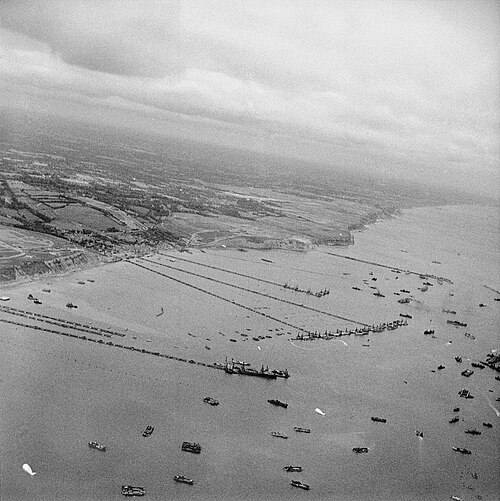
    The plan called for two artificial ports:

    • Mulberry “A” for the Americans at Omaha Beach
    • Mulberry “B” for the British at Arromanches

    Each harbor would include:

    • Massive concrete caissons (called Phoenixes) to form breakwaters
    • Old, scuttled ships (Gooseberries) sunk in a line to block waves
    • Floating pier roadways (Whales) connecting the sea to shore
    • Pierheads (Spuds) that could rise and fall with the tide

    In total, the project required over 600,000 tons of concrete, 33 jetties, and 10 miles of floating roadways — all secretly built in British shipyards.

    To hide the project, the parts were built in pieces and moved under the cover of night. Workers had no idea what the final structure would become. Some even thought they were helping build an “invasion bridge” or “floating fort.”


    The Engineering Genius Behind It

    Each Mulberry was like a giant mechanical organism.

    • The Phoenix caissons were hollow concrete boxes the size of apartment buildings, sunk in precise positions to form an artificial breakwater.
    • The Whale roadways were steel bridges mounted on floating pontoons, flexible enough to withstand waves but strong enough to carry tanks.
    • The Spud pierheads were adjustable platforms supported by massive legs that rested on the seabed — allowing ships to unload regardless of tide levels.

    Together, these components turned open water into a fully functioning port — capable of unloading thousands of tons of supplies daily.

    This was logistics warfare at its peak. It was about not just winning battles, but feeding victory.


    D-Day and the Arrival of the Mulberries

    When D-Day began on June 6, 1944, the first landings were chaotic. Beaches were littered with wreckage, men, and machines. The Mulberry harbors wouldn’t arrive for several days — but when they did, they changed everything.

    By June 9, convoys began towing the giant pieces across the Channel. The operation was immense: over 140 tugboats hauling 200 prefabricated parts through rough seas.

    The British Mulberry (“B”) at Arromanches became operational first. Within days, ships were unloading tanks, trucks, ammunition, and food directly onto the floating piers — all without needing a natural harbor.

    The American Mulberry (“A”) at Omaha Beach also began unloading cargo — until a violent storm hit on June 19, 1944.


    The Storm That Tested the Steel

    For three days, the worst storm in 40 years battered the Normandy coast. Winds reached 65 miles per hour, waves as high as 20 feet smashed into the floating structures.

    Mulberry “A” was destroyed — broken apart and scattered across the sea. The Americans salvaged what they could, but most of it was beyond repair.

    The British Mulberry “B,” however, survived — damaged but functional. The British engineers worked tirelessly to repair it, and it remained operational for the next 10 months.

    This single harbor, nicknamed “Port Winston,” became the lifeline of the Allied advance.


    Feeding the Front: The Numbers That Won the War

    What Mulberry “B” achieved was staggering.

    Between June 1944 and May 1945, Port Winston handled:

    • Over 2.5 million men
    • 500,000 vehicles
    • 4 million tons of supplies

    That’s the equivalent of an entire modern army — all funneled through a floating harbor made from steel, concrete, and vision.

    Without it, the Normandy invasion might have stalled before Paris. The Allies would have struggled to maintain momentum, and the war in Europe could have dragged on for months longer.


    The Hidden Legacy of Mulberry

    After the war, most of the Mulberry structures were dismantled, but parts still remain off the coast of Arromanches — silent relics of innovation and determination.

    The engineering lessons from the Mulberry Harbours influenced:

    • Modern modular construction
    • Offshore oil platforms
    • Temporary bridge systems
    • Disaster relief logistics

    Today, military planners still study Operation Mulberry as a case study in adaptive logistics and rapid infrastructure deployment.

    It’s proof that wars aren’t only won by soldiers — they’re also won by engineers, builders, and dreamers.


    Quote from the Front

    “Amateurs talk about tactics. Professionals talk about logistics.”
    — General Omar Bradley

    Conclusion: The Ports That Won the War

    The Mulberry Harbours were more than concrete and steel — they were symbols of ingenuity and courage under pressure.
    When soldiers stormed the beaches, they carried rifles. But behind them came the builders, welders, and engineers who built the invisible bridges to victory.

    Their floating ports didn’t just carry supplies — they carried hope, one wave at a time.

  • 💌 Letters from Home: How Mail Won Hearts and Kept Soldiers Alive

    💌 Letters from Home: How Mail Won Hearts and Kept Soldiers Alive

    Introduction: The Most Powerful Weapon Wasn’t a Rifle — It Was a Letter

    Morale | National Postal Museum

    In every war, soldiers carry weapons, wear uniforms, and follow orders.
    But there was something else every soldier carried — something invisible yet vital.

    A connection to home.

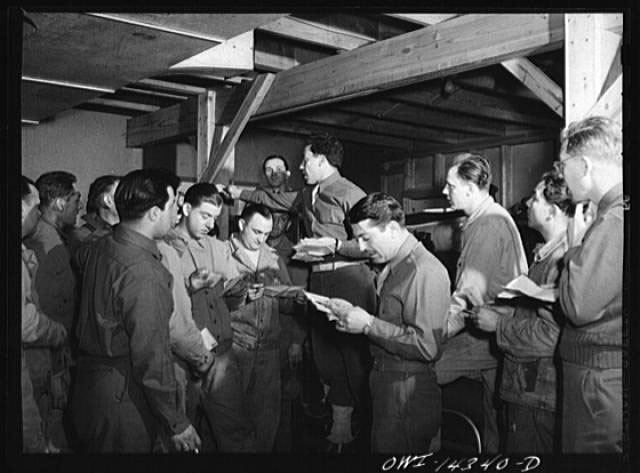
    During World War II, this connection came through letters — millions of them, written by mothers, wives, sweethearts, and children. These letters were the lifeline between two worlds: the frontlines of war and the safety of home.

    They gave soldiers hope, kept morale alive, and sometimes made the difference between breaking down and holding on.

    This is the story of how mail — the simplest form of communication — became one of the most important tools of war.


    1. The Emotional Battlefield: Why Letters Mattered More Than Ammo

    When a soldier fights thousands of miles away from home, isolation can be the deadliest enemy.
    Food and ammunition keep the body alive — but words from home kept the spirit alive.

    Letters reminded soldiers why they were fighting.
    They carried love, laughter, and faith in small, fragile envelopes that crossed oceans and battlefields.

    In a survey by the U.S. Army during WWII, 87% of soldiers said mail was their “most important morale booster.”
    For many, reading a letter was more thrilling than receiving medals or pay.

    As one private wrote in his journal:

    “A letter from home is like a piece of heaven. For a few minutes, I forget there’s a war.”


    2. The Mail Machine: How Armies Delivered 12 Million Letters a Day

    Christmas Post in WWII - The Postal Museum

    Delivering these emotional lifelines was no small task.
    By 1945, the U.S. military postal system was handling over 12 million pieces of mail every day.

    This was a logistical miracle — powered by thousands of postal clerks, ships, trucks, and even airplanes dedicated solely to mail.

    Letters traveled from the U.S. to the frontlines through a complex network:

    • Collected at hometown post offices
    • Routed to military postal centers
    • Sent overseas by ship or plane
    • Sorted again in theater post offices
    • Delivered directly to army units in the field

    Even on D-Day and during the Battle of the Bulge, soldiers received mail — sometimes dropped by parachute or delivered under fire.

    For the men in the trenches, it was proof that the world still remembered them.


    3. V-Mail: The High-Tech Solution of WWII

    With so much mail flooding across oceans, the U.S. faced a problem: how to transport it all without sinking ships under the weight of paper.

    The solution? Victory Mail, or V-Mail — one of the first large-scale uses of microfilm technology.

    Here’s how it worked:

    1. Families wrote letters on special V-Mail forms.
    2. The letters were photographed and reduced to microfilm — each roll holding thousands of messages.
    3. The microfilm reels were flown overseas.
    4. Once there, they were enlarged and printed back into readable letters for soldiers.

    This reduced the weight of mail by 98% and made delivery faster and safer.

    The result: a soldier could receive a letter written in New York within days, not weeks.

    It was technology with a human touch — a wartime version of email before email existed.


    4. The Power of the Pen: Letters That Changed Lives

    Some letters did more than comfort — they inspired.

    One of the most famous letters came from President Franklin D. Roosevelt, who wrote to American troops before D-Day:

    “The eyes of the world are upon you. The hopes and prayers of liberty-loving people everywhere march with you.”

    Others were deeply personal — a wife’s reassurance, a child’s drawing, or a photo folded into a uniform pocket.
    Some soldiers carried those letters through entire campaigns, reading them until the ink faded.

    The U.S. Army even encouraged families to write often, issuing posters that read:

    “Mail is a Soldier’s Morale — Write Today!”

    The British Army had a similar slogan:

    “Write and Keep Him Smiling.”


    5. Letters from the Front: The Other Side of the Envelope

    Soviet soldiers reading a letter they have received while smiling, 1945(?)  Eastern front - World War II : r/wwiipics

    While soldiers waited for mail from home, they also wrote letters back — sometimes hundreds during their service.

    These letters gave families glimpses into the war: the boredom, the terror, and the moments of strange beauty.
    They became historical treasures — emotional records of what war really felt like.

    One soldier in Italy wrote:

    “The days are long, and the shells fall close. But every night, I read your letter, and it keeps me brave.”

    Censorship was strict — soldiers couldn’t reveal locations or battle plans — but emotions were never censored.
    Even when words were scarce, meaning overflowed.

    A short note that simply said “I’m okay” could lift the weight of a family’s worry thousands of miles away.


    6. Mail in the Trenches: WWI’s Dirt-Stained Letters

    Before WWII’s V-Mail and airplanes, World War I soldiers had only the postman — and mud.

    Letters to WWI Soldiers Project Offers Glimpse into the Brutalities of the  Great War | War History Online

    Mail was carried by hand, horse, and rail across Europe’s trenches.
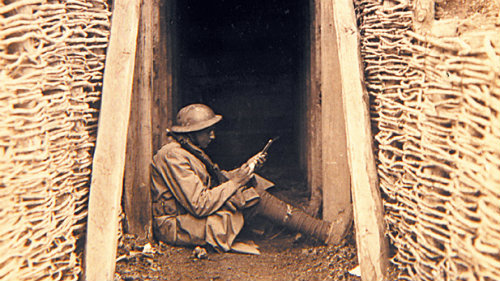
    In some battles, soldiers wrote letters using candlelight in flooded dugouts, sealing them with whatever they had — sometimes mud or wax scraped from ration tins.

    Despite everything, more than 2 billion letters were sent during the war.
    Even under shellfire, British and American troops lined up eagerly for mail call.

    The emotional impact was so strong that commanders noticed a direct pattern:

    When mail delivery stopped, morale dropped.
    When letters arrived, morale soared.

    Mail was as vital as ammunition — it kept the human heart armed.


    7. The Hidden Heroes: The Postal Soldiers

    Behind every love letter and field post were the unsung heroes — the Army Postal Service.

    These men and women sorted, packed, and delivered mail in war zones across Europe, North Africa, and the Pacific.
    They braved submarines, air raids, and long nights sorting sacks of letters by hand.

    No Mail, Low Morale: The 6888th Central Postal Battalion – The Unwritten  Record

    In WWII, the 6888th Central Postal Directory Battalion, an all-Black, all-female unit, became legendary.
    Nicknamed “Six Triple Eight,” they cleared a 17-million-letter backlog in Europe in just three months — working around the clock in freezing warehouses.

    Their motto?

    “No Mail, Low Morale.”

    Without them, the emotional backbone of the army would have collapsed.


    8. Enemy Lines: Letters Behind Barbed Wire

    Even prisoners of war depended on letters to survive mentally.
    Under the Geneva Convention, POWs were allowed to send and receive mail — though heavily censored.

    For captured soldiers, letters were lifelines. They proved they still existed.
    A message that simply said “We’re safe” could ease families’ nightmares back home.

    In Japanese and German camps alike, letters became symbols of hope — sometimes hidden under floorboards or smuggled through Red Cross channels.

    Even when supplies ran out, POWs made their own ink from charcoal and wrote on scraps of paper or cloth — proof that the human need to connect never dies.


    9. The Home Front: Women, Families, and Waiting

    War was not only fought by men overseas — it was endured by women at home.
    Mothers, wives, and girlfriends waited by the mailbox, their hearts rising or sinking with each delivery.

    Many described the sound of the mailman’s footsteps as the most emotional part of the day.

    Some days brought joy — a letter with familiar handwriting.
    Other days brought silence — or worse, a telegram from the War Department.

    Still, they wrote back.
    Every envelope sent was an act of faith, a declaration that love could cross oceans and outlast fear.

    Newspapers often printed advice columns for women, reminding them to “keep letters cheerful” and “send photos often” — as these lifted soldiers’ spirits more than anything else.


    10. Beyond WWII: From Vietnam to Afghanistan

    The magic of letters didn’t end in 1945.

    Vietminh soldiers relaxing and reading letters sent to them in the trenches  of Điện Biên Phủ, The First Indochina War 1954 : r/VietNam

    In Vietnam, soldiers received cassette tapes from home — “audio letters” filled with laughter, songs, and everyday chatter.
    In Iraq and Afghanistan, handwritten notes mixed with emails and video calls — but many soldiers still preferred real letters.

    One Marine in Fallujah wrote:

    “A letter stays with you. You can read it again when the bombs go quiet.”

    Even in the age of instant communication, letters offer something digital messages can’t:
    a physical reminder that someone cares.

    A creased paper still carries fingerprints, a smell, a stain — proof that home exists.


    11. The Legacy: Why We Still Need Letters

    Today, museums and archives preserve millions of wartime letters.
    They’re studied by historians, poets, and families who discover voices long gone.

    But their legacy isn’t just in history — it’s in the lesson they teach.

    That human connection is the strongest defense against despair.
    That a few words written in love can outlast war itself.
    That even when nations fall apart, letters can hold people together.

    As one WWII veteran said decades later:

    “I don’t remember every battle. But I remember every letter.”

  • 🚛 The Red Ball Express: The Convoy That Kept Freedom Rolling

    🚛 The Red Ball Express: The Convoy That Kept Freedom Rolling


    Introduction: The Forgotten Lifeline of D-Day

    In the summer of 1944, after Allied troops stormed the beaches of Normandy, victory seemed close — but there was one huge problem.
    The tanks, trucks, and troops racing across France were running out of fuel, food, and ammunition faster than anyone expected.

    The frontlines moved hundreds of miles ahead of supply bases.
    Trains couldn’t reach the soldiers, roads were bombed out, and ports were still in ruins.

    That’s when a daring idea was born — a rolling highway of trucks that would deliver everything the army needed, day and night.
    It was called the Red Ball Express — and it became the engine behind the Allied push toward victory in Europe.


    1. The Problem: Armies March on Their Stomachs — and Gas Tanks

    By August 1944, the Allied advance after D-Day was lightning fast.
    General Patton’s Third Army, in particular, was racing through France toward Germany.
    But every tank needed gas. Every rifleman needed food. Every gun needed shells.

    And the supply lines?
    They were still stuck on the beaches of Normandy.

    The U.S. Army realized that if it couldn’t move supplies fast enough, the entire invasion could stall.
    In war, logistics are everything — and the Allies were in danger of running dry.

    “My men can eat their belts,” Patton famously said, “but my tanks have got to have gas.”

    So, the Quartermaster Corps came up with a radical solution: build a non-stop convoy highway — dedicated only to trucks hauling supplies.


    2. The Birth of the Red Ball Express

    Red Ball Express - Wikipedia

    The name “Red Ball” wasn’t random.
    In American railroads, a red ball marked express freight lines that had absolute priority — nothing could delay them.

    In August 1944, that idea was reborn on French soil.
    The U.S. Army designated a special route from the beaches of Normandy to the advancing front lines near Chartres and beyond — nearly 700 kilometers (435 miles) of road.

    Only Red Ball trucks could use it.
    Signs with big red circles were placed along the way, and Military Police enforced the rules:

    “No unauthorized vehicles. No stopping. No excuses.”

    At its peak, the Red Ball Express moved 12,500 tons of supplies every day — fuel, food, ammo, medicine — everything the war machine needed.


    3. The Drivers Who Made It Happen

    The real heroes of the Red Ball Express were the drivers — most of them young, inexperienced, and often from segregated African American units.

    Logistics History: The Red Ball Express - Logistics Officer Association

    Out of roughly 23,000 drivers, about 75% were Black soldiers from support regiments.
    At a time when the U.S. Army was still segregated, these men proved their courage not in the trenches — but behind the wheel.

    They drove day and night through mud, rain, and bombed-out roads.
    Sometimes they were attacked by Luftwaffe planes or snipers.
    Sleep was rare. Rest stops didn’t exist.

    They often kept the trucks running with spare parts scavenged from wrecks — and pure determination.

    Their motto became: “Keep ’Em Rolling.”


    4. The Machines That Never Slept

    The Red Ball fleet ran mostly on GMC “Deuce-and-a-Half” trucks — 2.5-ton beasts that could haul heavy loads over bad terrain.

    Each truck carried around 2,500 pounds of cargo, and each driver would make the round trip — up to 1,000 miles a week.

    The route had two parallel roads:

    • One for northbound loaded trucks,
    • One for southbound empties returning for more cargo.

    To speed things up, the convoys ran 24 hours a day, guided by blackout lights at night.
    Even the smallest delay could ripple through the entire chain.

    At the height of operations, more than 6,000 trucks were on the road every single day.


    5. Challenges on the Road

    Driving for the Red Ball Express was no easy task.
    Drivers faced:

    • Narrow French farm roads barely wide enough for two trucks.
    • Bridges damaged by German retreating forces.
    • Fuel shortages even for the supply trucks themselves.
    • Constant exhaustion — and danger.

    To make matters worse, there was no GPS, no modern maps, and no headlights allowed at night.
    Drivers relied on instinct, road markers, and sometimes just the taillight of the truck in front.

    Many slept in their seats, eating cold rations while engines ran.
    Yet they kept going.


    6. How the Red Ball Express Fueled Victory

    By September 1944, the Red Ball Express had delivered over 400,000 tons of supplies.
    That fuel allowed Patton’s tanks to cross France in record time.
    Artillery units had the shells they needed.
    Infantry had food, boots, and ammo.

    General Patton" by Courtesy of the Naval Air Station Fort Lauderdale Museum

    It wasn’t glamorous work — but it was decisive.
    Without it, the Allied advance might have slowed to a crawl, giving Germany precious time to regroup.

    Historians often say that logistics wins wars — and the Red Ball Express was proof.
    It turned chaos into rhythm, and supply lines into a living artery of victory.


    7. Race, Recognition, and Reality

    U.S. Army Transportation Corps and Transportation School | Fort Lee,  Virginia

    Despite their crucial role, most of the African American drivers of the Red Ball Express received little recognition at the time.
    In official Army reports, they were rarely mentioned by name.

    Racism was still rampant — the Army was segregated, and many white officers doubted the skill and bravery of Black troops.
    Yet when the Allies needed men who could drive 18 hours straight under fire, these soldiers delivered.

    After the war, historians began to recognize their contributions.
    Documentaries, memorials, and even Hollywood films like The Red Ball Express (1952) helped bring their story to light.

    Today, their legacy stands as one of endurance, discipline, and quiet heroism.


    8. The End of the Line

    The Red Ball Express ran for only 82 days, from August 25 to November 16, 1944.
    Once the Allies captured major ports like Antwerp and Le Havre, supplies could arrive by ship and train again.

    But in those three months, the Express had done its job — keeping an entire army alive and moving.

    By the time it shut down, the Red Ball had logged over 20 million truck miles across France and Belgium.


    9. Lessons in Logistics: Then and Now

    The Red Ball Express became a model for future military supply chains.
    Its lessons echo in every modern army:

    • Mobility is power. Logistics must move as fast as the fight.
    • Road control is strategy. Securing routes is as vital as holding ground.
    • Morale matters. Drivers were not just transporters — they were lifelines.

    Even in modern conflicts — from Iraq to Ukraine — rapid resupply remains a top priority.
    The U.S. military still studies Red Ball’s operations to understand how to move massive resources under pressure.


    10. The Human Engine of War

    War is often told in stories of generals and battles, but behind every tank that rolled and every soldier that fought was a driver who delivered the fuel, the food, and the ammo.

    They were the invisible warriors — men whose steering wheels were their weapons, whose courage came from duty, not glory.

    The Red Ball Express wasn’t just about logistics.
    It was about belief — that no matter how long the road, or how hard the drive, the mission would continue.

    As one driver said: “We didn’t have heroes’ names. We had jobs. And we did them.”

    Conclusion: The Convoy That Won the War

    When people think of World War II, they picture D-Day, the Battle of the Bulge, or the raising of the flag at Iwo Jima.
    But none of those moments could have happened without the steady hum of engines on the back roads of France.

    The Red Ball Express didn’t fire a single bullet — but it delivered every one.
    It didn’t storm a beach — but it made sure those who did had what they needed to survive.

    In the end, the war was won not just by strategy or strength, but by stamina — and the will to keep rolling, no matter what.

    The Red Ball Express proved that heroes don’t always carry rifles.
    Sometimes, they drive trucks.

  • Port Wars & Terminal Leverage: How Control of Harbors Shapes Global Power

    Port Wars & Terminal Leverage: How Control of Harbors Shapes Global Power

    ⚓ Port Wars & Terminal Leverage: The Silent Battle Shaping Global Power

    Ports may look quiet — ships come and go, cranes lift containers, and goods move in and out. But behind the peaceful image, ports are becoming some of the most important weapons in modern power politics.

    Whoever controls a port controls trade. And whoever controls trade can influence economies, governments, and even military movements. This is the new battlefield — Port Wars.


    1. Introduction: When Ports Become Weapons

    For centuries, ports have been the lifeline of nations. Empires rose and fell on who controlled the seas and the harbors that supported them. Today, in the 21st century, ports are no longer just docks — they are geopolitical assets.

    Think about it:

    • 90% of world trade moves by sea.
    • Every container ship needs a port to unload.
    • Modern economies depend on smooth, fast shipping.

    But ports are more than just trade hubs. They are also:

    • Military launch points.
    • Intelligence collection sites.
    • Economic chokeholds.
    • Leverage points in diplomacy.

    Unlike aircraft carriers or missile bases, ports are quiet power tools. They don’t make headlines, but they can shift the balance of power.


    2. Why Ports Matter More Than Ever

    https://media.sciencephoto.com/f0/18/44/19/f0184419-800px-wm.jpg
    https://i0.wp.com/porteconomicsmanagement.org/wp-content/uploads/Map-Passages-with-Shipping-Routes.png?resize=900%2C450&ssl=1
    https://i.ytimg.com/vi/D1cM4r3Il_g/maxresdefault.jpg

    In the old days, countries fought wars over land and borders. Today, control of trade routes is just as important — sometimes even more. Ports sit at the heart of these trade routes.

    Here’s why they matter:

    🔹 1. Global Trade Runs on Ports

    • Around 80–90% of global goods travel by ship.
    • From oil and gas to electronics and food, everything depends on ports.

    🔹 2. Energy Flows Through a Few Chokepoints

    • Oil from the Middle East moves through terminals in the Red Sea, Indian Ocean, and Mediterranean.
    • Control of these ports means control of energy supplies.

    🔹 3. Military Power Needs Ports

    • Aircraft carriers, destroyers, and troop ships need bases.
    • A port gives a navy a launching pad to project power far from home.

    🔹 4. Intelligence is Gathered in Ports

    • Modern ports are wired with digital tracking systems, sensors, and data networks.
    • Whoever owns the port can monitor movement, collect shipping data, and even track military vessels.

    💡 Example: Djibouti is home to bases from the U.S., China, France, and Japan. Why? Because it’s at the Bab el-Mandeb Strait, a narrow chokepoint that connects the Red Sea to the Indian Ocean. Whoever holds Djibouti can watch over some of the world’s most important shipping lanes.


    🏗 3. What Is Terminal Leverage?

    Terminal leverage means gaining power not by owning land, but by controlling the infrastructure that moves global trade.

    Instead of invading countries, modern powers lease or build ports in strategic places. This gives them:

    • Economic influence — by controlling trade flows.
    • Military options — by giving access points to fleets.
    • Political leverage — by making host countries dependent.

    Here’s how terminal leverage works:

    1. Owning or Leasing Ports
      A country or company builds or buys part of a port. Example: China leasing Hambantota Port in Sri Lanka for 99 years.
    2. Creating Trade Dependence
      When a country relies on a foreign-owned port, the owner can apply pressure quietly. They can raise fees, slow shipping, or cut access in a crisis.
    3. Military Access Without Bases
      Ports can be used to resupply ships, even if they’re “civilian.” This gives strategic flexibility without formal military bases.
    4. Data and Surveillance
      Port operators have access to ship tracking systems, manifest data, and logistics flows. This gives them real-time intelligence.

    📍 Case Study:
    The Port of Piraeus in Greece was sold to China’s COSCO company. Within a few years, it became one of Europe’s busiest ports. China gained:

    • A logistics foothold into the European Union.
    • A political lever inside Greece and the EU.
    • A soft military option in the Mediterranean.

    That’s terminal leverage in action.


    🛰 4. Global Hotspots of Port Competition

    https://media.sciencephoto.com/image/t6400222/800wm/T6400222.jpg
    https://cdn.britannica.com/84/272384-050-1FB1AA03/Aerial-view-of-Gwadar-port-Balochistan-province-Pakistan.jpg
    https://upload.wikimedia.org/wikipedia/commons/f/fb/%CE%9B%CE%B9%CE%BC%CE%AC%CE%BD%CE%B9_%CF%84%CE%BF%CF%85_%CE%A0%CE%B5%CE%B9%CF%81%CE%B1%CE%B9%CE%AC.jpg

    The race for ports is happening right now. Here are some of the key regions where major powers are competing:

    RegionHotspot PortsKey PlayersStrategic Value
    Indian OceanDjibouti, Gwadar, ChabaharChina, U.S., India, IranEnergy routes and trade
    MediterraneanPiraeus, Haifa, Port SaidChina, U.S., EU, IsraelGateway to Europe
    Red SeaJeddah, Port SudanUAE, KSA, China, U.S.Suez Canal access
    AfricaMombasa, Lamu, DakarChina, UAE, FranceNew logistics hubs
    Latin AmericaColon, CallaoU.S., ChinaAtlantic-Pacific link
    ArcticMurmansk, future portsRussia, ChinaEmerging northern corridor

    These ports are like real-world chess pieces. Each move — each lease, each investment — shifts the balance of global trade.

    💡 Notice something: China and the UAE are buying or building ports. The U.S. focuses more on access agreements and naval presence.

    This shows two different strategies:

    • Economic footholds vs. military partnerships.

    🛡 5. Ports as Silent Weapons

    Ports can be used as strategic weapons — without firing a shot.

    How Ports Project Power:

    • Deny Access: A country can block or limit a rival’s shipping.
    • Control Supply Chains: Slow down goods, increase costs, or redirect flows.
    • Surveillance: Track naval movements in real time.
    • Political Pressure: Use economic dependence to influence decisions.

    📍 Examples:

    • UAE and the Red Sea: UAE-linked port operators influenced shipping patterns during Red Sea tensions, shifting trade flows quietly.
    • Iran: Uses friendly ports to help its shadow tanker fleet avoid sanctions.
    • China’s BRI Ports: Many Belt and Road ports are built as “dual-use” — commercial today, but easily usable by the navy tomorrow.

    Ports give power without the political cost of war.


    ⚔️ 6. The “Terminal Wars” Between Powers

    https://merics.org/sites/default/files/2020-06/Silkroad-Projekt_EN_2020_150dpi.png
    https://upload.wikimedia.org/wikipedia/commons/c/c5/Aerial_of_Naval_Station_Rota_%287299650%29.jpg
    https://cdn.britannica.com/84/272384-050-1FB1AA03/Aerial-view-of-Gwadar-port-Balochistan-province-Pakistan.jpg

    5

    We can think of this as a “Cold War for ports.” Instead of tanks and troops, countries compete using:

    • Cranes
    • Leasing contracts
    • Investments
    • Logistics networks

    Major Players in the Terminal Game:

    🇨🇳 China

    • Through the Belt and Road Initiative (BRI), China has invested in or controls over 90 ports worldwide.
    • Strategy: Buy, lease, or build terminals to secure trade routes and gain strategic access.

    🇺🇸 United States & Allies

    • Strategy: Secure military access agreements and defense pacts rather than outright ownership.
    • Focus areas: Mediterranean, Indo-Pacific, Red Sea.

    🇦🇪 United Arab Emirates

    • Through DP World and other companies, the UAE is quietly becoming a port power.
    • Investments across Africa, the Red Sea, and South Asia.

    🇮🇳 India

    • Developing Chabahar Port in Iran to counterbalance China’s Gwadar Port in Pakistan.

    🇷🇺 Russia

    • Building Arctic ports as the Northern Sea Route opens due to melting ice.
    • Also seeking footholds in the Mediterranean and Africa.

    This competition is subtle but decisive. Controlling the right port can mean controlling:

    • Regional trade
    • Energy flows
    • Military mobility
    • Diplomatic influence

    🧠 7. The Future of Port Wars

    https://www.identecsolutions.com/hubfs/port-terminal-automation.jpg
    https://www.lloydslist.com/-/media/lloyds-list/images/graphs-etc/2020-world-steel-production/do-not-use/singaporeport.png?rev=0153dd9648bb44b798727655878b8166
    https://upload.wikimedia.org/wikipedia/commons/b/bc/Map_of_the_Arctic_region_showing_the_Northeast_Passage%2C_the_Northern_Sea_Route_and_Northwest_Passage%2C_and_bathymetry.png

    The next decade will bring even more competition over ports. But it won’t just be about who owns the land — it will be about who controls the data and logistics.

    🌐 Key Trends to Watch:

    1. Automation and Smart Ports

    Ports are becoming highly automated, with AI systems, sensors, and real-time tracking. This means whoever controls the software may hold more power than the port manager.

    2. Private Power Rising

    Multinational companies like DP World, COSCO, and APM Terminals may end up with more leverage than some governments.

    3. AI Logistics Control

    Ports are linked through digital platforms. If one country dominates these platforms, it can influence global shipping flows.

    4. Arctic Opportunities

    Melting Arctic ice is opening new shipping lanes and potential ports. Russia and China are moving fast to control these routes.

    5. Militarization of Civilian Ports

    Many ports are designed to quickly convert to military use during a crisis. This dual-use model lowers costs and avoids public attention.

    💥 If major chokepoints like Suez, Panama, or Malacca were blocked or captured, it could disrupt entire economies overnight — without war.


    🧭 8. Strategic Chokepoints — The Real Power Nodes

    Some ports matter more than others. These chokepoints are the keys to the world economy:

    • Suez Canal (Egypt) – Link between Europe and Asia.
    • Panama Canal (Panama) – Atlantic-Pacific shortcut.
    • Strait of Malacca (Singapore/Malaysia) – Route for most of Asia’s oil.
    • Bab el-Mandeb (Djibouti) – Critical Red Sea entrance.
    • Gibraltar (Spain/UK) – Gateway to the Mediterranean.

    Control over just one of these chokepoints can tilt the global balance. That’s why they’re hot spots in great power strategy.


    📊 9. How Port Control Affects Ordinary People

    It’s easy to think of port wars as something far away, but their impact reaches everyday life.

    • When ports are blocked or pressured, prices rise.
    • Shipping delays lead to shortages in stores.
    • Energy routes disrupted = higher fuel costs.
    • Political tension around ports can trigger global economic instability.

    In 2021, when a single ship — the Ever Given — blocked the Suez Canal, global trade lost nearly $10 billion a day. Imagine if a port was blocked on purpose.


    🧠 10. The Quiet Future of Power

    Unlike the flashy displays of aircraft carriers or missiles, port control is quiet, long-term, and powerful.

    This is why governments are:

    • Building port partnerships
    • Signing long leases
    • Investing in port surveillance
    • Linking AI logistics networks

    Ports are no longer just docks. They are strategic power nodes.
    And in the decades ahead, port wars may decide who leads the world economy.


    📝 Conclusion: Control the Port, Control the Flow

    Port wars are not fought with bullets or bombs.
    They are fought with contracts, cranes, leases, and logistics systems.

    The country — or company — that controls key ports:

    • Controls global trade,
    • Projects military power quietly,
    • And shapes political outcomes far beyond its borders.

    We often look at wars in terms of armies and weapons. But the real power may rest in harbors, terminals, and shipping lanes.

    The battle for the world’s ports is already underway.
    And most people don’t even notice it.