Tag: politics

  • 🇰🇵 North Korea: Survival Through Strategy in the 21st Century

    🇰🇵 North Korea: Survival Through Strategy in the 21st Century

    Introduction

    North Korea (the DPRK) often makes headlines for its nuclear tests, missile launches, and fiery rhetoric. Yet, beneath the theatrics lies one of the most sophisticated survival strategies in modern geopolitics. Despite being isolated, sanctioned, and resource-poor, the DPRK has survived for over 70 years against vastly more powerful adversaries. This raises an important question: how does the regime endure?

    The answer lies in its unique blend of military deterrence, asymmetric tactics, and psychological control — making North Korea a case study in how small states can resist great powers.


    1. Nuclear Weapons: The Ultimate Insurance Policy

    • North Korea’s nuclear arsenal is the cornerstone of regime survival.
    • Unlike conventional weapons, nukes deter not only invasion but also regime change operations like those seen in Iraq and Libya.
    • For Pyongyang, denuclearization is existential; giving up nukes would remove its strongest bargaining chip.
    • With advances in ICBM technology capable of reaching the U.S. mainland, North Korea ensures it cannot be ignored on the world stage.

    2. Asymmetric Warfare Capabilities

    North Korea cannot outmatch the U.S. or South Korea conventionally, so it invests in asymmetry:

    • Missiles & Artillery: Thousands of artillery pieces positioned to devastate Seoul in hours.
    • Cyber Warfare: The Lazarus Group, blamed for bank heists, ransomware (WannaCry), and crypto thefts worth billions. Cyber operations serve both fundraising and disruption.
    • Special Forces: Estimated at over 200,000 troops, trained for infiltration, guerrilla warfare, and sabotage.
    • Chemical & Biological Weapons: Though unconfirmed, widely suspected to be stockpiled as part of deterrence.

    3. Information Control: The Hermit Firewall

    • Domestically, the regime maintains total information dominance through propaganda and surveillance.
    • Externally, it weaponizes information through threats, staged diplomacy, and timed provocations.
    • The regime masters the art of the “calibrated crisis”: escalate tensions to extract concessions, then de-escalate to secure aid.

    4. Diplomacy as Theater

    • North Korea treats diplomacy as an extension of psychological warfare.
    • Engagements with the U.S., China, and South Korea are choreographed to create leverage rather than achieve reconciliation.
    • Example: The 2018 Trump-Kim summits — historic in optics, limited in substance, but strategically useful for Pyongyang.

    5. Economic Survival Through Illicit Networks

    Sanctions have crippled formal trade, but the DPRK has adapted:

    • Shadow Tanker Fleets to smuggle oil.
    • Arms Sales to African and Middle Eastern states.
    • Crypto Theft & Mining as a major revenue stream.
    • China as Lifeline: Despite sanctions, China provides food, fuel, and trade, ensuring Pyongyang doesn’t collapse.

    6. Regional Dynamics: Playing Giants Against Each Other

    • China: Sees North Korea as a buffer state against U.S. forces in South Korea.
    • Russia: Increasingly aligns with Pyongyang to counter Western sanctions, exchanging oil, arms, and political cover.
    • South Korea & the U.S.: Trapped between deterrence and escalation risks.
    • Pyongyang’s genius lies in exploiting rivalries between great powers to avoid isolation.

    7. Future Scenarios

    1. Status Quo Survival → Nuclear-armed, sanctions in place, periodic crises.
    2. China-Russia Axis → Closer alignment with Beijing and Moscow as U.S. rivalry intensifies.
    3. Sudden Collapse → Triggered by internal instability (though less likely due to regime control).
    4. Nuclear Normalization → The world accepts North Korea as a permanent nuclear power, shifting focus to containment rather than denuclearization.

    Conclusion

    North Korea is often portrayed as irrational or erratic, but its survival proves the opposite: the regime is rational within its own framework. By blending nuclear deterrence, asymmetric warfare, information control, and cunning diplomacy, Pyongyang has turned weakness into strength.

    For policymakers, ignoring the DPRK is impossible — it is a small state with outsized strategic impact. For strategists, North Korea serves as a reminder that in the 21st century, survival is not about resources or allies alone, but about mastering the art of asymmetry and narrative control.

  • Floating Ghosts: The Global Menace of Shadow Oil Tankers

    Floating Ghosts: The Global Menace of Shadow Oil Tankers

    Shadow tanker fleets—also known as dark fleets—are aging vessels operating under the radar to ship sanctioned oil and scarce commodities. These networks have become strategic tools for sanctioned regimes like Russia and Iran to preserve revenue streams without open confrontation.


    What Are Shadow Fleets?

    Shadow fleets are clandestine networks of tankers involved in smuggling sanctioned goods—like crude oil—using deceptive maritime practices to evade detection.


    They operate increasingly outside conventional frameworks, exploiting AIS manipulation, flag-hopping, ship-to-ship transfers, and complex offshore ownership, all to remain invisible to regulators.Wikipedia+2 Wikipedia+2

    Originally adopted by countries like Iran and Venezuela, shadow fleets gained prominence after 2022 when Russia expanded its network to maintain oil exports under Western sanctions.

    Wikipedia Brookings The Washington Post Le Monde.fr


    Key Evasion Tactics

    Concealing identity and routing paths:

    Concealing shipments:


    The Scale of the Shadow Fleet

    Global presence: These ships are spotted across Arctic waters, the English Channel, Gulf of Oman, and Southeast Asia — showing how sanctions networks span the globe.

    Financial Times The Times. Atlantic Council. S&P Global


    Strategic Importance & Risks

    Shadow fleets are more than sanctions loopholes—they are instruments of geopolitical resilience:


    Enforcement vs Evasion: What’s Being Done?

    Regulatory moves:

    • In late 2023, the IMO demanded restrictions on ship-to-ship transfers and called for enhanced inspections of suspicious tankers. Atlantic Council
    • Western sanctions now specifically target vessels, operators, insurers, and ports facilitating shadow fleet operations.The Washington Post Financial Times
    • Countries like the UK are demanding vessels prove valid insurance before transit — an emerging point of pressure. Financial Times

    Limitations remain:

    • Evasion tactics, such as falsified ownership, spoofed AIS, and remote high-sea operations, make enforcement extremely hard.World Ports Atlantic Council
    • Shadow fleets also intersect with broader networks, including Iran’s ghost fleet, expanding beyond oil to other strategic commodities. Wikipedia

    Playbook for Mitigation

    For sanctioning coalitions:

    • Build real-time maritime tracking and cross-jurisdiction enforcement networks.
    • Impose secondary sanctions on insurers, financiers, and intermediaries enabling operations.
    • Leverage satellite imagery and maritime domain awareness tools to flag suspicious behaviors.

    For policymakers:

    • Strengthen international regulation on vessel registration, insurance verification, and end-use accountability.
    • Use sanctions strategically, pairing them with monitoring capabilities to limit evasion routes.
  • Indonesia’s Strategic Rebalance: Modernization, Eastern Deployment, and Industry Independence

    Indonesia’s Strategic Rebalance: Modernization, Eastern Deployment, and Industry Independence

    Introduction: Indonesia at the Crossroads of the Indo-Pacific

    Indonesia is often overlooked in global military rankings. When analysts debate the balance of power in Asia, eyes tend to focus on China, India, Japan, and the United States. Yet Indonesia, the world’s largest archipelagic state, sits astride the most important maritime chokepoints on earth: the Strait of Malacca, Sunda Strait, and Lombok Strait.

    Every year, trillions of dollars of trade — including much of China’s and Japan’s energy imports — flow through these waters. To control or secure them is to shape the future of the Indo-Pacific. Indonesia’s military, known as the Tentara Nasional Indonesia (TNI), may not yet match the great powers in raw strength, but its geography, modernization, and neutrality make it one of the most strategically significant forces of the 21st century.

    This deep dive explores how Indonesia’s military is structured, where it is headed, and why its choices will influence the future of regional security.


    1. The Structure of Indonesia’s Military

    🔹 The Army (TNI-AD)

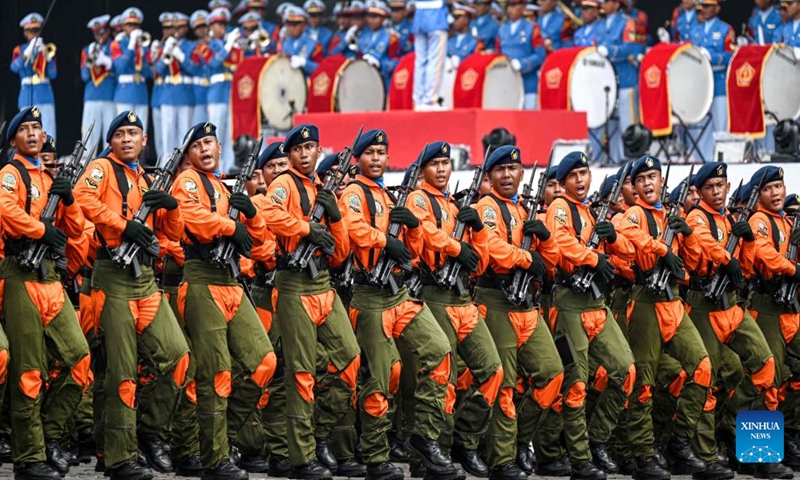
    Indonesia’s army is the backbone of its military, with around 300,000 active personnel. Historically, it has played an outsized role in both politics and security, focusing on internal stability and counterinsurgency.

    • Heavy Equipment: Leopard 2A4 main battle tanks, BMP-3F infantry fighting vehicles, and AH-64E Apache attack helicopters.
    • Special Forces: Kopassus, Indonesia’s elite special operations unit, specializes in counter-terrorism and unconventional warfare. Though highly capable, it has a controversial history due to human rights abuses in East Timor and Papua.

    The army’s priority remains guarding Indonesia’s vast and diverse islands, preventing separatism, and projecting presence across its huge archipelagic territory.


    🔹 The Navy (TNI-AL)

    With 74,000 personnel, Indonesia’s navy has ambitions to shift from a green-water force to a credible blue-water navy.

    • Submarines: 4 South Korean-built Type 209/1400 submarines.
    • Surface Fleet: 6 Dutch-designed Sigma-class corvettes, indigenous fast-attack craft, and Makassar-class landing platform docks (LPDs) that allow limited amphibious operations.
    • Role: Securing sea lanes, countering illegal fishing, and reinforcing Indonesia’s sovereignty in the Natuna Islands, where its Exclusive Economic Zone (EEZ) overlaps with China’s Nine-Dash Line claims.

    The navy is increasingly vital. With over 17,000 islands to defend, sea power is the key to deterrence and maritime domain control.


    🔹 The Air Force (TNI-AU)

    Indonesia’s air force has about 34,000 personnel and a mixed fleet that reflects its balancing strategy between great powers.

    • Current Fighters: F-16C/D Block 52ID, Su-27SK, and Su-30MK2.
    • Modernization: Orders have been placed for 42 Rafale fighters (France) and 24 F-15EX fighters (U.S.), which will significantly upgrade its capabilities.
    • Future Tech: Investment in drones, UAVs, and long-range strike platforms.

    The combination of Rafales and F-15EX will give Indonesia one of the most powerful air forces in Southeast Asia by the mid-2030s.


    2. Defense Modernization and Ambitions

    Indonesia spends around $13–15 billion annually on defense, about 0.7–0.8% of GDP. While relatively low compared to its size, there are plans to increase spending to 1.5% of GDP by 2035, nearly doubling its defense capacity.

    🔸 The Minimum Essential Force (MEF)

    The MEF is Indonesia’s three-phase modernization roadmap (2009–2025) designed to ensure the military reaches a “minimum credible deterrent.” Its goals:

    • Interoperability between branches.
    • Modernization of outdated Cold War-era platforms.
    • Increased maritime defense.

    🔸 Procurement Strategy

    Unlike many countries that rely heavily on a single partner, Indonesia deliberately diversifies procurement:

    • U.S.: F-15EX, Apache helicopters.
    • France: Rafale jets, Scorpène submarines (negotiations ongoing).
    • South Korea: Submarines and co-development of the KF-21 stealth fighter.
    • Domestic Industry: PT PAL (shipbuilding), PTDI (aerospace), and Pindad (land systems).

    This strategy prevents dependency but creates logistical complexity — maintaining parts and training across such a varied arsenal is a challenge.


    3. Geostrategic Pressures

    🔹 South China Sea Tensions

    Indonesia officially rejects Beijing’s Nine-Dash Line, but clashes are frequent in the Natuna Islands. Chinese fishing fleets, backed by armed coast guards, often test Indonesian resolve. In response, Jakarta has expanded bases and deployed F-16s to Natuna.

    🔹 Archipelagic Vulnerability

    Indonesia’s geography is both a strength and a weakness. Defending 17,000 islands requires enormous logistical reach. Maritime domain awareness is limited, with insufficient radar and satellite coverage to track all illegal incursions.

    🔹 Balancing Global Powers

    Indonesia adheres to a “free and active” foreign policy — avoiding formal alliances while engaging multiple partners.

    • With the U.S., it conducts joint training and buys advanced platforms.
    • With China, it maintains economic ties but pushes back against maritime assertiveness.
    • With Australia and Japan, it strengthens maritime cooperation and regional security coordination.

    Jakarta’s neutrality makes it a swing state in the Indo-Pacific.


    4. Grey-Zone and Unconventional Challenges

    Beyond traditional threats, Indonesia faces grey-zone warfare and non-traditional security issues:

    • Illegal Fishing: Foreign vessels cost Indonesia up to $4 billion annually. The navy’s dramatic tactic of blowing up seized vessels has become a symbol of resolve.
    • Terrorism: Groups linked to Jemaah Islamiyah and ISIS remain a domestic threat, though weakened by counter-terror units like Densus 88 and Kopassus.
    • Cyber Threats: As a digitally connected economy, Indonesia is investing in a Cyber Defense Command to protect infrastructure.

    5. Indonesia in 2035 – The Silent Giant Rises

    If modernization plans succeed, Indonesia in 2035 will look very different:

    • Blue-Water Navy: Expansion to 12–14 submarines, indigenous frigates, and drone ships.
    • Air Superiority: A powerful mix of Rafale and F-15EX, supported by drones and surveillance aircraft.
    • Defense Industry Independence: Growing capacity in aerospace and naval shipbuilding will reduce reliance on foreign suppliers.
    • Strategic Autonomy: Unlike Vietnam or the Philippines, Indonesia is unlikely to align firmly with either Washington or Beijing — giving it leverage as a balancing power.

    6. Strategic Takeaways

    1. Indonesia’s military is not yet among the great powers, but its geography and modernization make it impossible to ignore.
    2. Its doctrine is evolving from internal defense to regional sea control and deterrence.
    3. In a conflict over the South China Sea, Indonesia could be a kingmaker, tilting the balance toward the U.S., China, or maintaining neutrality.
    4. By 2035, if modernization goals are realized, Indonesia could emerge as Southeast Asia’s dominant military power.

    Conclusion: The Archipelagic Power to Watch

    Indonesia’s military today is still a work in progress — underfunded, spread thin across vast geography, and reliant on a patchwork of imported systems. But tomorrow, it may become the guardian of Southeast Asia’s sea lanes, a neutral balancer between great powers, and a formidable force in its own right.

    For strategists watching the Indo-Pacific, one lesson is clear: ignore Indonesia at your peril.

  • “Hack-for-Hire: How Cyber Mercenaries Are Changing Geopolitics”

    “Hack-for-Hire: How Cyber Mercenaries Are Changing Geopolitics”

    1. Definition & Core Concept

    Digital mercenaries are non-state cyber actors — often private companies, contractor groups, or even freelancers — who conduct offensive and defensive cyber operations on behalf of nation-states, corporations, or wealthy individuals.

    Unlike traditional mercenaries who fight with guns, these operators weaponize code, malware, AI, and digital infrastructure.


    2. Why They Matter Now

    • Plausible Deniability: Governments hire mercenary hackers to strike rivals without direct attribution.
    • Cheaper than State Programs: Maintaining an elite in-house cyber army is expensive; outsourcing is cost-efficient.
    • Blurring State & Non-State Lines: Attacks may come from a “company” but still serve state interests.

    Examples:

    • NSO Group (Israel) → Developed Pegasus spyware, sold globally, linked to political surveillance.
    • Wagner Group’s Cyber Arm (Russia) → Reported to assist disinformation ops in Africa.
    • Indian & Southeast Asian “Hack-for-Hire” firms → Offering services to both corporations and governments.

    3. Key Functions of Digital Mercenaries

    • Cyber Espionage: Breaching government/corporate systems to steal secrets.
    • Disruption & Sabotage: Knocking out power grids, pipelines, or satellites.
    • Disinformation Ops: Running botnets, fake news campaigns, or deepfake propaganda.
    • Corporate Warfare: Spying on business rivals (oil, defense, finance).
    • Election Meddling: Targeting voter databases, influencing narratives.

    4. Strategic Implications

    • New Arms Market: Just as private military companies (PMCs) reshaped warfare, “cyber PMCs” create a shadow arms bazaar for code-based weapons.
    • Escalation Risks: States hit back against mercenaries, dragging neutral countries into conflict.
    • Untraceable Wars: Unlike missiles, a malware attack can be invisible until it detonates.
    • Rise of Stateless Power: Skilled hacker groups can become global actors independent of governments.

    5. How Nations Can Respond

    • Legal Frameworks: Push for UN-backed conventions against hack-for-hire markets (difficult, but needed).
    • Cyber Deterrence: Clear doctrines that cyberattacks will be met with proportional responses — even kinetic ones.
    • Public-Private Alliances: States must integrate corporations into defense (cloud providers, telecoms, social platforms).
    • Offensive Counter-Hacking: Deploying white hat mercenaries to infiltrate and disrupt hostile groups.

    6. Future Outlook

    • “Loyalty for Hire”: Smaller states may rely entirely on cyber mercenary firms as their digital armies.
    • Corporate Cyber Wars: Imagine Google or Microsoft employing mercenaries to defend cloud systems against hostile state actors.
  • Rare Earths Warfare: How Magnets and Critical Minerals Decide Modern Wars

    Rare Earths Warfare: How Magnets and Critical Minerals Decide Modern Wars

    I) Why minerals = military power in 2025

    Modern weapons (F-35 actuators, AESA radars, ship motors, hypersonics guidance, missiles), EVs, and wind turbines all hinge on rare earth permanent magnets (especially NdFeB: neodymium-iron-boron).

    Control the three linksmining → processing → magnets—and you control industrial and military tempo.

    China currently dominates the midstream and magnet manufacturing, which is the real choke point. Estimates: ~60–70% of global REE production, ~90% of processing, and the overwhelming majority of magnet output. CSISMining Technology


    II) The battlespace: from NdPr to “stealth” chokepoints

    • NdPr (Neodymium + Praseodymium): core feedstock for high-performance magnets that spin drones, missiles, ship propulsors, and EV motors. Western supply is scaling, but still behind China’s deeply integrated chain. MP MaterialsInvesting News Network (INN)
    • Heavy rare earths (Dy, Tb): small additions of dysprosium or terbium keep magnets strong at high temperatures (missiles, jets). Non-Chinese heavy REE separation capacity is finally emerging in Malaysia via Lynas. Magnetics MagazineDiscovery Alert
    • Not rare but critical: gallium, germanium, graphite, antimony—vital for semiconductors, IR optics, anodes, and munitions. Beijing’s recent export controls showed how fast these can become geopolitical levers. FastmarketsReutersAP News

    III) China’s playbook: own the middle, shape the market

    Beijing’s long game was to overbuild processing, consolidate magnet capacity at home, and then use licenses/quotas as tools.

    The result: even if raw ore is mined abroad, much of it still goes to China for separation, metallization, and magnets.

    Recent reports detail tightened export management, warnings against foreign stockpiling, and growing delays for medium/heavy REEs—pressuring global automakers and defense primes. CSISFinancial Times

    Why it works

    • Cost & scale: processing is chemically messy and capital-intensive; China made it cheap and centralised.
    • Magnet moat: ~90% of NdFeB magnet production sits in China—own the magnets, own the battlefield tempo. CSISFinancial Times

    IV) The counter-axis: how others are breaking dependence

    • United States (MP Materials):
      • Record 2024 output at Mountain Pass (45k t REO; 1,300 t NdPr oxide) and a DoD-backed push into domestic magnet plants—targeting a first truly “mine-to-magnet” U.S. chain in decades. MP MaterialsCGEP
      • A recent DoD stake and multi-hundred-million funding aim to lift U.S. magnet capacity toward ~10,000 t/yr, roughly 2024 U.S. demand. Reuters
    • Australia/Malaysia (Lynas):
      • Scaling Mt Weld and heavy REE separation in Malaysia; first Dy and Tb separated in 2025—critical for high-temperature defense magnets. Magnetics MagazineDiscovery Alert
    • Policy signal: Even as the U.S. diversifies, Chinese gallium/germanium/graphite controls reveal the wider critical-minerals toolset—expect more targeted levers. FastmarketsReutersPIIE

    V) Real choke points (and how to neutralize them)

    1) Processing (the true bottleneck)

    • Offense: Countries can weaponize export permits for oxides/metals; slow rivals’ magnet lines without touching raw ore.
    • Defense: Stand up regional separation hubs (US, EU, AUS, JP) with guaranteed offtake and environmental fast lanes; share reagents/solvent-extraction IP. CSIS

    2) Magnets

    • Offense: Restrict shipments of finished NdFeB and bonded magnets; target automotive & defense MRO timelines.
    • Defense: Fund duplicate metallization + magnet lines near end-users; qualify multi-supplier specs across platforms (aviation, naval, missiles). Reuters

    3) “Side minerals” (gallium, germanium, graphite, antimony)

    • Offense: Narrow bans cause outsized pain in chips/IR/EV anodes.
    • Defense: Byproduct recovery (e.g., Ga from bauxite/aluminum), recycling, and friendly-nation tolling to build redundancy. FastmarketsReuters

    VI) Playbook for nations: build mineral deterrence

    1. Stacked redundancy
    • Two independent sources for each step (mine, separation, metal, magnet) across two or more allied jurisdictions.
    • Use defense procurement to pre-buy offtake; treat NdPr like fuel.
    1. Magnet mobilization
    • Subsidize metallization & magnet lines colocated with EV/motor and defense OEMs.
    • Mandate dual-qualified magnet designs (NdFeB + SmCo alternatives for high-temp systems).
    1. Strategic stockpiles 2.0
    • Stockpile NdPr oxide, Dy/Tb additives, and finished magnets, not just mixed concentrates.
    • Rotate via just-in-time swap programs with industry to keep inventories “fresh.”
    1. Materials R&D for substitution
    • Dy/Tb thrift (grain-boundary diffusion), heavy-rare-earth-free high-coercivity magnets, motor topologies that reduce critical content.
    • Fund recycling (shred-strip-separate) and urban mining from end-of-life motors/turbines.
    1. Market architecture
    • Launch a transparent Western pricing index for NdPr and magnets to reduce exposure to administered pricing.
    • Use long-term indexed contracts + floor/ceiling bands to stabilize CAPEX decisions. Reuters
    1. Lawfare & tradecraft
    • Tighten end-use controls on magnets for defense.
    • Anti-coercion tools for sudden export suspensions (snap-back tariffs, sanctions, emergency financing).
    1. Allied Industrial Corridors
    • Stitch US–Australia–Japan–EU critical-minerals corridors with synchronized permits and tax credits; align on ESG to speed approvals and keep costs bankable. CSIS

    VII) What to watch next

    • China’s magnet export licensing cadence and any expansion of product-level controls. Financial Times
    • U.S. magnet plants commissioning schedules (Texas + “10X” scale-up) and whether they reach 10k t/yr on time. CGEPReuters
    • Lynas heavy-REE output consistency (Dy/Tb) and Kalgoorlie ramp implications for non-Chinese heavies. Lynas Rare EarthsMagnetics Magazine
    • Any new controls on graphite/germanium/gallium—or relaxations if bargaining heats up. ReutersPIIE
  • Case Study: “From Fishing Boats to Fortresses: How China is Winning Without Firing a Shot”

    Case Study: “From Fishing Boats to Fortresses: How China is Winning Without Firing a Shot”

    The South China Sea (SCS) is one of the world’s most contested maritime regions, containing over $3.5 trillion in annual trade, vast fisheries, and potentially rich oil and gas reserves.

    Instead of risking direct war, China has chosen a grey-zone strategy to expand its control incrementally.


    The Strategy in Action

    Fiery Cross Reef - Wikipedia
    1. Island-Building Blitz
      • China dredges sand to turn submerged reefs into artificial islands.
      • Example: Fiery Cross Reef — now equipped with runways, radar systems, and missile batteries.
      • These “civilian” islands double as forward operating military bases.
    2. Maritime Militia
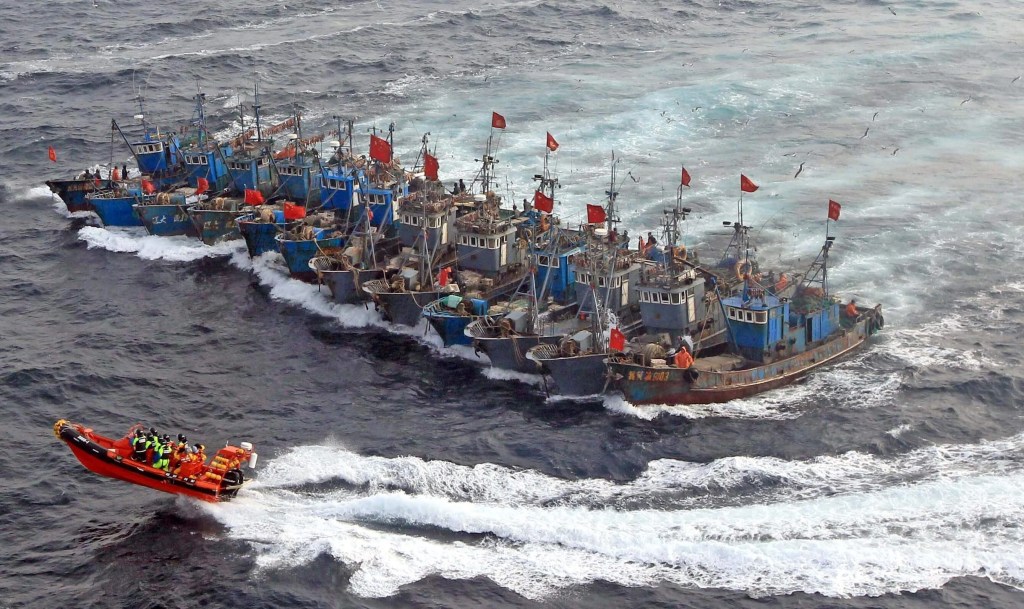
      • Civilian-looking fishing fleets act as intelligence gatherers and physical blockers against rival vessels.
      • This provides deniability — they aren’t “naval” forces, so military retaliation becomes diplomatically risky.
    3. Coast Guard as Grey-Hull Enforcers
      • Instead of sending warships (which would escalate), China uses large, heavily armed coast guard ships to shadow, bump, or water-cannon foreign vessels.
    4. Legal Warfare (“Lawfare”)
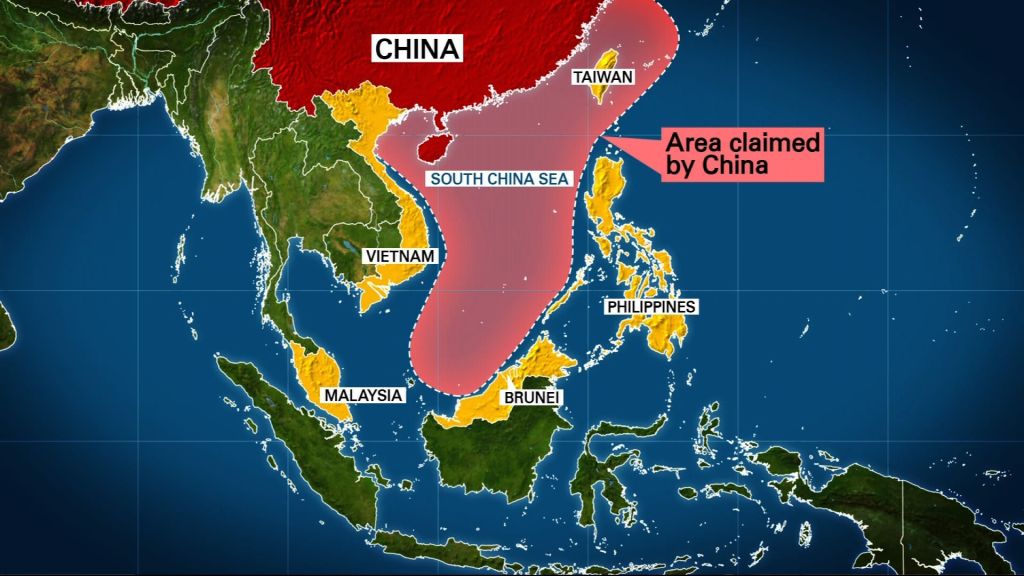
      • Beijing promotes its own “Nine-Dash Line” as historic evidence of ownership.
      • Rejects the 2016 Hague Tribunal ruling against its claims — reframing international law in its own favor.
    5. Economic Entanglement
      • ASEAN states dependent on China’s trade face diplomatic hesitation to challenge its actions, effectively muting collective resistance.

    Why This Works

    • Low-Intensity, High-Frequency: Small, constant actions are harder to respond to than a single invasion.
    • Plausible Deniability: Fishing boats, coast guard, and “research vessels” blur military intent.
    • Time as a Weapon: The longer artificial islands exist without being challenged, the more they become a “new normal.”

    Impact on Regional Powers

    • Philippines – Increasing confrontations near Second Thomas Shoal.
    • Vietnam – Harassment of oil exploration efforts within its EEZ.
    • Malaysia & Indonesia – Chinese survey vessels operating in contested waters.

    Counter-Strategies for Regional States

    1. Unified Maritime Domain Awareness
      • Shared satellite imagery and AIS (Automatic Identification System) tracking across ASEAN.
    2. Legal Coalition Pressure
      • Jointly bringing multiple cases to international courts to raise diplomatic cost.
    3. Mini-Lateral Defense Pacts
      • Small-group alliances like the Philippines-Japan-US trilateral for rapid naval drills.
    4. Civilian Resistance at Sea
      • Employing national fishing fleets as counter-militias to shadow Chinese vessels.
  • “Grey-Zone” Warfare: The New Frontier of Conflict

    “Grey-Zone” Warfare: The New Frontier of Conflict

    Grey-zone warfare refers to actions that fall between traditional war and outright peace — using coercion, influence, and disruption without crossing thresholds that would justify a full military response. It’s a deliberate “blurring” of war and diplomacy.

    Grey Zone Warfare - Plutus IAS

    Key Characteristics

    1. Ambiguity as a Weapon
      • Actions are hard to attribute definitively (e.g., cyberattacks, anonymous militias).
      • This complicates retaliation, as proof is often lacking.
    2. Gradual Escalation
      • Small, cumulative actions wear down the opponent over time.
      • Avoids triggering collective defense clauses like NATO’s Article 5.
    3. Hybrid Tools
      • Cyber operations, economic coercion, disinformation, proxy forces, political subversion.

    Tactics in Use

    Keeping Your Bank Account and Credit Cyber-Smart
    1. Cyberattacks on Infrastructure
      • Targeting banking systems, energy grids, or transport networks.
      • Example: Stuxnet-like malware sabotaging critical systems.
    2. Maritime Harassment
      • Fishing fleets doubling as intelligence gatherers.
      • Coast guard “gray hulls” enforcing territorial claims without a declaration of war.
    3. Disinformation Campaigns
      • Deepfakes, fake news amplification, and social media bots to erode trust.
      • Strategic narrative control to influence foreign elections.
    4. Economic Pressure
      • Weaponized trade bans, selective sanctions, and debt traps.
      • Example: Blocking rare earth exports.

    Countries Leveraging Grey-Zone Strategies

    • China – South China Sea island-building, maritime militia, cyber espionage.
    • Russia – Crimea annexation via “little green men,” election interference.
    • Iran – Proxies in Yemen, Iraq, and Syria to expand regional influence.
    • North Korea – Cryptocurrency thefts to fund missile programs.

    How Nations Can Defend Against It

    1. Persistent ISR (Intelligence, Surveillance, Reconnaissance)
      • Satellite, UAV, and maritime domain awareness to track ambiguous threats.
    2. Cyber Resilience
      • Harden infrastructure; public-private cybersecurity partnerships.
    3. Strategic Communication
      • Rapidly counter disinformation before it takes root.
    4. Multi-Domain Rapid Response Units
      • Small, agile teams ready to respond to hybrid incidents before escalation.

    Offensive Grey-Zone Opportunities

    1. Lawfare – Using international law aggressively to constrain adversary options.
    2. Economic Leveraging – Strategic control over rare commodities or ports.
    3. Proxy Force Development – Non-state actors aligned with your interests.
    4. Influence Networks – Academic, media, and NGO penetration to shape narratives abroad.
  • “Starvation as Strategy”: The Rise of Food Weaponization in Global Politics

    “Starvation as Strategy”: The Rise of Food Weaponization in Global Politics

    Starvation is a weapon of war: Gazans are paying the price

    I. Why Food is Becoming a Military Asset

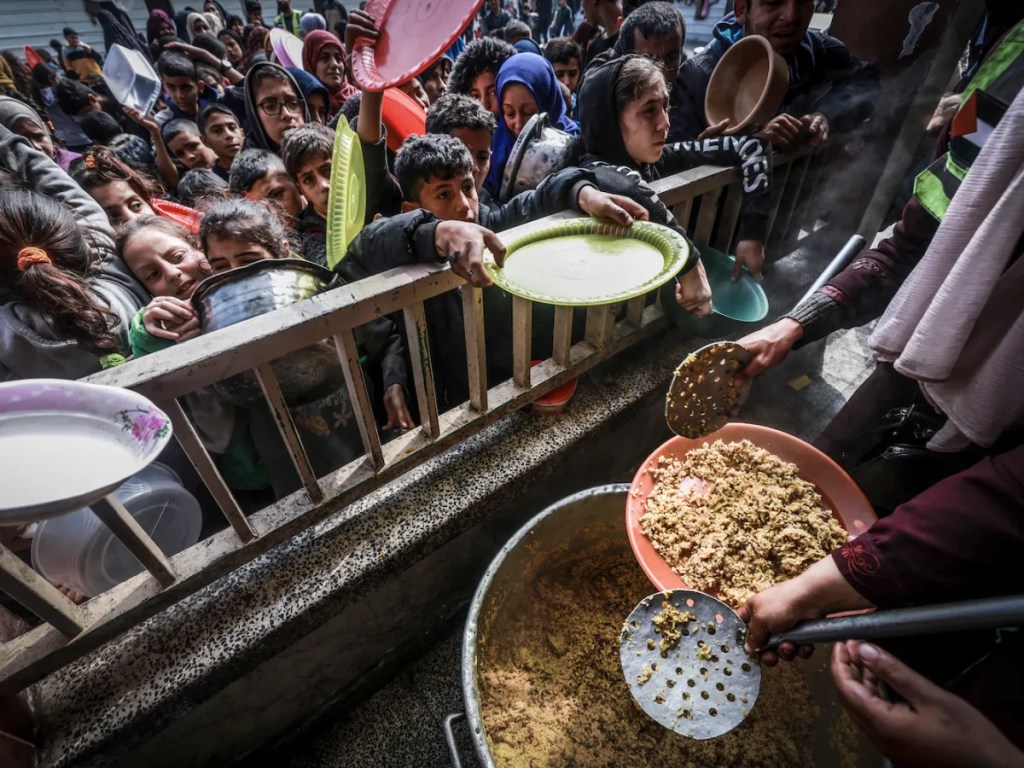
    For centuries, armies have “marched on their stomachs,” but in 2025, food isn’t just about sustaining troops — it’s about controlling entire populations and economies.

    Modern states have learned that starvation can be as effective as bullets in breaking resistance.


    Control the food supply, and you can:

    • Force political concessions
    • Collapse economies without firing a shot
    • Secure long-term dependency

    II. The Global Chokepoints of Food Supply

    1. Russia’s Grain Leverage

    SovEcon revises Russia wheat exports higher | World Grain
    • Russia and Ukraine together supply nearly 30% of global wheat exports
    • During the Ukraine war, Russia blocked Black Sea grain shipments, causing price spikes in Africa and the Middle East
    • Moscow used “grain diplomacy” to reward allies and punish critics

    2. China’s Farmland Empire

    • China has been buying or leasing farmland abroad — from Africa to South America
    • Secures long-term food security while leaving local populations dependent on Chinese-controlled supply chains

    3. U.S. and Allied Sanctions on Agricultural Inputs

    • Western states can restrict fertilizer, seed, and agrochemical exports to pressure adversaries
    • Targeting upstream inputs can cripple crop yields for multiple seasons

    III. How Food is Weaponized in Modern Geopolitics

    1. Export Bans and Embargoes

    • Limiting critical grain, rice, or soybean exports to create shortages
    • Example: India’s temporary wheat export ban in 2022 caused ripple effects across Asia

    2. Fertilizer Warfare

    • Restricting nitrogen, phosphorus, and potassium exports can cause multi-year food production crises
    • Russia and Belarus control large parts of the world’s potash supply

    3. Control of Seed Genetics

    • Countries can withhold high-yield GMO or hybrid seeds
    • Owning the intellectual property for climate-resilient crops can give leverage over food-insecure nations

    4. Supply Chain Disruption

    • Naval blockades, port seizures, and targeted cyberattacks on agricultural logistics networks

    IV. Strategic Risks of Food Weaponization

    • Humanitarian Backlash: Mass famine can trigger international condemnation — but often too late
    • Migration Crises: Food shortages fuel refugee flows, destabilizing entire regions
    • Shadow Markets: Blockades and shortages create black-market economies that empower criminal networks

    V. Strategic Recommendations for Nations

    1. Food Stockpile Diplomacy
      • Build large emergency reserves to both feed your population and use as a diplomatic tool
    2. Diversify Agricultural Imports
      • Reduce dependence on single suppliers for staple foods and fertilizers
    3. Invest in Climate-Resilient Agriculture
      • Develop drought-resistant crops and vertical farming to reduce vulnerability
    4. Agro-Intelligence Networks
      • Monitor global crop conditions, planting patterns, and shipping flows for early warning of shortages

    VI. The Future: Agricultural Warfare 2035

    Expect to see:

    • Geo-Agro Alliances — food-exporting nations forming strategic blocs
    • Seed Vault Militarization — securing genetic seed banks as national assets
    • AI Crop Prediction Warfare — using AI to manipulate futures markets and destabilize economies

  • Corporate Warriors: The New Face of Global Conflict

    Corporate Warriors: The New Face of Global Conflict

    I. From Medieval Soldiers-for-Hire to Modern Corporate Armies

    Wagner becomes a unit of the Rosgvardia. What happened to the PMC after  Prigozhin's death? :: Свідомі

    Mercenaries are as old as war itself — from the Swiss Guards of the Renaissance to the Foreign Legion.

    But in 2025, Private Military Companies (PMCs) have evolved into corporate superpowers capable of influencing wars, toppling governments, and controlling resources — often without a single state soldier setting foot in combat.

    These are militaries without borders:

    • Answerable only to contracts, not constitutions
    • Funded by states, corporations, and sometimes criminal syndicates
    • Operating in the gray zone between legality and deniability

    II. The Big Players in Modern Mercenary Warfare

    1. Wagner Group (Russia)

    • Active in Ukraine, Syria, Libya, and across Africa
    • Controls mines and energy infrastructure in Central African Republic and Mali
    • Operates as an arm of Russian foreign policy while officially “private”

    2. Blackwater Successors (US)

    Constellis в X: „Are you ready for your next adventure? Visit  https://t.co/YmvFAEQCzw to learn about career opportunities and ways you  can join our team. https://t.co/YfX1xROhhf“ / X
    • Blackwater → Xe Services → Academi → part of Constellis
    • Specializes in high-end security, convoy protection, and training
    • Still active in Middle East security contracts

    3. STTEP International (South Africa)

    • Founded by Eeben Barlow, ex-Executive Outcomes
    • Known for rapid, aggressive counterinsurgency operations in Africa
    • Played a key role in Nigeria’s 2015 campaign against Boko Haram

    4. Chinese Private Security Firms

    • Deployed along Belt & Road Initiative routes
    • Protects Chinese-owned mines, ports, and railways in Africa and Asia
    • Often staffed by ex-People’s Liberation Army personnel

    III. Why Mercenaries Are So Attractive to States and Corporations

    • Deniability: States can wage war without political backlash
    • Cost-Effectiveness: No pensions, veterans’ benefits, or long-term commitments
    • Flexibility: Can operate in areas where state militaries legally or politically cannot
    • Revenue Generation: Some PMCs fund themselves by securing and exploiting resources

    IV. The New Mercenary Business Models

    1. Resource-Backed Operations

    • PMCs secure oil fields, mines, or rare earth deposits
    • Profits directly fund ongoing military operations

    2. “Military-as-a-Service”

    • Nations rent PMCs for training, counterterrorism, or entire combat campaigns

    3. Hybrid State-PMC Campaigns

    • Example: Russia’s use of Wagner alongside official military units in Ukraine
    • Blends conventional warfare with covert, deniable operations

    V. Strategic Risks of Mercenary Superpowers

    • Unregulated Warfare: No Geneva Convention oversight
    • Human Rights Abuses: Many operate in legal gray zones
    • State Dependency: Fragile governments outsourcing entire defense structures
    • Global Arms Black Markets: PMCs often recycle weapons between conflict zones

    VI. Strategic Recommendations for States

    1. Contract Oversight Mechanisms
      • Create binding international PMC registry and transparency standards
    2. Counter-Mercenary Units
      • Specialized military and intelligence teams trained to deal with PMC tactics
    3. National Defense Industrial Base
      • Reduce dependency by investing in local training and manufacturing
    4. Cyber & Legal Offensive Tools
      • Sanctions, asset freezes, and information warfare against rogue PMCs

    VII. The Future: Mercenary States?

    By 2035, it’s possible we’ll see:

    • Corporations with standing armies rivaling national forces
    • PMCs managing entire territories as quasi-feudal domains
    • A “Mercenary UN” — coalitions of PMCs bidding for peacekeeping contracts

    The line between state soldier and corporate warrior is disappearing — and in the wars of the future, the flag you fight under might be a logo.


  • From Starlink to Killer Satellites: The Future of Space as a Battlefield.

    From Starlink to Killer Satellites: The Future of Space as a Battlefield.

    I. Why Space is the Next Battlefield

    In the 20th century, wars were fought over land, sea, and air. In the 21st century, the fifth domain of warfare—space—has emerged as the ultimate strategic high ground.

    Whoever controls Earth’s orbit controls global communications, missile defence, intelligence gathering, and even economic stability.

    Satellites are the nervous system of modern militaries:

    • GPS-guided missile strikes
    • Intelligence, surveillance, and reconnaissance (ISR)
    • Encrypted communications between field units
    • Early-warning detection for nuclear launches

    Destroy these satellites, and you can blind, confuse, and cripple an enemy before the first shot is fired on Earth.


    II. The Main Players in Space Militarization

    United States

    Opinion | Why giving the Space Force naval ranks might widen the schism  with the Air Force - POLITICO
    • US Space Force was formed in 2019 to consolidate orbital defences
    • X-37B Spaceplane: Reusable, autonomous, and potentially able to deploy small payloads or intercept satellites
    • Satellite constellations like Starlink are now integrated into defence planning (Ukraine war proved its military relevance)

    China

    • Shijian-17 satellite with robotic arm capable of grabbing other satellites
    • DF-21D ASAT missile program for direct satellite destruction
    • Expanding BeiDou navigation system as an alternative to GPS

    Russia

    • Pioneer in co-orbital ASAT weapons since the Cold War
    • Suspected of testing “nesting” satellites that can release smaller killer satellites
    • Blending cyber warfare with space attacks (e.g., Viasat hack in early Ukraine war)

    India

    Mission Shakti - Wikipedia
    • 2019 “Mission Shakti” ASAT test proved capability to shoot down satellites
    • Dual-use civilian and military space program with rapid tech growth

    III. How Space Can Be Weaponized

    1. Direct-Ascent Anti-Satellite Weapons (DA-ASAT)

    Russia launches anti-satellite weapon: A new warfront in space ...
    • Ground-launched missiles destroy satellites in low Earth orbit (LEO)
    • Downside: Creates dangerous orbital debris

    2. Co-Orbital Killers

    • Satellites placed near enemy satellites, capable of disabling or “bumping” them
    • Can be disguised as repair or inspection satellites

    3. Cyber and Signal Warfare

    • Hacking ground stations or intercepting satellite communications
    • Jamming GPS signals over battlefields

    4. Orbital Energy Weapons

    • It is theoretical, but potential for lasers or kinetic projectiles deployed from orbit (“Rods from God” concept)

    IV. The Strategic Risks of Space War

    • Kessler Syndrome: A chain reaction of debris collisions could make low Earth orbit unusable for decades
    • Civilian Dependency: GPS, weather forecasts, global internet all rely on satellites
    • Escalation Risk: Attacking space assets could trigger immediate nuclear alert status in some nations

    V. Strategic Recommendations for Nations

    1. Satellite Resilience & Redundancy
      • Deploy constellation swarms of small satellites (harder to destroy all)
      • Rapid launch capabilities for replacements (SpaceX model)
    2. Hardened Ground Infrastructure
      • Secure satellite control stations against cyber intrusions
      • Backup terrestrial navigation systems
    3. Space Domain Awareness (SDA)
      • Build AI systems to track, classify, and predict satellite maneuvers in real time
    4. International “Space Rules of Engagement”
      • Create treaties defining thresholds for hostile action in orbit (similar to naval law of the sea)

    VI. The Future: From Defense to Domination

    By the 2030s, we could see:

    • Orbital military outposts servicing small fleets of defensive drones
    • Space-based missile shields covering entire continents
    • Commercial space companies becoming de facto military contractors

    In the words of military planners, space is “the ultimate high ground”—and history shows that whoever holds the high ground dictates the terms of battle.