Tag: russia

  • Operation RYAN: The Soviet Spy Program That Searched for Signs of World War III

    How Fear of a Surprise Nuclear Attack Created One of the Largest Intelligence Hunts in Cold War History


    Introduction: The Spy Program Born From Fear

    Imagine being told that your country’s survival depended on spotting the first signs of World War III.

    Now imagine receiving orders to search for clues everywhere.

    Watch government buildings.

    Monitor military bases.

    Track unusual meetings.

    Observe lights in office windows at night.

    Count cars in parking lots.

    Report anything suspicious.

    That was the reality for thousands of Soviet intelligence officers during one of the Cold War’s most secret operations.

    Known as Operation RYAN, this massive intelligence effort was launched by the KGB in the early 1980s.

    Its mission was simple but terrifying:

    Determine whether the United States and its NATO allies were preparing a surprise nuclear attack against the Soviet Union.

    The operation became one of the largest intelligence-gathering programs in Soviet history.

    It sent spies across the world searching for signs of war.

    Ironically, the program designed to prevent a surprise attack may have helped create one of the most dangerous periods of misunderstanding during the Cold War.

    By the time NATO conducted Able Archer 83 in November 1983, Operation RYAN had already convinced many Soviet leaders that war might be closer than anyone realized.

    This is the story of the Soviet spy program that searched for World War III—and nearly found it where it did not exist.


    Chapter 1: A World Divided by Fear

    To understand Operation RYAN, we must first understand the atmosphere of the early 1980s.

    The Cold War had entered a particularly dangerous phase.

    Relations between the United States and the Soviet Union were deteriorating rapidly.

    Several developments alarmed Soviet leaders:

    • NATO military modernization
    • New American missile deployments in Europe
    • Increasing anti-Soviet rhetoric
    • Growing military competition

    At the center of Soviet concerns was a troubling question:

    What if the West launched a surprise nuclear attack?

    Unlike conventional wars, nuclear conflict could unfold within minutes.

    Ballistic missiles could reach targets before political leaders had time to fully assess the situation.

    This fear deeply influenced Soviet strategic thinking.

    And no one feared it more than Soviet leader Yuri Andropov.


    Chapter 2: Yuri Andropov’s Suspicion of the West

    Before becoming leader of the Soviet Union, Andropov had spent years running the KGB.

    His background shaped how he viewed the world.

    Andropov believed Western governments were engaged in sophisticated efforts to weaken the Soviet Union.

    He was especially concerned about the possibility of deception.

    What if NATO disguised preparations for war as military exercises?

    What if a nuclear attack came with little warning?

    These concerns intensified after several geopolitical crises during the late 1970s and early 1980s.

    Andropov increasingly viewed international events through the lens of strategic competition.

    As a result, he approved a major intelligence effort designed to answer one critical question:

    Was the West preparing for nuclear war?

    The answer would become Operation RYAN.


    Chapter 3: What Was Operation RYAN?

    Operation RYAN began in 1981.

    The name came from a Russian abbreviation meaning:

    “Nuclear Missile Attack”

    Its purpose was unprecedented.

    Rather than collecting intelligence on a specific target, Operation RYAN sought to identify indicators that NATO might be preparing a first strike.

    The Soviet leadership feared that technological advances and military modernization might allow the West to launch a surprise attack capable of crippling Soviet nuclear forces.

    To prevent this scenario, Soviet intelligence agencies were tasked with searching for warning signs.

    The operation involved:

    • KGB officers
    • military intelligence personnel
    • Soviet embassies
    • intelligence networks across Europe and North America

    Thousands of individuals became part of the effort.

    It was one of the most ambitious intelligence programs of the Cold War.


    Chapter 4: The Search for Clues

    The instructions given to Soviet intelligence officers were extraordinary.

    Agents were ordered to monitor a wide range of activities that might indicate preparations for war.

    Some examples included:

    Government Activity

    Officials watched for unusual meetings involving political leaders.

    Military Movements

    Troop deployments and equipment transfers were closely monitored.

    Emergency Preparations

    Agents looked for signs that governments were preparing civil defense measures.

    Communications Patterns

    Changes in military communications were analyzed carefully.

    Economic Indicators

    Some intelligence officers were even instructed to watch financial activity that might suggest wartime planning.

    The list became surprisingly detailed.

    In some cases, spies were asked to observe:

    • blood bank activity
    • hospital readiness
    • increased security around government facilities
    • unusual office hours among senior officials

    The assumption was simple:

    If war were approaching, governments would leave clues.

    Operation RYAN was designed to find them.


    Chapter 5: The Problem With Searching for Threats

    Operation RYAN contained a dangerous flaw.

    When people are told to look for evidence of a threat, they often begin seeing evidence everywhere.

    This phenomenon is sometimes called confirmation bias.

    Soviet intelligence officers were under pressure to identify signs of a possible attack.

    As a result, ordinary events could appear suspicious.

    A military exercise might seem threatening.

    A political meeting might appear unusual.

    Routine activities could be interpreted as warning signs.

    This created a feedback loop.

    The more reports that arrived, the more Soviet leaders worried.

    The more they worried, the more reports they requested.

    Fear began influencing analysis.

    And fear can distort judgment.


    Chapter 6: The Korean Air Lines 007 Disaster

    In September 1983, tensions escalated dramatically.

    A civilian airliner, Korean Air Lines Flight 007, accidentally entered Soviet airspace.

    Soviet fighter aircraft intercepted and shot down the plane.

    All 269 people aboard were killed.

    The incident sparked international outrage.

    For Soviet leaders, however, the event reinforced existing fears.

    Some officials believed the aircraft might have been involved in intelligence gathering.

    Whether justified or not, these suspicions increased paranoia within parts of the Soviet leadership.

    Operation RYAN continued expanding.

    The search for signs of war intensified.


    Chapter 7: Able Archer 83 and the Peak of Soviet Anxiety

    The moment that made Operation RYAN famous arrived in November 1983.

    NATO launched Able Archer 83, a command-post exercise designed to simulate the escalation of a conflict into nuclear war.

    To NATO commanders, it was a training exercise.

    To Soviet analysts already immersed in Operation RYAN, it looked disturbingly realistic.

    Several aspects caused concern:

    • encrypted communications
    • realistic command procedures
    • participation by senior leaders
    • simulated nuclear release processes

    Reports flowing through Operation RYAN suggested that NATO activity was becoming increasingly unusual.

    Some Soviet officials feared the exercise might be cover for an actual attack.

    Military readiness levels increased.

    Nuclear-capable forces were placed on alert in parts of Eastern Europe.

    The world unknowingly entered one of the most dangerous moments of the Cold War.


    Chapter 8: The Intelligence That Prevented Panic

    Fortunately, not everyone accepted worst-case assumptions.

    Intelligence sources inside the Eastern Bloc provided valuable information indicating that NATO was conducting a genuine exercise rather than preparing for war.

    One of the most significant figures was Rainer Rupp, who supplied information that helped clarify NATO intentions.

    As additional intelligence arrived, fears gradually subsided.

    Able Archer concluded without incident.

    No missiles were launched.

    No war occurred.

    But the episode revealed how dangerous Operation RYAN’s assumptions had become.


    Chapter 9: What the West Learned Later

    At the time, many Western officials did not realize how seriously Soviet leaders viewed the situation.

    Years later, declassified documents painted a different picture.

    Historians discovered that Operation RYAN had created genuine concern within Soviet intelligence circles.

    The Soviet Union was not pretending to fear an attack.

    Many leaders genuinely believed one might occur.

    This revelation shocked numerous Western policymakers.

    It demonstrated that the two sides often misunderstood each other’s intentions.

    One side believed it was conducting routine military activities.

    The other saw evidence of possible nuclear war.


    Chapter 10: The Legacy of Operation RYAN

    Operation RYAN ultimately failed in its primary mission.

    No surprise NATO attack occurred.

    Yet the program left an important legacy.

    It revealed how intelligence organizations can become trapped by their own assumptions.

    It demonstrated the dangers of confirmation bias.

    Most importantly, it showed how fear can influence national decision-making.

    Modern governments continue studying Operation RYAN because its lessons remain relevant.

    Today’s world still contains:

    • nuclear weapons
    • geopolitical rivalries
    • military exercises
    • intelligence operations

    The risk of misunderstanding has not disappeared.

    Only the players have changed.


    Conclusion: The Spy Program That Looked Too Hard

    Operation RYAN began with a reasonable objective.

    The Soviet Union wanted to avoid being surprised by a nuclear attack.

    But in searching so intensely for evidence of danger, Soviet intelligence sometimes began interpreting ordinary events as signs of catastrophe.

    The operation illustrates a timeless lesson.

    Intelligence is not only about gathering information.

    It is also about interpreting information correctly.

    When fear dominates analysis, even routine activities can appear threatening.

    By the time Able Archer 83 arrived, Operation RYAN had helped create an atmosphere in which a military exercise looked like the possible beginning of World War III.

    Fortunately, cooler heads prevailed.

    The crisis passed.

    The Cold War eventually ended.

    Yet Operation RYAN remains one of history’s most important warnings about the dangers of paranoia, misperception, and strategic fear.

    Because sometimes the greatest threat is not what your enemy is doing.

    It is what you believe your enemy might be doing.

    Sources & Citations

    1. Able Archer 83.
    2. The Dead Hand.
    3. National Security Archive – Declassified documents relating to Operation RYAN and Able Archer.
    4. Central Intelligence Agency – Cold War intelligence assessments and declassified records.
    5. Wilson Center – Cold War archival studies and Soviet decision-making research.
    6. North Atlantic Treaty Organization – Historical records of military exercises and Cold War planning.
    7. U.S. Department of State – Historical materials on U.S.-Soviet relations during the early 1980s.
  • Operation Gladio: NATO’s Secret Cold War Armies

    Operation Gladio: NATO’s Secret Cold War Armies

    The Hidden Networks Built to Fight a Soviet Invasion — and the Controversy That Followed


    Introduction: The Secret Armies of the Cold War

    After World War II ended in 1945, Europe did not become peaceful overnight. Instead, the continent entered a new kind of conflict known as the Cold War. On one side stood the Western alliance led by the United States. On the other stood the communist bloc led by the Soviet Union.

    Leaders in the West feared one terrifying possibility:
    What if Soviet armies invaded Western Europe?

    If that happened, traditional armies might collapse quickly. Cities could fall. Governments could be captured. To prepare for this nightmare scenario, Western intelligence agencies secretly created hidden resistance networks across Europe.

    These secret groups became known as “stay-behind armies.”

    The most famous of them was called Operation Gladio, a covert program connected to NATO and Western intelligence services.

    The idea was simple but dramatic:
    If Soviet forces conquered Europe, these secret fighters would stay behind enemy lines and launch guerrilla warfare, sabotage missions, and resistance operations.

    For decades, the existence of these networks remained hidden. When the truth began to emerge in the early 1990s, it shocked the world and raised major questions about intelligence agencies, democracy, and the limits of secrecy.

    This is the story of Operation Gladio — the Cold War’s hidden armies.


    Chapter 1: The Cold War Begins

    A Continent Divided

    After World War II, Europe was split into two powerful camps.

    The Western nations — including Britain, France, and the United States — formed military alliances to defend themselves from Soviet expansion. In 1949, these countries created North Atlantic Treaty Organization, better known as NATO.

    Meanwhile, the Soviet Union created its own alliance in Eastern Europe called the Warsaw Pact.

    Both sides feared invasion.

    Western leaders worried that millions of Soviet soldiers could pour into Western Europe, overwhelming defenses within days.

    Lessons from World War II

    During World War II, resistance movements played a huge role in fighting Nazi occupation. Groups like the French Resistance sabotaged railroads, gathered intelligence, and helped Allied forces.

    Western planners wondered:

    What if they could prepare resistance groups before an invasion even started?

    The idea was to build secret networks that could operate behind enemy lines long after armies had fallen.

    These networks would be trained, supplied, and hidden — ready to activate if war broke out.


    Chapter 2: The Birth of Operation Gladio

    Building Secret Armies

    In the late 1940s and early 1950s, Western intelligence services quietly began building these networks across Europe.

    Key players included:

    • Central Intelligence Agency (CIA)
    • European intelligence agencies
    • NATO military planners

    Each participating country developed its own secret network.

    These networks included:

    • Former soldiers
    • Anti-communist activists
    • Special forces veterans
    • Civilians trained in sabotage and survival

    Weapons, radios, and explosives were hidden in secret supply caches throughout Europe.

    Why the Name “Gladio”?

    The Italian branch of the program became the most famous. It was named after a Roman short sword called a gladius, symbolizing strength and defense.

    Over time, the name “Gladio” became shorthand for the entire network of stay-behind armies across Europe.

    Countries believed to have participated included:

    • Italy
    • France
    • Belgium
    • Germany
    • Greece
    • Turkey
    • the Netherlands
    • Switzerland
    • and several others

    Each nation maintained its own secret units while coordinating with NATO.


    Chapter 3: How the Secret Networks Were Supposed to Work

    Guerrilla Warfare Behind Enemy Lines

    If the Soviet Union invaded Western Europe, the stay-behind networks would activate.

    Their mission would include:

    • sabotaging railways and bridges
    • disrupting enemy supply lines
    • gathering intelligence
    • organizing underground resistance movements
    • helping NATO forces return

    In many ways, these fighters were meant to operate like the resistance groups of World War II.

    Hidden Weapons and Safe Houses

    To prepare for this mission, secret caches were placed across Europe. These caches contained:

    • rifles
    • explosives
    • radios
    • medical supplies
    • coded instructions

    Many of these supplies were buried underground or hidden in forests and remote areas.

    Only select members of the network knew their locations.

    Training the Fighters

    Members were often trained in:

    • guerrilla tactics
    • sabotage techniques
    • secret communications
    • survival skills
    • intelligence gathering

    Some received training from NATO special forces or intelligence agencies.

    Everything about the program was kept secret — even from many elected officials.


    Chapter 4: The Discovery of Operation Gladio

    The Secret Comes Out

    For decades, Operation Gladio remained hidden from the public.

    But in 1990, the secret began to unravel.

    Italian Prime Minister Giulio Andreotti publicly confirmed the existence of a secret NATO-linked network in Italy.

    The revelation stunned the country.

    Investigations soon showed that similar networks had existed across Western Europe.

    Public Shock and Political Controversy

    Many citizens were shocked to learn that secret armies had existed inside their countries for decades.

    Questions immediately emerged:

    • Who controlled these networks?
    • Did governments approve them?
    • Were they ever used inside their own countries?

    Parliaments across Europe launched investigations.

    Some leaders defended the networks as necessary Cold War defenses.

    Others argued they had gone too far.


    Chapter 5: The Controversies and Allegations

    Operation Gladio became highly controversial because of claims that some networks may have been involved in political activities.

    Allegations in Italy

    Italy experienced years of violence during the Cold War known as the “Years of Lead.”

    This period included:

    • bombings
    • political assassinations
    • extremist attacks

    Some investigators suggested that parts of the Gladio network may have been connected to these events, although evidence remains debated and controversial.

    Critics claimed that secret networks might have supported anti-communist strategies that influenced politics.

    Supporters argued the networks were strictly defensive and had nothing to do with terrorism.

    Investigations Across Europe

    Several European countries launched official inquiries.

    Some confirmed the existence of stay-behind networks but denied wrongdoing.

    Others shut the programs down completely.

    Even today, historians continue debating what role — if any — Gladio networks played in domestic politics.


    Chapter 6: The Soviet Threat That Created Gladio

    To understand Operation Gladio, it is important to remember the fears of the early Cold War.

    The Soviet Union possessed:

    • massive armies in Eastern Europe
    • powerful intelligence services like the KGB
    • nuclear weapons
    • influence over communist political parties across Europe

    Western leaders believed Soviet invasion plans were a real possibility.

    Military planners feared Western Europe could fall within weeks.

    From their perspective, secret resistance networks were a form of insurance.

    If everything else failed, the underground fighters would continue the war.


    Chapter 7: The End of the Cold War

    By the late 1980s, the Cold War was collapsing.

    Communist governments across Eastern Europe began to fall. In 1991, the Soviet Union itself dissolved.

    With the main threat gone, the purpose of stay-behind networks disappeared.

    Many countries dismantled their programs.

    Some intelligence agencies destroyed records. Others opened archives to investigators.

    But because these operations were secret for decades, many details remain unclear.


    Chapter 8: The Legacy of Operation Gladio

    Operation Gladio left behind an important legacy.

    The Power of Secret Intelligence Networks

    Gladio demonstrated how intelligence agencies can create hidden structures that operate outside public awareness.

    While secrecy can protect national security, it also raises concerns about democratic oversight.

    Preparing for Worst-Case Scenarios

    The stay-behind networks reflected the extreme fears of the Cold War era.

    Western governments were willing to build underground armies because they believed invasion was possible.

    Lessons for Modern Security

    Today, governments still prepare for unconventional threats such as cyberwarfare, terrorism, and hybrid warfare.

    While the world has changed, the core idea remains the same:

    Nations prepare secret plans for the worst scenarios.


    Conclusion: The Cold War’s Hidden Battlefield

    Operation Gladio reveals a hidden side of the Cold War.

    Behind the public speeches, treaties, and nuclear standoffs, governments were quietly preparing for occupation and resistance.

    Secret weapons caches were buried. Fighters were trained. Networks were built.

    Fortunately, the invasion these networks were created to resist never happened.

    But the existence of Operation Gladio reminds us that the Cold War was not only fought with missiles and diplomacy.

    It was also fought in the shadows — through intelligence operations, covert planning, and secret armies waiting silently for a war that never came.

    Sources & Citations

    1. Ganser, Daniele. NATO’s Secret Armies: Operation Gladio and Terrorism in Western Europe. Frank Cass, 2005.
    2. Willan, Philip. Puppetmasters: The Political Use of Terrorism in Italy. Constable & Robinson, 1991.
    3. NATO Historical Archives. “Stay-Behind Networks During the Cold War.”
    4. Central Intelligence Agency Historical Studies Division. Cold War Covert Operations Records.
    5. European Parliament. “Resolution on Gladio Networks and Stay-Behind Armies,” 1990.
    6. Encyclopaedia Britannica. “Operation Gladio.”

  • Navigating Germany’s Ammunition Crisis and Defense Goals

    Navigating Germany’s Ammunition Crisis and Defense Goals

    Germany surges to fourth largest global military spender: SIPRI - Breaking  Defense
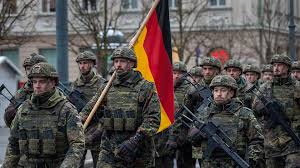
    A ceremony involving the Bundeswehr

    Germany is currently facing issues in force generation. With a goal of having 203,000 active troops by 2031, it is possible that they achieve that target.

    Current active troops as of 31st March 2025 of 182,000 troops means that they have to draw upon another 21,000 troops in a span of 6 years.

    Taking into consideration troops that resign or retire, incentives to recruit more from the younger population are being observed.

    Defence Spending Skyrockets

    Under-equipped German army gets 100 billion euro makeover
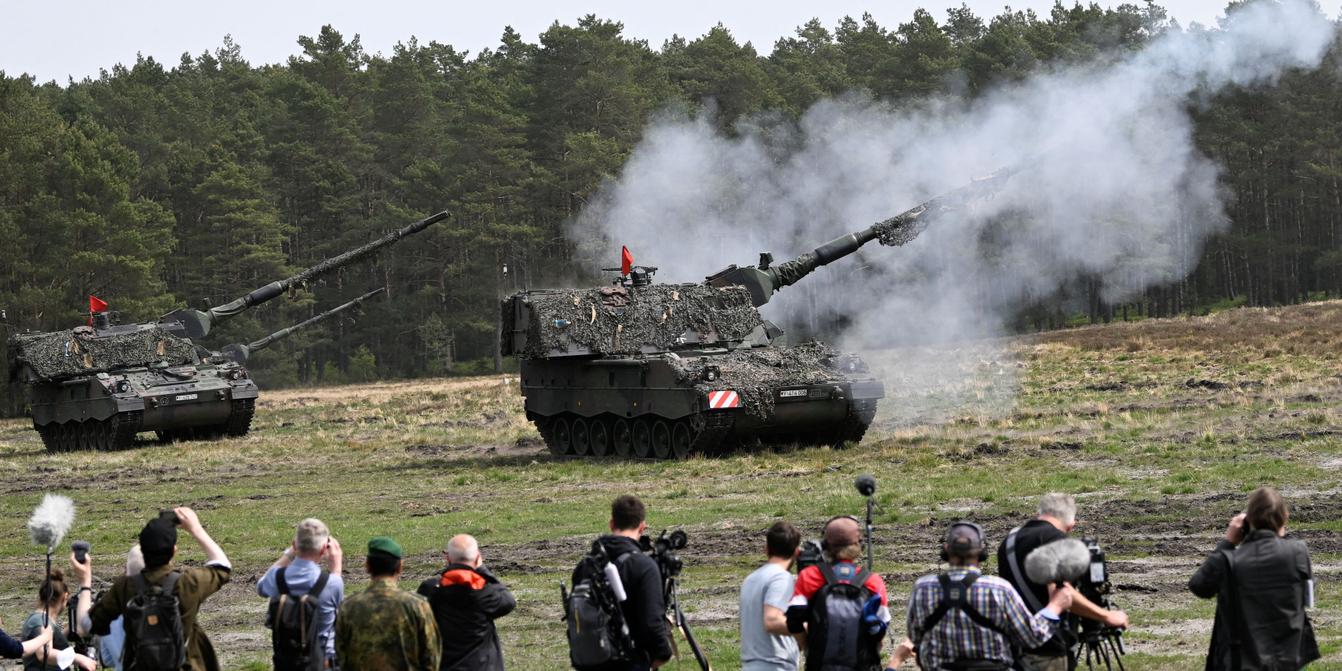
    Panzerhaubitze 2000 firing

    Germany has announced a €100 billion fund to raise its defence spending to 2% of its GDP. It raises the question on whether the country is able to solve its own internal problems.

    Germany currently faces procurement paralysis, industrial underinvestment and energy challenges. Ammo such as high-explosive artillery shells are in short supply due to the Ukraine war.

    I will put more focus on its ammunition shortfall as it sums up all the issues that Germany faces.

    The country had supplied Ukraine with tons of ammo resulting in a reserve of only 20,00 shells. With a plan to implement €21.4 billion into its ammo reserves by 2031, Germany aims to solve its weak supply chains.

    UK to speed up military kit deliveries to support Ukraine's fight - GOV.UK
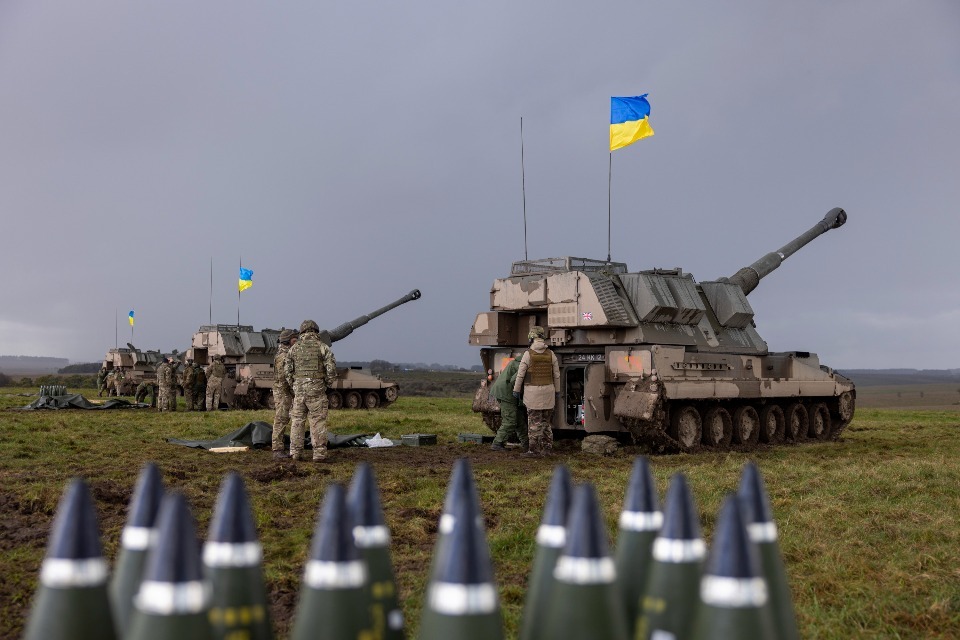
    Ukraine Artillery Pieces

    Germany imports most of its ammo from China which is unreliable in event of a war breaking out. Shipping times will cause delays and in a time where speed is what decides who wins, it is important to close up the gap.

    Focus on investing in its domestic production is underway. With companies like Rheinmetall, expanding its factories. Facing rare earth and explosive components shortages, expanding is difficult.

    Gen-Z refusing to fight?

    In anti-establishment era, German youth opt for status quo: Angela Merkel -  CSMonitor.com

    Germany has a birth rate issue. With 1.35 children per woman in 2023, not many are willing to pick up a weapon. Competition is fierce with civilian labor markets.

    There is a saying from WW2, “Every Soldier requires 7 in logistics”. Having a necessary workforce to support 203,000 troops will be a challenge.

    Germany also faces a barracks capacity problem. Having a bunch of soldiers is useless if there is no place for them to sleep.

    I would not be surprised if Germany were to bring back conscription to boost numbers with enough support.

    To sum up the potential,

    If Germany can restructure it has :
    1. a solid industrial base,
    2. vast financial resources,
    3. strong alliances,
    — and can recover its defence strength within 5–7 years, especially in combined NATO frameworks.

    Time will tell if Germany can build the necessary support systems to field an active army of 203,000 troops in these uncertain times.

    Blog Talk

    Hi guys, this is my fourth blog post since starting, I am getting the hang of it, will improve more as i pump out the content. Il probably delve into military intelligence next or whatever comes up in these turbulent times.

    If anyone wants to reach out to connect feel free to contact me 🙂

    Disclaimer Time!: I am not a professional, all my writings are my own personal opinion. Nothing I say should be taken as financial advice.

  • How Drones Are Revolutionizing Combat Strategies

    High Energy Laser with Integrated Optical-dazzler and Surveillance -  Wikipedia

    With reference to my previous blog on the Iron Dome system, I would like to delve into the ever-changing landscape of warfare with the introduction of laser systems, drones and the impact of them into defence systems infrastructure.

    Laser Systems – Cost effective Defences?

    How Ukraine soldiers use inexpensive commercial drones on the battlefield |  PBS News

    The main advantage of laser systems over traditional missile defence systems are mainly in cost per firing. Having a low cost per firing at US$2 – US$10 versus a Tamir interceptor firing at $50,000 or even a Patriot Missile at US$3-US$4 million, it is a no brainer on why advanced militaries such as the U.S are looking into it.

    Laser systems help flip the cost-inefficient attrition of defending against low cost attack modes such as drones into a sustainable high volume defence force. Arguably the cost to train personal to operate and maintain such a defence is also a net gain towards saving dollars.

    Currently, the Iron Beam system is projected to target smaller munitions such as drones to a distance of up to 10km. A far cry from the Tamir’s 150 square kilometer radius, however with the pace of technology evolving i find that this is not a big issue in terms of scalabality.

    Countermeasures: Mother Nature, fog, rain and smoke are some uncontrollable ways that reduce laser system’s combat effectiveness. Theoretically, if an enemy wants to increase their chances of breaking through such defences, they could have an smoke artillery barrage around the surrounding systems and quickly lead up with a drone attack.

    If a country were to be dependent on laser systems, their power stations and electrical grid will be key targets of attack as well, leading to more passive defences having to be placed around said infrastructure.

    Drone Warfare

    Russia is seeking more attack drones from Iran after depleting stockpile,  White House says | PBS News

    As seen in the Ukraine-Russian War, drone warfare is in its infancy. Intelligence gathering, Surveillance and Reconnaissance (ISR) once limited to the U.S UAV series is now widely available to even the smallest of paramilitaries.

    Drones offer precision strikes along with swarm attacks whilst being cheap to produce and offering close to zero risk of danger to its operators.

    Defending against such threats does not come cheap. With current tech, active defences such as interceptor missiles are expensive. Trying to counter drones with foot soldiers with shotguns (duck hunting experience preferred) is not feasible either.

    Right now, it remains to be seen on who can perfect the drone swarm advantage and which country can produce the first cost effective defence and adopt to the doctrine the fastest.

    Nation Defences

    If I were advising a defence ministry, I would propose:

    1. Build a counter-drone layered defence with lasers, jammers, and AI fire control
    2. Train civilian drone reserves for local ISR
    3. Stockpile cheap expendable drones for surge wartime use
    4. Harden comms against jamming and GNSS denial
    5. Integrate drones with existing artillery and air power for coordinated multi-domain operations
    6. Start building swarm doctrines for both attack and defense

    Usage of cheap defences such as camouflage netting for hiding key defence points, underground shelters for troops and counter drone tactics are the way i would minimise my losses in event of a war

    Thanks for reading, Im still getting used to wordpress and formatting my blog, if anyone has any tips do not hesitate and reach out to me! i wont bite promise!

    Disclaimer time!: I am not a professional, all my writings are my own personal opinion. Nothing I say should be taken as financial advice.