Tag: Taliban takeover

  • The Fall of Bagram: How Losing One Base Doomed a Country

    The Fall of Bagram: How Losing One Base Doomed a Country

    How one decision changed the end of the Afghanistan War — and shaped America’s exit forever.


    🔎 Introduction: The Base That Held a War Together

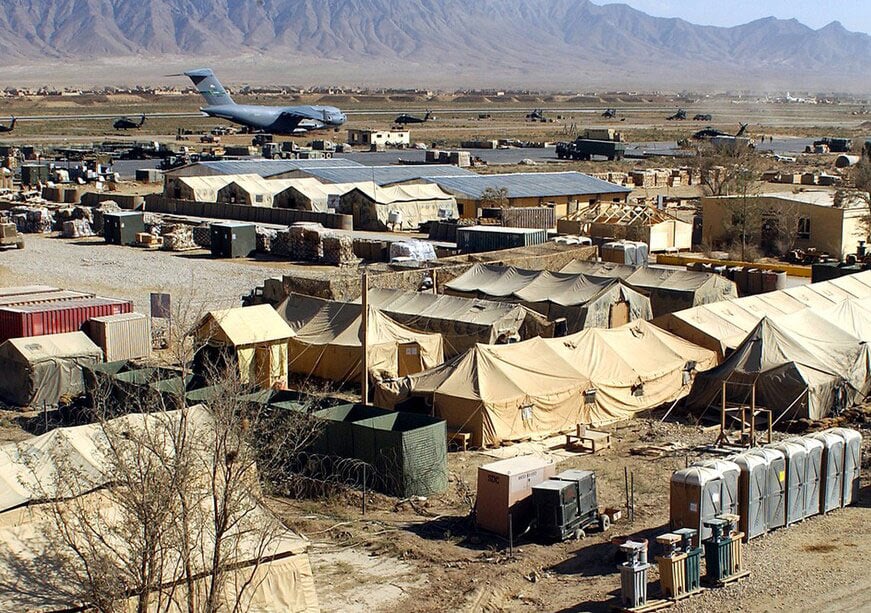
    For almost 20 years, Bagram Air Base was the center of America’s mission in Afghanistan. It was more than a runway. It was a symbol of strength, a shield for Afghan forces, a staging point for U.S. troops, and the heart of intelligence, drones, transport, and medical support.

    But in July 2021, the United States left Bagram overnight.
    No ceremony.
    No hand-off.
    No public warning.

    Within weeks, the Afghan government collapsed. The Taliban swept across the country. Kabul fell. And the world watched chaos unfold at the Hamid Karzai International Airport—a place never designed for mass evacuation.

    Many experts now say:

    “Losing Bagram doomed Afghanistan.”

    This article explains why.


    1. What Bagram Really Was: The Brain, Heart, and Lungs of a War

    To understand the collapse, we must first understand Bagram’s role. It wasn’t just a military base. It was the glue that held the Afghan war effort together.

    1.1 A Strategic Fortress

    Bagram had:

    • Two massive runways
    • Space for tens of thousands of troops
    • Three rings of defenses
    • Advanced radar and air-defense systems
    • A full field hospital
    • The main drone command center

    It was the only base in the country capable of:

    • Sustained heavy airlift
    • 24/7 drone missions
    • Large-scale logistics operations
    • Supporting NATO coalition traffic

    1.2 Air Power: The Afghan Army’s Life Support

    The Afghan National Army (ANA) heavily depended on U.S. airpower for:

    • Air strikes
    • Medical evacuations
    • Supply drops
    • Transport of reinforcements
    • Surveillance and intelligence

    Losing Bagram meant losing:

    • 90% of U.S. airstrike capability
    • All heavy logistics capacity
    • Command-and-control systems for Afghan pilots

    This left Afghan troops blind, isolated, and cut off.

    SIGAR (Special Inspector General for Afghanistan Reconstruction) later wrote:

    “Once U.S. air support ended, the Afghan Army’s ability to fight collapsed almost instantly.”
    — SIGAR, Why the Afghan Security Forces Collapsed, 2023


    2. Why Bagram Was Abandoned: The Doha Trap

    To understand why Bagram was closed, we must look at the Doha Agreement (February 2020).
    This was the U.S.–Taliban deal under which:

    • The U.S. promised to leave Afghanistan
    • The Taliban promised not to attack withdrawing forces
    • The Afghan government was excluded from negotiations
    • Taliban leaders gained international legitimacy

    But the biggest problem was hidden in the fine print:

    The U.S. agreed to reduce all forces to a level too small to hold major bases.

    By early 2021:

    • Only 2,500 U.S. troops remained
    • Just enough to hold one base — not Bagram

    The Biden administration reviewed the agreement but concluded the U.S. was trapped:

    “Staying meant breaking the deal and restarting the war. Leaving meant accepting the risks.”
    — U.S. National Security Review Summary, 2021

    The Pentagon recommended keeping Bagram.
    The White House chose full withdrawal.

    That meant:

    • Bagram had to be abandoned
    • A single airport (Kabul International) had to handle the evacuation
    • Afghan forces were left without air support
    • Taliban forces gained momentum across the country

    3. The Night Bagram Went Dark: A Silent Exit

    On July 1, 2021, U.S. troops shut off the electricity, packed their vehicles, and left Bagram in the middle of the night without informing the Afghan commander.

    Afghan General Mir Asadullah Kohistani later said:

    “We woke up and found they were gone. The Americans left without saying goodbye.”

    The base was instantly looted by local civilians.
    The Afghan Army took over, but they didn’t have:

    • Enough troops
    • Enough pilots
    • Enough maintenance crews
    • Any ability to defend the perimeter

    Bagram was now:

    • Too big to hold
    • Too complex to operate
    • Too costly to maintain

    Within 40 days, it fell to the Taliban without a fight.


    4. How Losing Bagram Collapsed the Afghan State

    4.1 No Air Support = No Army

    The Afghan military was built around one idea:

    American airpower will stop large Taliban attacks.

    But once Bagram fell:

    • Afghan helicopters ran out of spare parts
    • Drones stopped flying
    • Airstrikes stopped
    • Troops in remote bases were isolated
    • Desertions skyrocketed

    SIGAR wrote:

    “Removing U.S. advisers and air support crippled Afghan forces more than any Taliban offensive.”
    — SIGAR, 2023

    4.2 The Taliban’s Blitzkrieg

    With Bagram gone, the Taliban launched a lightning campaign:

    • Attack isolated bases
    • Cut off supply lines
    • Force local commanders to surrender
    • Capture equipment
    • Move rapidly from city to city

    By late July:

    • 200+ district centers fell
    • Taliban captured U.S.-supplied vehicles
    • Entire brigades surrendered without firing a shot

    It was a domino effect.

    4.3 Psychological Collapse

    Bagram’s fall signaled:

    • The U.S. is truly leaving
    • There will be no rescue
    • No more airstrikes
    • No logistics
    • No backup

    Afghan troops lost faith.
    Local warlords switched sides.
    Provincial governors negotiated surrender deals.

    Once morale broke, the collapse was unstoppable.


    5. Kabul Without Bagram: A Deadly Funnel

    When the Taliban closed in on Kabul, the U.S. needed an evacuation point.
    But there was a huge problem:

    Bagram was gone.

    The only option was:

    • A small civilian airport
    • In the middle of the city
    • With no secure perimeter
    • Surrounded by Taliban fighters

    This led to:

    • Chaotic crowds
    • A deadly ISIS-K suicide bombing
    • Billions in abandoned equipment
    • Desperate evacuations on cargo planes

    The Pentagon later admitted:

    “Without Bagram, we had limited options for a safe and orderly evacuation.”
    — U.S. Defense Department After-Action Review, 2022


    6. How the Taliban Used Bagram After the Capture

    Once the Taliban took Bagram:

    • They freed thousands of prisoners, including ISIS-K fighters
    • They seized helicopters, armored vehicles, weapons, and ammunition
    • They gained access to advanced equipment left behind
    • They used the base as their new military HQ

    One decision had changed the balance of power.


    7. The Strategic Lessons: What Bagram Teaches the World

    Lesson 1: Airpower keeps weak states alive

    Without U.S. planes, the Afghan Army was not a 300,000-man force.
    It was a patchwork of disconnected outposts.

    Lesson 2: Never give up your strongest military base first

    Bagram was:

    • Defensible
    • Equipped
    • Spacious
    • Internationally connected

    Giving it up made everything worse.

    Lesson 3: Diplomacy can trap militaries

    The Doha Agreement removed the U.S.’s freedom to choose:

    • timelines
    • troop levels
    • base structure
    • withdrawal positioning

    It was a military retreat shaped by political pressure.

    Lesson 4: Morale collapses before armies do

    Afghanistan did not fall militarily.
    It fell psychologically.

    Lesson 5: Evacuations require planning years ahead

    Kabul airport was doomed to fail the moment Bagram closed.


    Conclusion: How One Base Decided the Fate of a Nation

    The fall of Afghanistan was not caused by:

    • Lack of bravery
    • Poor training
    • Weak soldiers
    • Taliban strength

    It was caused by structural collapse.

    Bagram was the backbone.
    Once it was gone, the Afghan military lost:

    • mobility
    • coordination
    • firepower
    • intelligence
    • morale

    In the end, the fall of Bagram was not one event.

    It was the moment the war became unwinnable.

    The story of Bagram is a lesson for all future conflicts:

    Never walk away from the anchor that holds everything together.

    Sources

    • SIGAR (Special Inspector General for Afghanistan Reconstruction), Why the Afghan Security Forces Collapsed, 2023.
    • Department of Defense, Afghanistan After-Action Review, 2022.
    • Graeme Herd, The Causes and Consequences of Strategic Failure in Afghanistan, Marshall Center, 2021.
    • Al Jazeera, “US auditor: Washington, Ghani to blame for Afghanistan’s fall,” 2022.
    • The National, “Afghan Army collapse was years in the making,” 2021.
  • The Doha Agreement: How a Piece of Paper Ended America’s Longest War

    The Doha Agreement: How a Piece of Paper Ended America’s Longest War

    The deal that changed Afghanistan — and why its consequences came fast and hard.


    Introduction: A War Ending on Paper

    On February 29, 2020, in a luxury hotel in Doha, Qatar, American diplomats and Taliban leaders sat at a long table and signed a deal. There were no explosions. No military victory. No surrender. Just signatures.

    This document became known as The Doha Agreement — a simple piece of paper that ended America’s longest war.

    But while the agreement brought an official end to U.S.–Taliban fighting, it also triggered a chain reaction that led to a dramatic collapse in Afghanistan. Within 17 months of the signing, the Taliban took over the entire country. Kabul fell. The Afghan government dissolved. Millions of Afghans were launched into chaos.

    This article breaks down what was inside the agreement, why it was made, and how it reshaped the future of Afghanistan — all in simple language, backed by historical research and citations.


    1. What Was the Doha Agreement?

    The Doha Agreement was a peace deal between:

    • The United States
    • The Taliban

    The Afghan government was not a signatory, which would become one of the deal’s biggest flaws.

    The agreement had four main pillars:

    1. U.S. Forces Would Leave Afghanistan

    The U.S. promised to pull all troops out by May 1, 2021.
    This was the first time America formally agreed to a complete withdrawal.

    2. The Taliban Would Stop Attacking U.S. Troops

    In return, the Taliban pledged to stop attacks on U.S. and coalition forces.

    3. The Taliban Would Deny Safe Haven to Terrorists

    They promised not to allow groups like Al-Qaeda to use Afghan territory to attack America.

    4. Prisoner Swap

    The Afghan government had to release 5,000 Taliban prisoners, and the Taliban had to release 1,000 Afghan prisoners.

    Those released fighters later rejoined the battlefield.

    5. Start “Intra-Afghan Talks”

    The Taliban agreed to talk with the Afghan government…
    …but these talks never gained traction.

    This was not a peace treaty. It was more like a political exit plan — with major consequences.

    Source: Foreign Affairs analysis of deal impact


    2. Why the U.S. Wanted the Deal

    By 2020, the United States had been fighting in Afghanistan for almost 19 years.

    Three major reasons pushed the U.S. toward the Doha Agreement:


    A. War Fatigue at Home

    Americans were tired of funding a long and unclear war.

    • Trillions spent
    • Thousands of lives lost
    • No clear end in sight

    Public opinion showed strong interest in withdrawing troops.


    B. The “Forever Wars” Debate

    Both Republicans and Democrats agreed the U.S. needed to stop fighting “forever wars.”

    President Trump campaigned on leaving Afghanistan.
    President Biden, once in office, completed the plan.

    The Doha Agreement became the bridge between both administrations.


    C. The U.S. Needed an Exit Without Losing Face

    After nearly two decades:

    • The Taliban still controlled large areas
    • The Afghan government was weak
    • Corruption was widespread

    The Doha Agreement gave the U.S. a diplomatic way out.


    3. Why the Taliban Wanted the Deal

    For the Taliban, the Doha Agreement was a dream outcome.


    A. They Wanted U.S. Forces to Leave

    This was their core demand for 19 years.

    And now, the U.S. was finally agreeing to it — publicly and unconditionally.


    B. The Deal Gave Them Legitimacy

    For the first time:

    • Taliban leaders sat across from American officials as equals.
    • They appeared on global media as a political force.
    • The Afghan government was sidelined.

    This boosted their status both internationally and inside Afghanistan.


    C. They Got Their Fighters Back

    The release of 5,000 Taliban prisoners — many battle-hardened — supercharged their ranks.

    Analysts later called this “one of the biggest unforced errors in modern diplomacy.”

    Source: U.S. oversight report on collapse


    4. The Agreement Undermined the Afghan Government

    Perhaps the most damaging part of the Doha Agreement was this:

    The Afghan government was not included.

    This sent three messages:

    1. The U.S. does not fully trust the Afghan government.
    2. The Taliban is the real power to negotiate with.
    3. The Afghan government may not survive.

    Across the country, provincial officials, police, and civilians began hedging bets:

    • Some negotiated local surrender deals with the Taliban.
    • Some fled early.
    • Others stopped believing in Kabul’s leadership.

    The psychological blow was enormous.

    Source: Analysis from the Marshall Center on collapse of Afghan legitimacy


    5. The Deal Started a Countdown Clock

    The United States agreed to withdraw by May 1, 2021.

    This deadline:

    • Motivated the Taliban
    • Fractured the Afghan military
    • Gave extremists time to prepare for a final push

    The Taliban simply needed to wait.

    Meanwhile:

    The Afghan military depended on U.S. support

    • Aircraft maintenance
    • Logistics
    • Intelligence
    • Special forces coordination

    When U.S. contractors left, Afghan forces were crippled.

    Source: SIGAR report — Afghan forces collapsed when support was removed


    6. A Deal the Taliban Never Fully Honored

    The Taliban made several promises in the Doha Agreement:

    • Cut ties with Al-Qaeda
    • Reduce violence
    • Engage in real political negotiations

    But evidence showed:

    ❌ Al-Qaeda stayed active in Afghanistan

    UN reports noted continued ties.

    ❌ Taliban fighters kept attacking Afghan forces

    They only stopped attacking U.S. troops — as the agreement required.

    ❌ They escalated violence once the U.S. signaled withdrawal

    The Doha Agreement technically held, but only because its language was vague and toothless.


    7. How the Taliban Used the Deal to Win Propaganda Battles

    In rural areas, Taliban leaders said:

    “We already defeated the Americans. Kabul will fall soon.”

    Many Afghan soldiers believed it. Some commanders began surrendering without fighting, thinking:

    • The U.S. will not help us
    • Our government is collapsing
    • The Taliban will rule soon

    This “belief collapse” spread faster than the Taliban themselves.


    8. A Government That Had Lost Trust

    President Ashraf Ghani’s government was criticized for:

    • Corruption
    • Nepotism
    • Poor management
    • Centralizing power
    • Ignoring local leaders

    When the U.S. announced withdrawal, the Afghan government had no clear plan.

    Instead of preparing defenses:

    • Leaders argued
    • Generals rotated
    • Morale plummeted

    By August 2021, most officials were already making escape plans.

    Source: Journal of Democracy on systemic political weakness


    9. The Final Phase: Collapse in 11 Days

    Although the Doha Agreement was signed in early 2020, its real effect came in the summer of 2021.

    August 6–15, 2021: A Timeline

    DateEvent
    Aug 6First provincial capital falls
    Aug 7–12Major cities surrender without major fighting
    Aug 13Kandahar and Herat fall
    Aug 14Jalalabad collapses
    Aug 15Kabul falls; Ghani flees

    The Afghan army — once trained by the best in the world — dissolved almost overnight.

    Why?

    Because the Doha Agreement rewrote reality.

    It told Afghan forces:

    ✔ The U.S. is leaving
    ✔ Your government is weak
    ✔ The Taliban will soon take over
    ✔ Surrender is safer than fighting

    And with that, 20 years unraveled.

    Source: CNBC — collapse was a “collapse of will, not strength”


    10. What the Doha Agreement Meant for Ordinary Afghans

    The collapse led to:

    A. A massive refugee crisis

    Millions fled or tried to leave.

    B. Women losing rights

    Girls’ schools closed in many places.

    C. Economic collapse

    Aid froze. Jobs disappeared.

    D. Fear of reprisal

    Those who worked with the U.S. feared for their lives.

    Source: History.com timeline of Kabul’s fall


    11. Did the Doha Agreement Actually End the War?

    Technically, yes — but only between the U.S. and the Taliban.

    But the war inside Afghanistan continued, then transitioned into a power takeover by the Taliban.

    The Doha Agreement:

    • Ended America’s active fighting
    • Ended U.S. presence
    • Ended international commitment
    • Ended the Afghan Republic’s future

    A single document reshaped the entire geopolitical map.


    12. Why Some Experts Call It a “Strategic Mistake”

    Many analysts now argue:

    • The U.S. negotiated too quickly
    • The Afghan government was sidelined
    • The withdrawal timeline was unrealistic
    • The deal empowered extremists
    • It set the stage for collapse

    A Marshall Center report called it:

    “A strategic failure with predictable consequences.”

    Source: Marshall Center report on strategic failure


    Conclusion: A Piece of Paper That Changed a Nation

    The Doha Agreement was intended to bring peace.

    Instead, it created:

    • A power vacuum
    • A psychological collapse
    • A political meltdown
    • A military disintegration
    • A humanitarian crisis

    In the end, it became one of the most impactful diplomatic deals of the century — not because of what it built, but because of what it dismantled.

    The fall of Afghanistan was not sudden.

    It started the moment the ink dried in Doha.

    Citations

    Al Jazeera, “US auditor: Washington, Ghani to blame for Afghanistan’s fall.” aljazeera.com

    Graeme Herd, “The Causes and the Consequences of Strategic Failure in Afghanistan”, George C. Marshall European Center for Security Studies. marshallcenter.org+1

    Special Inspector General for Afghanistan Reconstruction (SIGAR), Why the Afghan Security Forces Collapsed, February 2023. Sigar+2Afghan Report+2

    UPI, “SIGAR report: U.S. withdrawal mainly to blame for collapse of Afghan government.” Upi

    The National, “How Afghanistan’s Army was pulled apart by corruption and back-room deals.” The National