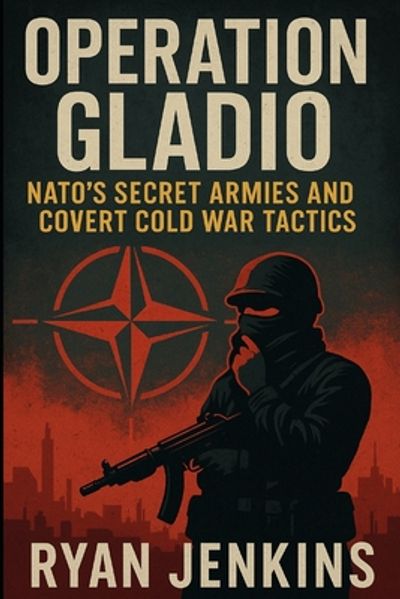
The Hidden Networks Built to Fight a Soviet Invasion — and the Controversy That Followed
Introduction: The Secret Armies of the Cold War
After World War II ended in 1945, Europe did not become peaceful overnight. Instead, the continent entered a new kind of conflict known as the Cold War. On one side stood the Western alliance led by the United States. On the other stood the communist bloc led by the Soviet Union.
Leaders in the West feared one terrifying possibility:
What if Soviet armies invaded Western Europe?
If that happened, traditional armies might collapse quickly. Cities could fall. Governments could be captured. To prepare for this nightmare scenario, Western intelligence agencies secretly created hidden resistance networks across Europe.
These secret groups became known as “stay-behind armies.”
The most famous of them was called Operation Gladio, a covert program connected to NATO and Western intelligence services.
The idea was simple but dramatic:
If Soviet forces conquered Europe, these secret fighters would stay behind enemy lines and launch guerrilla warfare, sabotage missions, and resistance operations.
For decades, the existence of these networks remained hidden. When the truth began to emerge in the early 1990s, it shocked the world and raised major questions about intelligence agencies, democracy, and the limits of secrecy.
This is the story of Operation Gladio — the Cold War’s hidden armies.
Chapter 1: The Cold War Begins
A Continent Divided
After World War II, Europe was split into two powerful camps.
The Western nations — including Britain, France, and the United States — formed military alliances to defend themselves from Soviet expansion. In 1949, these countries created North Atlantic Treaty Organization, better known as NATO.
Meanwhile, the Soviet Union created its own alliance in Eastern Europe called the Warsaw Pact.
Both sides feared invasion.
Western leaders worried that millions of Soviet soldiers could pour into Western Europe, overwhelming defenses within days.
Lessons from World War II
During World War II, resistance movements played a huge role in fighting Nazi occupation. Groups like the French Resistance sabotaged railroads, gathered intelligence, and helped Allied forces.
Western planners wondered:
What if they could prepare resistance groups before an invasion even started?
The idea was to build secret networks that could operate behind enemy lines long after armies had fallen.
These networks would be trained, supplied, and hidden — ready to activate if war broke out.
Chapter 2: The Birth of Operation Gladio
Building Secret Armies
In the late 1940s and early 1950s, Western intelligence services quietly began building these networks across Europe.
Key players included:
- Central Intelligence Agency (CIA)
- European intelligence agencies
- NATO military planners
Each participating country developed its own secret network.
These networks included:
- Former soldiers
- Anti-communist activists
- Special forces veterans
- Civilians trained in sabotage and survival
Weapons, radios, and explosives were hidden in secret supply caches throughout Europe.
Why the Name “Gladio”?
The Italian branch of the program became the most famous. It was named after a Roman short sword called a gladius, symbolizing strength and defense.
Over time, the name “Gladio” became shorthand for the entire network of stay-behind armies across Europe.
Countries believed to have participated included:
- Italy
- France
- Belgium
- Germany
- Greece
- Turkey
- the Netherlands
- Switzerland
- and several others
Each nation maintained its own secret units while coordinating with NATO.
Chapter 3: How the Secret Networks Were Supposed to Work
Guerrilla Warfare Behind Enemy Lines
If the Soviet Union invaded Western Europe, the stay-behind networks would activate.
Their mission would include:
- sabotaging railways and bridges
- disrupting enemy supply lines
- gathering intelligence
- organizing underground resistance movements
- helping NATO forces return
In many ways, these fighters were meant to operate like the resistance groups of World War II.
Hidden Weapons and Safe Houses
To prepare for this mission, secret caches were placed across Europe. These caches contained:
- rifles
- explosives
- radios
- medical supplies
- coded instructions
Many of these supplies were buried underground or hidden in forests and remote areas.
Only select members of the network knew their locations.
Training the Fighters
Members were often trained in:
- guerrilla tactics
- sabotage techniques
- secret communications
- survival skills
- intelligence gathering
Some received training from NATO special forces or intelligence agencies.
Everything about the program was kept secret — even from many elected officials.
Chapter 4: The Discovery of Operation Gladio
The Secret Comes Out
For decades, Operation Gladio remained hidden from the public.
But in 1990, the secret began to unravel.
Italian Prime Minister Giulio Andreotti publicly confirmed the existence of a secret NATO-linked network in Italy.
The revelation stunned the country.
Investigations soon showed that similar networks had existed across Western Europe.
Public Shock and Political Controversy
Many citizens were shocked to learn that secret armies had existed inside their countries for decades.
Questions immediately emerged:
- Who controlled these networks?
- Did governments approve them?
- Were they ever used inside their own countries?
Parliaments across Europe launched investigations.
Some leaders defended the networks as necessary Cold War defenses.
Others argued they had gone too far.
Chapter 5: The Controversies and Allegations
Operation Gladio became highly controversial because of claims that some networks may have been involved in political activities.
Allegations in Italy
Italy experienced years of violence during the Cold War known as the “Years of Lead.”
This period included:
- bombings
- political assassinations
- extremist attacks
Some investigators suggested that parts of the Gladio network may have been connected to these events, although evidence remains debated and controversial.
Critics claimed that secret networks might have supported anti-communist strategies that influenced politics.
Supporters argued the networks were strictly defensive and had nothing to do with terrorism.
Investigations Across Europe
Several European countries launched official inquiries.
Some confirmed the existence of stay-behind networks but denied wrongdoing.
Others shut the programs down completely.
Even today, historians continue debating what role — if any — Gladio networks played in domestic politics.
Chapter 6: The Soviet Threat That Created Gladio
To understand Operation Gladio, it is important to remember the fears of the early Cold War.
The Soviet Union possessed:
- massive armies in Eastern Europe
- powerful intelligence services like the KGB
- nuclear weapons
- influence over communist political parties across Europe
Western leaders believed Soviet invasion plans were a real possibility.
Military planners feared Western Europe could fall within weeks.
From their perspective, secret resistance networks were a form of insurance.
If everything else failed, the underground fighters would continue the war.
Chapter 7: The End of the Cold War
By the late 1980s, the Cold War was collapsing.
Communist governments across Eastern Europe began to fall. In 1991, the Soviet Union itself dissolved.
With the main threat gone, the purpose of stay-behind networks disappeared.
Many countries dismantled their programs.
Some intelligence agencies destroyed records. Others opened archives to investigators.
But because these operations were secret for decades, many details remain unclear.
Chapter 8: The Legacy of Operation Gladio
Operation Gladio left behind an important legacy.
The Power of Secret Intelligence Networks
Gladio demonstrated how intelligence agencies can create hidden structures that operate outside public awareness.
While secrecy can protect national security, it also raises concerns about democratic oversight.
Preparing for Worst-Case Scenarios
The stay-behind networks reflected the extreme fears of the Cold War era.
Western governments were willing to build underground armies because they believed invasion was possible.
Lessons for Modern Security
Today, governments still prepare for unconventional threats such as cyberwarfare, terrorism, and hybrid warfare.
While the world has changed, the core idea remains the same:
Nations prepare secret plans for the worst scenarios.
Conclusion: The Cold War’s Hidden Battlefield
Operation Gladio reveals a hidden side of the Cold War.
Behind the public speeches, treaties, and nuclear standoffs, governments were quietly preparing for occupation and resistance.
Secret weapons caches were buried. Fighters were trained. Networks were built.
Fortunately, the invasion these networks were created to resist never happened.
But the existence of Operation Gladio reminds us that the Cold War was not only fought with missiles and diplomacy.
It was also fought in the shadows — through intelligence operations, covert planning, and secret armies waiting silently for a war that never came.
Sources & Citations
- Ganser, Daniele. NATO’s Secret Armies: Operation Gladio and Terrorism in Western Europe. Frank Cass, 2005.
- Willan, Philip. Puppetmasters: The Political Use of Terrorism in Italy. Constable & Robinson, 1991.
- NATO Historical Archives. “Stay-Behind Networks During the Cold War.”
- Central Intelligence Agency Historical Studies Division. Cold War Covert Operations Records.
- European Parliament. “Resolution on Gladio Networks and Stay-Behind Armies,” 1990.
- Encyclopaedia Britannica. “Operation Gladio.”







 Vellum Insights