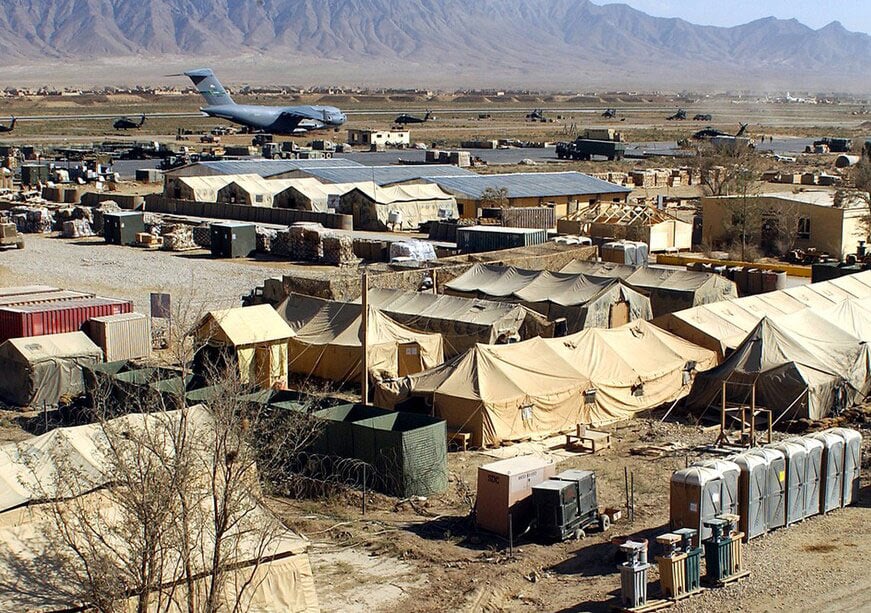
Tag: war

  • The Doha Agreement: How a Piece of Paper Ended America’s Longest War

    The Doha Agreement: How a Piece of Paper Ended America’s Longest War

    The deal that changed Afghanistan — and why its consequences came fast and hard.


    Introduction: A War Ending on Paper

    On February 29, 2020, in a luxury hotel in Doha, Qatar, American diplomats and Taliban leaders sat at a long table and signed a deal. There were no explosions. No military victory. No surrender. Just signatures.

    This document became known as The Doha Agreement — a simple piece of paper that ended America’s longest war.

    But while the agreement brought an official end to U.S.–Taliban fighting, it also triggered a chain reaction that led to a dramatic collapse in Afghanistan. Within 17 months of the signing, the Taliban took over the entire country. Kabul fell. The Afghan government dissolved. Millions of Afghans were launched into chaos.

    This article breaks down what was inside the agreement, why it was made, and how it reshaped the future of Afghanistan — all in simple language, backed by historical research and citations.


    1. What Was the Doha Agreement?

    The Doha Agreement was a peace deal between:

    • The United States
    • The Taliban

    The Afghan government was not a signatory, which would become one of the deal’s biggest flaws.

    The agreement had four main pillars:

    1. U.S. Forces Would Leave Afghanistan

    The U.S. promised to pull all troops out by May 1, 2021.
    This was the first time America formally agreed to a complete withdrawal.

    2. The Taliban Would Stop Attacking U.S. Troops

    In return, the Taliban pledged to stop attacks on U.S. and coalition forces.

    3. The Taliban Would Deny Safe Haven to Terrorists

    They promised not to allow groups like Al-Qaeda to use Afghan territory to attack America.

    4. Prisoner Swap

    The Afghan government had to release 5,000 Taliban prisoners, and the Taliban had to release 1,000 Afghan prisoners.

    Those released fighters later rejoined the battlefield.

    5. Start “Intra-Afghan Talks”

    The Taliban agreed to talk with the Afghan government…
    …but these talks never gained traction.

    This was not a peace treaty. It was more like a political exit plan — with major consequences.

    Source: Foreign Affairs analysis of deal impact


    2. Why the U.S. Wanted the Deal

    By 2020, the United States had been fighting in Afghanistan for almost 19 years.

    Three major reasons pushed the U.S. toward the Doha Agreement:


    A. War Fatigue at Home

    Americans were tired of funding a long and unclear war.

    • Trillions spent
    • Thousands of lives lost
    • No clear end in sight

    Public opinion showed strong interest in withdrawing troops.


    B. The “Forever Wars” Debate

    Both Republicans and Democrats agreed the U.S. needed to stop fighting “forever wars.”

    President Trump campaigned on leaving Afghanistan.
    President Biden, once in office, completed the plan.

    The Doha Agreement became the bridge between both administrations.


    C. The U.S. Needed an Exit Without Losing Face

    After nearly two decades:

    • The Taliban still controlled large areas
    • The Afghan government was weak
    • Corruption was widespread

    The Doha Agreement gave the U.S. a diplomatic way out.


    3. Why the Taliban Wanted the Deal

    For the Taliban, the Doha Agreement was a dream outcome.


    A. They Wanted U.S. Forces to Leave

    This was their core demand for 19 years.

    And now, the U.S. was finally agreeing to it — publicly and unconditionally.


    B. The Deal Gave Them Legitimacy

    For the first time:

    • Taliban leaders sat across from American officials as equals.
    • They appeared on global media as a political force.
    • The Afghan government was sidelined.

    This boosted their status both internationally and inside Afghanistan.


    C. They Got Their Fighters Back

    The release of 5,000 Taliban prisoners — many battle-hardened — supercharged their ranks.

    Analysts later called this “one of the biggest unforced errors in modern diplomacy.”

    Source: U.S. oversight report on collapse


    4. The Agreement Undermined the Afghan Government

    Perhaps the most damaging part of the Doha Agreement was this:

    The Afghan government was not included.

    This sent three messages:

    1. The U.S. does not fully trust the Afghan government.
    2. The Taliban is the real power to negotiate with.
    3. The Afghan government may not survive.

    Across the country, provincial officials, police, and civilians began hedging bets:

    • Some negotiated local surrender deals with the Taliban.
    • Some fled early.
    • Others stopped believing in Kabul’s leadership.

    The psychological blow was enormous.

    Source: Analysis from the Marshall Center on collapse of Afghan legitimacy


    5. The Deal Started a Countdown Clock

    The United States agreed to withdraw by May 1, 2021.

    This deadline:

    • Motivated the Taliban
    • Fractured the Afghan military
    • Gave extremists time to prepare for a final push

    The Taliban simply needed to wait.

    Meanwhile:

    The Afghan military depended on U.S. support

    • Aircraft maintenance
    • Logistics
    • Intelligence
    • Special forces coordination

    When U.S. contractors left, Afghan forces were crippled.

    Source: SIGAR report — Afghan forces collapsed when support was removed


    6. A Deal the Taliban Never Fully Honored

    The Taliban made several promises in the Doha Agreement:

    • Cut ties with Al-Qaeda
    • Reduce violence
    • Engage in real political negotiations

    But evidence showed:

    ❌ Al-Qaeda stayed active in Afghanistan

    UN reports noted continued ties.

    ❌ Taliban fighters kept attacking Afghan forces

    They only stopped attacking U.S. troops — as the agreement required.

    ❌ They escalated violence once the U.S. signaled withdrawal

    The Doha Agreement technically held, but only because its language was vague and toothless.


    7. How the Taliban Used the Deal to Win Propaganda Battles

    In rural areas, Taliban leaders said:

    “We already defeated the Americans. Kabul will fall soon.”

    Many Afghan soldiers believed it. Some commanders began surrendering without fighting, thinking:

    • The U.S. will not help us
    • Our government is collapsing
    • The Taliban will rule soon

    This “belief collapse” spread faster than the Taliban themselves.


    8. A Government That Had Lost Trust

    President Ashraf Ghani’s government was criticized for:

    • Corruption
    • Nepotism
    • Poor management
    • Centralizing power
    • Ignoring local leaders

    When the U.S. announced withdrawal, the Afghan government had no clear plan.

    Instead of preparing defenses:

    • Leaders argued
    • Generals rotated
    • Morale plummeted

    By August 2021, most officials were already making escape plans.

    Source: Journal of Democracy on systemic political weakness


    9. The Final Phase: Collapse in 11 Days

    Although the Doha Agreement was signed in early 2020, its real effect came in the summer of 2021.

    August 6–15, 2021: A Timeline

    DateEvent
    Aug 6First provincial capital falls
    Aug 7–12Major cities surrender without major fighting
    Aug 13Kandahar and Herat fall
    Aug 14Jalalabad collapses
    Aug 15Kabul falls; Ghani flees

    The Afghan army — once trained by the best in the world — dissolved almost overnight.

    Why?

    Because the Doha Agreement rewrote reality.

    It told Afghan forces:

    ✔ The U.S. is leaving
    ✔ Your government is weak
    ✔ The Taliban will soon take over
    ✔ Surrender is safer than fighting

    And with that, 20 years unraveled.

    Source: CNBC — collapse was a “collapse of will, not strength”


    10. What the Doha Agreement Meant for Ordinary Afghans

    The collapse led to:

    A. A massive refugee crisis

    Millions fled or tried to leave.

    B. Women losing rights

    Girls’ schools closed in many places.

    C. Economic collapse

    Aid froze. Jobs disappeared.

    D. Fear of reprisal

    Those who worked with the U.S. feared for their lives.

    Source: History.com timeline of Kabul’s fall


    11. Did the Doha Agreement Actually End the War?

    Technically, yes — but only between the U.S. and the Taliban.

    But the war inside Afghanistan continued, then transitioned into a power takeover by the Taliban.

    The Doha Agreement:

    • Ended America’s active fighting
    • Ended U.S. presence
    • Ended international commitment
    • Ended the Afghan Republic’s future

    A single document reshaped the entire geopolitical map.


    12. Why Some Experts Call It a “Strategic Mistake”

    Many analysts now argue:

    • The U.S. negotiated too quickly
    • The Afghan government was sidelined
    • The withdrawal timeline was unrealistic
    • The deal empowered extremists
    • It set the stage for collapse

    A Marshall Center report called it:

    “A strategic failure with predictable consequences.”

    Source: Marshall Center report on strategic failure


    Conclusion: A Piece of Paper That Changed a Nation

    The Doha Agreement was intended to bring peace.

    Instead, it created:

    • A power vacuum
    • A psychological collapse
    • A political meltdown
    • A military disintegration
    • A humanitarian crisis

    In the end, it became one of the most impactful diplomatic deals of the century — not because of what it built, but because of what it dismantled.

    The fall of Afghanistan was not sudden.

    It started the moment the ink dried in Doha.

    Citations

    Al Jazeera, “US auditor: Washington, Ghani to blame for Afghanistan’s fall.” aljazeera.com

    Graeme Herd, “The Causes and the Consequences of Strategic Failure in Afghanistan”, George C. Marshall European Center for Security Studies. marshallcenter.org+1

    Special Inspector General for Afghanistan Reconstruction (SIGAR), Why the Afghan Security Forces Collapsed, February 2023. Sigar+2Afghan Report+2

    UPI, “SIGAR report: U.S. withdrawal mainly to blame for collapse of Afghan government.” Upi

    The National, “How Afghanistan’s Army was pulled apart by corruption and back-room deals.” The National

  • Why Afghanistan Fell in 11 Days: The Political and Civilian Collapse

    Why Afghanistan Fell in 11 Days: The Political and Civilian Collapse

    How a Two-Decade War Ended Suddenly — and Why Everyone Was Shocked


    Introduction: A Collapse Nobody Expected

    In August 2021, Afghanistan fell faster than almost anyone believed possible. On August 15, Taliban fighters entered Kabul, and the Afghan government crumbled. President Ashraf Ghani fled. Two decades of U.S. involvement seemed to vanish in a matter of days. HISTORY+2CBS News+2

    Many people call it “11 days” — the final span when the Taliban swept through province after province, and Afghanistan’s future spun out of control.

    But the fall was no accident. It was the result of deep political failures, decades of dependency, and a peace deal that weakened the very state the U.S. built.

    This is the story of how power shifted, why ordinary Afghans felt betrayed, and what made the country “fall in 11 days.”


    1. The U.S.-Taliban Deal: A Fatal Promise

    The collapse began before the U.S. even left.

    In February 2020, the United States signed the Doha Agreement with the Taliban. Foreign Affairs The deal promised a full U.S. troop withdrawal in exchange for Taliban guarantees not to attack U.S. forces — but it didn’t include a strong role for the Afghan government. Foreign Affairs

    That weakened the Afghan state. The Taliban even demanded the release of 5,000 prisoners, many of whom became key leaders again. Foreign Affairs

    According to strategic analysts, this deal “shifted the balance of power toward the Taliban” and “created the conditions for the state’s collapse.” Foreign Affairs


    2. Leadership and Corruption: A Fragile Government

    The Afghan government was deeply flawed.

    • Centralized Power: President Ashraf Ghani ran a very top-down government. Foreign Affairs
    • Political Rivalries: Other leaders, like Abdullah Abdullah, challenged Ghani’s rule and even held a parallel inauguration. Foreign Affairs
    • Corruption: Billions of dollars poured into Afghanistan over 20 years — but much of it was siphoned off. SIGAR (the U.S. watchdog) found deep corruption in the Afghan security forces. CBS News+2New English Review+2

    According to a U.S. oversight report, part of the collapse was caused by the Afghan government’s failure to accept that the U.S. would actually leave, leaving them unprepared. Sigar

    Simply put: when the world turned away, the foundation of Afghan governance was too weak to stand on its own.


    3. The Withdrawal Signal: Collapse of Will to Fight

    When the U.S. announced a full troop withdrawal under President Joe Biden, the message was clear — the international backstop was gone. CNBC+1

    That signal spread quickly: many Afghan soldiers felt demoralized, believing that without U.S. support, they would not survive. CNBC

    An expert quoted in a report said the fast speed of collapse was “a reflection of a collapse in will to fight.” CNBC

    With their allies gone, Afghan forces melted away. Provincial capitals fell with little resistance — sometimes even without a shot fired.


    4. Poor Planning and Sudden Exit

    The way the U.S. left contributed to the chaos.

    • Abrupt Bases Closure: The U.S. quietly abandoned Bagram Air Base — a major hub — without coordinating with Afghan allies. The Guardian
    • Evacuation Missteps: Even as Taliban fighters approached Kabul, U.S. leadership was criticized by generals for not planning a proper evacuation. AP News
    • Broken Institutions: The Afghan National Security Forces relied heavily on U.S. contractors for maintenance, air support, and logistics. When these contractors left, many Afghan units failed to operate. The American Conservative+2Sigar+2

    The collapse was not sudden magic — it was a policy error playing out in real time.


    5. Civilian Chaos and the Human Toll

    Millions of ordinary Afghans paid the price for the political failures.

    As Taliban forces advanced, Afghan civilians ran for their lives. Many raced to Kabul airport, trying to board evacuation flights. Journal of Democracy+1

    When Ghani fled, it shattered any remaining hope in the government. Kabul fell without a fight. Journal of Democracy

    Women and girls were especially fearful. The Taliban’s return raised urgent questions about rights, education, and safety under new rule. 8am

    People who had worked with the U.S. — translators, civil society leaders — feared retribution. Many fled in panic or stayed, hoping to be safe.


    6. Strategic Failure or Inevitable Exit?

    Why did the collapse happen so fast? Experts point to multiple reasons:

    • Strategic Error: According to the George C. Marshall Center, the mission’s goals became too broad. Building a stable democracy proved more difficult than anticipated. marshallcenter.org
    • Legitimacy Crisis: According to the Journal of Democracy, the Afghan republic struggled to win true legitimacy. Journal of Democracy
    • Long-Term Weakness: Years of dependency on Western money and support created a fragile system. New English Review

    Critics argue that the U.S. never built a self-reliant Afghan nation. Instead, it built a dependent state that collapsed when its backers left.


    7. Aftermath: What the Collapse Means for the Future

    When Kabul fell:

    • The Taliban claimed victory, declaring the end of the Islamic Republic. Journal of Democracy
    • Thousands of Afghans tried to get on evacuation flights at the airport — a chaotic and tragic scene. HISTORY
    • Internationally, the U.S. withdrawal sparked fierce debate. Some said it was overdue; others called it a policy failure. TIME

    The legacy of those 11 days will be long:

    • For Afghans, it’s a story of betrayal, grief, and uncertainty.
    • For the U.S., it’s a reminder that nation-building is hard — and sometimes fragile.
    • For the world, it’s a warning: military exit without political backing can lead to chaos.

    Conclusion: A War That Ended Without Being Won

    Afghanistan’s fall in August 2021 was more than a military defeat — it was a political collapse.

    The Doha deal. Fragile governance. Deep-rooted corruption. A rapid exit. A terrified civilian population.

    All of these pieces came together in a perfect storm.

    The 11 days didn’t just end a war — they redefined what happened afterward.
    And whether the world remembers this as a failure or an inevitable outcome, the human cost is real, and the lessons are urgent.

    Citations

    • Foreign Affairs, “Why Afghanistan Fell.” Foreign Affairs
    • Special Inspector General for Afghanistan Reconstruction (SIGAR), Report on Collapse. Sigar
    • George C. Marshall Center, “Strategic Failure in Afghanistan.” marshallcenter.org
    • Al Jazeera, “US Withdrawal Prompted Collapse of Afghan Army.” Al Jazeera
    • CNBC, “How Afghanistan Fell to the Taliban So Quickly.” CNBC
    • Journal of Democracy, “The Collapse of Afghanistan.” Journal of Democracy
    • New English Review, “11 Days That Shook the World.” New English Review
    • History.com, “Kabul Falls to the Taliban After U.S. Withdrawal.” HISTORY
  • MiG Alley: The Jet Dogfights That Changed Air Combat Forever

    MiG Alley: The Jet Dogfights That Changed Air Combat Forever

    How the Skies Over Korea Became the Birthplace of the Jet Age


    Introduction: A New Kind of War in the Skies

    In the early 1950s, as the Korean War raged across the peninsula, another kind of battle unfolded far above the clouds.

    This wasn’t like the dogfights of World War II — propeller planes circling in the blue sky. This was something entirely new.

    Jet engines.
    Supersonic speeds.
    Split-second decisions that decided life or death.

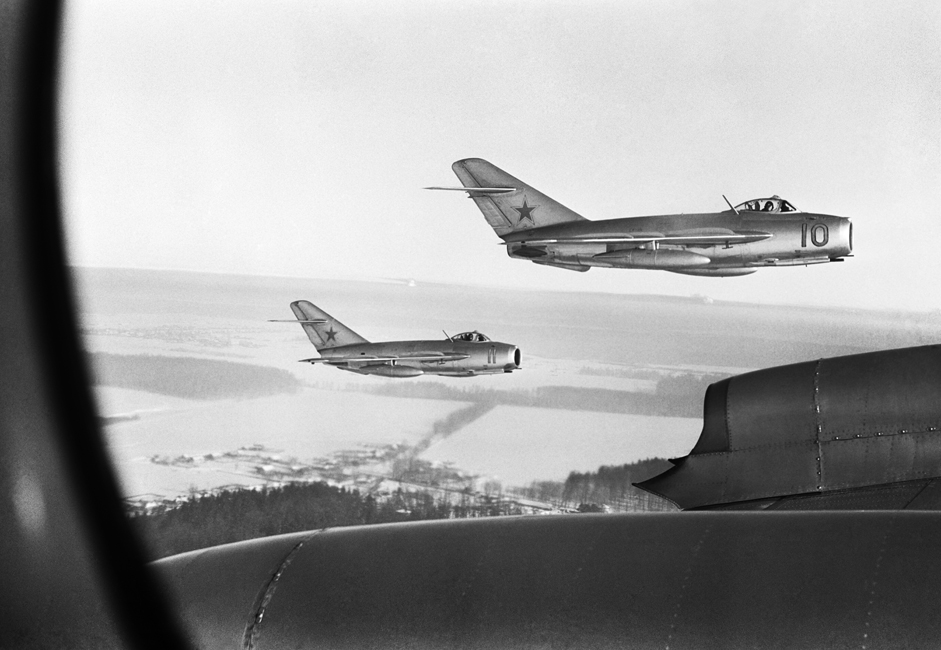
    Over a narrow stretch of northwestern Korea, near the Yalu River, pilots from the United States and the Soviet Union (though Moscow denied it) faced off in the world’s first major jet-versus-jet combat.

    They called it MiG Alley — a place where skill, nerves, and technology were pushed to their limits.

    What happened in those skies would change the future of air combat forever.


    The Setting: The Birth of Jet Warfare

    By the time the Korean War broke out in June 1950, jet aircraft were still new technology.

    Both sides started the war flying World War II–era propeller planes — the U.S. used the F-51 Mustang, and the North Koreans flew Soviet-built Yak-9 fighters.

    But that changed fast.

    When the Soviet-built MiG-15 appeared in late 1950, everything changed.

    With swept wings, a pressurized cockpit, and a powerful jet engine, the MiG could climb higher, fly faster, and turn tighter than anything the U.N. forces had seen before.

    It could reach speeds of almost 670 miles per hour and operate at altitudes above 50,000 feet — well beyond the reach of older aircraft.

    For a while, the skies over North Korea belonged to the enemy.


    Enter the F-86 Sabre: America’s Answer

    The U.S. needed something to match the MiG — and fast.

    Enter the North American F-86 Sabre, one of the most advanced fighter jets of its time.

    It had swept wings like the MiG, radar-assisted gunsights, and powerful .50 caliber machine guns.

    But the Sabre’s real strength wasn’t just speed — it was stability and precision.
    At high speeds, it was easier to control than the MiG, giving American pilots an edge in tight maneuvers.

    When the Sabre took to the skies in late 1950, the stage was set for a clash unlike any before.


    MiG Alley: The Deadliest Airspace on Earth

    The battles took place over a stretch of northwestern Korea along the Yalu River, near the Chinese border.

    The area soon earned a name whispered with respect and fear — MiG Alley.

    It became the hunting ground of the USAF’s 4th Fighter Interceptor Wing and the Soviet 64th Fighter Aviation Corps.

    American pilots were told to stay south of the Yalu to avoid provoking China or the USSR, but MiGs would swoop down from the north, strike, and retreat across the river to safety.

    The result?
    A daily aerial chess match between two of the most advanced fighter forces on the planet.


    The Men Behind the Machines

    The dogfights of MiG Alley weren’t just about machines — they were about the men who flew them.

    U.S. pilots were veterans of World War II — experienced, disciplined, and aggressive.
    They called themselves the “Sabre Men.”

    Their Soviet opponents were equally skilled, though officially “volunteers.”
    They wore Chinese or North Korean uniforms, flew aircraft with red star insignias, and operated under strict secrecy.

    Among them was Soviet ace Nikolai Sutyagin, who scored 22 kills — one of the highest of the war.
    On the American side, Captain Joseph McConnell became the top U.S. ace with 16 victories.

    These pilots lived by the second — and often died by it.


    Dogfighting at the Speed of Sound

    Air combat over MiG Alley was brutal and fast.
    A pilot had less than a few seconds to spot, target, and fire before the enemy disappeared into a blur.

    The F-86 Sabre’s advanced gyro gunsight gave it an edge — it predicted enemy movement, helping pilots lead their shots.

    But the MiG-15 had superior climb and altitude performance, often using “boom and zoom” tactics — diving from above, firing, and escaping skyward.

    The result was a deadly dance of angles and velocity.

    At these speeds, every decision was instinct.
    Every mistake, fatal.

    As one Sabre pilot later said:

    “You didn’t fight the MiG. You fought the man flying it.”


    The Shadow War: Soviets in the Sky

    Officially, the Soviet Union never fought in the Korean War.
    Unofficially, they were deeply involved.

    From late 1950 onward, Soviet pilots secretly flew hundreds of missions from air bases in Manchuria.

    Their jets carried North Korean or Chinese markings, and radio operators spoke in broken Korean to maintain the illusion.

    But American pilots weren’t fooled.

    Intercepted radio chatter and combat reports revealed that many of the MiG pilots spoke perfect Russian — and fought with precision far beyond what North Korea could train.

    In truth, MiG Alley had become the first direct aerial clash between American and Soviet pilots — the Cold War’s hidden front.


    Tactics and Technology: The Future Takes Shape

    The duels in MiG Alley changed air combat forever.

    Fighter tactics evolved from turning dogfights to energy warfare — controlling altitude, speed, and position to gain the advantage.

    The concept of the “kill zone” — a cone of fire extending from a jet’s nose — became the standard in aerial gunnery.

    New innovations also emerged:

    • Radar control and early warning systems to guide intercepts.
    • Mid-air refueling to extend range.
    • Jet training schools focused on energy management and teamwork.

    The lessons learned over MiG Alley would shape every air force in the world for decades to come.


    Life and Death in the Cockpit

    Behind every dogfight was a young man pushing the limits of fear and physics.

    Sabre pilots often flew two or three missions a day, facing freezing altitudes and crushing G-forces.
    Cockpits were cramped, noisy, and dangerous.

    When hit, a pilot had seconds to eject — hoping his chute opened before the ground reached him.

    If captured in North Korea, his fate was uncertain.

    But despite the risks, pilots volunteered in droves. The skies over MiG Alley became the ultimate test of skill, courage, and endurance.


    The Numbers: Victory and Controversy

    Official U.S. Air Force records claimed 792 MiGs destroyed for 78 Sabres lost — a stunning 10-to-1 kill ratio.

    Soviet records, however, told a different story, claiming 600 U.N. aircraft destroyed for 335 MiG losses.

    The truth likely lies somewhere in between.

    But what’s undisputed is this — the F-86 Sabre dominated the skies in the war’s later years, and MiG Alley became the proving ground for the modern fighter jet.


    Legacy: The Jet Age Is Born

    When the Korean War ended in 1953, MiG Alley faded into history — but its influence did not.

    The dogfights there were the prototype for modern air combat: radar-guided missiles, supersonic speeds, and electronic warfare.

    Many of the pilots who fought there would go on to shape the Cold War’s air strategy, train new generations of aviators, and even fly in Vietnam.

    And the lessons learned — about technology, adaptability, and pilot psychology — still guide air combat training today.

    As aviation historian Walter Boyne wrote:

    “MiG Alley was where the jet age was baptized by fire.”


    Conclusion: The Battle Above the Yalu

    MiG Alley wasn’t just a stretch of sky — it was the dawn of a new era.

    In that cold, thin air, the world saw what war in the modern age would look like: faster, deadlier, and fought with machines that left no room for error.

    It was a clash of ideologies, nations, and nerves.

    And for the men who fought there, it was the place where courage met speed — and history took flight.

    Cited Sources

    • Boyne, Walter J. MiG Alley: The Fight for Air Superiority. Smithsonian Books, 2000.
    • Thompson, Warren. F-86 Sabre vs MiG-15: Korea 1950–53. Osprey Publishing, 2010.
    • Futrell, Robert F. The United States Air Force in Korea, 1950–1953. U.S. Air Force Historical Study, 1983.
    • Werrell, Kenneth P. Sabres Over MiG Alley. Naval Institute Press, 2005.
    • National Museum of the United States Air Force Archives.
  • The Inchon Landing: The Daring Gamble That Turned the Korean War

    The Inchon Landing: The Daring Gamble That Turned the Korean War

    How One Bold Plan by General MacArthur Changed the Course of a War


    Introduction: The War Was Going Badly

    In the summer of 1950, the Korean Peninsula was on fire.
    North Korean forces had invaded the South in a lightning assault, driving the U.N. and South Korean armies into a tiny corner around the port city of Pusan.

    It looked like the war was lost.

    But one man refused to give up — General Douglas MacArthur. He believed that a bold strike behind enemy lines could turn the tide.

    His plan? A dangerous amphibious landing at a small, heavily defended port called Inchon.

    It was risky, almost impossible. The tides were extreme, the mudflats were deep, and the harbor was narrow.
    But if it worked — it would cut the North Korean army in half.

    This is the story of Operation Chromite, better known as the Inchon Landing — one of the most daring and brilliant military operations of the 20th century.


    The Situation: A War Hanging by a Thread

    When North Korean troops poured across the 38th parallel in June 1950, they were well-trained and well-equipped with Soviet weapons.
    In weeks, they captured Seoul and pushed deep into the South.

    By August, U.N. forces, mostly Americans and South Koreans, were trapped in the Pusan Perimeter, a small defensive pocket in the southeast corner of the peninsula.

    Supplies were running low. Soldiers were exhausted. The enemy was at the gates.

    The world watched as the United Nations prepared for what seemed like an inevitable defeat.

    But MacArthur — commanding from his headquarters in Tokyo — had another idea.


    MacArthur’s Gamble: A Plan No One Believed In

    General MacArthur with His Staff during the Daring Landing at Inchon,  Korea. 1951 | Amon Carter Museum of American Art

    General Douglas MacArthur was a legend — and a gambler.
    He had led the Pacific victories of World War II and returned triumphantly to Japan. But now, the situation in Korea tested everything he knew.

    While others talked about defense, MacArthur talked about attack.

    His idea: land U.N. forces far behind enemy lines at the port of Inchon, near Seoul.

    If successful, the landing would cut off North Korea’s supply lines, trap its army between Seoul and Pusan, and possibly end the war in a single blow.

    But there was a problem — almost everyone thought it was insane.


    Why Inchon Looked Impossible

    Military planners had good reasons to doubt the plan. Inchon was one of the worst possible landing sites in Korea:

    • Extreme Tides: The water level could rise or fall over 30 feet — one of the largest tidal ranges in the world.
    • Narrow Channels: Ships could only enter at high tide through a dangerous, twisting channel.
    • Mudflats: At low tide, the harbor turned into a sea of sticky mud — impossible for landing craft.
    • Urban Terrain: Inchon was a heavily built-up city with sea walls, defenses, and enemy troops.
    • Timing: The landing had to happen in mid-September — during a short window when tides and moonlight aligned.

    One U.S. Navy admiral even said:

    “We drew up every possible disadvantage — and still couldn’t find one good reason to land there.”

    But MacArthur wasn’t shaken.

    At a key meeting in Tokyo, he stood, pointed to a map, and told his generals:

    “The very arguments you make against this landing are the reasons why I will succeed.”


    The Preparation: A Secret Operation Named Chromite

    MacArthur’s plan became Operation Chromite.

    Planning began in secret in July 1950. The landing would use forces from both the U.S. Navy and U.S. Marine Corps, along with South Korean troops.

    The X Corps, commanded by General Edward Almond, would carry out the assault.
    The 1st Marine Division, battle-hardened from World War II, would lead the way.

    Meanwhile, the Eighth Army under General Walton Walker would hold the line at the Pusan Perimeter — buying time for the Inchon force to strike.

    To prepare, U.N. ships bombarded coastal defenses, while reconnaissance aircraft scouted enemy positions.

    MacArthur personally chose September 15, 1950 — the one day when tides would allow the landing.
    If the operation failed, there would be no second chance.


    D-Day at Inchon: September 15, 1950

    At dawn, the sky over Inchon burned with naval gunfire.
    U.S. destroyers and cruisers shelled the city, targeting North Korean gun batteries and fortifications.

    Then came the Marines.

    Phase One: Wolmi-do Island

    The first target was Wolmi-do, a small island guarding the harbor entrance.
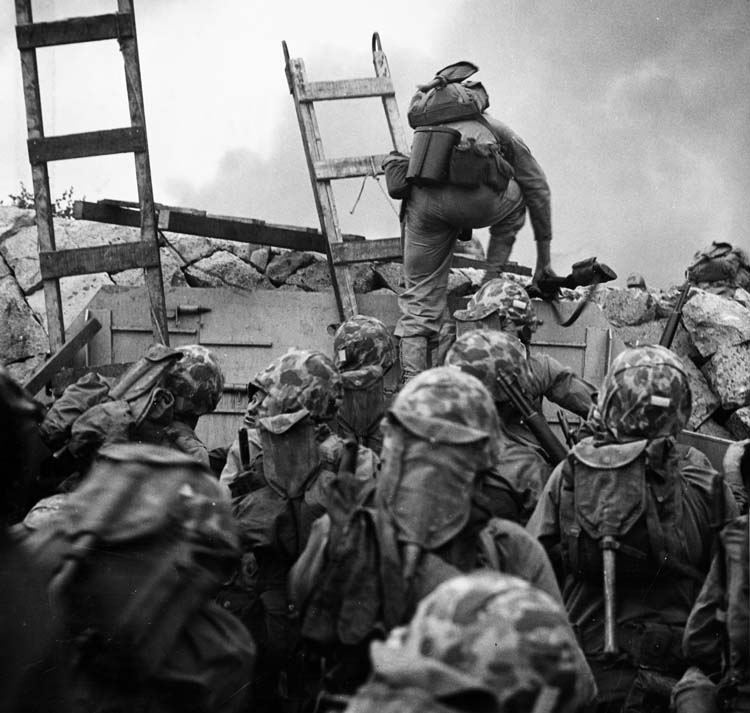
    At 6:30 a.m., 3rd Battalion, 5th Marines stormed the island under heavy fire.

    By noon, they had taken it. U.S. flags rose above the island — signaling success for the first wave.

    Phase Two: Red Beach and Blue Beach

    The next step came in the evening, timed precisely with the high tide.
    Landing craft surged forward toward Inchon’s Red Beach and Blue Beach.

    Marines climbed scaling ladders over sea walls slick with algae and bullets. They threw grenades, cleared bunkers, and fought block by block through the city’s narrow streets.

    By midnight, Inchon was in U.N. hands.

    The landing — considered impossible — had succeeded.


    The March on Seoul

    MacArthur wasted no time.
    Within hours of the landing, the Marines pushed east and north toward Seoul, just 15 miles away.

    North Korean resistance was fierce. The fight for Seoul turned into brutal urban combat — snipers, street fighting, and house-to-house clearing.

    But by September 28, the U.N. forces raised the South Korean flag over the capital once more.

    The liberation of Seoul stunned the world.

    What had seemed like certain defeat had turned into a brilliant victory.


    The Collapse of the North Korean Army

    Meanwhile, in the south, the North Korean army attacking the Pusan Perimeter suddenly found itself trapped.
    With Inchon behind them and U.N. troops pressing from the front, their supply lines were cut.

    Entire divisions broke apart as soldiers tried to flee north.

    By October, the U.N. advance crossed the 38th parallel. The North Korean army was shattered.

    In just three weeks, MacArthur’s plan had completely reversed the war.


    The Genius Behind the Gamble

    What made Inchon so successful wasn’t luck — it was calculated risk.

    MacArthur used three key principles of military strategy:

    1. Surprise: Landing where the enemy least expected.
    2. Speed: Striking fast before North Korea could react.
    3. Concentration: Using overwhelming force in one decisive blow.

    He turned the disadvantages — tides, terrain, timing — into tools of surprise.

    Even the North Korean commander later admitted,

    “We never believed the Americans would dare to land at Inchon.”


    Aftermath: From Triumph to Tension

    The victory at Inchon was complete, but it also set the stage for new dangers.

    Buoyed by success, MacArthur pushed his forces deep into North Korea — all the way to the Chinese border at the Yalu River.

    But this advance would soon bring China into the war, leading to the brutal winter battles of late 1950 — including the Chosin Reservoir campaign.

    Still, Inchon remains one of the greatest amphibious operations in history.
    It showed how daring strategy, flawless timing, and strong leadership could turn the tide of a war.


    The Legacy of Inchon

    The Inchon Landing became a textbook case of military genius.
    It’s studied in war colleges around the world as an example of how bold planning and precise execution can overcome impossible odds.

    For the Marines and sailors who fought there, Inchon wasn’t just a victory — it was proof that courage and discipline could make the impossible possible.

    And for history, it was the moment when the Korean War changed from desperate defense to decisive offense.

    Cited Sources

    • Appleman, Roy E. South to the Naktong, North to the Yalu (June–November 1950). U.S. Army Center of Military History, 1992.
    • Simmons, Edwin H. Over the Seawall: The U.S. Marines at Inchon. Marine Corps Historical Center, 1979.
    • Hastings, Max. The Korean War. Simon & Schuster, 1987.
    • MacArthur, Douglas. Reminiscences. McGraw-Hill, 1964.
    • National Archives, U.S. Marine Corps Combat Photography Unit, 1950.
  • The Frozen Chosin: How U.S. Marines Escaped the Chinese Trap

    The Frozen Chosin: How U.S. Marines Escaped the Chinese Trap

    A Battle Fought in Ice and Fire — The Story of Survival at the Chosin Reservoir


    Introduction: The Coldest Hell on Earth

    In the winter of 1950, deep in the mountains of North Korea, U.S. Marines found themselves trapped.
    They were surrounded by 120,000 Chinese soldiers. Temperatures dropped to –30°F. The wind howled. Guns froze. Blood turned to ice.

    This was the Battle of the Chosin Reservoir — one of the most brutal battles in modern military history. What began as a confident U.N. advance to “end the war by Christmas” turned into a desperate fight for survival.

    But in that frozen chaos, the First Marine Division didn’t crumble. Instead, they fought their way out — breaking through encirclement, saving thousands of lives, and writing one of the most legendary chapters in U.S. military history.


    The Setting: A War That Wasn’t Supposed to Happen

    When North Korea invaded South Korea in June 1950, few believed it would become a global conflict.
    The U.N., led by the United States, rushed to defend the South. Within months, U.N. forces under General Douglas MacArthur pushed the North Koreans back across the 38th parallel — the dividing line between North and South.

    By November 1950, MacArthur’s forces had reached the mountains near the Chinese border.
    MacArthur believed victory was near. He even promised his troops they’d be home for Christmas.

    But high above the frozen ridges of the Yalu River, China was watching — and planning.


    The Chinese Counterattack: Mao’s Secret Gamble

    Mao Zedong feared that U.S. forces so close to China’s border would threaten his new Communist government.
    Secretly, he sent the People’s Volunteer Army — 300,000 Chinese soldiers — across the Yalu River under cover of night.

    They moved silently through the mountains, wearing white camouflage, carrying supplies by hand or mule.
    By late November, they surrounded U.N. troops near a place called the Chosin Reservoir.

    The U.S. Marines didn’t know it yet, but they were walking straight into a trap.


    The Trap Closes: Night of Fire

    On November 27, 1950, the temperature plunged to –35°F.
    That night, the Chinese struck.

    Thousands of bugles blared through the darkness. Waves of Chinese infantry charged through the snow, screaming and firing.
    The Marines at Yudam-ni — one of the main camps — were hit from all sides.

    Machine guns jammed in the cold. Wounded soldiers froze if not moved immediately.
    Even morphine syrettes were solid from the cold.

    By morning, the Chosin Reservoir was ringed with fire and bodies. The U.N. forces — mainly U.S. Marines — were surrounded.


    Retreat, Hell! We’re Just Attacking in Another Direction

    The situation seemed hopeless. The nearest safe port, Hungnam, was 78 miles away — through frozen mountains and enemy roadblocks.
    But the Marines refused to surrender.

    Under the leadership of Major General Oliver P. Smith, the First Marine Division made a bold decision:
    They would fight their way out, bringing their wounded, their dead, and their gear with them.

    When asked if he was retreating, General Smith famously replied:

    “Retreat, hell! We’re just attacking in another direction.”


    The March Through Hell

    The breakout from Chosin became one of the most heroic marches in military history.

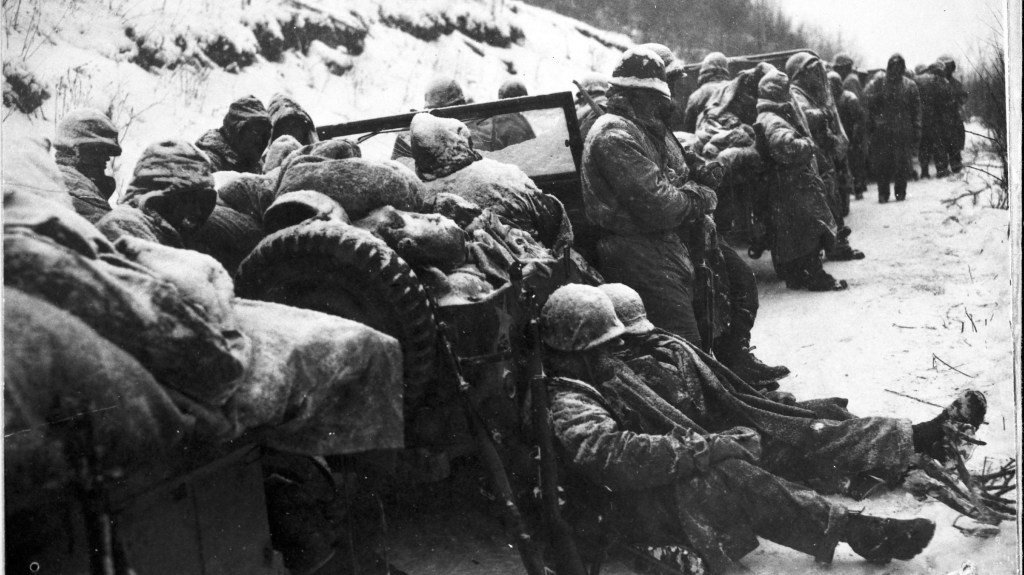
    For 17 days, the Marines and attached Army units fought their way south through blizzards and ambushes.
    Convoys stretched for miles, crawling along the snow-covered road that wound through the mountains.

    Chinese troops attacked constantly — sometimes from ridges above, sometimes from both sides of the road.
    Every bridge was blown, every hill defended.

    To survive, the Marines relied on air power and teamwork.
    U.S. Air Force and Navy pilots — flying Corsairs, Mustangs, and Skyraiders — dropped bombs, napalm, and supplies from the sky.
    Parachutes carrying food, fuel, and ammunition became lifelines.

    At night, the wounded were loaded into trucks, wrapped in sleeping bags or canvas. Many never woke again.


    The “Frozen Chosin”: A Battle Against Nature Itself

    The enemy wasn’t just the Chinese. It was the cold.

    Engines had to be lit with torches.
    C-rations froze solid.
    Medical plasma had to be thawed over campfires before use.

    Many Marines suffered frostbite so severe that they lost fingers and toes.

    And yet, morale stayed high. The Marines joked, cursed, and fought. They refused to be broken.


    The Air Bridge: Lifeline of the Chosin Campaign

    One of the greatest feats of the Chosin campaign was the air support.

    From bases in Japan and South Korea, U.S. aircraft flew thousands of sorties, dropping supplies and attacking Chinese positions.
    Helicopters — still new to the battlefield — carried out daring evacuations of the wounded from icy mountain ridges.

    At Hagaru-ri, engineers built a small airstrip by hand, using frozen picks and shovels under sniper fire.
    That strip became the lifeline of the trapped division.
    More than 4,000 wounded were evacuated before the Marines broke through.


    Breaking the Trap: The Final Dash to Hungnam

    By mid-December, the Marines reached the coastal town of Hungnam.
    They had fought through 78 miles of mountains, destroyed seven Chinese divisions, and saved their wounded and equipment.

    The U.S. Navy waited at the port with transport ships.
    Operation Hungnam Evacuation began — one of the largest sea evacuations in military history.

    Over 100,000 U.N. troops, 17,500 vehicles, and 98,000 North Korean refugees were evacuated safely.
    When the last Marine boarded the ship, they blew up the port behind them — denying it to the enemy.

    The “Frozen Chosin” had escaped the trap.


    Aftermath: Victory in Defeat

    Technically, the battle was a retreat. But in reality, it was a moral victory.

    The First Marine Division had survived against impossible odds.
    The Chinese army suffered tens of thousands of casualties — far more than the U.N. forces.

    The battle proved the value of discipline, leadership, and logistics in modern warfare.
    It also showed the world that even when surrounded and freezing, U.S. forces could fight their way out — and win.

    The Chosin Reservoir became a symbol of courage under fire, studied in military academies for decades afterward.


    Lessons from the Frozen Chosin

    1. Leadership under Pressure: General Smith’s calm and deliberate command saved his men. He refused to panic, even when superiors demanded a faster advance.
    2. Logistics Matter: Air supply, engineering, and maintenance were as important as rifles. The ability to repair, refuel, and feed men in sub-zero temperatures determined survival.
    3. Morale is Everything: The Marines’ humor, camaraderie, and discipline kept them from breaking.
    4. Adaptation and Flexibility: The phrase “attack in another direction” summed up military resilience — turning retreat into strategy.
    5. The Human Spirit: The story of Chosin reminds us that courage isn’t the absence of fear — it’s the will to keep moving forward through it.

    Legacy: The Chosin Few

    Today, the veterans of the battle are known as “The Chosin Few.”
    Every year, they gather to remember those who didn’t make it out.

    Their story continues to inspire soldiers, Marines, and civilians alike.
    It reminds us that sometimes, the hardest battles aren’t won — they’re survived.

    Cited Sources

    • Appleman, Roy E. East of Chosin: Entrapment and Breakout in Korea, 1950. Texas A&M University Press, 1987.
    • Montross, Lynn, and Nicholas A. Canzona. U.S. Marine Operations in Korea, 1950–1953, Volume III: The Chosin Reservoir Campaign. U.S. Marine Corps, 1957.
    • “The Battle of Chosin Reservoir.” U.S. Marine Corps History Division.
    • Simmons, Edwin H. The United States Marines: A History. Naval Institute Press, 2003.
    • National Archives, Korean War Photo Collections.
  • Operation Paperclip: How Nazi Scientists Built America’s Space Program

    Operation Paperclip: How Nazi Scientists Built America’s Space Program

    From the ashes of war to the stars above — how America’s greatest technological leap came from the unlikeliest of sources.


    Introduction: From Enemies to Assets

    When World War II ended in 1945, the world stood in ruins. Cities were leveled, economies shattered, and millions were dead. Yet, amid the wreckage, a new kind of race was beginning — not on the battlefield, but in the laboratories of science.


    The United States and the Soviet Union both realized that the scientists of Nazi Germany, the very minds behind the V-2 rocket and jet propulsion, held secrets that could change the future of war and exploration.

    That’s how Operation Paperclip was born — a secret U.S. intelligence program that brought over 1,600 German scientists, engineers, and technicians to America. Many of them were former Nazi Party members. Their knowledge would help shape the Cold War, the space race, and even modern technology — all while testing the boundaries of morality.


    The Seeds of Operation Paperclip

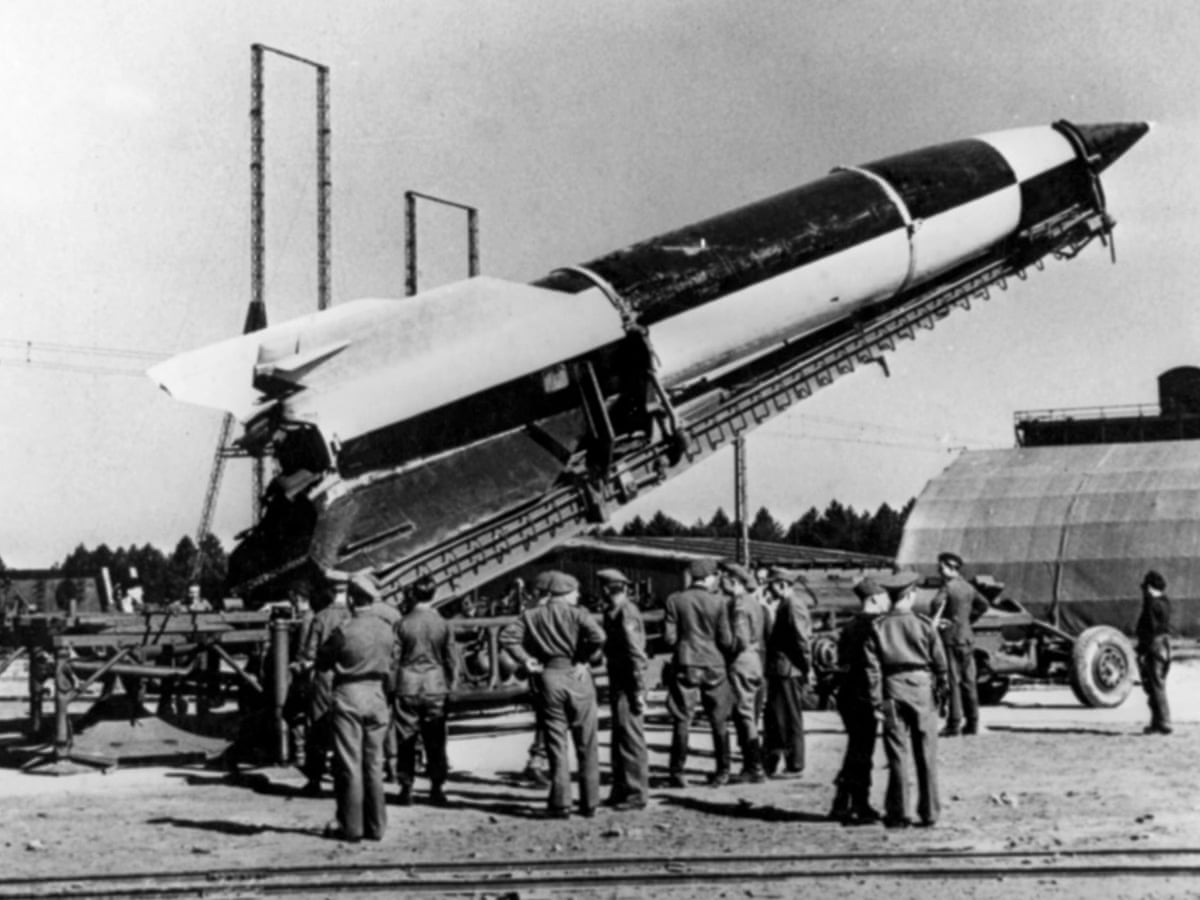
    By 1944, Allied troops were closing in on Germany. U.S. and British intelligence began identifying key figures in German research — men like Wernher von Braun, Arthur Rudolph, and Hubertus Strughold. These were the architects of Hitler’s advanced weapons programs, including the terrifying V-2 rocket, which had bombed London and Antwerp in the final stages of the war.

    The Allies knew the Soviets were also hunting for these scientists. Whoever captured them would gain not just knowledge, but technological dominance for decades to come.

    In late 1945, the U.S. Army launched Operation Overcast, soon renamed Operation Paperclip (because the scientists’ files were marked with paperclips to identify them). Officially, it was about collecting data. In reality, it was about recruiting Germany’s top scientific talent before the Soviets could.


    Who Were the Men Behind the Operation?

    The most famous figure was Wernher von Braun, a rocket engineer who had dreamed of space travel since childhood.

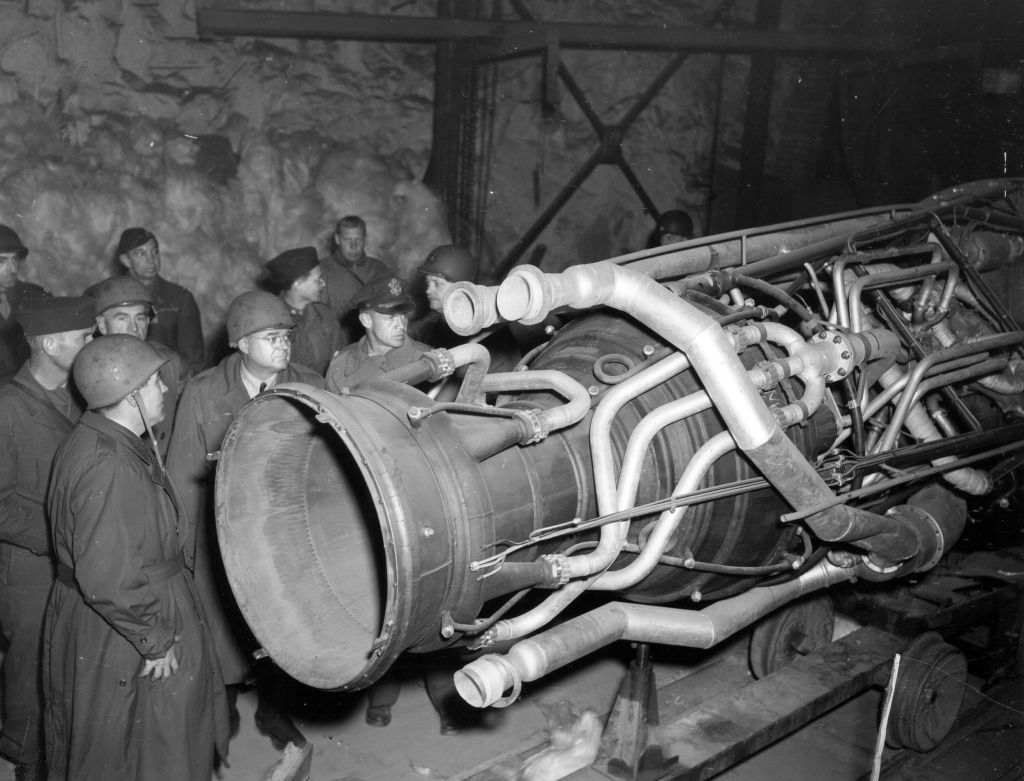
    Under the Nazis, von Braun led the design of the V-2 rocket — a weapon built using slave labor from concentration camps like Mittelbau-Dora.

    V2 rockets strike Britain - archive | Second world war | The Guardian


    After Germany’s defeat, von Braun and his team surrendered to the Americans in Austria. He was soon whisked away to Fort Bliss, Texas, to begin work for the U.S. Army.

    Others joined him — chemists, physicians, aviation experts, and physicists. Some had dark pasts. Many were involved in unethical human experiments or had worked directly under the Nazi regime. But as the Cold War heated up, the U.S. government decided that their value outweighed their crimes.

    The moral line blurred. What mattered now was keeping the knowledge out of Soviet hands.


    The Space Race Begins

    Once in the U.S., these scientists began reshaping American research and defense.
    Von Braun’s team helped develop the Redstone and Jupiter-C missiles — critical steps in U.S. rocket technology.

    Saturn V - Wikipedia

    By 1958, as tensions with the Soviet Union escalated, the newly formed NASA tapped von Braun to lead its space division. His work culminated in the Saturn V rocket, the massive engine that powered the Apollo missions to the Moon.

    Yes — the same man who built rockets for Hitler would later help America land on the Moon in 1969.

    Operation Paperclip had achieved its goal: technological superiority. But at what cost?


    The Cold War Justification

    To U.S. officials, the logic was simple: if we didn’t recruit them, the Soviets would.
    The Soviet Union was aggressively capturing German scientists, relocating thousands to facilities in Russia to boost their weapons and space programs.

    The U.S. couldn’t afford to fall behind.
    The fear of Soviet dominance — from atomic weapons to spaceflight — drove the moral compromises of Paperclip.

    Officially, the U.S. denied bringing Nazis into the country. But classified memos and declassified files later revealed that background checks were altered or destroyed, whitewashing the pasts of key scientists so they could enter the U.S. under false pretenses.

    It was a quiet bargain with the devil — one that reshaped modern history.


    Scientific Breakthroughs and Hidden Shadows

    The scientists brought under Operation Paperclip weren’t just rocket engineers. They included medical researchers, chemists, and aviation experts whose work laid the foundation for American advancements in space medicine, jet propulsion, and even early computing systems.

    • Hubertus Strughold, known as the “father of space medicine,” helped design the life-support systems for astronauts. But his legacy is clouded by accusations that he had overseen inhumane experiments on prisoners during the war.
    • Arthur Rudolph, another key engineer, directed the Saturn V rocket program. Later, he was investigated for his role in Nazi forced labor camps and voluntarily left the U.S. in 1984.

    Their brilliance propelled America into the future. Their pasts remained buried — until decades later, when historians and journalists began uncovering the truth.

    Operation Paperclip wasn’t just about science — it was about secrecy, morality, and the price of progress.


    Public Exposure and Moral Reckoning

    For decades, the American public knew little about Operation Paperclip. It wasn’t until the 1970s, when investigative journalists and declassified documents came to light, that the full story emerged.

    Books like “Operation Paperclip: The Secret Intelligence Program That Brought Nazi Scientists to America” by Annie Jacobsen revealed the hidden side of this grand experiment.

    The revelations shocked many Americans. How could the U.S., the self-proclaimed defender of freedom, employ men tied to a regime responsible for genocide?
    Government officials defended the decision as a strategic necessity — a move that ensured victory in the Cold War and accelerated America’s dominance in technology and space.

    In hindsight, historians still debate the ethics. Some see it as pragmatic survival in a dangerous world. Others view it as moral hypocrisy that stained America’s postwar legacy.


    The Legacy of Operation Paperclip

    Despite its dark origins, the legacy of Operation Paperclip is woven deeply into the fabric of modern science and defense.

    The technologies born from it influenced everything from ICBM systems to satellite launches and space exploration. The Apollo 11 mission, which put Neil Armstrong on the Moon, was a direct descendant of the V-2 program.

    Even modern missile defense systems and space research trace their roots back to the Paperclip scientists.

    But the operation also left behind a more haunting legacy — a reminder that progress often walks hand-in-hand with moral compromise.
    It raised the timeless question: Can scientific achievement ever be separated from the ethics of those who create it?


    Conclusion: A Deal That Changed the Future

    Operation Paperclip was more than a secret mission — it was a turning point in human history.
    By recruiting former enemies, the United States secured a technological lead that would define the 20th century. But it also blurred the moral lines between justice and survival.

    The rockets that once terrorized Europe carried mankind to the Moon.
    The scientists who worked under a dictator helped inspire a generation of discovery.

    It’s a paradox that still defines our modern age — the uneasy balance between ambition and accountability.
    And in that tension lies the true story of Operation Paperclip — the operation that turned war into wonder.


    Citations

    1. Jacobsen, Annie. Operation Paperclip: The Secret Intelligence Program That Brought Nazi Scientists to America. Little, Brown and Company, 2014.
    2. Bower, Tom. The Paperclip Conspiracy: The Hunt for the Nazi Scientists. Little, Brown, 1987.
    3. Neufeld, Michael J. Von Braun: Dreamer of Space, Engineer of War. Alfred A. Knopf, 2007.
    4. NASA History Office Archives, “Wernher von Braun and the U.S. Space Program.”
    5. U.S. National Archives, Operation Paperclip Records, 1945–1959.
  • The Berlin Airlift: How an “Impossible” Flight Saved a City

    The Berlin Airlift: How an “Impossible” Flight Saved a City


    Introduction: The City Under Siege

    After World War II ended, the city of Berlin found itself in a strange and dangerous place. The city was deep inside the Soviet zone of Germany, yet divided among the Allies — the U.S., Britain, France, and the USSR all had sectors in Berlin. Encyclopedia Britannica+3HISTORY+3berlinairlift.org+3

    In June 1948, the Soviets tried to force the Allies out by cutting all roads, railways and canals into West Berlin. This was called the Berlin Blockade. HISTORY+1

    West Berlin suddenly faced starvation, freezing winters without fuel, and isolation. Rather than surrender, the Western Allies launched a bold plan: they would supply a city of over two million people entirely by air. That plan became the Berlin Airlift. HISTORY

    This is the story of how planes replaced trains, runways replaced roads, and how a city under siege became a symbol of freedom.


    1. Why the Blockade Happened

    The Background

    At the end of World War II, Germany was split into four zones of occupation — U.S., Britain, France, and Soviet. Berlin, though inside the Soviet zone, was also divided among the four powers. PBS+2Office of the Historian+2

    By 1948, tensions between the West and Soviet Union had grown. The Western Allies introduced a new currency (the Deutsche Mark) in their zones of Germany and in West Berlin — something the Soviets saw as threatening. HISTORY+1

    The Blockade Begins

    On June 24, 1948, the Soviets blocked the last rail, road, and canal links into West Berlin. They hoped the Allies would surrender the city rather than risk war. HISTORY+1

    The Western Allies — under President Harry S. Truman and British leadership — had to choose: fight or find another way. They opted to fight by flight. They would keep West Berlin alive by airplane.


    2. Launching the Airlift — Operation Vittles

    Starting Small

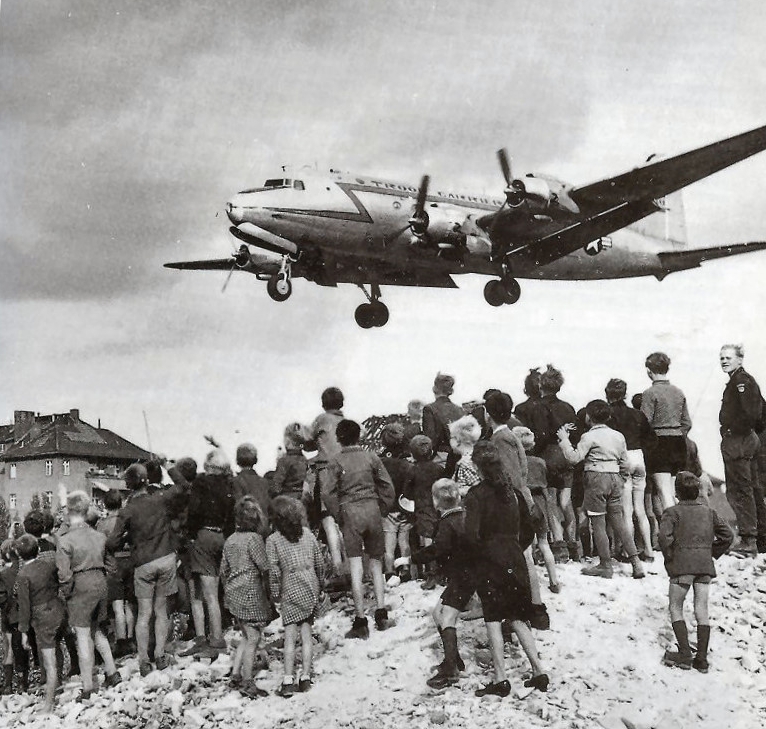
    On June 26, 1948, American cargo planes began flying into West Berlin under the codename Operation Vittles. HISTORY+1

    At first, the loads were tiny — only dozens of tons per day. The challenge was massive: feed, deliver fuel, and keep transport moving for more than two million people. berlinairlift.org

    Building Up

    The Allies quickly expanded their effort. They opened multiple airfields in Berlin: Tempelhof Airport (American), Gatow Airport (British), and later Tegel Airport (French sector). Wikipedia

    By early 1949, supplies per day reached 8,000 tons or more. Propelled by more aircraft and improved logistics. HISTORY+1

    The Air Corridors

    Because West Berlin was surrounded by Soviet-controlled territory, only three air corridors remained for Allied planes. These corridors were vital lifelines. HISTORY


    3. How It Worked — The Logistics of Saving a City

    The Supply Chain

    A steady stream of cargo planes flew day and night from air bases in West Germany, Britain, and other Allied locations. Each aircraft carried food, medicine, coal, fuel, clothing and other essentials. HISTORY

    At peak times, aircraft were landing every 30 to 45 seconds at Berlin’s airfields. HISTORY+1

    Innovations & Engineering

    • Runways were extended and strengthened so heavier cargo planes could land. Wikipedia
    • Unloading times were drastically reduced.
    • Scheduling precision soared: planes arriving, unloading, departing in tight sequence.
    • “Candy drops” and other morale-avenues were added (more on that later).

    Human Cost & Effort

    Flying in all conditions, at night, in winter, the pilots and ground crews faced tremendous risk. Planes crashed, crews died. The operation demanded extreme discipline.


    4. The Impact on Berlin & Cold War

    Saving Lives and a City

    Because of the airlift, West Berlin did not collapse under Soviet pressure. It kept functioning as a capitalist, democratic enclave. The Soviets lifted the blockade on May 12, 1949. Encyclopedia Britannica+1

    Strategic Message

    The success of the airlift had broader consequences:

    • It proved that the West would not abandon Berlin.
    • It forced the Soviet Union to back down — a psychological win for the Allies.
    • It accelerated the formal division of Germany into East and West. HISTORY

    Cold War Symbolism

    West Berlin became a symbol of freedom surrounded by Communist territory. The airlift helped engrain that image. Office of the Historian


    5. Stories & Symbols From the Airlift

    The Candy Bomber

    One pilot, Gail Halvorsen, began dropping candy tied to tiny parachutes for Berlin’s children. It became a beloved gesture of hope and kindness. Bon Appétit

    Everyday Heroes

    Men and women on the ground — air traffic controllers, mechanics, loaders — turned airports into assembly lines of hope. Berliners began to trust that relief would come.

    Berliners’ Trust

    In a city under siege, the daily arrival of planes became proof that help had arrived and would not abandon them. That trust was strategic, not just humanitarian.


    6. Challenges and Turning Points

    Harsh Winter 1948-49

    As the months passed, winter brought freezing temperatures. Berlin needed coal and fuel more than ever. The airlift adapted to deliver large quantities of coal by air. berlinairlift.org

    Soviet Harassment

    Though the Soviets did not shoot down the planes (avoid escalation), they attempted to undermine the effort by constraining airspace and rights. The Allied resolve held.

    Scaling Up

    What began as a small relief mission became a full-blown air supply chain. Upgrades to runways, more aircraft (C-54s, C-47s), and improved logistics made the difference. Wikipedia


    7. Legacy — Why It Matters

    Logistics & Airlift Doctrine

    The Berlin Airlift became a case-study in how to supply a city by air. Modern air-transport and humanitarian relief owe much to its lessons.

    Political Landscape

    The failure of the blockade and the success of the airlift helped lay the foundation for western alliances, NATO, and the West’s posture in the Cold War. HISTORY

    A Human Story

    Above all, the airlift reminds us: when people are isolated, when hope fades, logistics and courage can restore hope.


    8. The Long View — What If Things Had Gone Differently?

    Imagine if the Allies had given up West Berlin. The city might have fallen into Soviet hands, altering the balance of the Cold War. The airlift helped prevent that scenario.

    It also shows that wars are not only fought with tanks and bombs, but with planes, cargo, coordination, and trust.


    Conclusion: Wings of Freedom

    In 1948, West Berlin was under siege. Its survival seemed impossible. But by air, day and night, the Allies kept the city alive. The Berlin Airlift remains one of the greatest logistic feats in history — a quiet triumph without a single bullet fired.

    Every time a cargo plane touched down at Tempelhof or Gatow, it brought more than flour or fuel. It brought the message: We will not abandon you.

    And in doing so, it changed the course of Cold War history.


  • “Operation Bodyguard: The Web of Lies That Made D-Day Possible”

    “Operation Bodyguard: The Web of Lies That Made D-Day Possible”

    Introduction: A War Won Not Just by Battles – But by Deception

    When D‑Day came on June 6, 1944, the world saw thousands of Allied troops storm the beaches of Normandy.

    But hidden behind that dramatic morning was something nearly as vital: a vast deception plan. This plan was called Operation Bodyguard.

    The goal? Make the German commanders believe the invasion would come somewhere else, at another time. By misleading the enemy, the Allies gave themselves time, space, and the element of surprise. Wikipedia+2Military.com+2

    In this blog post we’ll explore:

    1. Why the Allies needed a deception at all.
    2. How Bodyguard was built and structured.
    3. The clever tricks and fake armies used.
    4. The impact it had on German decisions.
    5. What we can learn from it today.

    Let’s jump in.


    1. Why Deception Was Crucial

    The Allies faced a huge challenge: they needed to invade Germany-held Western Europe from the west. But the enemy expected them. Germany had built the Atlantic Wall and strengthened coastal defenses. The Allies knew that if the Germans discovered the when or where of the invasion early, they could mass troops and defeat the landing.

    That meant the Allies had to hide both the timing and the location of their attack. As Britannica states: “Bodyguard… set out an overall stratagem for misleading the Oberkommando der Wehrmacht as to the time and place of the invasion.” Wikipedia

    In short: the war would be won in part by what the enemy didn’t see.


    2. Planning the Deception: The Birth of Bodyguard

    Planning for Operation Bodyguard began in 1943 under the direction of the London Controlling Section (LCS), a secret Allied unit dedicated to deception strategy. iwm.org.uk+1

    The main aims:

    • Make the Germans believe the invasion would strike at Pas-de-Calais, not Normandy. iwm.org.uk+1
    • Hide the actual date of the landing.
    • Make the Germans keep large forces in wrong places, rather than reinforcing Normandy. Wikipedia+1

    Bodyguard was not just one operation—it was the umbrella for many sub-operations: Operation Fortitude (North & South), Operation Graffham, Operation Royal Flush, and more. dday.center+1


    3. The Tricks, the Tools & the Fake Army

    • Phantom Armies & Inflatable Tanks

    One of the centrepieces: the creation of a fake army group called First United States Army Group (FUSAG), supposedly under George S. Patton, based in southeast England facing Pas-de-Calais. The Germans had seen Patton as America’s top tank commander—so assigning him the fake army made the lie more convincing. dday.center+1

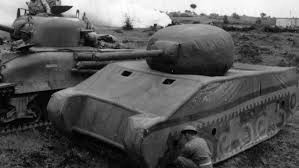
    Around the south coast of England, the Allies built inflatable tanks, dummy landing craft, fake airfields. Reconnaissance would spot what looked like build-up of invasion forces. iwm.org.uk

    • Fake Radio Traffic & Double Agents

    The Allies used double agents—such as the famous Juan Pujol Garcia (“Garbo”)—to feed German intelligence false stories. At the same time, Allied radio operators sent fake messages about troop and supply movements. HISTORY+1

    • The Date Trick

    Not only were the Germans led to expect an attack at Pas-de-Calais, they were also led to believe that the landing might be delayed. This caused hesitation in German command. iwm.org.uk

    • Diversionary Actions

    Operations like Fortitude North aimed to threaten Norway; and others made Germany think other invasion points (Mediterranean, Balkans) were active. dday.center

    All of these layered to create confusion, delay, and misallocation of German forces.


    4. Impact: What the Germans Did—and Why It Mattered

    Because of Bodyguard:

    • German high command kept large forces near Pas-de-Calais instead of sending them to Normandy. Encyclopedia Britannica
    • Hitler delayed moving some reinforcements from the Calais region for weeks—even after the landings had begun. dday.center+1
    • The real invasion force faced fewer German units at the critical moment—giving the Allies a critical early advantage.

    The deception didn’t guarantee victory—but it helped make success far more likely.


    5. Smaller Stories, Big Effects

    • Dummy tanks: The image of inflatable Shermans fooled aerial reconnaissance. iwm.org.uk
    • Fake operations: One double agent convinced Germany the Allies would invade Greece or the Balkans. dday.center
    • Intelligence synergy: The deception worked because it aligned with what the Germans wanted to believe. dday.center

    These human and creative details made Bodyguard a masterpiece of war craft.


    6. Why It Works: The Psychology of Deception

    Deception in war works when it:

    • Mimics what the enemy expects.
    • Delivers cues the enemy trusts (e.g., Patton in the fake army).
    • Delays their decision-making.
    • Shapes perception more than reality.

    Bodyguard didn’t overwhelm German intelligence—it manipulated their perceptions.


    7. Legacy: What We Learn Today

    Operation Bodyguard offers lessons for modern strategy:

    • Information warfare matters. Deception, misdirection, and intelligence shape outcomes.
    • Perception is real. Wars can be won by what the enemy believes.
    • Coordination of many tools. Fake armies, radio chatter, double agents—all had to work together.

    In the modern age of satellites and cyber-espionage, the scale of deception may change—but the principles remain.


    8. Conclusion: Victory’s Hidden Shadow

    On June 6, 1944, Allied troops flooded the beaches of Normandy. The guns, ships, and men took the spotlight. But behind the scenes, Operation Bodyguard was the hidden hand that made it happen.

    The campaign of lies, theater, and intelligence helped ensure the German response was slow and scattered. That gave the Allies a window to win.

    In war, truth may be precious—but so too is the ability to guard it with a bodyguard of lies.

  • The Secret Fuel Lines of D-Day: How the PLUTO Pipeline Powered Victory

    The Secret Fuel Lines of D-Day: How the PLUTO Pipeline Powered Victory


    The Hidden Lifeline of War

    When most people picture D-Day, they imagine soldiers storming the beaches of Normandy, tanks rolling inland, and aircraft flying overhead.
    But few realize that victory didn’t just depend on courage — it depended on fuel.

    The Allied invasion of Europe wasn’t just an army on the move — it was a machine that needed constant feeding.
    Every tank, truck, and plane ran on fuel. Without it, even the most powerful military would grind to a halt.

    The problem was simple: how could the Allies supply millions of gallons of fuel to France without relying on vulnerable tankers?

    The answer was a bold idea that sounded almost impossible:

    “Let’s build a fuel pipeline… under the ocean.”

    They called it PLUTO — short for Pipeline Under the Ocean — and it became one of the greatest engineering secrets of World War II.


    Operation PLUTO: Churchill’s Daring Idea

    The concept came directly from Winston Churchill’s obsession with logistics.
    He understood that the success of the Normandy invasion wouldn’t just depend on firepower, but on supply.

    In 1942, British scientists and engineers were tasked with developing a submarine pipeline system capable of pumping fuel across the English Channel — directly from Britain to the advancing armies in France.

    It was an idea ahead of its time — blending engineering, innovation, and secrecy.

    To the world, PLUTO was a myth. To the Allies, it was their hidden artery of war.


    Building the Impossible: The Engineering Challenge

    The English Channel is no calm pond. It’s a rough, deep, unpredictable stretch of water with tides, storms, and enemy submarines.
    Building a fuel pipeline beneath it in 1944 seemed absurd — yet the Allies refused to give up.

    Two main designs were created:

    1. The HAIS Cable
      • Developed by British engineer H.A. Hammick and Siemens Brothers.
      • It looked like a giant undersea electrical cable.
      • Layers of lead, steel, and asphalt protected the inner rubber hose.
      • Could pump up to 700 gallons per hour.
    2. The HAMEL Pipe
      • A steel pipeline coiled around huge floating drums called Conundrums (because of their strange shape).
      • These drums were towed by ships across the Channel, unspooling the pipe as they moved.
      • Each section stretched over 30 miles long.

    The pipelines were designed to connect Britain’s fuel depots — mainly on the Isle of Wight — to the beaches of Normandy after D-Day.


    Operation Fortitude: Secrecy at All Costs

    Everything about PLUTO was top secret.
    It was so secret, in fact, that many of the workers laying the pipes didn’t know what they were for.

    The operation was protected under the larger deception effort known as Operation Fortitude, which created fake armies and invasion plans to confuse the Germans.

    Code names were given to every part of the project:

    • BAMBI – the route from the Isle of Wight to Cherbourg.
    • DUMBO – the route from Dungeness to Boulogne.

    Even the word pipeline was never used in official communication. Engineers spoke of “cables,” “lines,” or “special conduits.”

    Churchill personally followed the project’s progress and called it “one of the most daring engineering adventures of the war.”


    Launch Day: The Pipeline Goes to War

    The first PLUTO line — BAMBI — was laid in August 1944.
    It stretched over 50 miles under the English Channel, from the Isle of Wight to Cherbourg in France.

    Ships slowly towed the massive Conundrums, releasing the pipeline as they went.
    Each drum weighed more than 250 tons and carried over 30 miles of coiled steel pipe.

    The first attempt failed — the pipe snapped under pressure from the waves.
    But the engineers adapted, strengthened the design, and tried again.
    By September 1944, fuel was successfully flowing under the sea — from Britain straight to the heart of Europe.

    By the end of the operation, 21 pipelines were laid across the Channel.


    Feeding the Front: The Lifeblood of Victory

    The PLUTO network supplied the advancing Allied armies with over 180 million gallons of fuel by the end of the war.

    That’s enough to:

    • Power 1 million tanks,
    • Fly thousands of fighter missions,
    • Or fuel every vehicle used in the liberation of France.

    At its peak, the system delivered one million gallons per day, quietly and safely beneath the waves.

    Unlike oil tankers — which could be sunk by German U-boats — PLUTO was invisible, invulnerable, and unstoppable.

    The success of PLUTO meant the Allies could maintain their momentum all the way from Normandy to Berlin — without ever running dry.


    Innovation Under Fire

    The PLUTO project pushed the limits of wartime engineering.

    • Underwater welding and pressure testing techniques pioneered for PLUTO laid the foundation for modern offshore pipelines.
    • The Conundrum spools became the model for future deep-sea cable laying systems.
    • The entire operation showed that logistics could win wars just as much as combat.

    As historian Basil Liddell Hart once said:

    “Victory in war is not gained by the brilliance of strategy, but by the strength of supply.”

    PLUTO proved that statement beyond doubt.


    Human Stories: The Engineers Who Made It Happen

    Thousands of workers, scientists, and soldiers contributed to PLUTO — often without knowing the full scale of what they were building.

    • Geoffrey Lloyd, the British Petroleum Minister, coordinated resources across secret government departments.
    • Lord Louis Mountbatten supported the project as part of Combined Operations.
    • Civilians from oil companies, telecom firms, and steel factories all played roles in fabricating the components.

    At one point, British street lamps were dismantled to recover the copper needed for pipeline wiring.

    The project blurred the line between civilian industry and military necessity — a hallmark of total war.


    Challenges and Failures Along the Way

    PLUTO was not without its problems.

    • Some of the early lines broke due to ocean pressure and seabed movement.
    • The BAMBI line delivered less fuel than expected due to technical issues.
    • The DUMBO line required constant maintenance as Allied forces advanced inland.

    Yet the psychological and strategic value of PLUTO was enormous.
    It gave Allied commanders confidence that their supply lines could stretch across the Channel — a vital factor in maintaining the offensive.

    By early 1945, PLUTO had proven itself indispensable.


    Aftermath and Legacy

    When the war ended, the pipelines were no longer needed — but their legacy was just beginning.

    The PLUTO project inspired:

    • Modern underwater oil and gas pipelines.
    • Transatlantic communication cables.
    • Offshore energy infrastructure.

    In peacetime, the same technology that fueled tanks would later fuel economies.

    Today, remnants of PLUTO can still be seen along the coastlines of Britain and France.
    Museums at Sandown and Arromanches preserve sections of the original pipes, and visitors can still trace the routes once known only to wartime engineers.

  • The Floating Harbors of D-Day: How the Mulberries Built a Beachhead

    The Floating Harbors of D-Day: How the Mulberries Built a Beachhead


    Prelude to the Invasion: The Impossible Problem

    On June 6, 1944, thousands of Allied ships crossed the English Channel toward Normandy in what would become the largest amphibious invasion in history — D-Day. But behind the courage of the soldiers storming the beaches was a quieter, equally daring operation — one that involved not rifles and tanks, but engineering and imagination.

    The problem was simple but brutal:
    Once the Allies landed in France, they needed a way to bring in supplies — fuel, ammunition, food, and reinforcements — faster than the Germans could counterattack.

    The French ports, like Cherbourg and Le Havre, were heavily defended or destroyed. Landing craft could unload tanks and trucks on beaches, but not enough to sustain an army of millions.

    So Churchill posed a bold idea:

    “If we cannot capture a port, we must take one with us.”

    That line birthed one of the greatest engineering miracles of the war — the Mulberry Harbours.


    The Great Gamble: Building a Port That Floats

    In 1943, British and American engineers began planning what seemed impossible: portable harbors that could be assembled off the coast of Normandy.

    The plan called for two artificial ports:

    • Mulberry “A” for the Americans at Omaha Beach
    • Mulberry “B” for the British at Arromanches

    Each harbor would include:

    • Massive concrete caissons (called Phoenixes) to form breakwaters
    • Old, scuttled ships (Gooseberries) sunk in a line to block waves
    • Floating pier roadways (Whales) connecting the sea to shore
    • Pierheads (Spuds) that could rise and fall with the tide

    In total, the project required over 600,000 tons of concrete, 33 jetties, and 10 miles of floating roadways — all secretly built in British shipyards.

    To hide the project, the parts were built in pieces and moved under the cover of night. Workers had no idea what the final structure would become. Some even thought they were helping build an “invasion bridge” or “floating fort.”


    The Engineering Genius Behind It

    Each Mulberry was like a giant mechanical organism.

    • The Phoenix caissons were hollow concrete boxes the size of apartment buildings, sunk in precise positions to form an artificial breakwater.
    • The Whale roadways were steel bridges mounted on floating pontoons, flexible enough to withstand waves but strong enough to carry tanks.
    • The Spud pierheads were adjustable platforms supported by massive legs that rested on the seabed — allowing ships to unload regardless of tide levels.

    Together, these components turned open water into a fully functioning port — capable of unloading thousands of tons of supplies daily.

    This was logistics warfare at its peak. It was about not just winning battles, but feeding victory.


    D-Day and the Arrival of the Mulberries

    When D-Day began on June 6, 1944, the first landings were chaotic. Beaches were littered with wreckage, men, and machines. The Mulberry harbors wouldn’t arrive for several days — but when they did, they changed everything.

    By June 9, convoys began towing the giant pieces across the Channel. The operation was immense: over 140 tugboats hauling 200 prefabricated parts through rough seas.

    The British Mulberry (“B”) at Arromanches became operational first. Within days, ships were unloading tanks, trucks, ammunition, and food directly onto the floating piers — all without needing a natural harbor.

    The American Mulberry (“A”) at Omaha Beach also began unloading cargo — until a violent storm hit on June 19, 1944.


    The Storm That Tested the Steel

    For three days, the worst storm in 40 years battered the Normandy coast. Winds reached 65 miles per hour, waves as high as 20 feet smashed into the floating structures.

    Mulberry “A” was destroyed — broken apart and scattered across the sea. The Americans salvaged what they could, but most of it was beyond repair.

    The British Mulberry “B,” however, survived — damaged but functional. The British engineers worked tirelessly to repair it, and it remained operational for the next 10 months.

    This single harbor, nicknamed “Port Winston,” became the lifeline of the Allied advance.


    Feeding the Front: The Numbers That Won the War

    What Mulberry “B” achieved was staggering.

    Between June 1944 and May 1945, Port Winston handled:

    • Over 2.5 million men
    • 500,000 vehicles
    • 4 million tons of supplies

    That’s the equivalent of an entire modern army — all funneled through a floating harbor made from steel, concrete, and vision.

    Without it, the Normandy invasion might have stalled before Paris. The Allies would have struggled to maintain momentum, and the war in Europe could have dragged on for months longer.


    The Hidden Legacy of Mulberry

    After the war, most of the Mulberry structures were dismantled, but parts still remain off the coast of Arromanches — silent relics of innovation and determination.

    The engineering lessons from the Mulberry Harbours influenced:

    • Modern modular construction
    • Offshore oil platforms
    • Temporary bridge systems
    • Disaster relief logistics

    Today, military planners still study Operation Mulberry as a case study in adaptive logistics and rapid infrastructure deployment.

    It’s proof that wars aren’t only won by soldiers — they’re also won by engineers, builders, and dreamers.


    Quote from the Front

    “Amateurs talk about tactics. Professionals talk about logistics.”
    — General Omar Bradley

    Conclusion: The Ports That Won the War

    The Mulberry Harbours were more than concrete and steel — they were symbols of ingenuity and courage under pressure.
    When soldiers stormed the beaches, they carried rifles. But behind them came the builders, welders, and engineers who built the invisible bridges to victory.

    Their floating ports didn’t just carry supplies — they carried hope, one wave at a time.