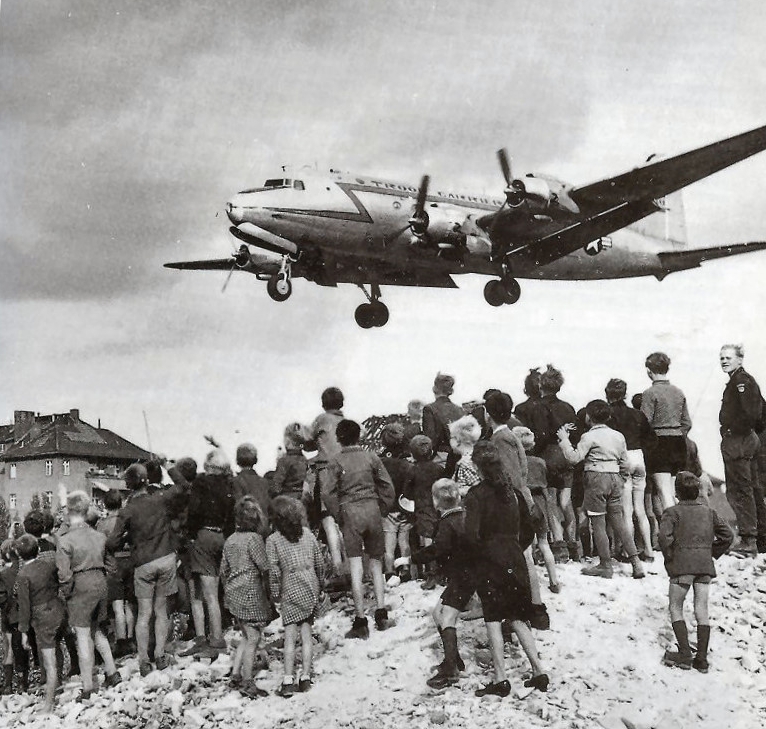
Introduction: The City Under Siege
After World War II ended, the city of Berlin found itself in a strange and dangerous place. The city was deep inside the Soviet zone of Germany, yet divided among the Allies — the U.S., Britain, France, and the USSR all had sectors in Berlin. Encyclopedia Britannica+3HISTORY+3berlinairlift.org+3
In June 1948, the Soviets tried to force the Allies out by cutting all roads, railways and canals into West Berlin. This was called the Berlin Blockade. HISTORY+1
West Berlin suddenly faced starvation, freezing winters without fuel, and isolation. Rather than surrender, the Western Allies launched a bold plan: they would supply a city of over two million people entirely by air. That plan became the Berlin Airlift. HISTORY
This is the story of how planes replaced trains, runways replaced roads, and how a city under siege became a symbol of freedom.
1. Why the Blockade Happened
The Background
At the end of World War II, Germany was split into four zones of occupation — U.S., Britain, France, and Soviet. Berlin, though inside the Soviet zone, was also divided among the four powers. PBS+2Office of the Historian+2
By 1948, tensions between the West and Soviet Union had grown. The Western Allies introduced a new currency (the Deutsche Mark) in their zones of Germany and in West Berlin — something the Soviets saw as threatening. HISTORY+1
The Blockade Begins
On June 24, 1948, the Soviets blocked the last rail, road, and canal links into West Berlin. They hoped the Allies would surrender the city rather than risk war. HISTORY+1
The Western Allies — under President Harry S. Truman and British leadership — had to choose: fight or find another way. They opted to fight by flight. They would keep West Berlin alive by airplane.
2. Launching the Airlift — Operation Vittles
Starting Small
On June 26, 1948, American cargo planes began flying into West Berlin under the codename Operation Vittles. HISTORY+1
At first, the loads were tiny — only dozens of tons per day. The challenge was massive: feed, deliver fuel, and keep transport moving for more than two million people. berlinairlift.org
Building Up
The Allies quickly expanded their effort. They opened multiple airfields in Berlin: Tempelhof Airport (American), Gatow Airport (British), and later Tegel Airport (French sector). Wikipedia
By early 1949, supplies per day reached 8,000 tons or more. Propelled by more aircraft and improved logistics. HISTORY+1
The Air Corridors
Because West Berlin was surrounded by Soviet-controlled territory, only three air corridors remained for Allied planes. These corridors were vital lifelines. HISTORY
3. How It Worked — The Logistics of Saving a City
The Supply Chain
A steady stream of cargo planes flew day and night from air bases in West Germany, Britain, and other Allied locations. Each aircraft carried food, medicine, coal, fuel, clothing and other essentials. HISTORY
At peak times, aircraft were landing every 30 to 45 seconds at Berlin’s airfields. HISTORY+1
Innovations & Engineering
- Runways were extended and strengthened so heavier cargo planes could land. Wikipedia
- Unloading times were drastically reduced.
- Scheduling precision soared: planes arriving, unloading, departing in tight sequence.
- “Candy drops” and other morale-avenues were added (more on that later).
Human Cost & Effort
Flying in all conditions, at night, in winter, the pilots and ground crews faced tremendous risk. Planes crashed, crews died. The operation demanded extreme discipline.
4. The Impact on Berlin & Cold War
Saving Lives and a City
Because of the airlift, West Berlin did not collapse under Soviet pressure. It kept functioning as a capitalist, democratic enclave. The Soviets lifted the blockade on May 12, 1949. Encyclopedia Britannica+1
Strategic Message
The success of the airlift had broader consequences:
- It proved that the West would not abandon Berlin.
- It forced the Soviet Union to back down — a psychological win for the Allies.
- It accelerated the formal division of Germany into East and West. HISTORY
Cold War Symbolism
West Berlin became a symbol of freedom surrounded by Communist territory. The airlift helped engrain that image. Office of the Historian
5. Stories & Symbols From the Airlift
The Candy Bomber
One pilot, Gail Halvorsen, began dropping candy tied to tiny parachutes for Berlin’s children. It became a beloved gesture of hope and kindness. Bon Appétit
Everyday Heroes
Men and women on the ground — air traffic controllers, mechanics, loaders — turned airports into assembly lines of hope. Berliners began to trust that relief would come.
Berliners’ Trust
In a city under siege, the daily arrival of planes became proof that help had arrived and would not abandon them. That trust was strategic, not just humanitarian.
6. Challenges and Turning Points
Harsh Winter 1948-49
As the months passed, winter brought freezing temperatures. Berlin needed coal and fuel more than ever. The airlift adapted to deliver large quantities of coal by air. berlinairlift.org
Soviet Harassment
Though the Soviets did not shoot down the planes (avoid escalation), they attempted to undermine the effort by constraining airspace and rights. The Allied resolve held.
Scaling Up
What began as a small relief mission became a full-blown air supply chain. Upgrades to runways, more aircraft (C-54s, C-47s), and improved logistics made the difference. Wikipedia
7. Legacy — Why It Matters
Logistics & Airlift Doctrine
The Berlin Airlift became a case-study in how to supply a city by air. Modern air-transport and humanitarian relief owe much to its lessons.
Political Landscape
The failure of the blockade and the success of the airlift helped lay the foundation for western alliances, NATO, and the West’s posture in the Cold War. HISTORY
A Human Story
Above all, the airlift reminds us: when people are isolated, when hope fades, logistics and courage can restore hope.
8. The Long View — What If Things Had Gone Differently?
Imagine if the Allies had given up West Berlin. The city might have fallen into Soviet hands, altering the balance of the Cold War. The airlift helped prevent that scenario.
It also shows that wars are not only fought with tanks and bombs, but with planes, cargo, coordination, and trust.
Conclusion: Wings of Freedom
In 1948, West Berlin was under siege. Its survival seemed impossible. But by air, day and night, the Allies kept the city alive. The Berlin Airlift remains one of the greatest logistic feats in history — a quiet triumph without a single bullet fired.
Every time a cargo plane touched down at Tempelhof or Gatow, it brought more than flour or fuel. It brought the message: We will not abandon you.
And in doing so, it changed the course of Cold War history.
 Vellum Insights