The South China Sea (SCS) is one of the world’s most contested maritime regions, containing over $3.5 trillion in annual trade, vast fisheries, and potentially rich oil and gas reserves.
Instead of risking direct war, China has chosen a grey-zone strategy to expand its control incrementally.
The Strategy in Action

- Island-Building Blitz
- China dredges sand to turn submerged reefs into artificial islands.
- Example: Fiery Cross Reef — now equipped with runways, radar systems, and missile batteries.
- These “civilian” islands double as forward operating military bases.
- Maritime Militia
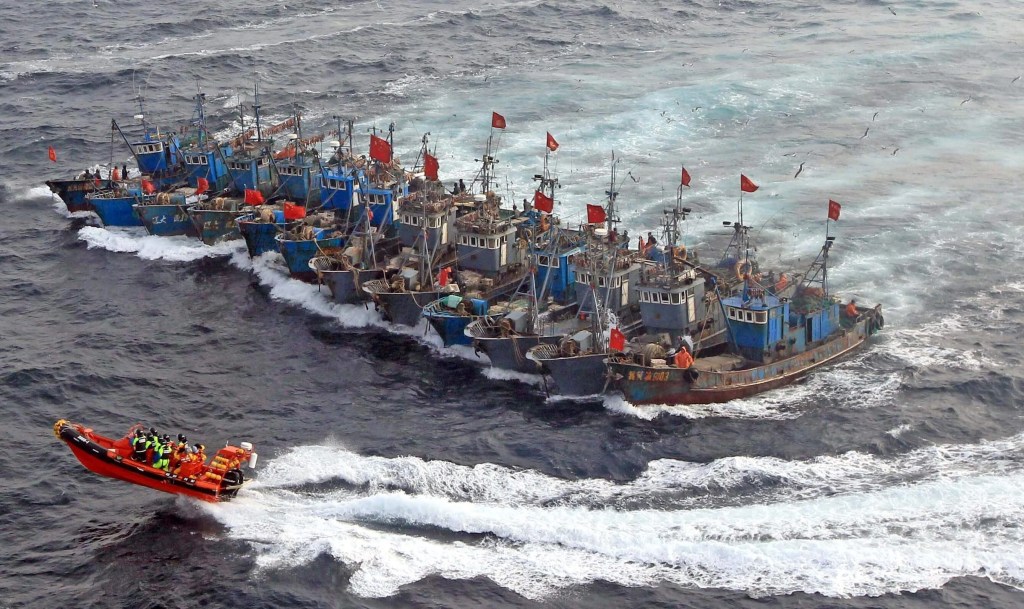
- Civilian-looking fishing fleets act as intelligence gatherers and physical blockers against rival vessels.
- This provides deniability — they aren’t “naval” forces, so military retaliation becomes diplomatically risky.
- Coast Guard as Grey-Hull Enforcers
- Instead of sending warships (which would escalate), China uses large, heavily armed coast guard ships to shadow, bump, or water-cannon foreign vessels.
- Legal Warfare (“Lawfare”)
- Beijing promotes its own “Nine-Dash Line” as historic evidence of ownership.
- Rejects the 2016 Hague Tribunal ruling against its claims — reframing international law in its own favor.
- Economic Entanglement
- ASEAN states dependent on China’s trade face diplomatic hesitation to challenge its actions, effectively muting collective resistance.
Why This Works
- Low-Intensity, High-Frequency: Small, constant actions are harder to respond to than a single invasion.
- Plausible Deniability: Fishing boats, coast guard, and “research vessels” blur military intent.
- Time as a Weapon: The longer artificial islands exist without being challenged, the more they become a “new normal.”
Impact on Regional Powers
- Philippines – Increasing confrontations near Second Thomas Shoal.
- Vietnam – Harassment of oil exploration efforts within its EEZ.
- Malaysia & Indonesia – Chinese survey vessels operating in contested waters.
Counter-Strategies for Regional States
- Unified Maritime Domain Awareness
- Shared satellite imagery and AIS (Automatic Identification System) tracking across ASEAN.
- Legal Coalition Pressure
- Jointly bringing multiple cases to international courts to raise diplomatic cost.
- Mini-Lateral Defense Pacts
- Small-group alliances like the Philippines-Japan-US trilateral for rapid naval drills.
- Civilian Resistance at Sea
- Employing national fishing fleets as counter-militias to shadow Chinese vessels.
 Vellum Insights
Leave a comment