Category: Military Posts

These are all my military insights all in one place!

  • Chapter 1: 1983 – The Most Dangerous Year of the Cold War

    Chapter 1: 1983 – The Most Dangerous Year of the Cold War

    To understand Able Archer, we must first understand the atmosphere of 1983.

    The Cold War was already entering a tense period.

    Relations between East and West had deteriorated sharply.

    The Soviet Union viewed many Western actions as increasingly aggressive.

    Meanwhile, the United States believed it needed to confront Soviet expansion around the world.

    At the center of this confrontation stood Ronald Reagan.

    Reagan had adopted a tougher stance toward Moscow than many previous American presidents.

    In March 1983, he famously described the Soviet Union as an “evil empire.”

    To Soviet leaders, this rhetoric appeared threatening.

    To American leaders, it reflected growing concerns about Soviet military power.

    The tension grew even worse in September 1983.

    A Soviet fighter aircraft shot down Korean Air Lines Flight 007, a civilian airliner that had accidentally entered Soviet airspace.

    All 269 people aboard were killed.

    The incident shocked the world and pushed East-West relations to a new low.

    By late 1983, distrust between the superpowers had reached dangerous levels.

    Neither side trusted the intentions of the other.


    Chapter 2: Living Under the Shadow of Nuclear War

    To modern readers, it can be difficult to understand just how frightening the nuclear threat felt during the Cold War.

    Both the United States and the Soviet Union possessed thousands of nuclear weapons.

    Many could reach their targets in less than thirty minutes.

    Some missiles could strike in under fifteen minutes.

    This created a terrifying strategic problem.

    If one side believed a nuclear attack was imminent, leaders would have only minutes to decide how to respond.

    Waiting too long could mean losing the ability to retaliate.

    Acting too quickly could start a war unnecessarily.

    This reality became known as Mutually Assured Destruction, often shortened to MAD.

    The theory was simple:

    • If either side launched a nuclear attack,
    • The other side would respond,
    • Both societies would suffer catastrophic destruction.

    Ironically, the fear of total destruction helped prevent war.

    But it also created an environment where misunderstandings could become extremely dangerous.


    Chapter 3: Operation RYAN – The Soviet Search for Signs of War

    Years before Able Archer began, Soviet leaders were already worried about the possibility of a surprise Western attack.

    In response, the Soviet intelligence service launched one of the largest intelligence operations in its history.

    The program was known as Operation RYAN.

    The name came from a Russian phrase meaning “Nuclear Missile Attack.”

    The objective was straightforward:

    Detect signs that NATO might be preparing a first strike.

    Soviet intelligence officers around the world were instructed to watch for unusual activity.

    They monitored:

    • military movements
    • government communications
    • political meetings
    • changes in military readiness

    Agents were told to report anything that might suggest preparations for war.

    This created a dangerous situation.

    Because Soviet leaders expected to find signs of an attack, intelligence officers sometimes interpreted ordinary events as possible evidence of hostile intentions.

    Fear began influencing analysis.

    And fear can be a powerful force.


    Chapter 4: What Was Able Archer 83?

    Every year, North Atlantic Treaty Organization conducted military exercises designed to test readiness and command procedures.

    Able Archer was one such exercise.

    The 1983 version was scheduled for November.

    Its purpose was to simulate how NATO would respond during a major conflict with the Soviet Union.

    What made Able Archer 83 unusual was its realism.

    The exercise included:

    • high-level command participation
    • simulated nuclear release procedures
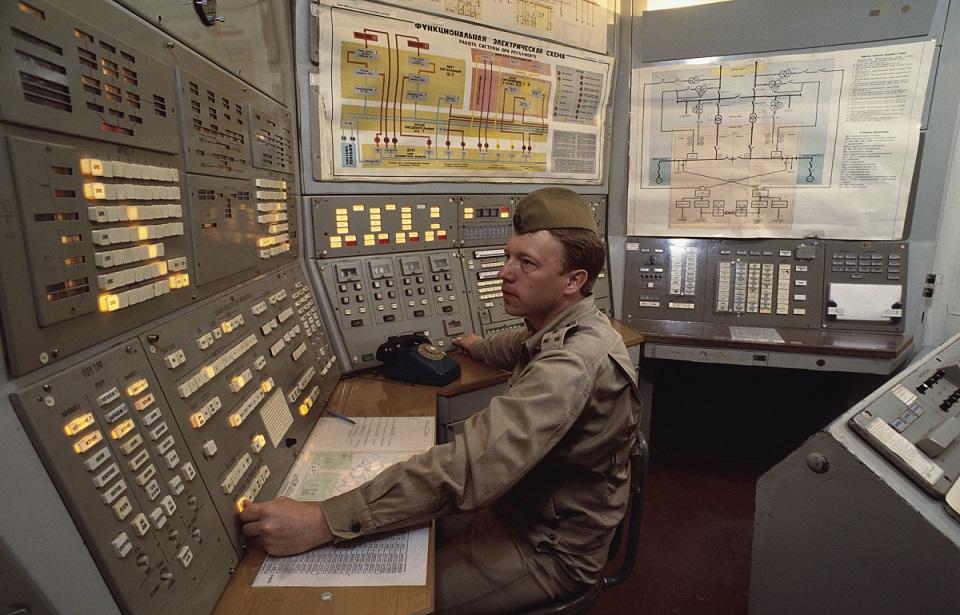
    • secure communications systems
    • realistic military messaging

    NATO commanders wanted the exercise to closely resemble actual wartime conditions.

    From their perspective, realism improved training.

    From the Soviet perspective, realism looked frightening.

    The more realistic the exercise became, the harder it was to distinguish from genuine preparations for war.


    Chapter 5: Why the Soviets Became Alarmed

    As Able Archer unfolded, Soviet intelligence began reporting troubling observations.

    Several factors contributed to Soviet fears.

    Realistic Nuclear Procedures

    For the first time, the exercise included highly realistic simulations involving nuclear command procedures.

    Increased Communications Security

    Military communications became more encrypted and active.

    Senior Leader Participation

    High-ranking officials took part in the exercise.

    Existing Political Tensions

    The exercise occurred during one of the worst periods of Cold War relations.

    Each development might seem harmless on its own.

    Combined together, they created a picture that worried Soviet analysts.

    Some feared NATO might be using the exercise as cover for a real attack.

    This possibility may seem unlikely today.

    But in an environment of extreme distrust, leaders often expect the worst.


    Chapter 6: The Soviet Response

    Inside the Soviet military, concerns grew rapidly.

    Reports later revealed that Soviet forces increased readiness levels during the exercise.

    Nuclear-capable aircraft in parts of Eastern Europe were reportedly placed on heightened alert.

    Military units monitored NATO activity closely.

    The Soviet leadership wanted to ensure they would not be caught by surprise.

    At the time, Soviet leader Yuri Andropov was already deeply suspicious of Western intentions.

    Andropov believed the United States might be seeking strategic advantages.

    This mindset made Soviet leaders more likely to interpret NATO actions as threatening.

    The result was a dangerous cycle.

    NATO activity increased Soviet fears.

    Soviet preparations could have increased NATO concerns.

    Both sides were reacting to what they believed the other side might do.


    Chapter 7: The World Had No Idea

    One of the most remarkable aspects of Able Archer is that ordinary citizens knew almost nothing about it.

    Newspapers did not report a major crisis.

    Television broadcasts did not warn of impending war.

    Most people continued their daily routines completely unaware of the danger.

    Even many Western officials did not fully understand how seriously Soviet leaders viewed the exercise.

    The crisis remained largely hidden.

    Only years later, after classified documents were declassified, did historians begin piecing together the full story.

    What emerged was deeply unsettling.

    The world may have come closer to accidental nuclear war than anyone realized at the time.


    Chapter 8: The Intelligence Warnings

    Not everyone was unaware of Soviet concerns.

    Certain intelligence sources began reporting that Soviet reactions were more serious than expected.

    One particularly valuable source was Rainer Rupp, who provided information indicating that NATO’s exercise was causing alarm inside the Soviet bloc.

    Western intelligence agencies gradually realized that Moscow might genuinely fear an attack.

    This realization helped prevent misunderstandings from escalating further.

    The exercise eventually concluded without incident.

    No missiles were launched.

    No war began.

    But the experience revealed how easily misperceptions could create danger.


    Chapter 9: Reagan’s Wake-Up Call

    After learning how seriously Soviet leaders had interpreted Able Archer, President Reagan reportedly became deeply concerned.

    He had previously believed Soviet fears of a surprise attack were exaggerated.

    Able Archer challenged that assumption.

    Reagan realized that Soviet leaders might genuinely believe the United States was capable of launching a first strike.

    This revelation influenced his thinking about nuclear diplomacy.

    In the years that followed, Reagan pursued greater dialogue with Soviet leaders.

    His later relationship with Mikhail Gorbachev helped produce important arms-control agreements.

    Many historians believe Able Archer played a role in changing how Reagan viewed the nuclear danger.


    Chapter 10: Could It Happen Again?

    The Cold War ended in 1991.

    But the lessons of Able Archer remain relevant.

    Modern technology has improved communications.

    Yet misunderstandings still occur.

    Today, tensions exist in multiple regions:

    • Eastern Europe
    • The South China Sea
    • The Taiwan Strait
    • The Korean Peninsula
    • The Middle East

    Military exercises continue.

    Missile systems remain on alert.

    Nuclear weapons still exist.

    The fundamental lesson of Able Archer is timeless:

    Countries do not always miscalculate because they are reckless.

    Sometimes they miscalculate because they are afraid.

    Fear can distort perception.

    Fear can create false assumptions.

    And fear can make routine actions appear threatening.


    Conclusion: The Nuclear War That Never Happened

    The Able Archer Scare remains one of history’s most important warnings.

    For one tense week in November 1983, two nuclear superpowers looked at the same events and reached very different conclusions.

    NATO believed it was conducting a training exercise.

    The Soviet Union feared it might be witnessing the beginning of World War III.

    Fortunately, cooler heads prevailed.

    The exercise ended.

    The alerts were lowered.

    The missiles remained in their silos.

    But the incident exposed a frightening reality.

    The greatest dangers during the Cold War did not always come from deliberate aggression.

    Sometimes they came from misunderstanding.

    Able Archer reminds us that peace often depends not only on military strength but also on communication, trust, and restraint.

    Because in a nuclear age, a mistake can be as dangerous as an attack.

    And in November 1983, the world came dangerously close to learning that lesson the hard way.

    Sources & Citations

    1. Able Archer 83.
    2. National Security Archive – Declassified documents relating to Able Archer 83 and Soviet reactions.
    3. Central Intelligence Agency – Cold War intelligence assessments and declassified reports.
    4. North Atlantic Treaty Organization – Historical information on NATO exercises and command procedures.
    5. The Dead Hand.
    6. Wilson Center – Cold War archival research and Soviet decision-making studies.
    7. U.S. Department of State – Historical records on Cold War diplomacy and arms control.
  • Operation Earnest Will: How the U.S. Navy Escorted Oil Through a War Zone

    Operation Earnest Will: How the U.S. Navy Escorted Oil Through a War Zone

    The Largest Naval Convoy Operation Since World War II and the Mission That Brought America Into the Tanker War


    Introduction: When Oil Tankers Became Frontline Targets

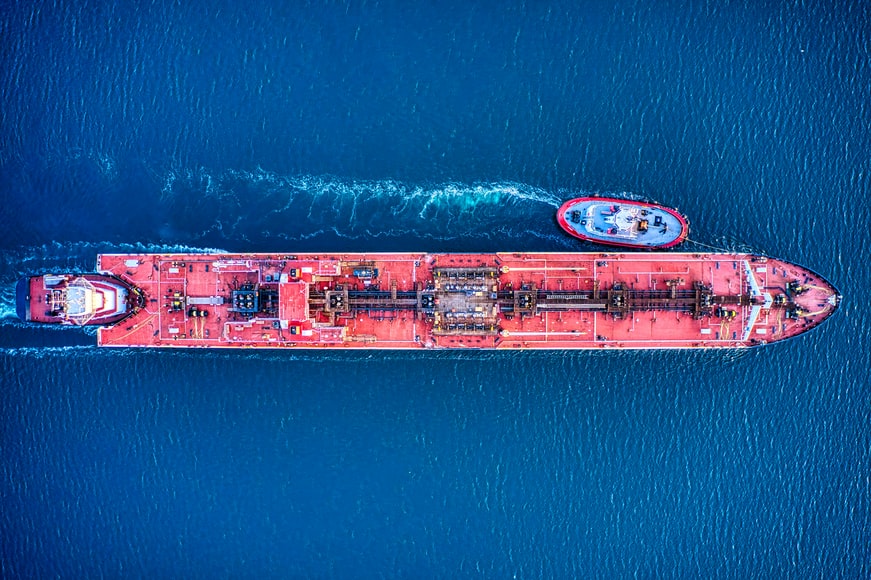
    In the summer of 1987, enormous oil tankers sailed through the waters of the Persian Gulf carrying one of the world’s most important commodities.

    Oil.

    Normally, these voyages would have been routine.

    But the Persian Gulf was no longer a safe place.

    The Iran–Iraq War had entered its seventh year, and both sides were attacking merchant shipping in what became known as the Tanker War.

    Oil tankers were being struck by missiles.

    Mines lurked beneath shipping lanes.

    Warplanes hunted commercial vessels.

    Insurance costs soared.

    Ship captains feared every voyage might be their last.

    The conflict threatened not only the economies of the Middle East but also the global energy supply.

    Then the United States Navy launched one of the most ambitious maritime security operations of the Cold War.

    Known as Operation Earnest Will, the mission involved American warships escorting oil tankers through a war zone.

    It became the largest naval convoy operation conducted by the United States since World War II.

    More importantly, it marked a turning point in America’s military involvement in the Persian Gulf.

    This is the story of how U.S. warships protected global oil supplies and found themselves drawn into one of the most dangerous maritime conflicts of the twentieth century.


    Chapter 1: The Tanker War Escalates

    By the mid-1980s, the Iran-Iraq War had become a brutal stalemate.

    Neither side could achieve a decisive battlefield victory.

    As a result, both countries increasingly targeted each other’s economic lifelines.

    Oil exports became primary targets.

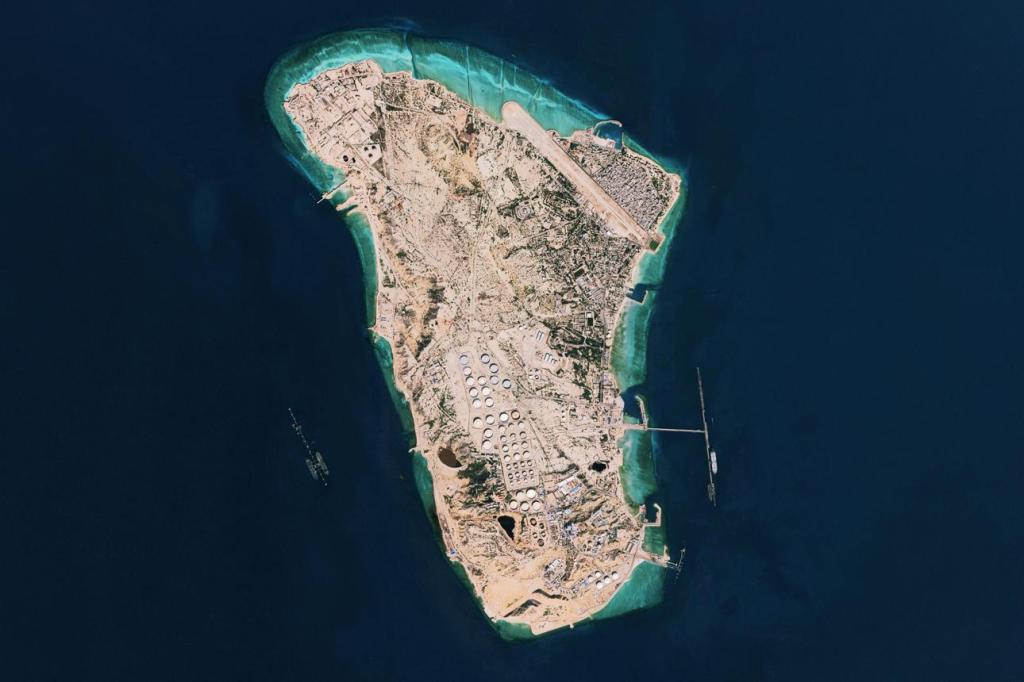
    Iraq launched attacks against Iranian oil facilities, including the critical export hub at Kharg Island.

    Iran responded by targeting shipping connected to Iraq and its regional supporters.

    Soon, commercial vessels from many countries were caught in the middle.

    Between 1984 and 1988, hundreds of merchant ships were attacked in the Persian Gulf.

    Missiles, mines, and aircraft turned one of the world’s most important trade routes into a combat zone.

    The danger extended far beyond the Middle East.

    A significant portion of the world’s oil moved through Gulf shipping lanes.

    Any disruption could affect global energy markets.

    The international community began paying close attention.


    Chapter 2: Kuwait’s Plea for Protection

    One country found itself particularly vulnerable.

    The small Gulf state of Kuwait relied heavily on maritime oil exports.

    As attacks increased, Kuwaiti leaders worried their tankers could become easy targets.

    Kuwait lacked the naval power needed to protect its shipping fleet.

    In 1986, Kuwait sought assistance from major powers.

    It approached both the United States and the Soviet Union.

    For Washington, the request presented both risks and opportunities.

    The United States wanted to ensure the continued flow of oil and maintain influence in a strategically vital region.

    At the same time, direct involvement carried the danger of becoming entangled in an ongoing war.

    Ultimately, the United States agreed to provide protection.

    The result would be Operation Earnest Will.


    Chapter 3: Reflagging the Tankers

    Before American naval escorts could begin, an unusual legal and political solution was required.

    Several Kuwaiti oil tankers were transferred to the American shipping registry.

    This process became known as reflagging.

    The vessels would now sail under the American flag.

    This change carried major implications.

    An attack against a reflagged tanker could potentially be viewed as an attack against a U.S.-flagged vessel.

    The move provided a stronger legal justification for American military protection.

    Eleven Kuwaiti tankers were eventually reflagged under U.S. registration.

    These ships became the centerpiece of Operation Earnest Will.

    The United States was now committed to protecting them.


    Chapter 4: Convoys Return to the High Seas

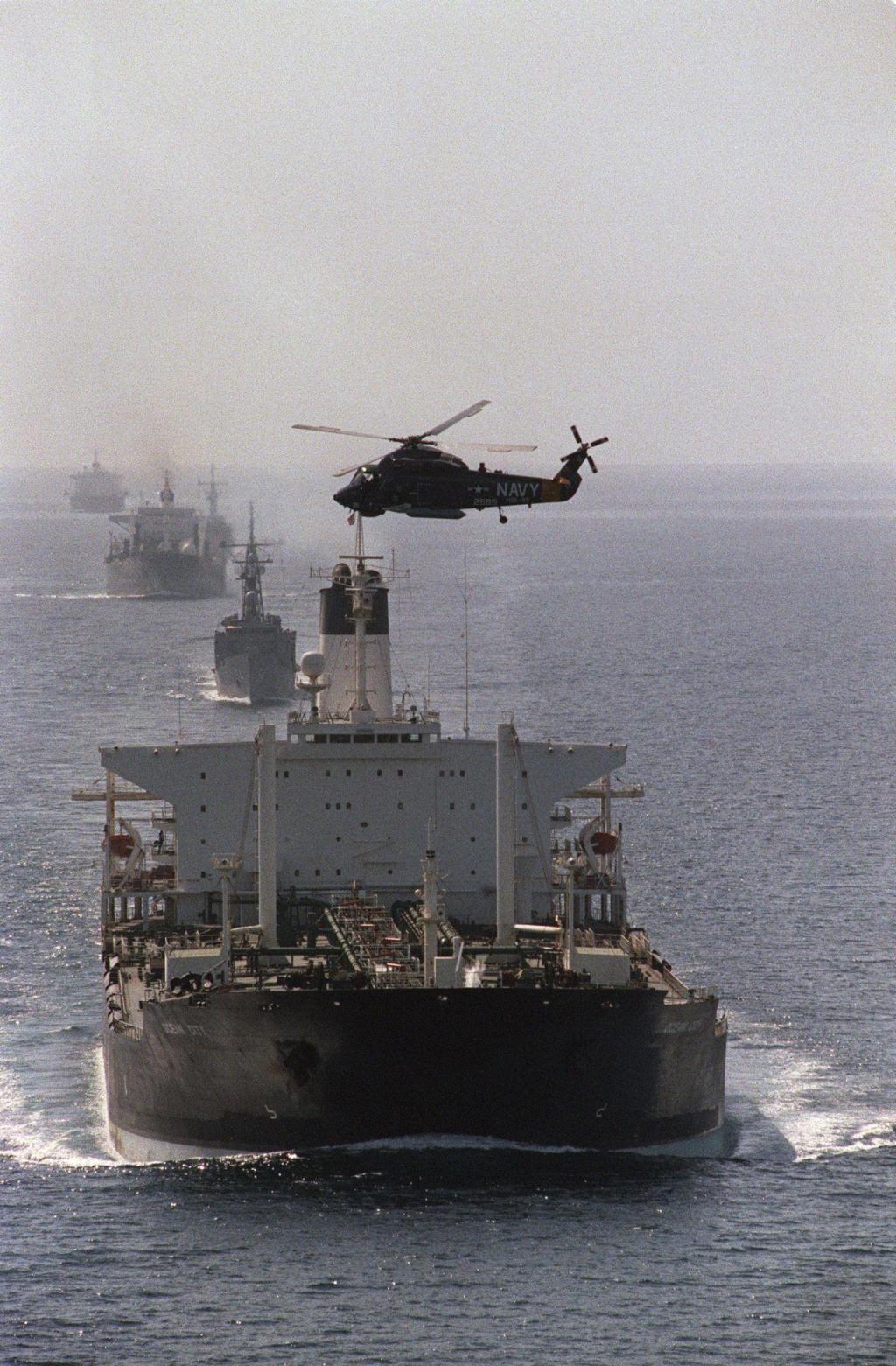
    The escort system used during Operation Earnest Will resembled convoy operations from World War II.

    American warships accompanied merchant vessels through dangerous waters.

    The convoy typically included:

    • guided missile cruisers
    • destroyers
    • frigates
    • logistics support vessels

    The objective was straightforward.

    Protect the tankers from attack while ensuring oil continued flowing to global markets.

    Yet this mission was far from simple.

    The Persian Gulf presented unique challenges.

    The waterway was narrow.

    Commercial traffic was heavy.

    Potential threats could emerge from aircraft, missiles, speedboats, or hidden mines.

    Unlike the Atlantic convoys of World War II, danger could appear from almost any direction.


    Chapter 5: The Mine Threat Emerges

    One of the most dangerous threats proved to be naval mines.

    Unlike missiles or aircraft, mines are difficult to detect and relatively inexpensive to deploy.

    A single mine can severely damage even a large vessel.

    In July 1987, the reflagged tanker SS Bridgeton struck an Iranian mine during the operation.

    The explosion tore a large hole in the ship’s hull.

    Fortunately, the tanker remained afloat.

    The incident exposed a major vulnerability.

    Despite America’s powerful navy, mines could still threaten convoy operations.

    The event embarrassed U.S. planners and highlighted the growing complexity of the mission.

    Mine warfare would soon become one of the operation’s defining challenges.


    Chapter 6: The Secret War at Sea

    As the operation continued, American forces intensified surveillance efforts.

    Special operations units and naval assets monitored suspected Iranian activities.

    One notable development occurred when U.S. forces discovered Iranian vessels laying mines in international shipping lanes.

    In September 1987, American helicopters and naval forces intercepted the Iranian ship Iran Ajr while it was allegedly deploying mines.

    The vessel was seized, and evidence of mining operations was recovered.

    The incident provided concrete proof that mines were being actively placed in shipping routes.

    This discovery escalated tensions significantly.

    The naval escort mission was increasingly becoming a direct confrontation.


    Chapter 7: Operation Nimble Archer

    By late 1987, the United States decided to respond more aggressively to attacks on shipping.

    In October, U.S. forces launched Operation Nimble Archer.

    The operation targeted Iranian offshore oil platforms that American officials believed were being used for military purposes.

    Naval forces bombarded and destroyed several platforms.

    The attack sent a clear message.

    The United States was willing to use military force to defend Gulf shipping and deter further attacks.

    For Iran, it demonstrated that actions against maritime traffic could carry significant consequences.

    The conflict at sea was becoming increasingly dangerous.


    Chapter 8: The USS Samuel B. Roberts Incident

    The most serious challenge of the operation occurred in April 1988.

    The guided missile frigate USS Samuel B. Roberts (FFG-58) struck an Iranian mine.

    The explosion nearly destroyed the ship.

    A massive hole was blown into its hull.

    Several sailors were injured.

    Only extraordinary damage control efforts by the crew prevented the vessel from sinking.

    The incident shocked American leaders.

    It demonstrated that the mine threat remained severe despite extensive naval operations.

    Washington decided a major response was necessary.


    Chapter 9: Operation Praying Mantis

    In response to the mining incident, the United States launched Operation Praying Mantis on April 18, 1988.

    It became the largest U.S. naval surface combat action since World War II.

    American forces attacked Iranian naval assets across the Persian Gulf.

    The operation resulted in:

    • destruction of Iranian oil platforms
    • sinking of Iranian warships
    • damage to additional military vessels

    The battle demonstrated overwhelming American naval superiority.

    It also signaled that the United States was prepared to defend Gulf shipping with decisive force.

    Many historians view Operation Praying Mantis as a turning point in the Tanker War.


    Chapter 10: Why Operation Earnest Will Mattered

    Operation Earnest Will achieved its primary objective.

    Oil continued flowing through the Persian Gulf.

    Despite ongoing attacks, global energy markets avoided the catastrophic disruption many had feared.

    The operation also produced several lasting consequences.

    It Expanded U.S. Presence in the Gulf

    American military involvement in the region increased significantly.

    It Demonstrated the Importance of Maritime Security

    Global trade depended on secure shipping lanes.

    It Highlighted the Power of Economic Warfare

    The conflict showed how attacks on commercial infrastructure could have worldwide effects.

    It Shaped Future U.S. Strategy

    Many of the security relationships established during the operation continue to influence Gulf politics today.


    Chapter 11: Lessons for Modern Geopolitics

    The story of Operation Earnest Will remains highly relevant.

    Modern geopolitical tensions continue to center around strategic waterways.

    These include:

    • Strait of Hormuz
    • South China Sea
    • Red Sea
    • Bab el-Mandeb Strait

    Just as in the 1980s, disruptions to shipping can have global economic consequences.

    Recent attacks on commercial vessels in the Red Sea demonstrate that maritime security remains a critical geopolitical issue.

    Operation Earnest Will offers valuable lessons about protecting trade routes in an increasingly uncertain world.


    Conclusion: The Convoys That Protected the Global Economy

    When people think about the Cold War, they often imagine nuclear standoffs, spies, and superpower rivalries.

    Few remember the oil tankers that sailed through a war zone under naval escort.

    Yet Operation Earnest Will was one of the most important maritime security operations of the era.

    It protected vital energy supplies.

    It demonstrated America’s commitment to maintaining freedom of navigation.

    And it reshaped the security architecture of the Persian Gulf.

    Most importantly, it proved a timeless truth.

    Modern economies depend on secure sea lanes.

    When those routes are threatened, warships often follow.

    The convoy escorts of Operation Earnest Will were not merely protecting ships.

    They were protecting the flow of energy that powered much of the modern world.

    Sources & Citations

    1. Naval History and Heritage Command – Official records of Operation Earnest Will and Operation Praying Mantis.
    2. The Tanker War: The Assault on Merchant Shipping During the Iran-Iraq Conflict.
    3. U.S. Naval Institute – Analysis of convoy operations and Persian Gulf security.
    4. Center for Naval Analyses – Strategic studies on maritime security and Gulf operations.
    5. Naval War College – Research on naval strategy and the Tanker War.
    6. The Longest War: The Iran-Iraq Military Conflict.
    7. Congressional Research Service – Historical studies of U.S. military operations in the Persian Gulf.
  • China’s Economic Arsenal: How Economic Power Fuels Military Strength

    China’s Economic Arsenal: How Economic Power Fuels Military Strength

    How Beijing Uses Industry, Supply Chains, and Global Trade to Strengthen Its Military Position


    Introduction: When Economic Power Becomes Military Power

    In modern geopolitics, wars are no longer determined only by tanks, ships, and missiles.

    Economic power has become one of the most important foundations of military strength.

    Few countries demonstrate this connection more clearly than China.

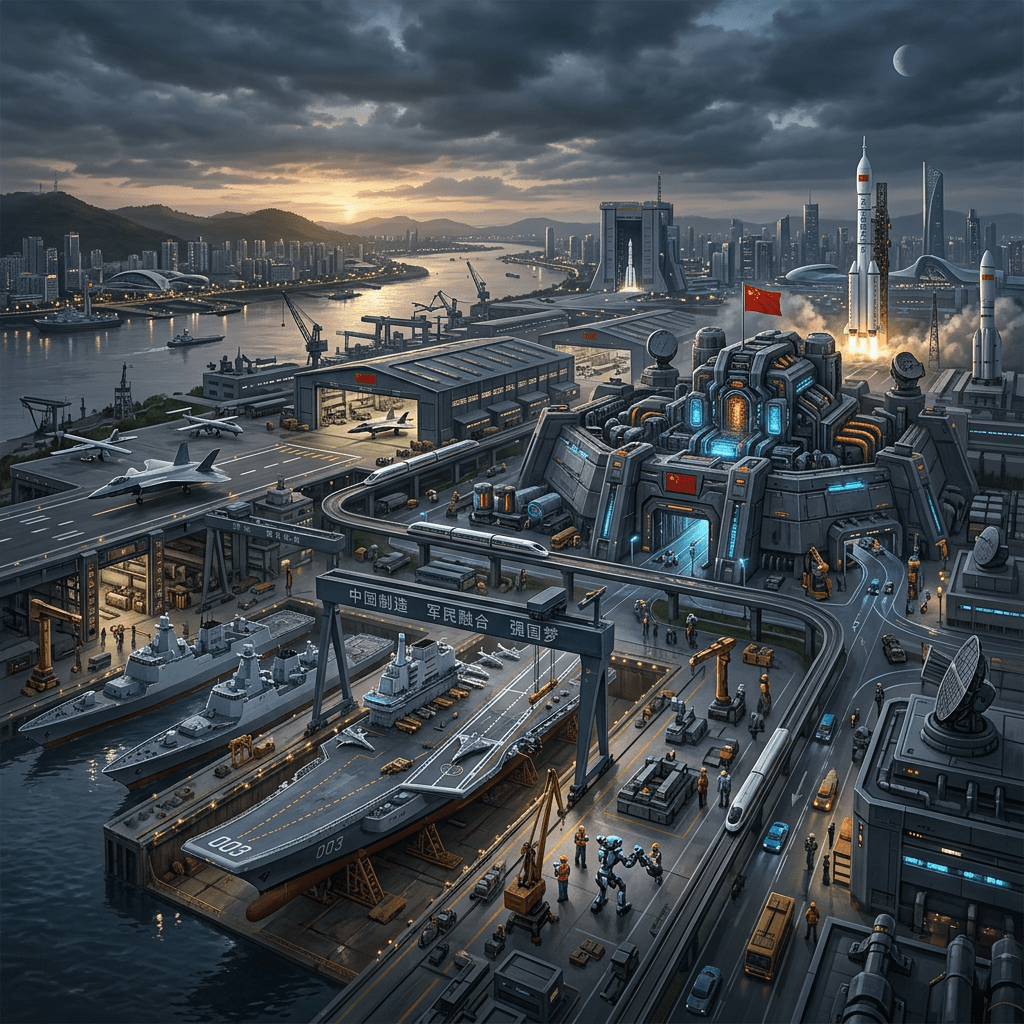
    Over the past four decades, China has transformed from a developing economy into the world’s second-largest economy. This growth has not only improved living standards but also enabled the country to build one of the most advanced and rapidly expanding militaries in the world.

    The connection between economics and military strength is not accidental.

    China’s leaders have pursued a strategy that links industrial development, technological advancement, and military modernization.

    Through this approach, economic success becomes a strategic tool that supports national security.

    Understanding how China’s economy strengthens its military power helps explain the country’s growing influence in global geopolitics.


    Chapter 1: The Foundation — China’s Manufacturing Powerhouse

    One of the key pillars of China’s economic strength is its massive manufacturing sector.

    China produces an enormous range of industrial goods, from consumer electronics to heavy machinery.

    According to global economic data, China accounts for roughly one-third of the world’s manufacturing output, making it the largest manufacturing economy on Earth.

    This industrial capacity provides significant military advantages.

    A strong manufacturing base allows a country to:

    • produce weapons and equipment at scale
    • rapidly expand production during wartime
    • maintain complex supply chains for military hardware

    China’s industrial capacity supports the modernization of the People’s Liberation Army, the country’s armed forces.

    Military equipment such as aircraft, naval vessels, missiles, and armored vehicles all depend on advanced manufacturing capabilities.

    Because China controls such a large industrial base, it can sustain long-term military development programs more easily than many other nations.


    Chapter 2: The Civil-Military Fusion Strategy

    One of China’s most important strategic policies is known as Military-Civil Fusion.

    This policy encourages cooperation between civilian industries and the military.

    Instead of separating commercial technology from military applications, China actively integrates the two sectors.

    Under this approach:

    • private companies contribute technological innovations
    • universities conduct research useful for defense
    • commercial technologies are adapted for military use

    The goal is to accelerate military development by using the country’s broader economic ecosystem.

    For example, technologies developed for commercial industries—such as artificial intelligence, drones, and advanced electronics—can also enhance military capabilities.

    This integration allows the military to benefit directly from China’s rapidly growing technology sector.


    Chapter 3: Shipbuilding and the Rise of China’s Navy

    One of the most visible examples of economic power translating into military strength is China’s naval expansion.

    China’s commercial shipbuilding industry is one of the largest in the world.

    This industrial capacity has helped support the rapid growth of the People’s Liberation Army Navy.

    Shipyards that build commercial vessels can also produce naval ships.

    As a result, China has been able to launch large numbers of modern warships, including:

    • destroyers
    • amphibious assault ships
    • aircraft carriers

    In recent years, the Chinese navy has grown into the largest naval fleet in the world by number of ships.

    This expansion is directly supported by China’s massive shipbuilding industry.

    Without this industrial base, such rapid naval growth would be far more difficult.


    Chapter 4: Technology and the Military Innovation Race

    Economic growth has also allowed China to invest heavily in technological research and development.

    Chinese companies are now major players in areas such as:

    • artificial intelligence
    • telecommunications
    • robotics
    • quantum computing

    These technologies have important military applications.

    For example, artificial intelligence can improve battlefield decision-making and autonomous weapons systems.

    Advanced telecommunications technology can strengthen military communications networks.

    One example of China’s technological rise can be seen in companies such as Huawei, which has become a global leader in telecommunications infrastructure.

    Technological advancements developed by such companies can influence both civilian and military capabilities.


    Chapter 5: Control of Critical Supply Chains

    Another important aspect of China’s economic strategy is its control over key global supply chains.

    China dominates the production and processing of many critical minerals, including rare earth elements.

    These materials are essential for modern technologies such as:

    • advanced electronics
    • electric motors
    • missile guidance systems
    • military radar equipment

    Because China controls a large share of the global rare earth supply chain, it has significant leverage in international trade.

    In a geopolitical crisis, control of these resources could influence global technology production and military supply chains.


    Chapter 6: Infrastructure and Strategic Logistics

    China has also invested heavily in infrastructure that can support both economic growth and military logistics.

    Major infrastructure projects include:

    • high-speed rail networks
    • modern highways
    • large deep-water ports

    Many of these projects were built under initiatives such as the Belt and Road Initiative, which funds infrastructure projects across Asia, Europe, and Africa.

    While these projects are primarily economic, they can also have strategic implications.

    Ports built through the Belt and Road Initiative could potentially support naval logistics or resupply operations.

    Similarly, domestic transportation networks allow rapid movement of troops and equipment across China’s vast territory.


    Chapter 7: Defense Spending and Economic Resources

    China’s economic growth has also enabled significant increases in defense spending.

    China now has one of the largest military budgets in the world, second only to the United States.

    This funding supports:

    • advanced weapons development
    • modernization of military equipment
    • expansion of naval and air forces
    • development of space and cyber capabilities

    Economic strength allows China to sustain long-term defense investment without placing excessive strain on its national finances.

    This financial stability is a key advantage in long-term strategic competition.


    Chapter 8: Economic Resilience as Strategic Defense

    In modern geopolitics, economic resilience is an essential part of national security.

    Countries that rely heavily on foreign supply chains can become vulnerable to sanctions or trade disruptions.

    China has worked to reduce these vulnerabilities by strengthening domestic industries and stockpiling key resources.

    This strategy includes:

    • building strategic reserves of food and energy
    • expanding domestic semiconductor production
    • diversifying trade partnerships

    These measures help ensure that China’s economy—and its military supply chains—can continue operating even during periods of geopolitical tension.


    Chapter 9: The Global Balance of Power

    China’s economic strength has fundamentally reshaped the global balance of power.

    For much of the twentieth century, military dominance was closely tied to economic leadership.

    Today, China’s rise as a major economic power is enabling it to expand its influence across multiple domains:

    • military power
    • technology development
    • international trade
    • global infrastructure investment

    This shift has contributed to increasing strategic competition between China and other major powers.

    Economic competition is now deeply intertwined with military and geopolitical rivalry.


    Conclusion: The Economic Foundations of Military Power

    China’s rise illustrates a fundamental truth about modern geopolitics.

    Military strength does not exist in isolation.

    It depends on a nation’s economic foundations.

    By building a massive industrial base, investing in advanced technology, and controlling key supply chains, China has created the economic conditions necessary to support a powerful and modern military.

    These economic advantages help sustain long-term military modernization and strategic influence.

    As global competition continues, the relationship between economic power and military capability will remain one of the defining factors shaping the future of international security.

    In the twenty-first century, the strongest armies are often built not only in military bases—but also in factories, laboratories, and supply chains.

    Sources & Citations

    1. World Bank – Data on global manufacturing output and economic indicators.
    2. U.S. Department of Defense – Reports on Chinese military modernization.
    3. Center for Strategic and International Studies – Analysis of China’s civil-military fusion strategy.
    4. International Institute for Strategic Studies – Global defense spending reports.
    5. Organisation for Economic Co‑operation and Development – Research on global supply chains and industrial capacity.
  • China’s Underground Great Wall: The Hidden Tunnel Network for Nuclear Missiles

    China’s Underground Great Wall: The Hidden Tunnel Network for Nuclear Missiles

    How China Built a Vast Secret Tunnel System to Protect Its Nuclear Arsenal


    Introduction: The Secret Beneath the Mountains

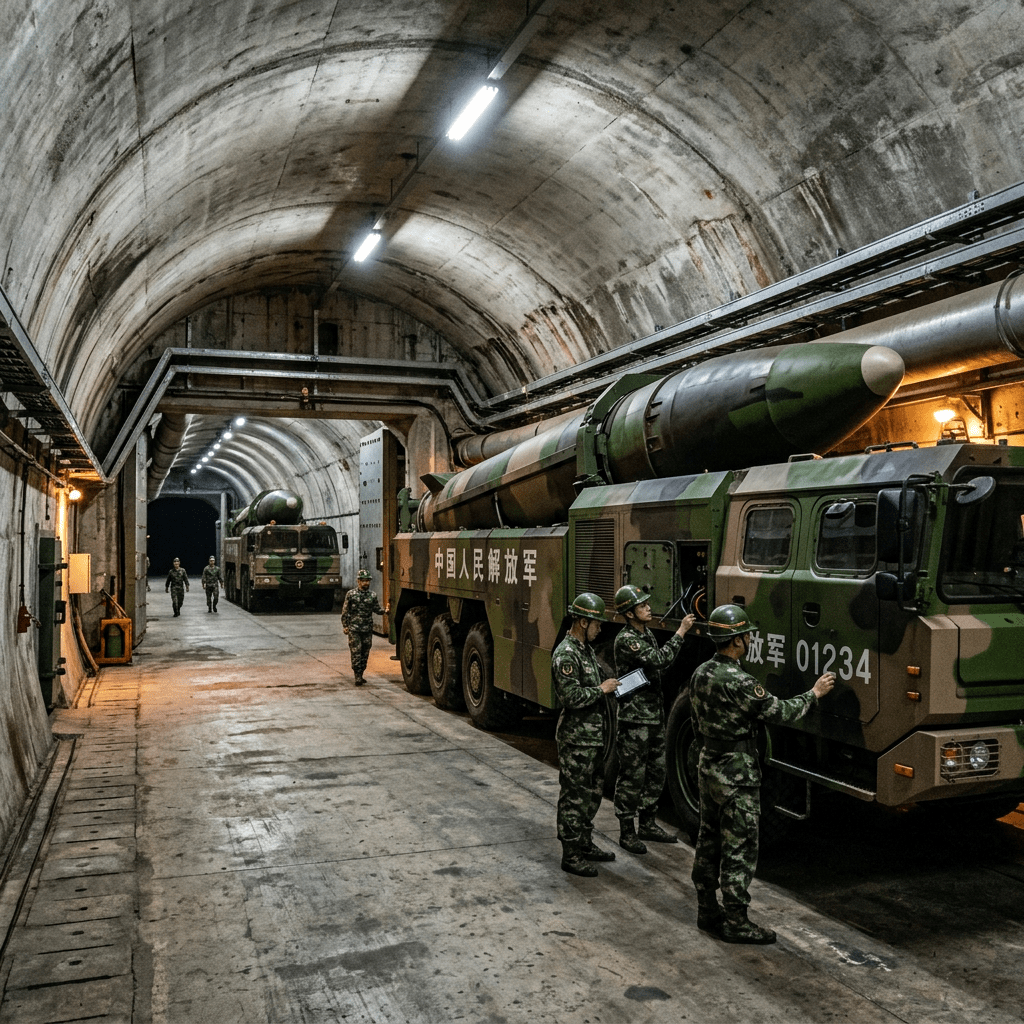
    Deep beneath mountains and remote landscapes across China, an enormous underground network stretches for thousands of kilometers.

    This hidden infrastructure is often referred to by analysts as China’s “Underground Great Wall.”

    Built to protect the country’s nuclear weapons, the network consists of tunnels, bunkers, missile storage facilities, and command centers designed to survive even the most powerful military attacks.

    While much of the system remains classified, defense analysts believe it is one of the most extensive underground military networks ever constructed.

    The tunnel system is operated by the People’s Liberation Army Rocket Force, the branch of China’s military responsible for the country’s strategic missile arsenal.

    By hiding nuclear missiles deep underground, China aims to ensure that its nuclear deterrent would survive any first strike in a potential conflict.

    In modern nuclear strategy, survivability is everything. If a country’s nuclear weapons can survive an attack, it can retaliate—and that threat of retaliation is what prevents nuclear war.

    China’s Underground Great Wall is built around that principle.


    Chapter 1: The Origins of China’s Underground Defense Strategy

    China’s focus on underground military infrastructure dates back to the early years of the Cold War.

    After the establishment of the People’s Republic of China in 1949, the country quickly found itself facing powerful rivals.

    During the 1950s and 1960s, tensions escalated with both the United States and the Soviet Union.

    Chinese leaders feared that their young nuclear program could be destroyed by a surprise attack.

    In response, they began developing strategies to protect their growing missile arsenal.

    One solution was to hide these weapons underground.

    China’s mountainous terrain made this possible.

    By digging tunnels into mountainsides, missiles could be stored safely out of sight and protected from aerial bombardment.

    This approach became a core element of China’s nuclear strategy.


    Chapter 2: The Birth of China’s Nuclear Arsenal

    China officially became a nuclear power in 1964 when it conducted its first successful atomic test.

    This test took place at the Lop Nur Nuclear Test Site, located in the remote deserts of western China.

    With this achievement, China joined the small group of nuclear-armed nations that already included the United States, the Soviet Union, and the United Kingdom.

    However, China’s nuclear arsenal remained much smaller than those of the superpowers.

    Rather than competing in a massive nuclear arms race, Chinese strategists adopted a different approach.

    China developed a doctrine known as “minimum deterrence.”

    Under this strategy, China would maintain only enough nuclear weapons to guarantee a devastating retaliatory strike if attacked.

    For this strategy to work, the country’s nuclear weapons had to be extremely difficult to destroy.

    This requirement helped drive the creation of the underground missile tunnel network.


    Chapter 3: Building the Underground Great Wall

    The construction of China’s missile tunnels accelerated during the late Cold War.

    The project was overseen by the military branch that would later become the People’s Liberation Army Rocket Force.

    According to military researchers, the tunnel network may extend for thousands of kilometers beneath mountains and remote regions.

    Some analysts estimate the network could exceed 5,000 kilometers (3,100 miles) in total length.

    The tunnels serve several critical functions:

    • storing nuclear missiles
    • protecting mobile launchers
    • hiding warheads
    • allowing missiles to move secretly between launch sites

    These tunnels are often carved directly into mountains, making them extremely difficult to detect or destroy.

    In many cases, entrances are hidden behind reinforced doors or disguised structures.

    From the outside, these entrances may look like ordinary industrial buildings or warehouses.

    But behind them lies an underground military infrastructure designed to withstand modern warfare.


    Chapter 4: Mobile Missiles and Strategic Mobility

    One of the key advantages of the tunnel network is that it allows China to operate mobile missile launchers.

    Unlike fixed missile silos, mobile launchers can move between different locations.

    This mobility makes it far harder for enemy forces to locate and destroy them.

    Many of China’s modern nuclear missiles are designed to be transported on large military vehicles known as transporter erector launchers (TELs).

    These vehicles can travel along roads and inside tunnels before emerging to launch missiles from hidden sites.

    The ability to move missiles through underground tunnels means that even if satellites detect a launcher leaving a tunnel entrance, it may be impossible to know where it will emerge.

    This uncertainty complicates the targeting plans of potential adversaries.


    Chapter 5: Protecting China’s Nuclear Deterrent

    The Underground Great Wall plays a crucial role in China’s nuclear deterrence strategy.

    China’s nuclear doctrine includes a no-first-use policy, meaning the country pledges not to launch nuclear weapons unless it is attacked first.

    For this policy to remain credible, China must ensure its nuclear arsenal can survive an initial strike.

    Underground tunnels help accomplish this goal in several ways.

    First, they protect missiles from aerial attacks.

    Mountains and reinforced tunnels provide strong physical protection against bombs and missiles.

    Second, the tunnels create uncertainty.

    Even advanced satellite surveillance may not be able to track missile movements underground.

    Third, the network allows missiles to be dispersed across large areas, reducing the chances that they could all be destroyed at once.

    This survivability is the foundation of nuclear deterrence.

    If adversaries know that China’s missiles cannot be eliminated in a first strike, they may be less likely to attack.


    Chapter 6: The Role of the PLA Rocket Force

    The responsibility for operating this system falls to the People’s Liberation Army Rocket Force.

    This branch of China’s military manages both conventional and nuclear missile forces.

    The Rocket Force operates a wide range of missile systems, including:

    • intercontinental ballistic missiles (ICBMs)
    • intermediate-range ballistic missiles
    • conventional strike missiles

    These weapons can target locations thousands of kilometers away.

    China’s modern nuclear missiles include systems capable of reaching targets across the United States, Russia, and other regions.

    Many of these missiles are believed to be stored and maintained within the underground tunnel network.

    The Rocket Force trains extensively to move missiles quickly from storage to launch positions if needed.


    Chapter 7: Satellite Surveillance and Modern Intelligence

    In the modern era, satellites play a major role in monitoring military activity.

    Countries such as the United States operate advanced reconnaissance satellites capable of detecting missile launches, troop movements, and military infrastructure.

    However, underground tunnels present a unique challenge.

    While satellites can observe surface activity, they cannot see deep underground.

    This makes it difficult for intelligence agencies to determine exactly how many missiles are stored within the tunnel system.

    Some analysts believe the network could conceal far more missiles than publicly estimated.

    Others argue that the tunnels primarily serve to protect a smaller number of weapons.

    Because the system is so secretive, the true scale of China’s underground missile network remains uncertain.


    Chapter 8: Expansion of China’s Nuclear Forces

    In recent years, reports have suggested that China is expanding its nuclear capabilities.

    Satellite imagery has revealed new missile silo construction in several regions of China.

    At the same time, the country has continued developing new missile technologies.

    These include:

    • multiple-warhead ballistic missiles
    • hypersonic glide vehicles
    • advanced submarine-launched nuclear missiles

    The underground tunnel system may play an important role in supporting these expanding capabilities.

    By providing protected storage and mobility for missile forces, the network helps maintain the survivability of China’s growing arsenal.


    Chapter 9: Strategic Implications for Global Security

    China’s Underground Great Wall has important implications for global security.

    For military planners in other countries, the existence of such a network complicates strategic calculations.

    Because the exact number and location of China’s nuclear weapons are difficult to determine, adversaries cannot easily eliminate them in a single attack.

    This uncertainty strengthens China’s deterrence.

    At the same time, the secrecy surrounding the system can create concerns among other nations.

    If countries believe their rivals are expanding hidden nuclear capabilities, they may respond by increasing their own arsenals.

    This dynamic has the potential to fuel new nuclear competition.

    In the modern geopolitical environment, underground infrastructure has become an important component of national defense strategies.


    Conclusion: The Hidden Backbone of China’s Nuclear Strategy

    China’s Underground Great Wall is one of the most mysterious military projects in the world.

    Stretching beneath mountains and remote regions, the tunnel network was designed to protect the country’s nuclear arsenal from surprise attack.

    By hiding missiles deep underground and allowing them to move secretly between launch sites, the system helps ensure that China’s nuclear deterrent remains credible.

    Even in the age of satellites and advanced surveillance technologies, underground infrastructure continues to provide strategic advantages.

    While many details about the network remain classified, its existence highlights a broader reality of modern geopolitics.

    In a world where nuclear weapons still play a central role in global security, survivability is the key to deterrence.

    And deep beneath China’s mountains, the Underground Great Wall exists to ensure that deterrence remains intact.

    Sources & Citations

    1. Federation of American Scientists – Research on China’s nuclear forces and missile infrastructure.
    2. U.S. Department of Defense – Annual reports on Chinese military power.
    3. Center for Strategic and International Studies – Strategic missile and deterrence analysis.
    4. International Institute for Strategic Studies – Global nuclear weapons assessments.
    5. Stockholm International Peace Research Institute – Nuclear forces and strategic weapons data.
  • China’s Strategic Food and Energy Stockpiles: Preparing for a World of Uncertainty

    China’s Strategic Food and Energy Stockpiles: Preparing for a World of Uncertainty

    How Beijing Is Building Massive Reserves to Protect Itself From War, Blockades, and Global Crises


    Introduction: Why China Is Stockpiling for the Future

    In recent years, China has quietly begun building some of the largest strategic reserves in the world.

    These reserves include massive stockpiles of:

    • grain 🌾
    • oil 🛢️
    • natural gas
    • coal
    • key industrial minerals

    The goal is simple: prepare for a future where global trade could be disrupted by war, sanctions, or economic crises.

    China imports enormous amounts of food and energy. If global shipping routes were interrupted—especially in regions like the South China Sea or the Taiwan Strait—China’s economy could face serious pressure.

    To reduce this risk, Beijing has spent years quietly building vast strategic reserves.

    These stockpiles are now becoming a key part of China’s long-term geopolitical strategy.


    Chapter 1: The Lesson of Vulnerability

    China’s leadership understands a simple reality: the country depends heavily on imports.

    China is the world’s largest importer of:

    • oil
    • soybeans
    • many agricultural commodities

    Large portions of these supplies travel through narrow maritime chokepoints such as the Strait of Malacca.

    Chinese leaders often refer to this vulnerability as the “Malacca Dilemma.”

    If a major conflict or blockade closed this route, China could face severe shortages of energy and food.

    This concern has pushed Beijing to invest heavily in long-term supply security.


    Chapter 2: The World’s Largest Grain Stockpile

    One of China’s biggest strategic priorities is food security.

    According to agricultural analysts, China now holds an enormous share of the world’s grain reserves.

    Estimates suggest the country controls:

    • more than half of global wheat reserves
    • large shares of global rice and corn reserves

    These reserves are stored in massive government-controlled facilities operated by China Grain Reserves Corporation, also known as Sinograin.

    The purpose of these reserves is to stabilize domestic food prices and ensure supply during emergencies.

    If global trade were disrupted, these stockpiles could help feed China’s population of over 1.4 billion people.


    Chapter 3: China’s Strategic Petroleum Reserve

    Food is only part of the equation.

    Energy security is just as important.

    China is the world’s largest importer of crude oil, consuming millions of barrels every day.

    To prepare for potential disruptions, China has built a massive Strategic Petroleum Reserve, similar to that maintained by the U.S. Department of Energy in the United States.

    These reserves are stored in huge underground tanks and coastal storage facilities.

    Some estimates suggest China’s oil reserves could cover several months of national consumption during a crisis.

    China has also expanded oil storage facilities near major ports and industrial hubs to increase emergency capacity.


    Chapter 4: Diversifying Energy Supply

    Stockpiling alone is not enough.

    China has also worked to diversify how it obtains energy.

    Instead of relying only on sea routes, China has built major pipelines across Asia.

    Key projects include:

    • the Power of Siberia pipeline transporting natural gas from Russia
    • oil pipelines connecting Kazakhstan and Central Asia to Chinese refineries

    These pipelines allow China to import energy without relying entirely on vulnerable maritime routes.

    This strategy helps reduce the risks posed by naval blockades or maritime conflict.


    Chapter 5: Strategic Stockpiles of Critical Minerals

    In addition to food and oil, China has accumulated large reserves of critical minerals.

    These materials are essential for modern industries such as:

    • electronics
    • electric vehicles
    • renewable energy technology

    China already dominates global production of rare earth elements, which are crucial for manufacturing advanced electronics and military equipment.

    By controlling both production and reserves of these materials, China gains powerful leverage in global supply chains.

    This could become particularly important during periods of geopolitical tension.


    Chapter 6: Preparing for Economic Warfare

    Modern conflicts are no longer fought only with armies and weapons.

    Economic pressure—such as sanctions, trade restrictions, and supply disruptions—has become a major tool in global competition.

    China has studied recent economic conflicts carefully, including sanctions placed on countries such as Russia.

    These events have reinforced Beijing’s belief that economic resilience is a form of national defense.

    Strategic stockpiles help protect China against:

    • supply shocks
    • trade disruptions
    • financial sanctions
    • wartime blockades

    By maintaining large reserves, China hopes to ensure that its economy can continue functioning even during severe international crises.


    Chapter 7: The Limits of Stockpiling

    Despite these preparations, stockpiles are not a perfect solution.

    Maintaining large reserves is extremely expensive.

    Food reserves must be rotated regularly to prevent spoilage.

    Oil storage facilities require constant maintenance.

    And even large reserves may not last indefinitely during a prolonged crisis.

    China’s growing population and industrial demand mean that energy and food consumption remain extremely high.

    This makes long-term supply security an ongoing challenge.


    Conclusion: Strategic Reserves in an Uncertain World

    China’s massive stockpiles of food, oil, and critical materials reflect a broader shift in global geopolitics.

    In a world where supply chains can be disrupted by conflict, sanctions, or economic rivalry, national security is no longer just about military power.

    It is also about economic resilience.

    By building strategic reserves and diversifying supply routes, China is preparing for a future where global trade may become less predictable.

    These preparations may never be tested in a major crisis.

    But if they are, China’s stockpiles could play a critical role in determining how well the country can withstand global shocks.

    In today’s uncertain geopolitical environment, food silos and oil tanks can be just as important as missiles and warships.

    Sources & Citations

    1. Food and Agriculture Organization – Global grain reserves and agricultural supply data.
    2. U.S. Energy Information Administration – Analysis of China’s oil imports and strategic petroleum reserves.
    3. International Energy Agency – Reports on global energy security and strategic stockpiles.
    4. Center for Strategic and International Studies – Research on China’s economic security strategy.
    5. World Bank – Global trade and commodity reserve data.
  • The Quds Force: Iran’s Shadow Army Operating Across the Middle East

    The Quds Force: Iran’s Shadow Army Operating Across the Middle East

    How a Secretive Military Unit Built One of the Most Powerful Proxy Networks in Modern Warfare


    Introduction: The Invisible Army Behind Regional Conflicts

    Across the Middle East, wars are often fought by groups that are not official armies.

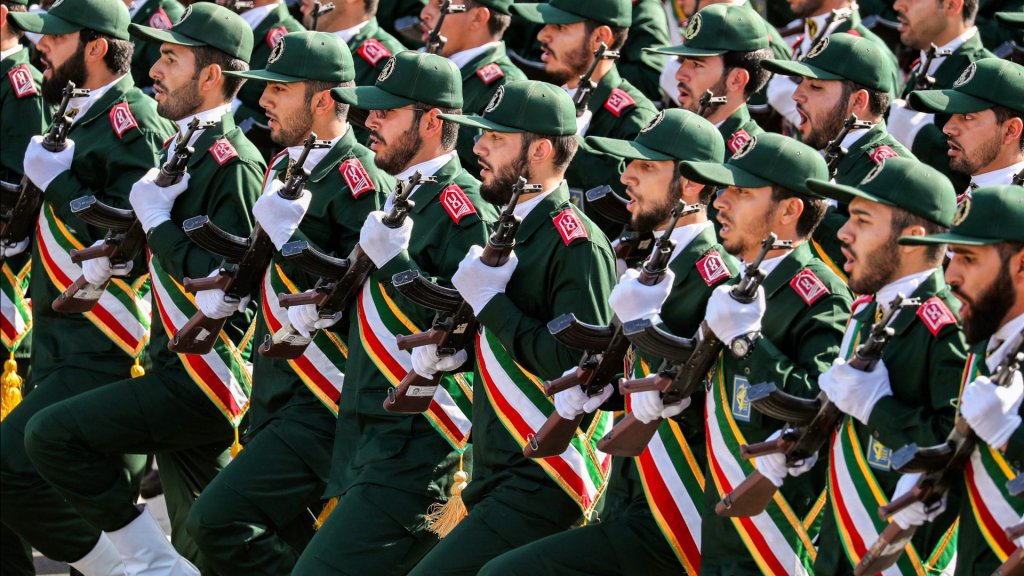
    Behind many of these forces stands one of the most secretive military organizations in the world: the Islamic Revolutionary Guard Corps Quds Force.

    Often called Iran’s “shadow army,” this elite unit conducts covert operations, trains militias, and coordinates armed groups across the region.

    Unlike conventional military forces, the Quds Force rarely fights large battles openly.

    Instead, it works behind the scenes—building alliances with militias, supplying weapons, and shaping conflicts through proxy forces.

    From Lebanon and Iraq to Syria and Yemen, the influence of the Quds Force has played a major role in shaping modern Middle Eastern geopolitics.

    Understanding how this shadow army operates reveals how modern wars are increasingly fought through networks rather than traditional armies.


    Chapter 1: The Birth of Iran’s Foreign Operations Unit

    The Quds Force emerged shortly after the Iranian Revolution of 1979.

    Following the revolution, Iran created a parallel military organization known as the Islamic Revolutionary Guard Corps (IRGC) to protect the new Islamic government.

    Within the IRGC, the Quds Force was formed to handle operations outside Iran’s borders.

    Its mission was unique:

    • expand Iran’s influence abroad
    • support allied movements
    • challenge Western and Israeli influence in the region
    • build alliances with militant groups

    The name “Quds” itself means “Jerusalem,” reflecting Iran’s ideological goal of supporting movements opposed to Israel.

    Over time, the Quds Force became Iran’s most important tool for conducting foreign military operations.


    Chapter 2: The Structure of the Quds Force

    Unlike a traditional army division, the Quds Force operates as a network of specialized units.

    These units focus on different regions and missions across the world.

    Typical responsibilities include:

    • training foreign fighters
    • transferring weapons to allied groups
    • gathering intelligence
    • conducting covert operations
    • coordinating proxy forces

    The organization is relatively small—estimated to have several thousand elite operatives—but its influence extends far beyond its size.

    Rather than deploying large numbers of troops, the Quds Force acts as a coordinator and force multiplier for local militias.


    Chapter 3: Qasem Soleimani — The Architect of Iran’s Proxy Strategy

    For more than two decades, the Quds Force was led by Qasem Soleimani.

    Under Soleimani’s leadership, the organization expanded dramatically.

    He became one of the most influential military figures in the Middle East.

    Soleimani’s strategy focused on building a network of allied militias across the region.

    Instead of relying on Iranian soldiers, he supported local forces who shared Iran’s geopolitical goals.

    These alliances eventually formed the backbone of the Axis of Resistance, linking groups across multiple countries.

    Soleimani was killed in a U.S. drone strike near Baghdad International Airport in 2020, a moment that dramatically increased tensions between Iran and the United States.

    After his death, leadership of the Quds Force passed to Esmail Qaani.


    Chapter 4: The Quds Force Network of Militias

    The Quds Force has built relationships with numerous militias across the Middle East.

    These groups operate in different countries but are often connected through funding, training, and weapons supplied by Iran.

    Some of the most prominent allies include:

    Hezbollah (Lebanon)

    One of the earliest and strongest partnerships is with Hezbollah in Lebanon.

    The Quds Force helped organize Hezbollah during the 1982 Israeli invasion of Lebanon.

    Today, Hezbollah is one of the most powerful non-state military groups in the world.


    Iraqi Militias

    Following the Iraq War in 2003, the Quds Force expanded its presence in Iraq.

    It supported several Shiite militias that fought against both insurgent groups and coalition forces.

    Many of these militias later became part of Iraq’s Popular Mobilization Forces.


    Syrian Conflict

    During the Syrian Civil War, the Quds Force played a major role in supporting the government of Bashar al-Assad.

    Iranian advisers, militia fighters, and allied forces helped stabilize the Syrian government during some of the war’s most intense battles.


    The Houthis in Yemen

    The Quds Force has also supported the Houthi movement in Yemen.

    The group has used drones and missiles against regional targets, demonstrating how proxy forces can challenge stronger militaries.


    Chapter 5: The Strategy of Proxy Warfare

    Iran’s use of the Quds Force represents a form of warfare known as proxy warfare.

    Instead of fighting wars directly, countries support allied groups who fight on their behalf.

    This approach offers several advantages:

    Reduced Risk

    Iran can influence conflicts without deploying large numbers of its own troops.

    Strategic Depth

    Conflicts occur far from Iran’s borders.

    Plausible Deniability

    Iran can sometimes deny direct responsibility for attacks carried out by allied groups.

    This strategy has allowed Iran to expand its influence across multiple countries simultaneously.


    Chapter 6: The Quds Force in Modern Conflicts

    In recent decades, the Quds Force has been involved in many major regional conflicts.

    These include:

    • the War in Afghanistan (2001–2021)
    • the Syrian Civil War
    • the fight against Islamic State in Iraq and Syria

    The organization has also been accused of organizing arms transfers, intelligence operations, and covert activities across the Middle East.

    Through these activities, the Quds Force has helped shape the balance of power in the region.


    Chapter 7: The Future of Iran’s Shadow Army

    Despite leadership changes and international pressure, the Quds Force remains a central pillar of Iran’s military strategy.

    Its influence continues through:

    • expanding drone and missile programs
    • strengthening proxy alliances
    • coordinating regional militia networks

    As conflicts continue across the Middle East, the Quds Force is likely to remain one of the most important—yet least visible—actors shaping events on the battlefield.

    Because while many wars appear to be fought between nations, the real power behind them may lie in hidden networks operating in the shadows.


    Conclusion: The Hidden Engine of Iran’s Regional Power

    The Quds Force represents a new kind of military power.

    Rather than relying on traditional armies, it builds influence through alliances with non-state actors across the region.

    Through training, funding, and coordination, this shadow army has created a network of militias capable of shaping conflicts from Lebanon to Yemen.

    For Iran, the Quds Force provides strategic depth and deterrence against powerful adversaries.

    For the rest of the region, it represents one of the most influential and controversial forces in modern geopolitics.

    And as long as proxy warfare remains a key feature of modern conflict, Iran’s shadow army will likely remain at the center of Middle Eastern power struggles.

    Sources & Citations

    1. Encyclopaedia Britannica – History and operations of the Quds Force.
    2. Council on Foreign Relations – Analysis of the IRGC and Iran’s regional strategy.
    3. International Institute for Strategic Studies – Research on proxy warfare and regional security.
    4. Center for Strategic and International Studies – Middle East security reports.
    5. Wikipedia – Organizational structure and activities of the Quds Force.
  • Inside Iran’s “Axis of Resistance”: The Network of Militias Shaping Middle East Wars

    Inside Iran’s “Axis of Resistance”: The Network of Militias Shaping Middle East Wars

    How a Web of Armed Groups Became One of the Most Powerful Forces in Modern Geopolitics


    Introduction: The Shadow Alliance Changing Middle East Warfare

    Across the Middle East, a loose network of militias, political movements, and armed groups has become one of the most powerful forces shaping modern conflicts.

    This network is commonly called the “Axis of Resistance.”

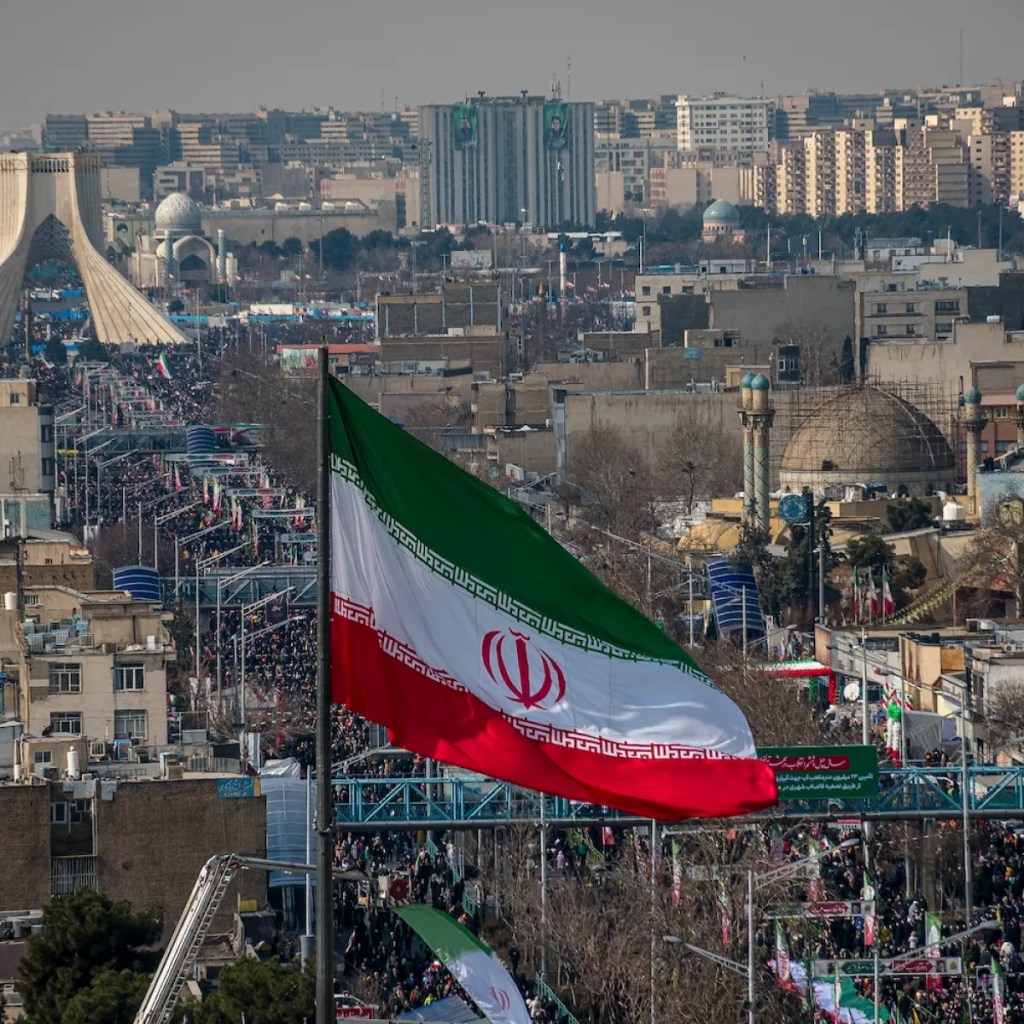
    Led primarily by Iran, the alliance links militant groups across several countries, including Lebanon, Iraq, Syria, Yemen, and Gaza Strip.

    Many of these groups operate independently in their own countries, but they share common goals:

    • opposing Israel
    • resisting the influence of the United States in the Middle East
    • expanding Iran’s regional influence

    Over decades, this network has transformed from a small group of militias into a powerful geopolitical alliance.

    Today, the Axis of Resistance influences wars across the region—from Lebanon and Gaza to Iraq, Syria, and Yemen.

    Understanding how this network works is key to understanding modern Middle Eastern conflicts.


    Chapter 1: The Origins of the Axis of Resistance

    The roots of the Axis of Resistance trace back to the Iranian Revolution in 1979.

    After the revolution, Iran’s new leadership sought to export its revolutionary ideology and challenge Western influence in the Middle East.

    One of Iran’s most important early allies emerged in the early 1980s.

    During the 1982 Israeli invasion of Lebanon, Iran helped create a powerful militia called Hezbollah.

    Hezbollah quickly became one of the strongest non-state military groups in the world.

    Over time, Iran expanded its strategy by supporting similar movements across the region.

    These alliances eventually formed the foundation of what became known as the Axis of Resistance.


    Chapter 2: The Architect Behind the Network

    The central organizer behind this network was the Islamic Revolutionary Guard Corps, especially its foreign operations unit known as the Quds Force.

    This elite branch of Iran’s military was responsible for building alliances with militias across the Middle East.

    One key figure was Qasem Soleimani, the longtime commander of the Quds Force.

    Soleimani spent years coordinating military operations and strengthening connections between allied groups.

    His strategy focused on building local militias that could fight wars without requiring Iran to deploy large numbers of its own troops.

    This model allowed Iran to expand its influence across the region while avoiding direct confrontation with powerful adversaries.


    Chapter 3: The Core Members of the Axis

    The Axis of Resistance is not a formal military alliance like NATO.

    Instead, it is a loose network of groups that cooperate strategically while maintaining their own leadership and goals.

    Some of the most important members include:

    Hezbollah (Lebanon)

    The most powerful member of the axis is Hezbollah, based in Lebanon.

    Over decades, the group has built a massive arsenal that analysts estimate includes more than 100,000 rockets and missiles, making it one of the most heavily armed non-state actors in the world.

    Hezbollah also provides training and expertise to other allied groups across the region.


    Hamas and Palestinian Islamic Jihad (Gaza)

    In the Gaza Strip, groups such as Hamas and Palestinian Islamic Jihad form part of the network.

    These groups primarily focus on conflict with Israel but have received weapons, funding, and training from Iran and its allies.


    Iraqi Militias

    Several powerful militias in Iraq also form part of the axis.

    These include groups such as:

    • Kata’ib Hezbollah
    • Harakat Hezbollah al-Nujaba

    Many of these militias operate under the umbrella of Iraq’s Popular Mobilization Forces.

    These groups have played major roles in fighting ISIS while also conducting attacks on U.S. forces in the region.


    The Houthi Movement (Yemen)

    In Yemen, the Houthi movement has become another key member of the axis.

    Originally a local insurgent group, the Houthis gained international attention during the Yemeni Civil War.

    The group has developed missile and drone capabilities capable of striking targets hundreds of kilometers away.


    Chapter 4: The “Land Bridge” Strategy

    One of Iran’s long-term strategic goals has been to create a land corridor stretching from Iran to the Mediterranean Sea.

    This corridor passes through:

    • Iran
    • Iraq
    • Syria
    • Lebanon

    Control of this route allows weapons, fighters, and equipment to move across the region.

    For example:

    • weapons can travel from Iran into Iraq
    • then through Syria
    • and finally into Lebanon to supply Hezbollah

    This geographic network greatly expands Iran’s ability to influence conflicts across the Middle East.


    Chapter 5: How the Axis Fights Wars

    Unlike traditional armies, the Axis of Resistance relies heavily on asymmetric warfare.

    Instead of large conventional battles, the network uses tactics such as:

    • rocket attacks
    • drone strikes
    • guerrilla warfare
    • cyber operations

    These tactics allow smaller groups to challenge more powerful militaries.

    For example:

    • Hezbollah has used rocket barrages to deter Israeli military action.
    • Iraqi militias have launched attacks on U.S. military bases.
    • Houthi forces have targeted shipping in the Red Sea.

    Because these attacks can occur across multiple countries simultaneously, they create complex security challenges for regional powers.


    Chapter 6: The Strategic Advantages for Iran

    The Axis of Resistance provides several strategic advantages for Iran.

    Strategic Depth

    By building alliances across multiple countries, Iran pushes potential battlefields far away from its own borders.

    Deterrence

    If Iran itself were attacked, allied militias across the region could launch retaliatory strikes.

    Plausible Deniability

    Because many operations are carried out by independent groups, Iran can sometimes avoid direct blame.

    This strategy allows Iran to project power across the Middle East without relying solely on its own military forces.


    Chapter 7: The Future of the Axis

    Despite its influence, the Axis of Resistance faces growing challenges.

    Recent conflicts and military strikes have weakened several groups within the network.

    Some militias have suffered leadership losses, including the death of Qasem Soleimani in 2020.

    Other groups have faced domestic political pressures in their own countries.

    Reports also suggest that some militias may be hesitant to escalate conflicts that could trigger large-scale wars.

    However, despite these challenges, the network remains one of the most powerful non-state military alliances in the world.

    As long as tensions remain high across the Middle East, the Axis of Resistance is likely to continue playing a major role in shaping regional conflicts.


    Conclusion: A Shadow Alliance Reshaping Modern Warfare

    The Axis of Resistance represents a new model of geopolitical power.

    Instead of relying solely on traditional armies, Iran has built a network of allied militias across multiple countries.

    This strategy allows influence, deterrence, and military power to extend far beyond Iran’s borders.

    In conflicts from Lebanon to Yemen, these groups have demonstrated how modern wars can be fought through alliances of non-state actors.

    Understanding this network is essential for understanding the future of Middle Eastern geopolitics.

    Because in today’s world, wars are no longer fought only by nations.

    Sometimes, they are fought by networks.

    Sources & Citations

    1. Encyclopaedia Britannica – Overview of the Axis of Resistance alliance.
    2. Reuters – Reporting on Iran-backed militias and regional alliances.
    3. International Institute for Strategic Studies – Military analysis of regional militia networks.
    4. Center for Strategic and International Studies – Reports on Iranian regional strategy.
    5. NATO Defense College – Studies on proxy warfare and hybrid conflict.
  • Operation RYAN: The Soviet Spy Program That Searched for Signs of World War III

    How Fear of a Surprise Nuclear Attack Created One of the Largest Intelligence Hunts in Cold War History


    Introduction: The Spy Program Born From Fear

    Imagine being told that your country’s survival depended on spotting the first signs of World War III.

    Now imagine receiving orders to search for clues everywhere.

    Watch government buildings.

    Monitor military bases.

    Track unusual meetings.

    Observe lights in office windows at night.

    Count cars in parking lots.

    Report anything suspicious.

    That was the reality for thousands of Soviet intelligence officers during one of the Cold War’s most secret operations.

    Known as Operation RYAN, this massive intelligence effort was launched by the KGB in the early 1980s.

    Its mission was simple but terrifying:

    Determine whether the United States and its NATO allies were preparing a surprise nuclear attack against the Soviet Union.

    The operation became one of the largest intelligence-gathering programs in Soviet history.

    It sent spies across the world searching for signs of war.

    Ironically, the program designed to prevent a surprise attack may have helped create one of the most dangerous periods of misunderstanding during the Cold War.

    By the time NATO conducted Able Archer 83 in November 1983, Operation RYAN had already convinced many Soviet leaders that war might be closer than anyone realized.

    This is the story of the Soviet spy program that searched for World War III—and nearly found it where it did not exist.


    Chapter 1: A World Divided by Fear

    To understand Operation RYAN, we must first understand the atmosphere of the early 1980s.

    The Cold War had entered a particularly dangerous phase.

    Relations between the United States and the Soviet Union were deteriorating rapidly.

    Several developments alarmed Soviet leaders:

    • NATO military modernization
    • New American missile deployments in Europe
    • Increasing anti-Soviet rhetoric
    • Growing military competition

    At the center of Soviet concerns was a troubling question:

    What if the West launched a surprise nuclear attack?

    Unlike conventional wars, nuclear conflict could unfold within minutes.

    Ballistic missiles could reach targets before political leaders had time to fully assess the situation.

    This fear deeply influenced Soviet strategic thinking.

    And no one feared it more than Soviet leader Yuri Andropov.


    Chapter 2: Yuri Andropov’s Suspicion of the West

    Before becoming leader of the Soviet Union, Andropov had spent years running the KGB.

    His background shaped how he viewed the world.

    Andropov believed Western governments were engaged in sophisticated efforts to weaken the Soviet Union.

    He was especially concerned about the possibility of deception.

    What if NATO disguised preparations for war as military exercises?

    What if a nuclear attack came with little warning?

    These concerns intensified after several geopolitical crises during the late 1970s and early 1980s.

    Andropov increasingly viewed international events through the lens of strategic competition.

    As a result, he approved a major intelligence effort designed to answer one critical question:

    Was the West preparing for nuclear war?

    The answer would become Operation RYAN.


    Chapter 3: What Was Operation RYAN?

    Operation RYAN began in 1981.

    The name came from a Russian abbreviation meaning:

    “Nuclear Missile Attack”

    Its purpose was unprecedented.

    Rather than collecting intelligence on a specific target, Operation RYAN sought to identify indicators that NATO might be preparing a first strike.

    The Soviet leadership feared that technological advances and military modernization might allow the West to launch a surprise attack capable of crippling Soviet nuclear forces.

    To prevent this scenario, Soviet intelligence agencies were tasked with searching for warning signs.

    The operation involved:

    • KGB officers
    • military intelligence personnel
    • Soviet embassies
    • intelligence networks across Europe and North America

    Thousands of individuals became part of the effort.

    It was one of the most ambitious intelligence programs of the Cold War.


    Chapter 4: The Search for Clues

    The instructions given to Soviet intelligence officers were extraordinary.

    Agents were ordered to monitor a wide range of activities that might indicate preparations for war.

    Some examples included:

    Government Activity

    Officials watched for unusual meetings involving political leaders.

    Military Movements

    Troop deployments and equipment transfers were closely monitored.

    Emergency Preparations

    Agents looked for signs that governments were preparing civil defense measures.

    Communications Patterns

    Changes in military communications were analyzed carefully.

    Economic Indicators

    Some intelligence officers were even instructed to watch financial activity that might suggest wartime planning.

    The list became surprisingly detailed.

    In some cases, spies were asked to observe:

    • blood bank activity
    • hospital readiness
    • increased security around government facilities
    • unusual office hours among senior officials

    The assumption was simple:

    If war were approaching, governments would leave clues.

    Operation RYAN was designed to find them.


    Chapter 5: The Problem With Searching for Threats

    Operation RYAN contained a dangerous flaw.

    When people are told to look for evidence of a threat, they often begin seeing evidence everywhere.

    This phenomenon is sometimes called confirmation bias.

    Soviet intelligence officers were under pressure to identify signs of a possible attack.

    As a result, ordinary events could appear suspicious.

    A military exercise might seem threatening.

    A political meeting might appear unusual.

    Routine activities could be interpreted as warning signs.

    This created a feedback loop.

    The more reports that arrived, the more Soviet leaders worried.

    The more they worried, the more reports they requested.

    Fear began influencing analysis.

    And fear can distort judgment.


    Chapter 6: The Korean Air Lines 007 Disaster

    In September 1983, tensions escalated dramatically.

    A civilian airliner, Korean Air Lines Flight 007, accidentally entered Soviet airspace.

    Soviet fighter aircraft intercepted and shot down the plane.

    All 269 people aboard were killed.

    The incident sparked international outrage.

    For Soviet leaders, however, the event reinforced existing fears.

    Some officials believed the aircraft might have been involved in intelligence gathering.

    Whether justified or not, these suspicions increased paranoia within parts of the Soviet leadership.

    Operation RYAN continued expanding.

    The search for signs of war intensified.


    Chapter 7: Able Archer 83 and the Peak of Soviet Anxiety

    The moment that made Operation RYAN famous arrived in November 1983.

    NATO launched Able Archer 83, a command-post exercise designed to simulate the escalation of a conflict into nuclear war.

    To NATO commanders, it was a training exercise.

    To Soviet analysts already immersed in Operation RYAN, it looked disturbingly realistic.

    Several aspects caused concern:

    • encrypted communications
    • realistic command procedures
    • participation by senior leaders
    • simulated nuclear release processes

    Reports flowing through Operation RYAN suggested that NATO activity was becoming increasingly unusual.

    Some Soviet officials feared the exercise might be cover for an actual attack.

    Military readiness levels increased.

    Nuclear-capable forces were placed on alert in parts of Eastern Europe.

    The world unknowingly entered one of the most dangerous moments of the Cold War.


    Chapter 8: The Intelligence That Prevented Panic

    Fortunately, not everyone accepted worst-case assumptions.

    Intelligence sources inside the Eastern Bloc provided valuable information indicating that NATO was conducting a genuine exercise rather than preparing for war.

    One of the most significant figures was Rainer Rupp, who supplied information that helped clarify NATO intentions.

    As additional intelligence arrived, fears gradually subsided.

    Able Archer concluded without incident.

    No missiles were launched.

    No war occurred.

    But the episode revealed how dangerous Operation RYAN’s assumptions had become.


    Chapter 9: What the West Learned Later

    At the time, many Western officials did not realize how seriously Soviet leaders viewed the situation.

    Years later, declassified documents painted a different picture.

    Historians discovered that Operation RYAN had created genuine concern within Soviet intelligence circles.

    The Soviet Union was not pretending to fear an attack.

    Many leaders genuinely believed one might occur.

    This revelation shocked numerous Western policymakers.

    It demonstrated that the two sides often misunderstood each other’s intentions.

    One side believed it was conducting routine military activities.

    The other saw evidence of possible nuclear war.


    Chapter 10: The Legacy of Operation RYAN

    Operation RYAN ultimately failed in its primary mission.

    No surprise NATO attack occurred.

    Yet the program left an important legacy.

    It revealed how intelligence organizations can become trapped by their own assumptions.

    It demonstrated the dangers of confirmation bias.

    Most importantly, it showed how fear can influence national decision-making.

    Modern governments continue studying Operation RYAN because its lessons remain relevant.

    Today’s world still contains:

    • nuclear weapons
    • geopolitical rivalries
    • military exercises
    • intelligence operations

    The risk of misunderstanding has not disappeared.

    Only the players have changed.


    Conclusion: The Spy Program That Looked Too Hard

    Operation RYAN began with a reasonable objective.

    The Soviet Union wanted to avoid being surprised by a nuclear attack.

    But in searching so intensely for evidence of danger, Soviet intelligence sometimes began interpreting ordinary events as signs of catastrophe.

    The operation illustrates a timeless lesson.

    Intelligence is not only about gathering information.

    It is also about interpreting information correctly.

    When fear dominates analysis, even routine activities can appear threatening.

    By the time Able Archer 83 arrived, Operation RYAN had helped create an atmosphere in which a military exercise looked like the possible beginning of World War III.

    Fortunately, cooler heads prevailed.

    The crisis passed.

    The Cold War eventually ended.

    Yet Operation RYAN remains one of history’s most important warnings about the dangers of paranoia, misperception, and strategic fear.

    Because sometimes the greatest threat is not what your enemy is doing.

    It is what you believe your enemy might be doing.

    Sources & Citations

    1. Able Archer 83.
    2. The Dead Hand.
    3. National Security Archive – Declassified documents relating to Operation RYAN and Able Archer.
    4. Central Intelligence Agency – Cold War intelligence assessments and declassified records.
    5. Wilson Center – Cold War archival studies and Soviet decision-making research.
    6. North Atlantic Treaty Organization – Historical records of military exercises and Cold War planning.
    7. U.S. Department of State – Historical materials on U.S.-Soviet relations during the early 1980s.

  • Kharg Island: The Tiny Island That Powered Iran’s War Machine

    Kharg Island: The Tiny Island That Powered Iran’s War Machine

    How One Small Island Became the Most Important Oil Target in the Iran–Iraq War


    Introduction: The Island That Held a Nation’s Economy

    In the waters of the Persian Gulf, about 25 kilometers off Iran’s coast, sits a small and rocky island that most people have never heard of.

    At first glance, Kharg Island appears insignificant.

    It has no massive cities.

    No famous landmarks.

    No large population.

    Yet during one of the bloodiest conflicts of the twentieth century, this tiny island became one of the most strategically important locations on Earth.

    For much of the Iran–Iraq War (1980–1988), Kharg Island handled the vast majority of Iran’s oil exports.

    Without it, Iran’s economy could collapse.

    Without oil revenue, Iran would struggle to buy weapons, fund military operations, or sustain its war effort.

    Recognizing this vulnerability, Iraq launched hundreds of attacks against the island.

    Bombers, missiles, and aircraft repeatedly targeted Kharg Island in an attempt to cripple Iran’s economy.

    Yet despite years of bombardment, the island continued operating.

    Its survival became one of the most remarkable logistical stories of modern warfare.

    This is the story of how a tiny island became the beating heart of a nation at war.


    Chapter 1: Why Kharg Island Mattered

    Before the Iran-Iraq War began, Kharg Island was already one of the most important energy hubs in the Middle East.

    The island served as Iran’s primary oil export terminal.

    Crude oil from massive fields across Iran flowed through pipelines to Kharg, where giant tankers loaded millions of barrels for customers around the world.

    By the late 1970s, approximately 90 percent of Iran’s oil exports passed through Kharg Island.

    This made the island a critical economic lifeline.

    Oil was not simply another export.

    It was the foundation of Iran’s economy.

    Revenue from oil sales funded:

    • government spending
    • infrastructure projects
    • military purchases
    • national development

    In strategic terms, Kharg Island functioned like a giant economic artery.

    If it stopped pumping oil, the nation would suffer severe consequences.

    This reality did not go unnoticed in Baghdad.


    Chapter 2: Saddam Hussein’s Economic War Strategy

    When Saddam Hussein launched the Iran-Iraq War in 1980, he hoped for a quick victory.

    Instead, the conflict became a brutal stalemate.

    As the war dragged on, Iraq searched for ways to weaken Iran without relying solely on ground offensives.

    One answer was economic warfare.

    Iraqi planners recognized that Iran’s military depended heavily on oil income.

    If Iraq could destroy Kharg Island, it could strike directly at the financial foundation of the Iranian war effort.

    This strategy was simple:

    • Destroy export infrastructure
    • Reduce oil revenue
    • Weaken Iran’s economy
    • Limit Iran’s ability to continue fighting

    In theory, it was a logical plan.

    In practice, it would prove much harder than expected.


    Chapter 3: The Air War Against Kharg Island

    Beginning in the early 1980s, Iraq launched an extensive bombing campaign against Kharg Island.

    The attacks became increasingly sophisticated over time.

    Iraqi aircraft targeted:

    • loading terminals
    • storage tanks
    • pumping stations
    • port facilities
    • tanker ships

    The goal was to shut down oil exports completely.

    French-made Dassault Mirage F1 fighters armed with anti-ship missiles became some of Iraq’s most effective tools.

    These aircraft could strike targets from long distances and then quickly withdraw.

    The attacks became so frequent that some observers described Kharg Island as one of the most heavily bombed economic targets in modern history.

    Yet despite the destruction, exports continued.

    Repair crews often began rebuilding damaged facilities almost immediately after attacks ended.

    This constant cycle of destruction and reconstruction became a defining feature of life on the island.


    Chapter 4: The Men Who Kept the Oil Flowing

    The survival of Kharg Island was not simply a story of infrastructure.

    It was also a story of people.

    Engineers, technicians, dock workers, and construction crews remained on the island despite repeated attacks.

    Every time facilities were damaged, workers rushed to repair them.

    Storage tanks were rebuilt.

    Pipelines were patched.

    Loading systems were restored.

    Many workers understood that keeping oil exports flowing was as important as any battlefield victory.

    Without oil revenue, Iran’s ability to continue the war would be severely weakened.

    As a result, Kharg Island became a frontline position in an economic war.

    The workers stationed there were effectively part of Iran’s national defense effort.


    Chapter 5: The Birth of the Tanker War

    By 1984, attacks on Kharg Island expanded into something much larger.

    The conflict evolved into what became known as the Tanker War.

    Instead of focusing solely on oil terminals, both sides began targeting commercial shipping.

    Oil tankers moving through the Persian Gulf became military targets.

    Iraq hoped that attacks on shipping would discourage international companies from transporting Iranian oil.

    Insurance rates skyrocketed.

    Shipping companies faced growing risks.

    Yet many tankers continued sailing.

    The world depended heavily on Gulf oil supplies.

    Completely halting exports proved difficult.

    Kharg Island remained at the center of this maritime conflict.

    Every tanker departing from the island became part of a larger geopolitical struggle.


    Chapter 6: Innovation Under Fire

    Faced with constant attacks, Iran adapted.

    Rather than relying solely on fixed infrastructure, Iranian planners developed alternative methods for exporting oil.

    These included:

    • offshore loading systems
    • dispersed storage facilities
    • emergency repair teams
    • alternative export routes

    This flexibility made it harder for Iraq to achieve decisive results.

    Every time a facility was destroyed, Iran found new ways to continue operations.

    Military historians often point to this resilience as a key reason why Iraq failed to achieve its economic objectives.

    Kharg Island demonstrated an important lesson:

    Infrastructure can be damaged, but adaptive systems are much harder to destroy.


    Chapter 7: Why Iraq Could Not Knock It Out

    Despite hundreds of attacks, Kharg Island never completely stopped functioning.

    Several factors explain this outcome.

    Geography

    The island’s location complicated military operations.

    Aircraft had limited time over target areas before facing air defenses.

    Redundancy

    Iran built backup systems and alternative facilities.

    Constant Repairs

    Repair crews worked continuously to restore damaged infrastructure.

    Global Demand

    International buyers still needed oil.

    Economic incentives encouraged continued exports despite the risks.

    These factors combined to create a situation where Iraq could inflict damage but could not deliver a knockout blow.


    Chapter 8: Lessons for Modern Warfare

    Kharg Island remains highly relevant today.

    Modern conflicts increasingly target economic infrastructure.

    Military planners recognize that economies are often more vulnerable than armies.

    Recent conflicts have seen attacks on:

    • oil facilities
    • pipelines
    • power stations
    • ports
    • shipping networks

    The story of Kharg Island demonstrates both the power and limitations of economic warfare.

    Strategic infrastructure matters enormously.

    But resilience matters too.

    Countries that can quickly repair damage and adapt to disruption are much harder to defeat.

    This lesson continues to influence military thinking around the world.


    Chapter 9: The Legacy of Kharg Island

    Today, Kharg Island remains one of Iran’s most important energy facilities.

    Although modern export routes have diversified somewhat, the island continues to play a major role in the country’s oil industry.

    Its wartime experience also shaped Iran’s broader strategic thinking.

    The Iranian government has invested heavily in:

    • hardened infrastructure
    • dispersed energy facilities
    • underground storage systems
    • alternative export capabilities

    Many of these investments reflect lessons learned during the Iran-Iraq War.

    The attacks on Kharg Island convinced Iranian planners that economic infrastructure would remain a primary target in future conflicts.

    As a result, resilience became a national security priority.


    Conclusion: The Island That Refused to Fall

    Military history often focuses on famous battles, powerful generals, and advanced weapons.

    Yet sometimes the outcome of a war depends on something much simpler.

    An island.

    A port.

    A pipeline.

    A tanker.

    Kharg Island was never a battlefield in the traditional sense.

    But it became one of the most important strategic locations in the Iran-Iraq War.

    For eight years, Iraq attempted to destroy the economic lifeline that sustained its enemy.

    For eight years, Iran fought to keep that lifeline open.

    The result was one of history’s most intense campaigns against energy infrastructure.

    And despite relentless attacks, Kharg Island endured.

    Its story reminds us that wars are not won only on the front lines.

    Sometimes they are won in the ports, terminals, and supply networks that keep a nation alive.

    In the modern world, economic infrastructure is often as important as military firepower.

    And few places illustrate that reality better than Kharg Island.

    Sources & Citations

    1. The Tanker War: The Assault on Merchant Shipping During the Iran-Iraq Conflict.
    2. U.S. Energy Information Administration – Historical analysis of Persian Gulf oil exports and strategic infrastructure.
    3. Center for Strategic and International Studies – Research on energy security and maritime conflict.
    4. International Institute for Strategic Studies – Military assessments of the Iran-Iraq War.
    5. The Longest War: The Iran-Iraq Military Conflict.
    6. Naval History and Heritage Command – Historical records on the Tanker War and Persian Gulf operations.

  • The Tanker War Returns: How Attacks on Oil Shipping Could Ignite a Global Crisis

    The Tanker War Returns: How Attacks on Oil Shipping Could Ignite a Global Crisis

    Why Modern Conflicts Are Once Again Targeting the World’s Most Important Energy Supply Routes


    Introduction: The Vulnerable Arteries of Global Energy

    Every day, thousands of ships move across the world’s oceans carrying oil and natural gas that power modern economies.

    But these vital shipping routes are increasingly becoming targets in modern warfare.

    In recent years, attacks on oil tankers, cargo vessels, and energy infrastructure have raised fears that the world could see a return of a dangerous strategy from the 1980s known as the Tanker War.

    During that conflict, merchant ships carrying oil through the Persian Gulf were repeatedly attacked as part of the larger Iran–Iraq War.

    Today, tensions involving Iran, Israel, and the United States have revived fears that global shipping could once again become a battlefield.

    Because a significant share of the world’s oil travels by sea, even a small number of attacks could trigger a global economic shock.


    Chapter 1: What Was the Original Tanker War?

    The original Tanker War began in 1984 during the later stages of the Iran–Iraq War.

    Both Iran and Iraq began targeting oil tankers and merchant vessels in the Persian Gulf.

    The goal was simple:

    Destroy the enemy’s economic lifeline.

    Since both countries relied heavily on oil exports, disrupting shipping could weaken the opponent’s economy and reduce their ability to fund the war.

    The attacks included:

    • anti-ship missiles
    • naval mines
    • aircraft strikes
    • attacks on oil terminals

    More than 400 commercial vessels were attacked during the conflict, making it one of the largest maritime attacks on civilian shipping since World War II.

    Eventually the conflict drew in outside powers.

    The United States launched Operation Earnest Will, escorting oil tankers through the Gulf to protect them from attacks.


    Chapter 2: Why Oil Tankers Are Strategic Targets

    Oil tankers are among the most important vessels in global trade.

    A single supertanker can carry two million barrels of crude oil.

    Because of this, tanker attacks have effects far beyond the ships themselves.

    Key impacts include:

    Energy Supply Disruptions

    Damaging even a few tankers can disrupt supply chains and delay shipments.

    Insurance and Shipping Costs

    Shipping through dangerous regions dramatically increases insurance costs.

    During past crises, insurance rates for vessels in the Persian Gulf increased several hundred percent.

    Market Panic

    Even rumors of attacks can cause oil prices to surge in global markets.

    Energy traders closely monitor shipping risks because disruptions can immediately affect supply expectations.


    Chapter 3: The World’s Most Dangerous Shipping Routes

    Several key maritime chokepoints dominate global energy transportation.

    Among the most important is the Strait of Hormuz, the narrow passage connecting the Persian Gulf to the Arabian Sea.

    About 20% of the world’s oil supply passes through this corridor each day.

    Other important energy chokepoints include:

    • the Bab el‑Mandeb Strait connecting the Red Sea to the Indian Ocean
    • the Suez Canal linking the Mediterranean Sea to the Red Sea
    • the Strait of Malacca between Malaysia and Indonesia

    Because these routes are narrow and heavily trafficked, ships passing through them are difficult to protect.

    This makes them attractive targets during conflicts.


    Chapter 4: The Modern Return of Tanker Attacks

    Recent years have seen a growing number of attacks on shipping in the Middle East.

    Tankers have been damaged by:

    • naval mines
    • drone strikes
    • missile attacks

    Some of these incidents have occurred near the Strait of Hormuz, raising fears of a new tanker war.

    Other attacks have taken place near the Red Sea, where armed groups have targeted commercial vessels.

    These incidents demonstrate how modern weapons—especially drones and missiles—have made tanker attacks easier to conduct.

    Unlike in the 1980s, attackers no longer need fighter aircraft or large naval forces.

    Even small groups equipped with drones or missiles can threaten major shipping routes.


    Chapter 5: The Role of Proxy Forces

    Modern conflicts increasingly rely on proxy groups.

    Instead of direct military confrontation between major powers, attacks are often conducted by allied militias or non-state actors.

    In the Middle East, this includes groups such as:

    • Hezbollah in Lebanon
    • Houthi movement in Yemen

    These groups have developed missile and drone capabilities capable of striking ships at sea.

    By operating through proxies, states can apply pressure on enemies while maintaining plausible deniability.

    This strategy complicates military responses and increases the risk of escalation.


    Chapter 6: The Global Economic Domino Effect

    If tanker attacks increase significantly, the economic consequences could spread rapidly across the world.

    Potential effects include:

    Oil Price Spikes

    Even limited disruptions could push oil prices sharply higher.

    Energy markets react quickly to perceived supply threats.

    Inflation

    Higher fuel costs increase transportation and manufacturing prices.

    This can drive inflation in economies worldwide.

    Supply Chain Disruptions

    Shipping delays can disrupt industries that depend on energy imports.

    Countries heavily reliant on imported oil—such as Japan, South Korea, and India—would be especially vulnerable.


    Chapter 7: Can Tanker Shipping Be Protected?

    Protecting thousands of merchant ships across vast ocean areas is extremely difficult.

    Navies can escort some vessels, but not every ship.

    Major maritime powers—including the United States Navy and allied fleets—regularly patrol the Persian Gulf and nearby waters.

    However, modern threats such as drones and sea mines remain difficult to detect.

    New technologies being developed to protect shipping include:

    • anti-drone systems
    • improved radar detection
    • naval escorts and convoy systems

    But despite these efforts, commercial shipping will always remain somewhat vulnerable in wartime.


    Conclusion: The Fragile Lifelines of the Global Economy

    The world’s energy system depends heavily on maritime transportation.

    Oil tankers crossing narrow waterways connect producers in the Middle East with consumers across the globe.

    This dependence creates a dangerous vulnerability.

    The original Tanker War showed how quickly attacks on shipping can escalate into international crises.

    Today, new technologies—including drones, missiles, and proxy warfare—make such attacks easier than ever before.

    If a modern tanker war were to erupt, its effects would not be limited to the Middle East.

    Energy markets, shipping routes, and global economies could all be affected.

    Because in the modern world, the oceans are not just highways of trade.

    They are also potential battlefields that hold the power to shake the global economy.

    Sources & Citations

    1. U.S. Energy Information Administration – Global oil shipping routes and chokepoint analysis.
    2. International Energy Agency – Global oil supply and maritime trade statistics.
    3. Center for Strategic and International Studies – Maritime security and tanker war analysis.
    4. International Institute for Strategic Studies – Middle East military and maritime security reports.
    5. Historical reporting and research on Operation Earnest Will and the Tanker War during the Iran–Iraq War.