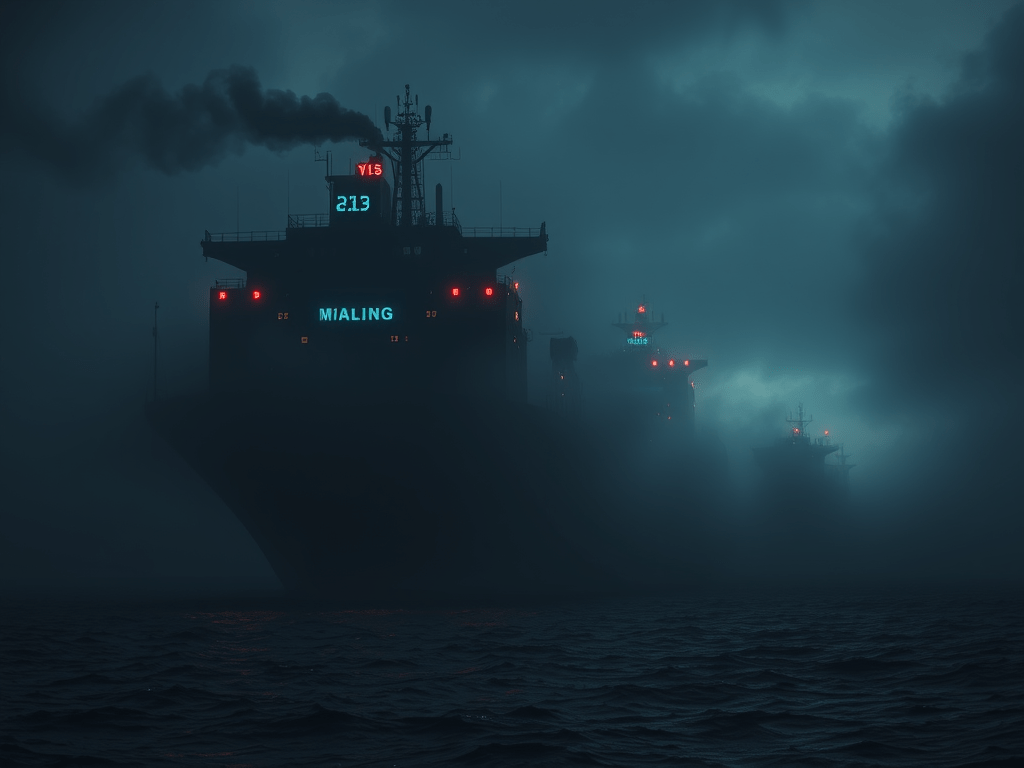
Shadow tanker fleets—also known as dark fleets—are aging vessels operating under the radar to ship sanctioned oil and scarce commodities. These networks have become strategic tools for sanctioned regimes like Russia and Iran to preserve revenue streams without open confrontation.
What Are Shadow Fleets?
Shadow fleets are clandestine networks of tankers involved in smuggling sanctioned goods—like crude oil—using deceptive maritime practices to evade detection.
They operate increasingly outside conventional frameworks, exploiting AIS manipulation, flag-hopping, ship-to-ship transfers, and complex offshore ownership, all to remain invisible to regulators.Wikipedia+2 Wikipedia+2
Originally adopted by countries like Iran and Venezuela, shadow fleets gained prominence after 2022 when Russia expanded its network to maintain oil exports under Western sanctions.
Wikipedia Brookings The Washington Post Le Monde.fr
Key Evasion Tactics
Concealing identity and routing paths:
- AIS manipulation: Vessels either turn off automatic transponders or spoof their locations.Wikipedia The Economic Times
- Flag-hopping & name changes: Ships frequently switch registration to obscure identities, often across jurisdictions with lax oversight like Gabon or the Marshall Islands.Wikipedia+1 newsletter.boundlessdiscovery.comS&P Global
- Shell companies & front ownership: Complex corporate structures obscure the source and control of these vessels.Wikipedia+1 BrookingsGeopolitical Monitor
Concealing shipments:
- Ship-to-ship (STS) transfers: Transfers oil mid-ocean to mislabel origin or hide entities.World Ports The Economic Times gCaptain
- False documentation: Oil cargoes often present forged paperwork and misleading declarations.Wikipedia. The Economic Times
The Scale of the Shadow Fleet
- Rapid expansion: Since 2022, the fleet has swollen from under 100 vessels to over 1,000 by late 2023–2025, transporting as much as 70% of Russia’s oil exports.Wikipedia The Washington Post Le Monde.frnewsletter.boundlessdiscovery.com
- Major investments: Russia reportedly spent around $10 billion in acquiring aging vessels to fuel this fleet. BrookingsMDPI
- Insurance blind spots: Many of these ships sail with no verified insurance, raising alarm over environmental hazards and liability.The Washington Post Wikipedia. S&P Global
Global presence: These ships are spotted across Arctic waters, the English Channel, Gulf of Oman, and Southeast Asia — showing how sanctions networks span the globe.
Financial Times The Times. Atlantic Council. S&P Global
Strategic Importance & Risks
Shadow fleets are more than sanctions loopholes—they are instruments of geopolitical resilience:
- Revenue lifeline for sanctioned states like Russia and Iran, bypassing price caps and official trade platforms.Geopolitical Monitor The Washington Post The Times MDPI. Brookings
- Environmental hazard: Aging ships and mid-sea transfers elevate risk of spills and coastal pollution. gCaptain The Times The Washington Post
- Security threat: NATO and regional navies worry about sabotage potential—especially near subsea cables.The Washington Post. AP News
Enforcement vs Evasion: What’s Being Done?
Regulatory moves:
- In late 2023, the IMO demanded restrictions on ship-to-ship transfers and called for enhanced inspections of suspicious tankers. Atlantic Council
- Western sanctions now specifically target vessels, operators, insurers, and ports facilitating shadow fleet operations.The Washington Post Financial Times
- Countries like the UK are demanding vessels prove valid insurance before transit — an emerging point of pressure. Financial Times
Limitations remain:
- Evasion tactics, such as falsified ownership, spoofed AIS, and remote high-sea operations, make enforcement extremely hard.World Ports Atlantic Council
- Shadow fleets also intersect with broader networks, including Iran’s ghost fleet, expanding beyond oil to other strategic commodities. Wikipedia
Playbook for Mitigation
For sanctioning coalitions:
- Build real-time maritime tracking and cross-jurisdiction enforcement networks.
- Impose secondary sanctions on insurers, financiers, and intermediaries enabling operations.
- Leverage satellite imagery and maritime domain awareness tools to flag suspicious behaviors.
For policymakers:
- Strengthen international regulation on vessel registration, insurance verification, and end-use accountability.
- Use sanctions strategically, pairing them with monitoring capabilities to limit evasion routes.
 Vellum Insights
Leave a comment