Introduction: Medicine as a Weapon of Influence
When people think of power, they imagine tanks, bombs, or armies. But Cuba, a small island under decades of sanctions, found another kind of weapon: doctors.
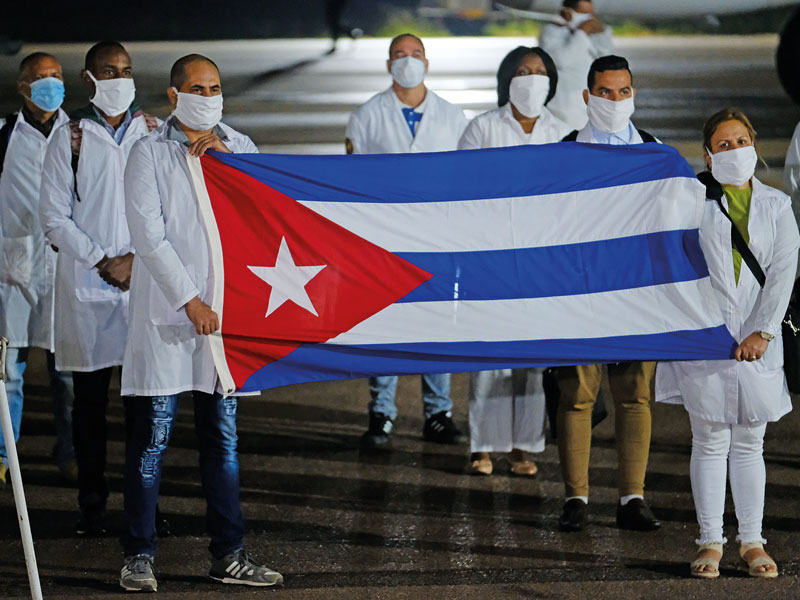
For over 50 years, Cuba has sent tens of thousands of medical professionals abroad — not just to friendly countries, but also to nations struck by disaster, poverty, or war. This medical diplomacy has turned Cuba’s doctors into ambassadors in white coats, spreading influence and keeping the regime alive.
Part 1: The Origins of Cuba’s Medical Army
After the revolution in 1959, Fidel Castro realized that healthcare could be more than a domestic policy. It could be a way to win friends and allies.
- In 1960, Cuba sent its first medical brigade to Chile after a devastating earthquake.
- By the 1960s and 70s, Cuban doctors were working in newly independent African states like Angola and Algeria, tying Cuba to the anti-colonial movement.
- The message was simple: while America sent soldiers, Cuba sent doctors.
Part 2: How the System Works
Cuba invests heavily in medical education:
- Medical school is free in Cuba.
- Doctors are trained not just in hospitals but also in community outreach, making Cuban healthcare highly people-centered.
When Cuba sends doctors abroad:
- Host countries often pay the Cuban government, not the doctors directly.
- This gives Cuba foreign currency, which is vital for survival under sanctions.
- Doctors get only a portion of the money, but they also gain experience and prestige.
At its peak, Cuba had over 50,000 medical workers in 60 countries.
Part 3: Doctors as Soft Power
Sending doctors accomplishes several goals for Cuba:
- Diplomatic Goodwill
- Countries that receive Cuban doctors often support Cuba in the United Nations or shield it from U.S. pressure.
- Example: Many African states still back Cuba diplomatically because of its medical and military support during their independence struggles.
- Economic Survival
- Medical services became Cuba’s largest export, even bigger than sugar or tourism at times.
- Between 2011 and 2018, Cuba reportedly earned $11 billion annually from its overseas medical missions.
- Propaganda and Image
- Cuba presents itself as a humanitarian superpower, punching far above its size.
- The image of Cuban doctors saving lives builds sympathy, even in countries hostile to Cuba politically.
Part 4: Case Studies of Cuba’s Medical Diplomacy
Africa: Angola and Ebola
- In Angola’s civil war (1975–2002), Cuba sent both soldiers and doctors. The doctors won long-lasting goodwill that soldiers alone could not.
- In 2014, when West Africa was hit by Ebola, Cuba sent more than 250 doctors and nurses. They were some of the first foreign responders on the ground.
Latin America: Venezuela’s Oil-for-Doctors Deal
- Venezuela, under Hugo Chávez, struck a deal with Cuba: cheap oil in exchange for Cuban doctors.
- This alliance kept Cuba’s economy afloat during the Special Period’s aftermath.
- For Venezuela’s poor, Cuban doctors became the only access to free healthcare.
Global Pandemic: COVID-19 Response
- During the COVID-19 pandemic, Cuban doctors traveled to Italy, South Africa, and Caribbean nations to help fight the virus.
- While wealthier countries struggled, Cuba leveraged its medical army to gain international spotlight.
Part 5: Criticism and Controversy
Cuba’s doctor diplomacy is not without criticism:
- Many accuse the Cuban government of exploiting its doctors, taking most of their earnings.
- Some doctors defected while abroad, seeking better pay and freedom.
- The U.S. has called these missions “modern slavery” and tried to pressure countries to reject them.
Yet, despite the controversy, Cuba’s model remains attractive to many nations desperate for affordable medical care.
Part 6: Strategic Lessons from the Doctor Diplomacy
- Health as Foreign Policy
- Cuba turned healthcare — usually a domestic issue — into a global weapon of influence.
- Small States Can Lead
- Cuba, an island with limited resources, used doctors to outshine richer nations in humanitarian response.
- Resilience through Reputation
- Even under sanctions, Cuba kept itself relevant by building a reputation for saving lives.
Conclusion: White Coats as Cuba’s True Army
Cuba has very few tools to survive against U.S. pressure. But in the end, its most effective weapon has not been missiles or ideology — it has been the Cuban doctor.
By sending doctors abroad, Cuba gained money, allies, and global influence. While controversial, the strategy shows the power of soft power in survival.
Cuba’s lesson is simple: not all weapons carry bullets. Some carry stethoscopes.
 Vellum Insights
Leave a comment