Introduction: When Cities Become Battlefields
In the 21st century, war has moved into the city.
Gone are the open fields and desert tank battles of old wars.
Now, the fight happens in crowded streets, tower blocks, and underground tunnels.
We live in the most urban century in history. Over half the world’s population now lives in cities. Many of these cities are growing fast, without enough housing, jobs, or public safety. When governments fail to control these areas, militants, gangs, and militias move in — and turn neighborhoods into urban fortresses.
These fortresses are not made of stone walls or castles. They are made of people, buildings, and fear.
From Mosul in Iraq, Aleppo in Syria, to Port-au-Prince in Haiti, and even Marawi in the Philippines, the world has seen what happens when an urban area becomes a fortress — and then collapses.
This article explores how these “urban fortresses” are created, how they fall, and what the world can learn from them.
1. What Is an Urban Fortress?
An urban fortress is a city or district that has become a stronghold for armed groups.
It may start as a safe zone for protection — but over time, it turns into a place of control and conflict.
These fortresses usually form in:
- Dense city areas with narrow streets and many civilians.
- Poorly governed neighborhoods where the state has weak control.
- War zones or fragile states where government power doesn’t reach every corner.
Characteristics:
- Complex tunnel systems and barricaded streets.
- Armed militias that mix in with civilians.
- Local support networks that supply food, fuel, and intelligence.
- Information control — propaganda, rumors, and social media dominance.
In short: an urban fortress is a city turned into a weapon.
2. How Urban Fortresses Form
Urban fortresses do not appear overnight. They grow slowly through layers of social collapse.
Step 1: Government Retreat
When the government fails to provide security or basic needs, criminal and militant groups fill the gap. They start offering “justice,” food, and protection, gaining loyalty from locals.
Step 2: Parallel Authority
Soon, these groups set up their own rule — collecting taxes, enforcing order, and even providing healthcare. To outsiders, it looks like chaos; to locals, it may look like survival.
Step 3: Militarization
As the central state tries to reassert control, the area arms itself. Streets get barricaded. Civilians are trapped between loyalty and fear. Over time, the district becomes a fortified zone — an “urban fortress.”
Step 4: Siege and Collapse
Eventually, the government launches an assault or siege. Supplies run out. Civilians flee or starve. Infrastructure collapses. Even if the fortress is retaken, the city itself dies in the process.
3. Case Studies: Lessons from the Past
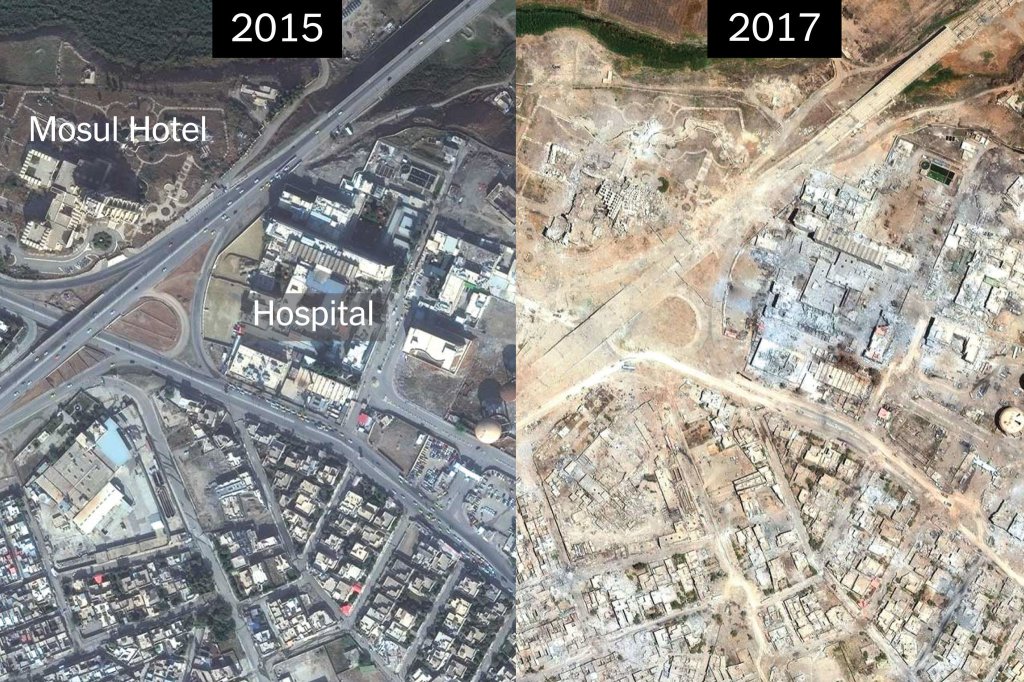
🇮🇶 Mosul (2017)
When ISIS took over Mosul, Iraq’s second-largest city, it transformed entire neighborhoods into defensive grids.
- Tunnels connected houses and mosques.
- Snipers hid in minarets.
- Civilians were used as shields.
It took nine months of heavy urban warfare for Iraqi forces, supported by U.S. airpower, to retake the city. The cost: over 10,000 civilian deaths and massive destruction.
🇸🇾 Aleppo (2012–2016)
Aleppo’s siege became a symbol of the Syrian civil war.
Different factions controlled different districts, each walled off by frontlines. Barrel bombs, artillery, and starvation turned the city into a hellscape. When government forces finally took control, the city was in ruins — but the victory sowed deep resentment.
🇵🇭 Marawi (2017)
In the Philippines, ISIS-linked militants captured the city of Marawi. The military responded with airstrikes and artillery in a dense environment. After five months, the militants were defeated — but the city was flattened.
The key lesson: urban operations destroy what they try to save.
4. Why Urban Warfare Is So Hard
Fighting in cities is different from fighting in open terrain. Buildings hide enemies. Civilians make it impossible to use full firepower. Every street corner becomes a death trap.
Challenges:
- Visibility: Snipers, tunnels, and high-rise positions make spotting enemies difficult.
- Civilians: Militant groups often use civilians as shields, knowing armies will hesitate to strike.
- Logistics: Narrow roads block armored vehicles and supply convoys.
- Psychological stress: Soldiers face constant fear, confusion, and moral dilemmas.
- Media exposure: Every civilian death goes viral, shaping global opinion instantly.
Urban warfare is often described as “fighting in three dimensions” — up, down, and through. You’re not just battling on the streets, but also in basements, tunnels, and rooftops.
5. Modern Strategies: Fighting the Urban Fortress
1. Precision Warfare
Modern militaries now use drones, robotics, and AI mapping to reduce collateral damage.
Drones can scout rooftops. Robots can clear rooms. AI systems can map tunnels.
2. Psychological Operations (PsyOps)
Winning the hearts and minds of civilians is key.
Before attacking, militaries use loudspeakers, leaflets, and social media to persuade civilians to evacuate — and sometimes, to convince fighters to surrender.
3. Civilian Corridors
In Aleppo and Mosul, humanitarian corridors were used to evacuate civilians.
However, they also exposed weaknesses — as militants sometimes used them to escape.
4. Urban Governance After Combat
Taking the city is only half the job. Rebuilding governance, trust, and infrastructure is the true victory.
Otherwise, another fortress will rise from the ruins.
6. When the Fortress Collapses
When an urban fortress finally falls, it doesn’t end the war — it transforms it.
The collapse creates a vacuum. Civilians return to destroyed homes, no schools, no hospitals. Gangs and militias often reemerge under new names.
This is what happened in:
- Grozny after the Chechen wars.
- Mosul after ISIS.
- Homs after Syria’s sieges.
The military victory is short-lived unless it’s followed by reconstruction and reconciliation.
Long-Term Effects:
- Mass migration as people flee ruined cities.
- Economic collapse due to destroyed infrastructure.
- Loss of trust between people and their government.
- Generation of trauma, especially among children.
7. The Global Trend: Urbanization Meets Instability
By 2050, the world’s urban population will reach 70%.
Most of this growth will happen in Africa, South Asia, and Latin America — regions where states already struggle to provide security and services.
This means more cities will become potential battlegrounds:
- Lagos, Kinshasa, Karachi, and Dhaka are expanding faster than infrastructure can handle.
- Informal settlements (“megacity slums”) can house millions, often outside government control.
- Non-state actors — gangs, militias, even terrorist networks — can find safe havens there.
These urban fortresses of the future may not even look like wars.
They’ll look like ongoing emergencies — part crime, part insurgency, part social collapse.
8. Technology’s Double-Edged Role
Technology can both help and harm in urban warfare.
Helpful Tools:
- Drones: for mapping, surveillance, and precision strikes.
- AI & data analytics: to track militant networks and predict hotspots.
- Smart city data: cameras and sensors can help detect movement in real time.
Dangerous Risks:
- Civilian surveillance abuse: governments may use these tools to suppress dissent.
- Digital misinformation: militants can manipulate social media faster than governments can respond.
- Cyberwarfare: cutting power, communications, or water supply to urban areas can devastate civilians instantly.
9. Case Study: El Salvador’s Urban Crackdown
A real-world example of preventing urban fortress formation is El Salvador’s war on gangs.
The government launched a massive security campaign against MS-13 and Barrio 18, reclaiming neighborhoods once ruled by criminals.
Though controversial, this strategy combined military presence, social programs, and media control to crush gang power.
The results: a dramatic drop in homicide rates — from 52 per 100,000 (2018) to under 3 per 100,000 (2024).
The lesson: hard power alone can pacify cities temporarily, but long-term peace requires education, jobs, and community rebuilding.
10. Preventing the Next Fortress
To prevent future “urban fortresses,” nations must:
- Invest in governance — provide security and services before armed groups fill the gap.
- Use smart surveillance with transparency — detect criminal networks early, but protect civil rights.
- Build trust — communities that trust the state won’t support militants.
- Modernize doctrine — train armed forces for urban combat, negotiation, and reconstruction.
- Promote international cooperation — share best practices for rebuilding post-conflict cities.
⚠️ 11. The Moral Dilemma of Urban Warfare
Every commander faces the same impossible choice:
How do you save a city without destroying it?
Using artillery or airstrikes ends battles faster but kills civilians.
Fighting street by street saves lives but drags the war on.
The real battlefield isn’t just physical — it’s moral.
Winning hearts and minds is just as important as winning territory.
🧠 12. The Future Urban Battlefield
Imagine the megacities of 2040:
- 50 million people.
- AI-managed transport grids.
- Drone patrols and data walls.
- Tunnels beneath skyscrapers.
Now imagine a rebel force taking over part of that network.
With a few hacks, they could shut down power to 10 million people or hijack self-driving vehicles.
The future of war will be digital and urban — fought in cyberspace, rooftops, and newsfeeds all at once.
🔚 Conclusion: From Rubble to Resilience
Urban fortress collapse is one of the great challenges of modern warfare.
It shows us that wars are no longer fought in faraway deserts or jungles — they are fought where people live.
Every destroyed apartment block, every broken school, every shattered bridge — these are not just ruins. They are warnings.
The future of warfare is the battle for the city itself — for its systems, its people, and its soul.
To win, nations must learn not just to fight in cities — but to protect them.
 Vellum Insights
Leave a comment