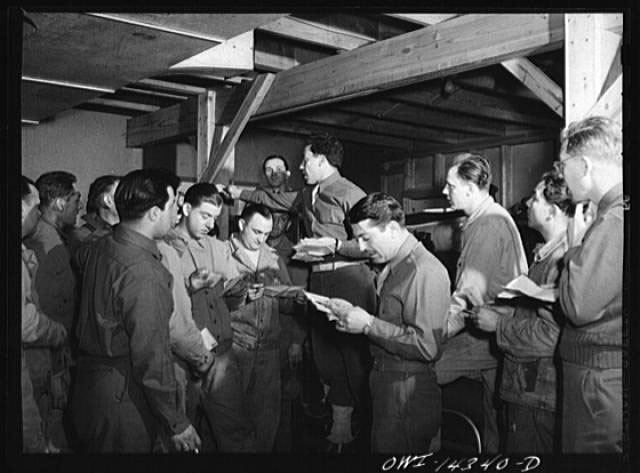
Introduction: The Most Powerful Weapon Wasn’t a Rifle — It Was a Letter
In every war, soldiers carry weapons, wear uniforms, and follow orders.
But there was something else every soldier carried — something invisible yet vital.
A connection to home.
During World War II, this connection came through letters — millions of them, written by mothers, wives, sweethearts, and children. These letters were the lifeline between two worlds: the frontlines of war and the safety of home.
They gave soldiers hope, kept morale alive, and sometimes made the difference between breaking down and holding on.
This is the story of how mail — the simplest form of communication — became one of the most important tools of war.
1. The Emotional Battlefield: Why Letters Mattered More Than Ammo
When a soldier fights thousands of miles away from home, isolation can be the deadliest enemy.
Food and ammunition keep the body alive — but words from home kept the spirit alive.
Letters reminded soldiers why they were fighting.
They carried love, laughter, and faith in small, fragile envelopes that crossed oceans and battlefields.
In a survey by the U.S. Army during WWII, 87% of soldiers said mail was their “most important morale booster.”
For many, reading a letter was more thrilling than receiving medals or pay.
As one private wrote in his journal:
“A letter from home is like a piece of heaven. For a few minutes, I forget there’s a war.”
2. The Mail Machine: How Armies Delivered 12 Million Letters a Day
Delivering these emotional lifelines was no small task.
By 1945, the U.S. military postal system was handling over 12 million pieces of mail every day.
This was a logistical miracle — powered by thousands of postal clerks, ships, trucks, and even airplanes dedicated solely to mail.
Letters traveled from the U.S. to the frontlines through a complex network:
- Collected at hometown post offices
- Routed to military postal centers
- Sent overseas by ship or plane
- Sorted again in theater post offices
- Delivered directly to army units in the field
Even on D-Day and during the Battle of the Bulge, soldiers received mail — sometimes dropped by parachute or delivered under fire.
For the men in the trenches, it was proof that the world still remembered them.
3. V-Mail: The High-Tech Solution of WWII

With so much mail flooding across oceans, the U.S. faced a problem: how to transport it all without sinking ships under the weight of paper.
The solution? Victory Mail, or V-Mail — one of the first large-scale uses of microfilm technology.
Here’s how it worked:
- Families wrote letters on special V-Mail forms.
- The letters were photographed and reduced to microfilm — each roll holding thousands of messages.
- The microfilm reels were flown overseas.
- Once there, they were enlarged and printed back into readable letters for soldiers.
This reduced the weight of mail by 98% and made delivery faster and safer.
The result: a soldier could receive a letter written in New York within days, not weeks.
It was technology with a human touch — a wartime version of email before email existed.
4. The Power of the Pen: Letters That Changed Lives
Some letters did more than comfort — they inspired.
One of the most famous letters came from President Franklin D. Roosevelt, who wrote to American troops before D-Day:
“The eyes of the world are upon you. The hopes and prayers of liberty-loving people everywhere march with you.”
Others were deeply personal — a wife’s reassurance, a child’s drawing, or a photo folded into a uniform pocket.
Some soldiers carried those letters through entire campaigns, reading them until the ink faded.
The U.S. Army even encouraged families to write often, issuing posters that read:
“Mail is a Soldier’s Morale — Write Today!”
The British Army had a similar slogan:
“Write and Keep Him Smiling.”
5. Letters from the Front: The Other Side of the Envelope

While soldiers waited for mail from home, they also wrote letters back — sometimes hundreds during their service.
These letters gave families glimpses into the war: the boredom, the terror, and the moments of strange beauty.
They became historical treasures — emotional records of what war really felt like.
One soldier in Italy wrote:
“The days are long, and the shells fall close. But every night, I read your letter, and it keeps me brave.”
Censorship was strict — soldiers couldn’t reveal locations or battle plans — but emotions were never censored.
Even when words were scarce, meaning overflowed.
A short note that simply said “I’m okay” could lift the weight of a family’s worry thousands of miles away.
6. Mail in the Trenches: WWI’s Dirt-Stained Letters
Before WWII’s V-Mail and airplanes, World War I soldiers had only the postman — and mud.
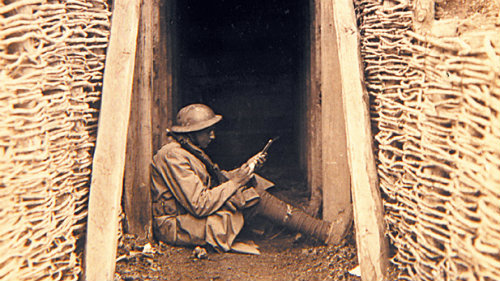
Mail was carried by hand, horse, and rail across Europe’s trenches.
In some battles, soldiers wrote letters using candlelight in flooded dugouts, sealing them with whatever they had — sometimes mud or wax scraped from ration tins.
Despite everything, more than 2 billion letters were sent during the war.
Even under shellfire, British and American troops lined up eagerly for mail call.
The emotional impact was so strong that commanders noticed a direct pattern:
When mail delivery stopped, morale dropped.
When letters arrived, morale soared.
Mail was as vital as ammunition — it kept the human heart armed.
7. The Hidden Heroes: The Postal Soldiers
Behind every love letter and field post were the unsung heroes — the Army Postal Service.
These men and women sorted, packed, and delivered mail in war zones across Europe, North Africa, and the Pacific.
They braved submarines, air raids, and long nights sorting sacks of letters by hand.

In WWII, the 6888th Central Postal Directory Battalion, an all-Black, all-female unit, became legendary.
Nicknamed “Six Triple Eight,” they cleared a 17-million-letter backlog in Europe in just three months — working around the clock in freezing warehouses.
Their motto?
“No Mail, Low Morale.”
Without them, the emotional backbone of the army would have collapsed.
8. Enemy Lines: Letters Behind Barbed Wire
Even prisoners of war depended on letters to survive mentally.
Under the Geneva Convention, POWs were allowed to send and receive mail — though heavily censored.
For captured soldiers, letters were lifelines. They proved they still existed.
A message that simply said “We’re safe” could ease families’ nightmares back home.
In Japanese and German camps alike, letters became symbols of hope — sometimes hidden under floorboards or smuggled through Red Cross channels.
Even when supplies ran out, POWs made their own ink from charcoal and wrote on scraps of paper or cloth — proof that the human need to connect never dies.
9. The Home Front: Women, Families, and Waiting
War was not only fought by men overseas — it was endured by women at home.
Mothers, wives, and girlfriends waited by the mailbox, their hearts rising or sinking with each delivery.
Many described the sound of the mailman’s footsteps as the most emotional part of the day.
Some days brought joy — a letter with familiar handwriting.
Other days brought silence — or worse, a telegram from the War Department.
Still, they wrote back.
Every envelope sent was an act of faith, a declaration that love could cross oceans and outlast fear.
Newspapers often printed advice columns for women, reminding them to “keep letters cheerful” and “send photos often” — as these lifted soldiers’ spirits more than anything else.
10. Beyond WWII: From Vietnam to Afghanistan
The magic of letters didn’t end in 1945.

In Vietnam, soldiers received cassette tapes from home — “audio letters” filled with laughter, songs, and everyday chatter.
In Iraq and Afghanistan, handwritten notes mixed with emails and video calls — but many soldiers still preferred real letters.
One Marine in Fallujah wrote:
“A letter stays with you. You can read it again when the bombs go quiet.”
Even in the age of instant communication, letters offer something digital messages can’t:
a physical reminder that someone cares.
A creased paper still carries fingerprints, a smell, a stain — proof that home exists.
11. The Legacy: Why We Still Need Letters
Today, museums and archives preserve millions of wartime letters.
They’re studied by historians, poets, and families who discover voices long gone.
But their legacy isn’t just in history — it’s in the lesson they teach.
That human connection is the strongest defense against despair.
That a few words written in love can outlast war itself.
That even when nations fall apart, letters can hold people together.
As one WWII veteran said decades later:
“I don’t remember every battle. But I remember every letter.”
 Vellum Insights
Leave a comment