From the ashes of war to the stars above — how America’s greatest technological leap came from the unlikeliest of sources.
Introduction: From Enemies to Assets
When World War II ended in 1945, the world stood in ruins. Cities were leveled, economies shattered, and millions were dead. Yet, amid the wreckage, a new kind of race was beginning — not on the battlefield, but in the laboratories of science.
The United States and the Soviet Union both realized that the scientists of Nazi Germany, the very minds behind the V-2 rocket and jet propulsion, held secrets that could change the future of war and exploration.
That’s how Operation Paperclip was born — a secret U.S. intelligence program that brought over 1,600 German scientists, engineers, and technicians to America. Many of them were former Nazi Party members. Their knowledge would help shape the Cold War, the space race, and even modern technology — all while testing the boundaries of morality.
The Seeds of Operation Paperclip
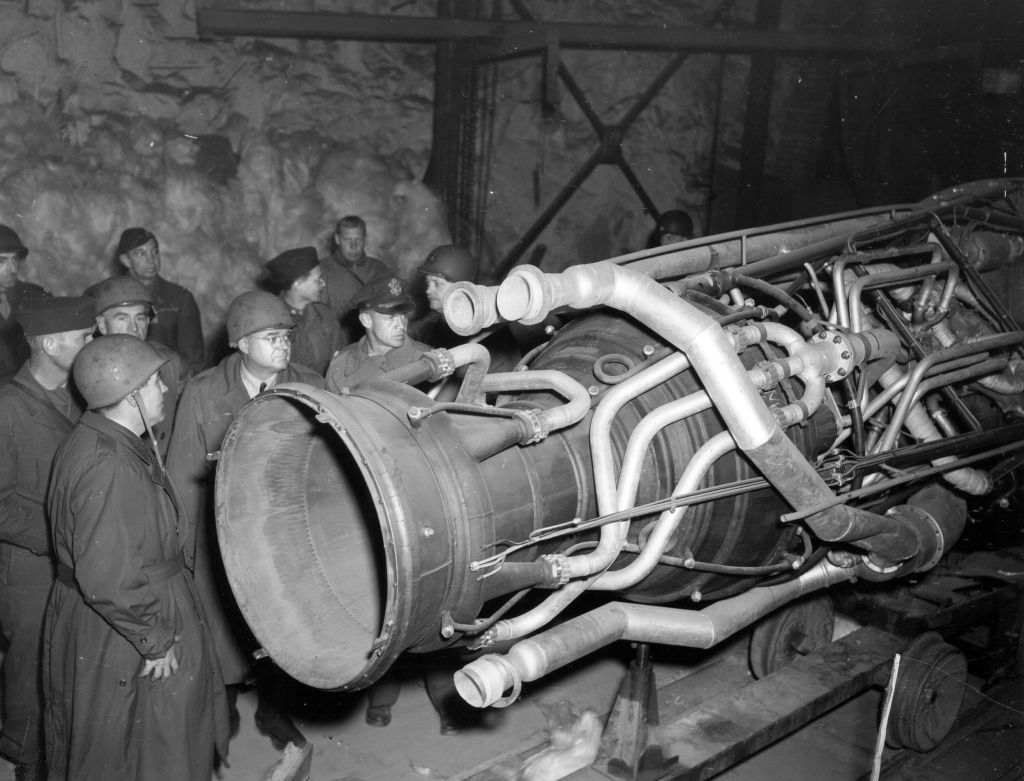
By 1944, Allied troops were closing in on Germany. U.S. and British intelligence began identifying key figures in German research — men like Wernher von Braun, Arthur Rudolph, and Hubertus Strughold. These were the architects of Hitler’s advanced weapons programs, including the terrifying V-2 rocket, which had bombed London and Antwerp in the final stages of the war.
The Allies knew the Soviets were also hunting for these scientists. Whoever captured them would gain not just knowledge, but technological dominance for decades to come.
In late 1945, the U.S. Army launched Operation Overcast, soon renamed Operation Paperclip (because the scientists’ files were marked with paperclips to identify them). Officially, it was about collecting data. In reality, it was about recruiting Germany’s top scientific talent before the Soviets could.
Who Were the Men Behind the Operation?
The most famous figure was Wernher von Braun, a rocket engineer who had dreamed of space travel since childhood.
Under the Nazis, von Braun led the design of the V-2 rocket — a weapon built using slave labor from concentration camps like Mittelbau-Dora.
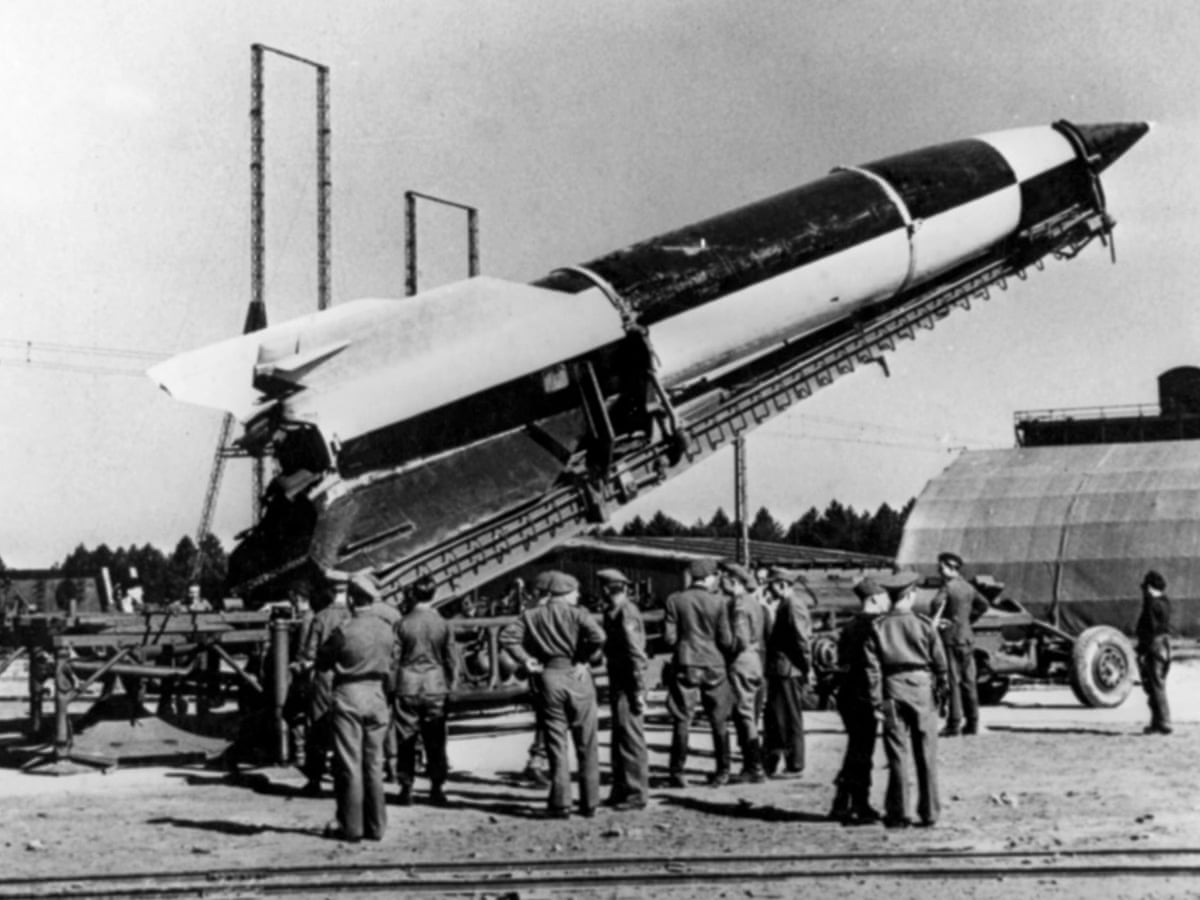
After Germany’s defeat, von Braun and his team surrendered to the Americans in Austria. He was soon whisked away to Fort Bliss, Texas, to begin work for the U.S. Army.
Others joined him — chemists, physicians, aviation experts, and physicists. Some had dark pasts. Many were involved in unethical human experiments or had worked directly under the Nazi regime. But as the Cold War heated up, the U.S. government decided that their value outweighed their crimes.
The moral line blurred. What mattered now was keeping the knowledge out of Soviet hands.
The Space Race Begins
Once in the U.S., these scientists began reshaping American research and defense.
Von Braun’s team helped develop the Redstone and Jupiter-C missiles — critical steps in U.S. rocket technology.

By 1958, as tensions with the Soviet Union escalated, the newly formed NASA tapped von Braun to lead its space division. His work culminated in the Saturn V rocket, the massive engine that powered the Apollo missions to the Moon.
Yes — the same man who built rockets for Hitler would later help America land on the Moon in 1969.
Operation Paperclip had achieved its goal: technological superiority. But at what cost?
The Cold War Justification
To U.S. officials, the logic was simple: if we didn’t recruit them, the Soviets would.
The Soviet Union was aggressively capturing German scientists, relocating thousands to facilities in Russia to boost their weapons and space programs.
The U.S. couldn’t afford to fall behind.
The fear of Soviet dominance — from atomic weapons to spaceflight — drove the moral compromises of Paperclip.
Officially, the U.S. denied bringing Nazis into the country. But classified memos and declassified files later revealed that background checks were altered or destroyed, whitewashing the pasts of key scientists so they could enter the U.S. under false pretenses.
It was a quiet bargain with the devil — one that reshaped modern history.
Scientific Breakthroughs and Hidden Shadows
The scientists brought under Operation Paperclip weren’t just rocket engineers. They included medical researchers, chemists, and aviation experts whose work laid the foundation for American advancements in space medicine, jet propulsion, and even early computing systems.
- Hubertus Strughold, known as the “father of space medicine,” helped design the life-support systems for astronauts. But his legacy is clouded by accusations that he had overseen inhumane experiments on prisoners during the war.
- Arthur Rudolph, another key engineer, directed the Saturn V rocket program. Later, he was investigated for his role in Nazi forced labor camps and voluntarily left the U.S. in 1984.
Their brilliance propelled America into the future. Their pasts remained buried — until decades later, when historians and journalists began uncovering the truth.
Operation Paperclip wasn’t just about science — it was about secrecy, morality, and the price of progress.
Public Exposure and Moral Reckoning
For decades, the American public knew little about Operation Paperclip. It wasn’t until the 1970s, when investigative journalists and declassified documents came to light, that the full story emerged.
Books like “Operation Paperclip: The Secret Intelligence Program That Brought Nazi Scientists to America” by Annie Jacobsen revealed the hidden side of this grand experiment.
The revelations shocked many Americans. How could the U.S., the self-proclaimed defender of freedom, employ men tied to a regime responsible for genocide?
Government officials defended the decision as a strategic necessity — a move that ensured victory in the Cold War and accelerated America’s dominance in technology and space.
In hindsight, historians still debate the ethics. Some see it as pragmatic survival in a dangerous world. Others view it as moral hypocrisy that stained America’s postwar legacy.
The Legacy of Operation Paperclip
Despite its dark origins, the legacy of Operation Paperclip is woven deeply into the fabric of modern science and defense.
The technologies born from it influenced everything from ICBM systems to satellite launches and space exploration. The Apollo 11 mission, which put Neil Armstrong on the Moon, was a direct descendant of the V-2 program.
Even modern missile defense systems and space research trace their roots back to the Paperclip scientists.
But the operation also left behind a more haunting legacy — a reminder that progress often walks hand-in-hand with moral compromise.
It raised the timeless question: Can scientific achievement ever be separated from the ethics of those who create it?
Conclusion: A Deal That Changed the Future
Operation Paperclip was more than a secret mission — it was a turning point in human history.
By recruiting former enemies, the United States secured a technological lead that would define the 20th century. But it also blurred the moral lines between justice and survival.
The rockets that once terrorized Europe carried mankind to the Moon.
The scientists who worked under a dictator helped inspire a generation of discovery.
It’s a paradox that still defines our modern age — the uneasy balance between ambition and accountability.
And in that tension lies the true story of Operation Paperclip — the operation that turned war into wonder.
Citations
- Jacobsen, Annie. Operation Paperclip: The Secret Intelligence Program That Brought Nazi Scientists to America. Little, Brown and Company, 2014.
- Bower, Tom. The Paperclip Conspiracy: The Hunt for the Nazi Scientists. Little, Brown, 1987.
- Neufeld, Michael J. Von Braun: Dreamer of Space, Engineer of War. Alfred A. Knopf, 2007.
- NASA History Office Archives, “Wernher von Braun and the U.S. Space Program.”
- U.S. National Archives, Operation Paperclip Records, 1945–1959.
 Vellum Insights
Leave a comment