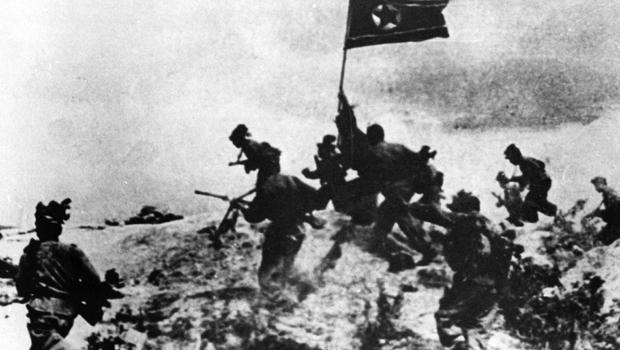
The War Everyone Fought, but No One Remembered
The Korean War began on June 25, 1950, when North Korean forces poured across the 38th parallel and invaded South Korea.
For three years, soldiers from across the world — especially the United States, South Korea, and United Nations allies — fought in freezing mountains, bombed-out cities, and muddy trenches.
Yet today, when people speak of great wars, most remember World War II or Vietnam. The Korean War rarely makes the same lists, documentaries, or memorials. It’s often called “The Forgotten War.”
Why did a conflict that claimed more than three million lives fade so quickly from public memory? The answer lies not just in the battlefield, but in the politics, media, and timing that shaped how the war was remembered.
1. The War That Wasn’t Declared
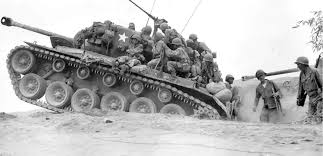
Unlike World War II, the Korean War wasn’t officially a declared war — it was a “police action.” U.S. President Harry Truman never asked Congress for a formal declaration. Instead, the United Nations authorized the use of force to defend South Korea.
That language mattered.
Without the patriotic speeches, victory parades, and posters that defined World War II, Americans didn’t see the Korean War as a grand crusade — just another distant conflict in Asia.
For soldiers who fought there, the lack of recognition was painful. They risked their lives under the same dangers as World War II veterans, yet came home to silence and indifference.
“We went, we fought, and we came back — and nobody cared,” one veteran later said.
2. The Media’s Quiet War
During World War II, reporters embedded with troops sent back vivid stories and heroic images. By contrast, the Korean War came at an awkward moment in media history. Television was still new, radio was fading, and newspapers were turning their attention to the early Cold War.
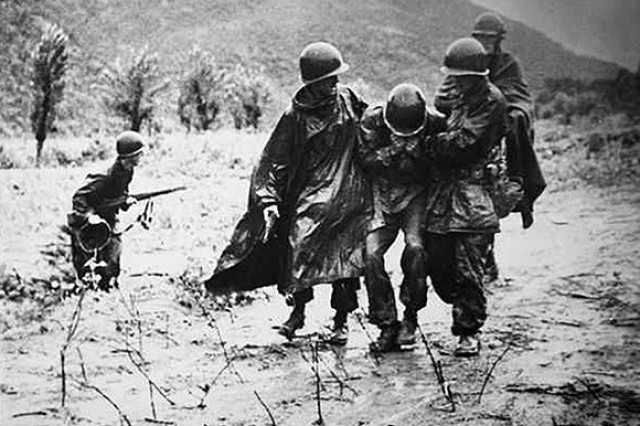
News from Korea was slow, often black-and-white footage of mud and snow. Without dramatic visuals, the public couldn’t connect emotionally.
Worse, reporters called it a stalemate — a word that killed enthusiasm. Americans didn’t see victory or progress, only endless fighting with no clear end.
By 1953, as the armistice was signed, few people outside the military even noticed the final battles. The war simply slipped off the front page.
3. Cold War Fatigue
The Korean War happened just five years after World War II ended. Many countries were still rebuilding their economies and mourning millions of dead.
When the Korean War began, people felt war fatigue. They didn’t want another global conflict. Governments avoided dramatic language to prevent panic, while the public tuned out.
At the same time, the Cold War between the U.S. and the Soviet Union was heating up. Korea became just one front in a much larger struggle — overshadowed by nuclear fears, spies, and propaganda.
By the 1950s, headlines shifted to the arms race and McCarthyism at home, while soldiers still fought and froze on Korean hillsides.
4. No Clear Victory
The Korean War ended in armistice, not victory. The 38th parallel — the line that divided North and South — stayed right where it was.
Unlike World War II, there was no surrender ceremony, no peace treaty, no victory march through Seoul or Pyongyang. The war simply stopped.
For many, that felt like defeat. Politicians called it “containment,” not triumph. Veterans came home without medals of victory, only memories of survival.
This lack of closure made it easy for the war to fade — because there was no clear ending to remember.
5. The Human Cost Forgotten

Behind the politics and strategy were millions of ordinary people whose lives were torn apart. Cities like Seoul changed hands four times during the war. Families were split across the border, some never reunited again.
Over 2.5 million Korean civilians died — many caught in the crossfire or bombings. Refugees poured south in endless columns.
Yet their stories were rarely told. Western audiences saw Korea as a faraway place, not a people with faces and names.
Only decades later did historians and filmmakers begin to recover these voices — stories of children orphaned, families divided, and survivors rebuilding from ashes.
6. The Veterans’ Long Silence
When American and UN soldiers returned home, there were no big parades. The U.S. was already moving on — new cars, new suburbs, new fears of communism.
Many veterans didn’t talk about Korea for years. Some felt forgotten; others believed no one wanted to hear.
In South Korea, too, the war left deep scars. The country rebuilt under strict rule, and memories of the conflict were often suppressed in favor of modernization.
It wasn’t until the 1980s and 1990s that public recognition grew. The Korean War Veterans Memorial in Washington, D.C. — unveiled in 1995 — finally gave a voice to those who had been forgotten.
7. Lessons in Memory and Honor
The Korean War shows that history isn’t just about what happens — it’s about what people choose to remember.
Wars fade not because they were unimportant, but because they don’t fit simple narratives of victory or loss. The Korean War was a brutal, necessary stalemate that stopped communism from spreading south, setting the stage for South Korea’s eventual rise into democracy and prosperity.
Remembering it means honoring not only soldiers, but also the civilians who suffered and survived.
As one veteran wrote in his diary:
“We didn’t lose. We didn’t win. But we did our duty — and that should count for something.”
Conclusion: The War That Built the Present
The Korean War might be called “forgotten,” but its impact still shapes the world. The border at the DMZ remains one of the most dangerous on Earth. South Korea’s rise from rubble to global powerhouse stands as a symbol of resilience.
For the United States, the Korean War marked the beginning of modern limited warfare — a conflict fought not for conquest, but for containment.
Remembering the Forgotten War is more than looking back — it’s understanding how fragile peace truly is
 Vellum Insights
Leave a comment