From 19th-Century Empires to Modern Superpowers — Why Central Asia Is Again the World’s Strategic Crossroads
Introduction: The Return of the Great Game
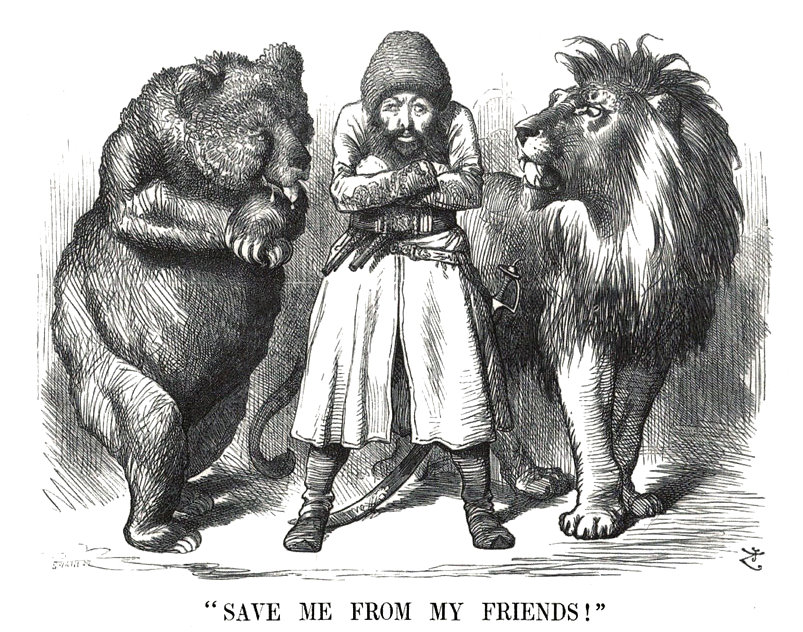
In the 1800s, Central Asia became the stage for one of history’s most famous geopolitical rivalries. The British Empire and the Russian Empire competed fiercely for influence across the region in a struggle known as The Great Game.
Both empires believed that controlling Central Asia meant controlling the balance of power in Eurasia.
Today, more than a century later, the region is once again at the center of global competition. But this time the players are different.
Instead of Victorian-era empires, the new contestants include:
- China
- Russia
- United States
- India
- Turkey
- Iran
At stake are energy resources, trade routes, military influence, and strategic geography.
Many analysts now call this new competition “The Great Game 2.0.”
To understand why Central Asia matters so much today, we must first look at why it mattered in the past.
Chapter 1: The Original Great Game
Britain vs Russia
During the 19th century, the British Empire ruled India — the most valuable colony in the world. British leaders feared that Russia might expand southward and threaten India.
At the same time, the Russian Empire was expanding across the Eurasian landmass, conquering vast territories in Central Asia.
The two powers began a quiet but intense rivalry.
This competition involved:
- espionage missions
- military expeditions
- diplomatic alliances
- influence over local rulers
The region became a chessboard where empires competed for advantage.
Afghanistan: The Strategic Buffer
One country became especially important in this struggle:
Afghanistan.
Britain wanted Afghanistan to remain independent but friendly — a buffer state protecting India from Russian influence.
This led to several conflicts known as the Anglo‑Afghan Wars, as Britain attempted to control Afghanistan’s foreign policy.
The Great Game shaped the political borders of Central Asia that still exist today.
Chapter 2: The Strategic Geography of Central Asia
Central Asia includes several nations that once formed part of the Soviet Union:
- Kazakhstan
- Uzbekistan
- Turkmenistan
- Kyrgyzstan
- Tajikistan
These countries lie at the heart of Eurasia.
Their geography creates several strategic advantages:
Crossroads of Continents
Central Asia connects:
- Europe
- East Asia
- the Middle East
- South Asia
This makes it a vital corridor for trade routes and transportation networks.
Energy and Natural Resources
The region contains massive reserves of:
- oil
- natural gas
- uranium
- rare earth minerals
These resources make Central Asia attractive to major powers seeking energy security.
Strategic Military Position
Central Asia borders several critical regions, including:
- Russia
- China
- Afghanistan
- Iran
Control or influence here can shape regional security across a huge portion of the world.
Chapter 3: China’s Strategy — The Belt and Road Vision
One of the most important players in the new Great Game is China.
China launched a massive global infrastructure project known as the Belt and Road Initiative.
This project aims to build railways, highways, pipelines, and ports across Eurasia to strengthen trade with China.
Central Asia is a critical part of this network.
Why China Needs Central Asia
China relies heavily on international trade and imported energy.
Central Asia provides:
- land routes that avoid vulnerable sea lanes
- pipelines for oil and gas
- access to European markets
New railways across Kazakhstan and Uzbekistan now allow goods to travel between China and Europe much faster than by sea.
For China, Central Asia is not just geography — it is economic security.
Chapter 4: Russia’s Traditional Sphere of Influence
For more than a century, Central Asia was dominated by Russia, first as part of the Russian Empire and later as part of the Soviet Union.
Even after the Soviet Union collapsed in 1991, Russia continued to maintain strong influence in the region.
Russia’s Tools of Influence
Russia maintains power in Central Asia through several methods:
- military alliances
- economic cooperation
- cultural ties
- energy infrastructure
One major organization is the Collective Security Treaty Organization (CSTO), a military alliance that includes several Central Asian states.
Russia also hosts migrant workers from the region, creating economic links that reinforce its influence.
Despite China’s growing presence, Russia still sees Central Asia as part of its traditional sphere of influence.
Chapter 5: The United States and Western Interests
The United States entered the Central Asian geopolitical arena mainly after the attacks of September 11 Attacks in 2001.
To support military operations in Afghanistan, the United States established bases and logistical agreements across the region.
Strategic Goals
U.S. interests in Central Asia include:
- counterterrorism cooperation
- energy development
- balancing Russian and Chinese influence
Although U.S. military presence in the region declined after the war in Afghanistan ended, Washington still views Central Asia as strategically important.
Chapter 6: Regional Powers Enter the Competition
In addition to global superpowers, several regional countries are also expanding their influence.
Turkey’s Cultural Strategy
Turkey shares linguistic and cultural ties with many Central Asian countries.
Through cultural exchanges, trade agreements, and diplomatic partnerships, Turkey seeks to strengthen its regional influence.
India’s Strategic Concerns
India is also interested in Central Asia, particularly because of security concerns involving Afghanistan and regional terrorism.
India has invested in transportation corridors connecting Central Asia to South Asia.
Iran’s Geographic Advantage
Iran sits between Central Asia and the Persian Gulf.
By offering trade routes to its ports, Iran hopes to become a key transit hub for Central Asian exports.
Chapter 7: Energy Pipelines and Economic Competition
Energy pipelines are one of the most important elements of the modern Great Game.
Major pipelines carry oil and natural gas from Central Asia to:
- China
- Russia
- Europe
Control over pipeline routes can determine who profits from the region’s resources.
For example:
- China built major pipelines from Kazakhstan and Turkmenistan.
- Russia maintains traditional energy networks linking Central Asia to Europe.
These infrastructure projects represent billions of dollars and decades of geopolitical planning.
Chapter 8: The Future of the New Great Game
Central Asia is becoming increasingly important in global politics.
Several trends suggest competition will continue:
Growing Energy Demand
As global energy consumption increases, access to Central Asian resources will remain valuable.
Trade Route Competition
Railways and highways connecting Asia and Europe will shape future global trade.
Strategic Rivalry
China, Russia, and the United States all want influence in the region, even if their methods differ.
Regional Stability
Political stability in Central Asia will determine whether the region becomes a bridge for cooperation or a battlefield for competition.
Conclusion: The Chessboard of Eurasia
The original Great Game was a rivalry between two empires fighting for influence over remote territories.
Today’s version is far more complex.
Instead of two empires, multiple powers now compete across Central Asia — through infrastructure projects, diplomacy, economic investment, and security partnerships.
While the methods have changed, the underlying reality remains the same:
Geography shapes power.
Central Asia sits at the heart of Eurasia, connecting continents, resources, and civilizations.
For that reason, the region will likely remain one of the world’s most important geopolitical crossroads for decades to come.
The Great Game never truly ended.
It simply evolved into The Great Game 2.0.
Sources & Citations
- Hopkirk, Peter. The Great Game: The Struggle for Empire in Central Asia. Kodansha International, 1992.
- Cooley, Alexander. Great Games, Local Rules: The New Great Power Contest in Central Asia. Oxford University Press, 2012.
- Rashid, Ahmed. Central Asia in the Post-Cold War World. Yale University Press, 2017.
- Council on Foreign Relations. “China’s Belt and Road Initiative and Eurasian Strategy.”
- NATO Strategic Studies Reports on Eurasian Security.
- Encyclopaedia Britannica. “The Great Game.”
 Vellum Insights
Leave a comment