How One Bold Plan by General MacArthur Changed the Course of a War
Introduction: The War Was Going Badly
In the summer of 1950, the Korean Peninsula was on fire.
North Korean forces had invaded the South in a lightning assault, driving the U.N. and South Korean armies into a tiny corner around the port city of Pusan.
It looked like the war was lost.
But one man refused to give up — General Douglas MacArthur. He believed that a bold strike behind enemy lines could turn the tide.
His plan? A dangerous amphibious landing at a small, heavily defended port called Inchon.
It was risky, almost impossible. The tides were extreme, the mudflats were deep, and the harbor was narrow.
But if it worked — it would cut the North Korean army in half.
This is the story of Operation Chromite, better known as the Inchon Landing — one of the most daring and brilliant military operations of the 20th century.
The Situation: A War Hanging by a Thread
When North Korean troops poured across the 38th parallel in June 1950, they were well-trained and well-equipped with Soviet weapons.
In weeks, they captured Seoul and pushed deep into the South.
By August, U.N. forces, mostly Americans and South Koreans, were trapped in the Pusan Perimeter, a small defensive pocket in the southeast corner of the peninsula.
Supplies were running low. Soldiers were exhausted. The enemy was at the gates.
The world watched as the United Nations prepared for what seemed like an inevitable defeat.
But MacArthur — commanding from his headquarters in Tokyo — had another idea.
MacArthur’s Gamble: A Plan No One Believed In

General Douglas MacArthur was a legend — and a gambler.
He had led the Pacific victories of World War II and returned triumphantly to Japan. But now, the situation in Korea tested everything he knew.
While others talked about defense, MacArthur talked about attack.
His idea: land U.N. forces far behind enemy lines at the port of Inchon, near Seoul.
If successful, the landing would cut off North Korea’s supply lines, trap its army between Seoul and Pusan, and possibly end the war in a single blow.
But there was a problem — almost everyone thought it was insane.
Why Inchon Looked Impossible
Military planners had good reasons to doubt the plan. Inchon was one of the worst possible landing sites in Korea:
- Extreme Tides: The water level could rise or fall over 30 feet — one of the largest tidal ranges in the world.
- Narrow Channels: Ships could only enter at high tide through a dangerous, twisting channel.
- Mudflats: At low tide, the harbor turned into a sea of sticky mud — impossible for landing craft.
- Urban Terrain: Inchon was a heavily built-up city with sea walls, defenses, and enemy troops.
- Timing: The landing had to happen in mid-September — during a short window when tides and moonlight aligned.
One U.S. Navy admiral even said:
“We drew up every possible disadvantage — and still couldn’t find one good reason to land there.”
But MacArthur wasn’t shaken.
At a key meeting in Tokyo, he stood, pointed to a map, and told his generals:
“The very arguments you make against this landing are the reasons why I will succeed.”
The Preparation: A Secret Operation Named Chromite
MacArthur’s plan became Operation Chromite.
Planning began in secret in July 1950. The landing would use forces from both the U.S. Navy and U.S. Marine Corps, along with South Korean troops.
The X Corps, commanded by General Edward Almond, would carry out the assault.
The 1st Marine Division, battle-hardened from World War II, would lead the way.
Meanwhile, the Eighth Army under General Walton Walker would hold the line at the Pusan Perimeter — buying time for the Inchon force to strike.
To prepare, U.N. ships bombarded coastal defenses, while reconnaissance aircraft scouted enemy positions.
MacArthur personally chose September 15, 1950 — the one day when tides would allow the landing.
If the operation failed, there would be no second chance.
D-Day at Inchon: September 15, 1950
At dawn, the sky over Inchon burned with naval gunfire.
U.S. destroyers and cruisers shelled the city, targeting North Korean gun batteries and fortifications.
Then came the Marines.
Phase One: Wolmi-do Island
The first target was Wolmi-do, a small island guarding the harbor entrance.
At 6:30 a.m., 3rd Battalion, 5th Marines stormed the island under heavy fire.
By noon, they had taken it. U.S. flags rose above the island — signaling success for the first wave.
Phase Two: Red Beach and Blue Beach
The next step came in the evening, timed precisely with the high tide.
Landing craft surged forward toward Inchon’s Red Beach and Blue Beach.
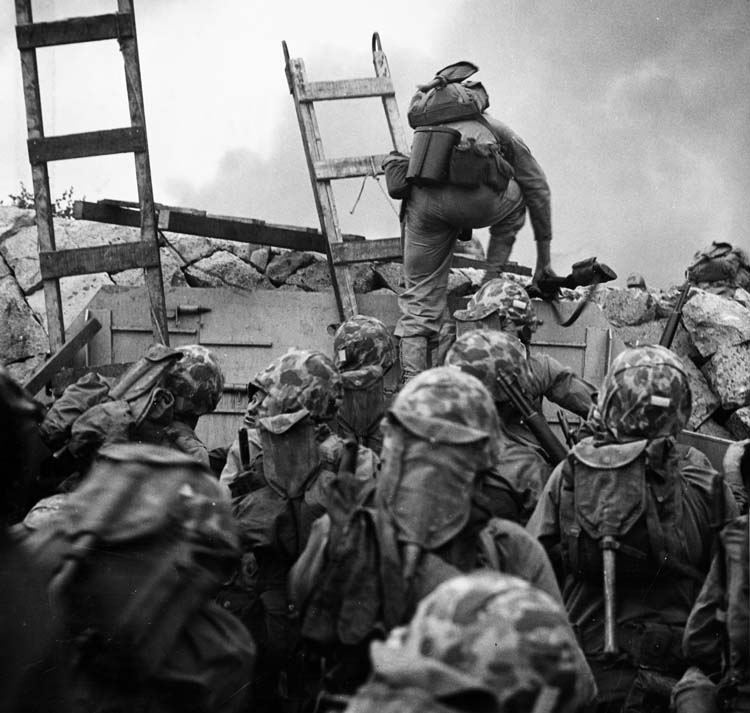
Marines climbed scaling ladders over sea walls slick with algae and bullets. They threw grenades, cleared bunkers, and fought block by block through the city’s narrow streets.
By midnight, Inchon was in U.N. hands.
The landing — considered impossible — had succeeded.
The March on Seoul
MacArthur wasted no time.
Within hours of the landing, the Marines pushed east and north toward Seoul, just 15 miles away.
North Korean resistance was fierce. The fight for Seoul turned into brutal urban combat — snipers, street fighting, and house-to-house clearing.
But by September 28, the U.N. forces raised the South Korean flag over the capital once more.
The liberation of Seoul stunned the world.
What had seemed like certain defeat had turned into a brilliant victory.
The Collapse of the North Korean Army
Meanwhile, in the south, the North Korean army attacking the Pusan Perimeter suddenly found itself trapped.
With Inchon behind them and U.N. troops pressing from the front, their supply lines were cut.
Entire divisions broke apart as soldiers tried to flee north.
By October, the U.N. advance crossed the 38th parallel. The North Korean army was shattered.
In just three weeks, MacArthur’s plan had completely reversed the war.
The Genius Behind the Gamble
What made Inchon so successful wasn’t luck — it was calculated risk.
MacArthur used three key principles of military strategy:
- Surprise: Landing where the enemy least expected.
- Speed: Striking fast before North Korea could react.
- Concentration: Using overwhelming force in one decisive blow.
He turned the disadvantages — tides, terrain, timing — into tools of surprise.
Even the North Korean commander later admitted,
“We never believed the Americans would dare to land at Inchon.”
Aftermath: From Triumph to Tension
The victory at Inchon was complete, but it also set the stage for new dangers.
Buoyed by success, MacArthur pushed his forces deep into North Korea — all the way to the Chinese border at the Yalu River.
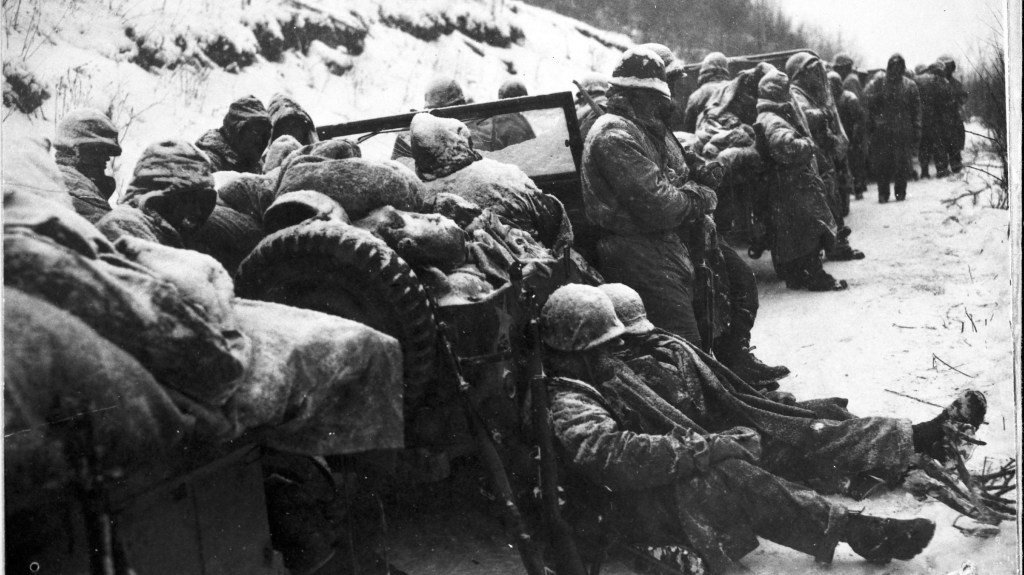
But this advance would soon bring China into the war, leading to the brutal winter battles of late 1950 — including the Chosin Reservoir campaign.
Still, Inchon remains one of the greatest amphibious operations in history.
It showed how daring strategy, flawless timing, and strong leadership could turn the tide of a war.
The Legacy of Inchon
The Inchon Landing became a textbook case of military genius.
It’s studied in war colleges around the world as an example of how bold planning and precise execution can overcome impossible odds.
For the Marines and sailors who fought there, Inchon wasn’t just a victory — it was proof that courage and discipline could make the impossible possible.
And for history, it was the moment when the Korean War changed from desperate defense to decisive offense.
Cited Sources
- Appleman, Roy E. South to the Naktong, North to the Yalu (June–November 1950). U.S. Army Center of Military History, 1992.
- Simmons, Edwin H. Over the Seawall: The U.S. Marines at Inchon. Marine Corps Historical Center, 1979.
- Hastings, Max. The Korean War. Simon & Schuster, 1987.
- MacArthur, Douglas. Reminiscences. McGraw-Hill, 1964.
- National Archives, U.S. Marine Corps Combat Photography Unit, 1950.







 Vellum Insights